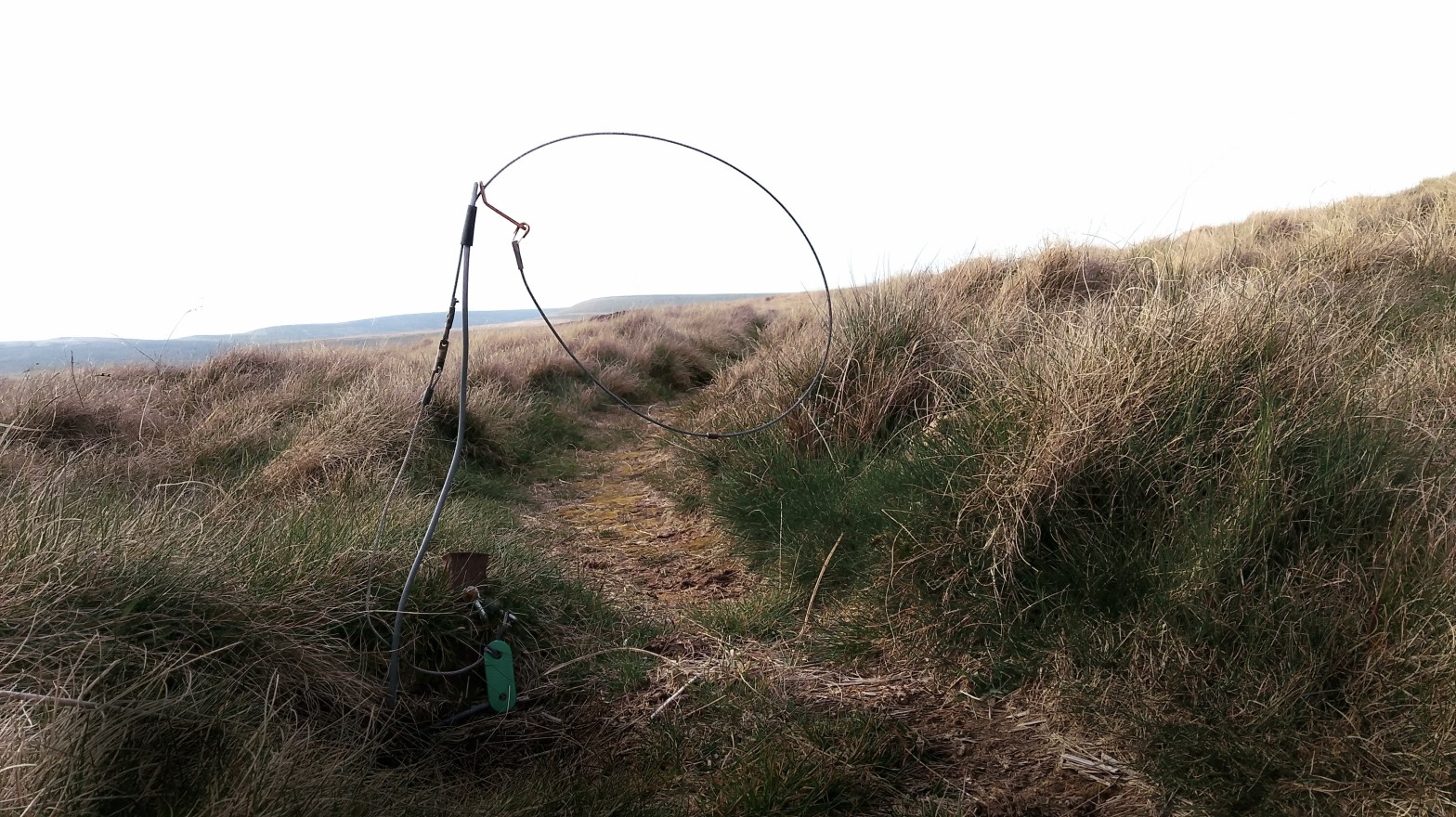
There is no exit, but death. But up on the tops the notion at least remains; a breathing space necessary for the escape-desperate pathos to recognise itself.
The possibility of a way out via peaceful parliamentary measures had its last chance in a hot June month of 2017 that momentarily melted perceived certainties as if they were plastic. And for many of us it was the first time in our adult lives we escaped the weight of depression. Perhaps this itself was already an hallucination, a Millennial one?
But it took until ‘operation: return to normal’, the escape from lockdown, to realise there was no longer a ‘way out’.
Operation: escape the Maddening House.
Between the Russian assault on Ukraine and the ‘atrocity exhibition’ of Gaza live-streamed, I reached an epiphany upon these tops, above the old-industrial North of England: I had never known how to be a human being, and by adulthood, through disorders, addictions, avoidance, art, I had been trying to find different ways of expressing this desire to ‘get out’.
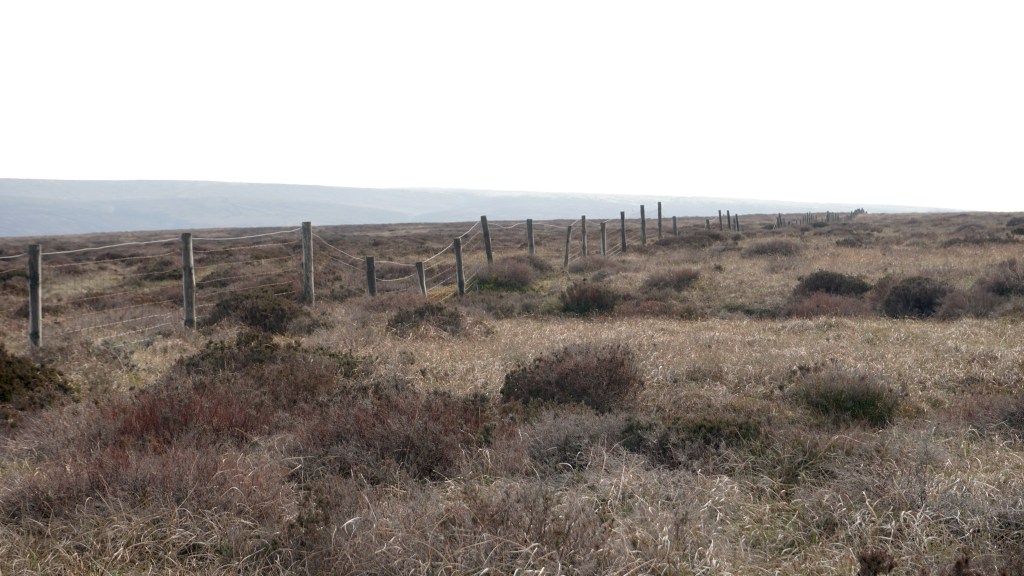
These tops are the outback for the Northern psyche, they store our collective trauma as if it was carbon. They also speak the language of the ‘frontierism’ that scoured the desert, reached the moon, and then crashed back down and began to devour itself.
The roads and paths towards here have always held an absolutist promise to them, in that they seem to offer one way in/one way out. No crossroads, no choice paralysis – just escape or come back down.
In my early 20s I would impulsively seek escape, drawn towards the tops by the trance-like Joy Division chant of ‘day in/day out/day in/day out’. I felt it ‘closing in’, and needed to get out before ‘it’ got me.
Today I know there is no true escape up here. ‘it’ is closing in; ‘it’ has won.
Regardless, the tops remain a crucial space in which to think.
Down there there no is thought no more, just chaos in the mind.
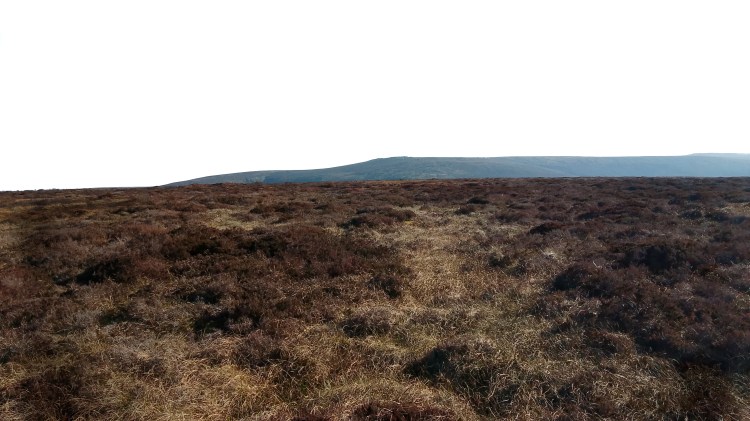
Technically in the Peak District, this area has avoided the post-pandemic influencer influenza that tramples over everything just to prove “I exist” in a culture where to be ignored is to be a living ghost, unimportant and forgotten.
On these outer-edges it is still possible to be alone through escaping the loneliness you feel subjected to down there. Its emptiness and waste allow for a reprieve from a socially-constructed loneliness, dealt out as punishment for ‘failure’. Here there is space to be weak, to be a loser, a degenerate, a nobody, with no shame.
At the very start of the decade this epidemic of loneliness was eased by the Covid Pandemic Lockdown. Although it caused mass isolation, there was a reprieve from the loneliness of humiliation, failure, and all the necessary afflictations dealt out to mediate a functional separation between successful and failed subjects in a neoliberal society.
But unfortunately it was also in this period that the networked mind ‘lost its mind’.
My late tutor called social media ‘the final battleground of Thatcherism’, and in the wake of the pandemic we were all now infected. All words became weaponised. And once the ‘better angels’ realised there was no escape, and justice had no horizon, indignation and accusation were all that was left.
Finger pointing in hell.
I feel a temporary peace looking at 320 million-year-old rocks, sunken and hidden amidst a deep mass of peat, like abandoned and rusting army tanks.
It seems that everything peaceful was formed in violence.
I long held faith in the human ability to prove such an idea wrong; that seismic change could be prised out on a pathway of peace. In the back of my heart the 2010s was the test ground, and I still had faith that the ‘networked mind’ could compound all historical traumas to reconstitute the collective psyche into something I felt was necessarily conducive towards thriving and surviving the 21st century.
I admit I no longer believe any of this. I now fear with an empty heart, that the violence that exploded since the pandemic is the start of what is to be expected.
I also admit am a weak person. I am somebody who has never been able to approach a conflict without taking the side of the opposition (I usually want to destroy me as much as they do).
For a long period of time I tormented and chastised myself for not being part of the noisy, active crowd – I felt I was betraying the mantras of the memefied 20th century activists, yelling at me from their graves.
I went to protests in the 2010s, usually balking, only to be found shakingly clutching a Strongbow in the nearest pub. The pressure to ‘show up’ contributed to excessive burn-outs as the 2020s restarted.
I fear the violence is now necessary, and inevitable. I sometimes believe it is collectively craved subconsciously in the collective mindset: the only craving that unites us all in the Maddening House.
And it is on this subconscious level that it seems that all of us secretly wanted Donald Trump; we want the next catastrophe, we want the haste towards destruction, because destruction is the only thing that makes any sense when locked inside a Maddening House.
Progress lost its soul to the machine. It can longer separate itself from all-encompassing spectacle and doesn’t even conceive that we need a way out. It produces pop culture that sounds increasingly dead behind the eyes before Ai could even get to it.
I am a weak person, violence makes me nauseous and shakey. I cannot be part of the violence that is already around us. The violence that I fear is tragically necessary in order to get out of the Maddening House. None of this is easy to admit as a child born the year and in the place of the Miners’ Strike.
I wish I was more.
Part of my ‘journey’ since my epiphany 3 years ago, was to accept myself. But it’s hard to go easy on yourself in the Maddening House.
At least up on the tops (my tops) I can accept that it for what it is: locked in the Maddening House.

