The reason I’m writing this isn’t an expected one..
Basically I’m pretty much at rock bottom. The life I have led for all my adult life has become increasingly untenable and intolerable, no matter how many times I’ve tried and tried afresh.
This life I’ve led has been flakey from the start, but the ideal at its core was to find a work/life balance that enabled me to be pursue my artistic talents.
Rewind 25 years, I couldn’t wait to escape lad culture; the groups, the sports teams. The general atmosphere that defined high school was one in which I felt small, often humiliated and misunderstood. My biggest fear was almost respiratory-based: I could never breathe in such an environment. The mere prospect of being in big groups, being barked at by a pedagogical bully was the stuff of nightmares. At least I would never have to go into such an environment ever again.
Fast forward to the present, and I’m increasingly dysfunctional. I feel increasingly isolated and unable to connect with people, increasingly reliant on alcohol and increasingly in despair about ever combating the persistent inner critics that mock my life.
All in all, the line my generation swallowed, that we could and should ‘be whatever we want to be’ and ‘live in whatever way we want to’ has left my mental cogs burnt out. The mental weight of having to constantly pick and choose based on individual satisfaction has left me burnt out – right now, in possibly one of the lowest ebbs I’ve experienced, I’m crying out for someone to tell me exactly what to do next.
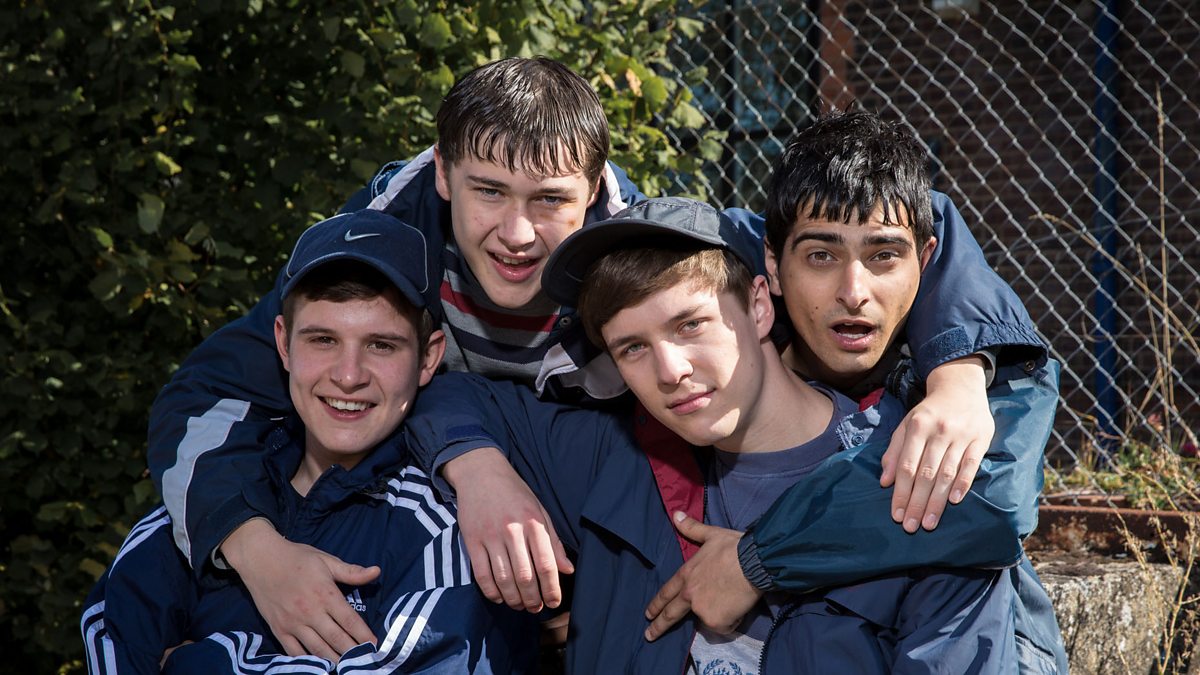
The image in this blog is from a BBC show called ‘Ladhood’. Based in Garforth, I really connected with how close elements of this show felt to growing up in the late 90s/early 2000s, 20 miles down the M1.
If only I’d had a better encounter with pedagogical structures as a young person, if only I’d been socialised and skilled up for this life with compassion and solidarity rather than by macho downward punching, I might have become a much more well-rounded person.
The thing is, when the Tories announced they would bring back national service this weekend, they had no good intentions in mind, it is purely a political strategy to create division in Labour’s electoral base, by putting young against old. We’ve seen it so many times before. The Tories know they’ve no chance of getting the vote from the people old enough to be made to do national service. They are trying to get older people to vote Tory out of resent for young people
However, true ‘progressives’ who want to see the back of the toxically individualistic neoliberal society, shouldn’t throw the baby out with the bath water. A variant of national service, albeit with less of the ‘national’ and definitely less of the ‘military’ to it, could be just what we need to both re-socialise society and in turn help with our catastrophic mental health crisis.
This isn’t to play into patriarchal ideas, but I could have done with experiencing both compassionate and life building male group friendships in my young life. In fact I think I would have been a far healthier and happier person now if I’d had that.
Look around at the community care organisations picking up the pieces at the moment (recovery organisations, Andy’s Mans Club etc), and you can begin to imagine how compassion and solidarity could be at the centre of another kind of national service.
It might be too late to rewire the damage for people like myself, but when thinking of the huge challenges we have ahead, especially with climate change, or even how we treat the homeless in our city centres, a society of people who feel confident to step up, for compassion rather than any jingoistic cause, cannot be a bad thing.
No more apologies for any perceived erroneous move from a continual striving for respect.
This has been the longest spell of depression I have ever experienced. And I no longer know what I have left that is worth its weight going forward.
What has made it so sustained is that previously, and partly down to being younger, I always maintained some faith in tomorrow being the day when suddenly I would no longer be in a state of perpetual self-demonisation, and this thought itself would lessen the self-demonising, in the knowledge that ‘it’ wasn’t invincible to change.
But since then a perception of the self born from constant self-demonisation feels impossible to escape, because I no longer have the energy, or horizons through which to believe it will go away.
I am fast losing faith in a tomorrow.
I’ve always been in a state of emotional arrrested development. But, on rare occasions, I could at least get to the conversation part on dating apps; I could act in that boysterous (although now red flaggish territory) of impressing women by being loud and silly – all in all I could become alive, and non-ghost.
I used to feel a future.
My own experiences with mental health have always felt like they must look like a self-inflicted joke from the outside. I can’t help but feel like it’s perceived as being my own stupid fault.
After-all, I do have this conviction from childhood that I am the most stupid, wrong, person ever to exist.
I sometimes think people think on behalf of collective energies they do not understand, and sometimes people think other people dead. Seriously, we collectively unconsciously exhale people from life, because they are ill-fitting to any script and they jot out and need to be jotted out.
“They CHOOSE to be that way” , of course.
But there is no choice when your head is literally made up of ‘other peoples’ arguing about whether of not you are justified in your existence.
Sometimes I fantasise about doing something far more destructive than my old technique of smashing a smart phone against a wall. Now I have a car, I often imagine smashing my car against a wall. Because, sometimes prison, condemnation, the taking away of normal liberties, feels like the biggest liberty I could have.
I have been granted a highly disputable freedom, but let’s just call it freedom for now. But I am not me. There is no me. The only me, is ‘fuck you’ and ‘fuck off’ to the overbearing ‘them’ in my head. And how this has grown so tiring in middle age.
I’m not really bothered that my writing will never be venerated, and at best will be noticed for its inability to leave the self. The reason I cannot escape myself is because I am not able to have a self. And I cannot see my life as a ‘creative practitioner’ overcoming this.
“Other people do it. Other people manage, Other people can, Other people can’t!!”
My biggest dream is to go somewhere where nobody knows my name, where I have no friends, no memories, no hooks back into the person I am.
What this means is my biggest dream is to be able to escape my own life; everything that reminds me of me, makes me think of me, see me, and remember me.
…it all leads to inner warfare.
The thing is, I don’t really have an identity. I am composed of ‘other people’ things, what the ever-changing ‘they’ say I ‘could’, ‘should’, ‘am’ and. ‘aren’t’.
My identity is a battleground of ideas about who I am, and I am fucking mentally exhausted.
The world isn’t an idle summer forest through which we can take our time, and listen to the earth, we are instead, locked inside a maddening house, as capitalism insanely turns inwards, onto us, attacking us, through weaponised information.
Nobody has the time to do what they need to do, because fear is always dragging them back into their defensive positions. And nobody grows in a defensive position.
Lots of people (“”Other people do it. Other people manage, Other people can, Other people can’t, nananananananaa) do it. But my head is now merely a engine that can still growl as the wheels turn in the mud of all that I’ve achieved.
No empathy is afforded to those who try to connect their own struggles with a madness bigger than themselves.
A friend said that how I describe this sounds like schizophrenia. But I know it’s not.
I don’t hear voices, it’s more that I am constantly in 3rd person. My head is interpretations of myself that critique my every move. It’s ruining my life, to be honest.
What does freedom mean to you?
The freedom to be needs to be matched by the freedom from having to be.
You can’t be forced to be yourself, otherwise freedom itself becomes the tyranny.
Share a story about someone who had a positive impact on your life.
Garry Sykes. Who passed away earlier this year.
He taught me on my Bachelors degree in art at Barnsley College.
Although it was a Bachelors degree, this wasn’t a university education. Barnsley is a post-industrial town, and certainly not a university town. I didn’t go to university in that respect.
However, what we had at Barnsley was special, and this was largely down to a people like Garry.
Whilst we lacked high-flying lecturers, and had to always have one foot grounded in day to day reality (with there being no university culture to immerse oneself into), we had teachers who were always there for us, who spent time trying to nurture both us and the future of people in the town they were also from.
Garry’s positive impact was special because it was collectively owned by a large sporadic group of people who were taught by him, and this made it have a stronger impact individually.
This collective impact was captured this month, when many of us attended his funeral to show our respects. His wife Linda died a month later – so they had a joint funeral. As tragic as they this may seem, there is also a romantic beauty there for two people who were with it each other since being kids.
Garry taught me to have the courage to keep going as an artist. He taught me that if one had the urge to create, they would create whatever their situation, and this urge wasn’t like a force of nature, it was a force of nature.
What a great bloke, with a a great mind, and great vision for his town, that will surely carry on.
I can’t explain how much self-hate I experience towards myself on a daily basis, without wanting to punch you, kill you, expose myself to you – anything to prove what a piece of worthless wank I am, so as to justify my non-existence.
It’s been a driver in my mental make-up for most my adult life, but it has become gradually worse since I hit my late 30s, early 40s.
It’s an hard world, we all know that. But self-hate doesn’t make you want to stand up to injustice, it merely makes you think that you deserve no sympathy for whatever you are experiencing: after all, people in other countries are being slaughtered en mass – why does somebody with a safe roof over their head deserve the privilege of life?
Self-hate, on a minor, micro-level, has ensured that I spend most of my time by myself. Initially time spent trying to ‘better myself’ in order not to be self-hating, so I could become part of something, has become a life of literal loneliness. And only people who like themselves can truly embrace loneliness.
Maybe there’s a case of arrested development. I have never felt intimacy, love, or an embrace of an other to the point that I have learned can change that person, and take them out of their own head. But, again, that’s just another reason to blame, shame, and despise one’s ‘wrongness’ in knowing how to live.
I know there’s people who read this who know me who tell me I disclose too much information about myself. “You shouldn’t be so honest they say”. Crawl back into your nicey nice profile projection.
All I say back is I won’t stop – I don’t owe you anything. This may be a big joke, that you are all secretly laughing at and criticising me for. But that’s how I feel anyway, so what’s the difference?
Negativity isn’t a perception of a world outside, it’s a projection of that world inside: how you feel about yourself, as you continually manoeuvre the inner furniture, trying to feel at home.
This reminder gives you rest-bite from the habit of being hard on yourself. But it splutters and withers as you see the next status car in your rear mirror. A predatory form almost designed to interrogate the souls of those not ‘up to scratch’.
“Just ignore it!” – but it’s no use.
You catch somebody’s eye as you drive past a micro pub; he’s younger than you, and successfully pulls off the veneer of a competency that the game applauds.
You drive on, breathing a sigh of relief as you park the car in a liminal lay-by.
But this space is another compromised space. A sports car creeps slowly past, then reverses and pulls in front. The pink top of a man’s bald head is enough to make you realise what this space is used for. You quickly move on.
All escapes routes are tracked by the dopamine circuit.
Those wretched feelings. The war upon yourself that goes from cold to hot. You realise there is no space – at least not the kind you so desperately need.
Driving around for ages, you feel like some human bonsai tree, trapped in a teenage cage. You hear mocking tones in your head, and its a relief to let it hang low as you accept defeat to the fight pitched by this bank holiday evening.
BACK TO NORMALISM
The train, the bus, the roadside path; all those roads that led to a relationship with the city have become nauseating over the past few years.
Have I changed or has the city changed around me?
Strong perfume and the Peaky Blinderised hyper-smart-casual. Necks craning, with eyes to be avoided.
“I’m trying to read a book, mate, please leave me be“. …please.
Overcrowded weekend trains seem almost designed to turn Back to Normalism Britain into the kind of yoke it more or less is. Infantilisation and senility meet one another, as we all melt into one pink, gooey, shape. Nobody gets out clean.
‘Binge drink Britain’ was, at best, meant to be a momentary exercise in self-obliteration until a better tomorrow came along.
The ‘better’ tomorrow became the financial crash.
The city oozes and leaks a gaseous blandalism, an odourless intoxication, which leaves you dehydrated and gasping for air.
Hobbies. Everything must become an hobby! An attribute to our profiles. Hobbyists abound as much as addicts, nowhere is free from one or them. Which one are you?
Back to Normalism Britain looks weirdly familiar, but it’s an overpriced remake of life before ‘the event’ – the crash, the austerity policies, the pandemic, whatever. Stage sets for the infinite uploads to Instagram; look too close and it becomes grotesque, a mimicry of yesterday’s desires grown out of the undead yoke it left behind.
Since ‘Back to Normalism’, my mental and physical health has been continuously running on empty. Bereft of redemptive plans and, most of all, an horizon.
Too tired to be what I used to have to be, you will now find me on the peripheries.
THE AGE OFMICRO-INSTRUCTION
Who remembers the relief of April 2020?
Amidst the primal fears and sacrifices, ‘micro-instructions’ – essential for up-keeping neoliberal relativity – momentarily ebbed away.
Like a tide that had been high for generations, suddenly a hidden landscape became visible. Just as you found yourself momentarily admiring the geometric beauty of empty motorways, previously invisible infrastructure for the daily anxiety-grind, those self-worth anxieties also temporarily loosened their grip on reality.
Neoliberalism could never have succeeded without a contemporary information age. In fact, neoliberalism only really got going once it died: the disorder of the financial crash and the subsequent rise of social media was the perfect climate for its undead triumph.
Micro-instructions are the body-snatchers for this neoliberal culture. Once abundant in the information we consume, they are absorbed so as to emerge from within us as if they were our own volitions. Micro-instructions work to autocorrect our biorhythms to the standard of entrepreneurial selfhood.
This really got going once social media had the omnipotency to allow us to enforce it within our social circles, to the point that our mental and physical health became attributes frogmarched to the same dance as financial success.
But in March 2020 it was weirdly liberating to have to “do as we were told”. Micro-instructions suddenly felt silly. In this momentary blip, as the government begrudgingly moved away from the neoliberal script, it felt like we were part of a society.
It wasn’t the end of Zombie neoliberalism: its facilitating of wealth from the poor to the rich became more frenzied – state-facilitated robbery was rampant. But enough of us experienced a reprieve from the self-hate, the anxieties – all emotions that make us less able to stand up for ourselves – that the micro-instructions produce.
Perhaps it was an hallucination? I had staked my future mental well-being, my quality of life, on the conviction that seismic social change had to be the outcome to be born out the conditions of the 2010s.
I thought it had happened.
But it didn’t happen…
THE PERIPHERY THROUGH WHICH THE WHOLE IS SEEN
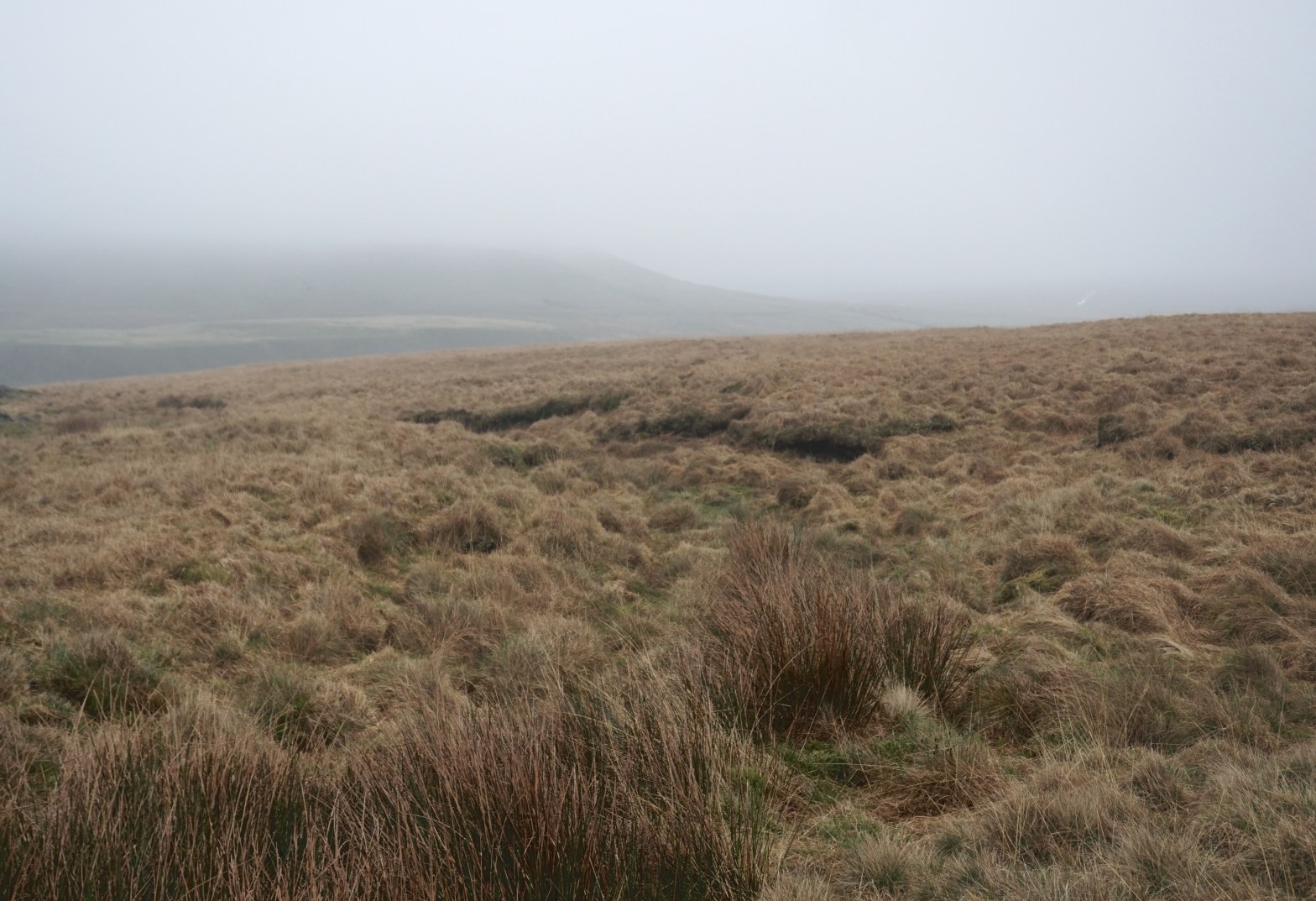
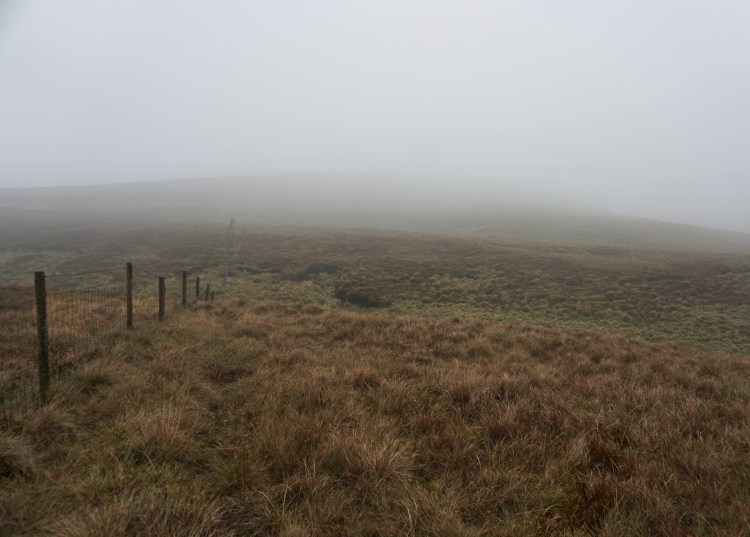
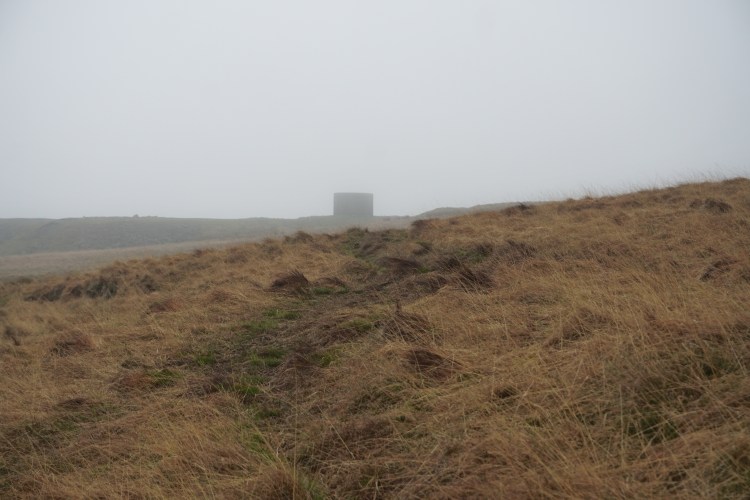
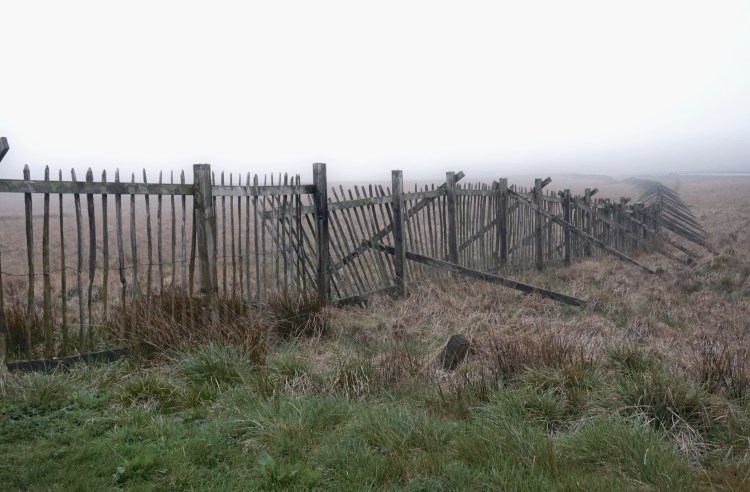
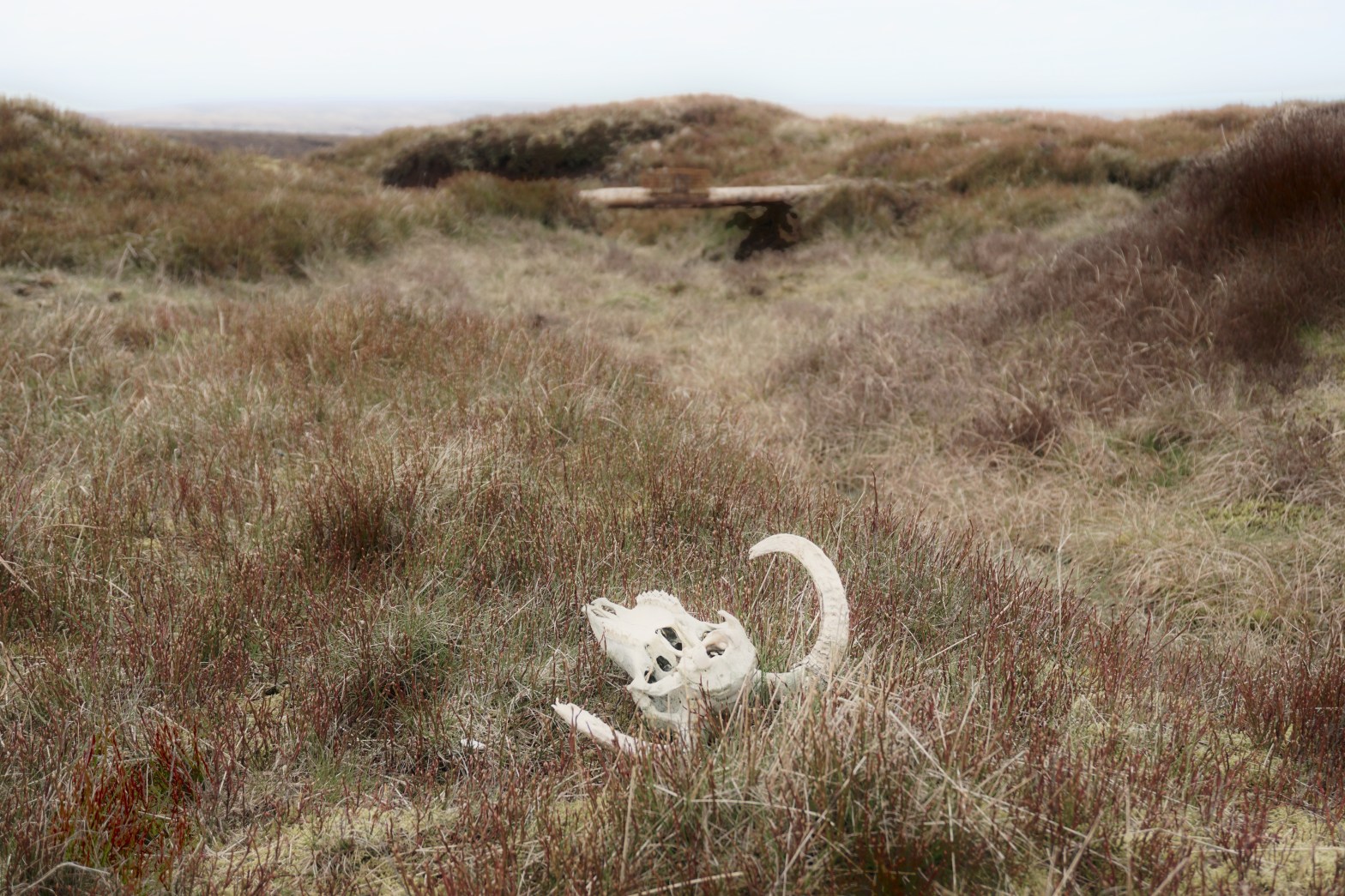
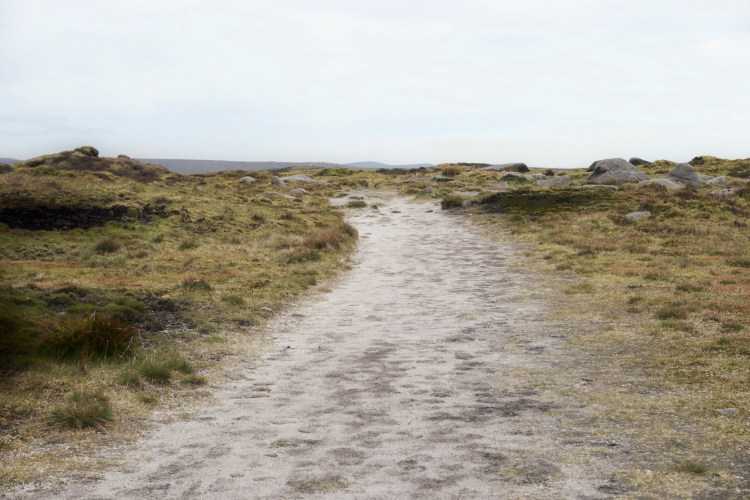
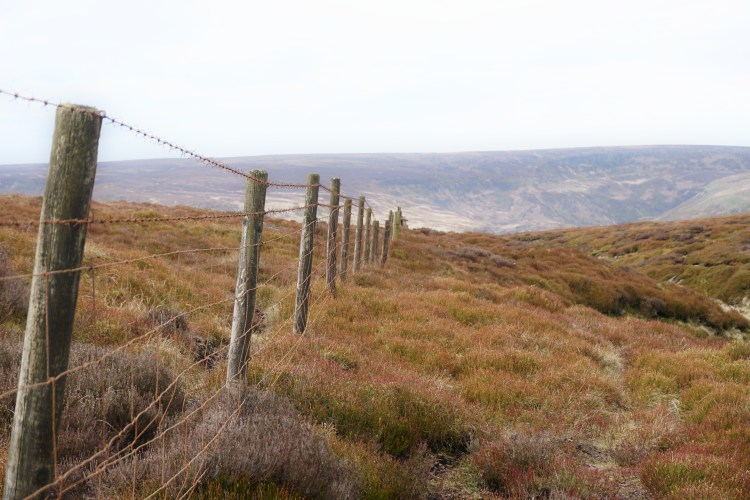
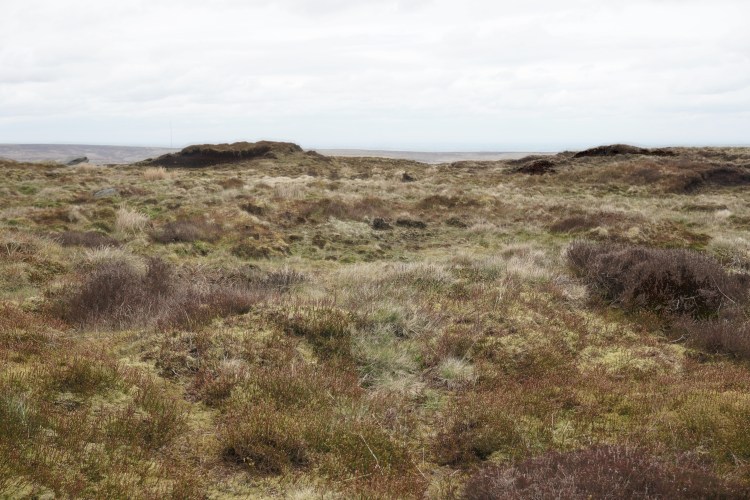
The lunar-like barrenness of ‘the tops’ allows for extracorporeal meditations, and the climb up here is the closest thing to an astral escape route I have ever had.
At the farthest remove visible on this horizon, and through this bridge, meet three historic counties. But if you stray a little too far you merely walk through the skewed mirror and head back into the same.
Without your body, the machine and its micro-instructions are nothing.
I came up here in my teens, in my early twenties, and in my late 30s, because I did not know how to be a body.
I did not know how to be present. Didn’t know how to manifest into a form that could occupy space in this kind of world.
I have searched urban areas in this wider region for a space in which I could be, and become, only to find exhaustion.
Now I realise that occupying the periphery is not escapism, but that it is currently the only place from which to interrogate the whole.
This isn’t a full stop…
Hope itself has now become extracorporeal in a way I never could have thought it, because I thought I could feel it.
It lay in the periphery. It cannot be located in the ‘down there’, where we consume hundreds of images of genocide in-between thousands of images of fancy.
When images of butchery become mere equivalents to images of ice cream, or images of porn, when our need for the next fix overpowers all commitment to moral obligations, it can be hard to believe that humanity, my humanity, counts for anything.
Hope begs for its return into the social body. It begs to fill the watershed, and the springs, and engulf ‘down there’ with ‘warm streams‘ that wash away the heavy headedness of having seen ‘too much’.
Do I believe this, in my heart of hearts? No.
But the willingness to want to believe what I know is worth believing as part of the fight-back is currently the most valuable thing I have.
This isn’t a stale serving of platitudes, to round off a blog. So, it doesn’t matter if all of this sounds crass and contrived – for it may not be written for you. It’s a new manifesto to myself.
A call to work on the exhausted mind’s conviction that it’s all been said before. In the sustained post-pandemic disillusion I misinterpreted the word impossible for what it only initially conveys.
It felt like a grave error believing this break-through was latent in the 2010s. But the biggest error of all would be to think nothing is possible ever again.
Like many kids who have been allowed the space to be interested in things, I had fleeting fixations. Having initially been WW2 obsessed, collecting and subsequently breaking Airfix models, I went on to be obsessed with snakes, fossils, and trees.
When I started secondary school in 1995 I came to the conclusion that the only way I could prevent being a daily target for bullies was to ‘fit in’.
‘Fitting in’, as I surmised, meant not really being ‘into’ anything…at all.
Even football, adidas or Eclipse clothing and boyband haircuts were bad if you were into it a little ‘too much’.
Somebody at secondary school found out that I could’t do my alphabet from A to Z in order, and for a month or so I was routinely bullied.
One memory I have is of naively trying to prove my knowledge in other fields, by naming the geological eras from PreCambrian right up to the Cretaceous (the ridicule that this provoked used to haunt me for years later).
However, After that, I would make sure that nobody would humiliate me ever again.
Yet, although this interest was crushed into the ground, it couldn’t be killed.
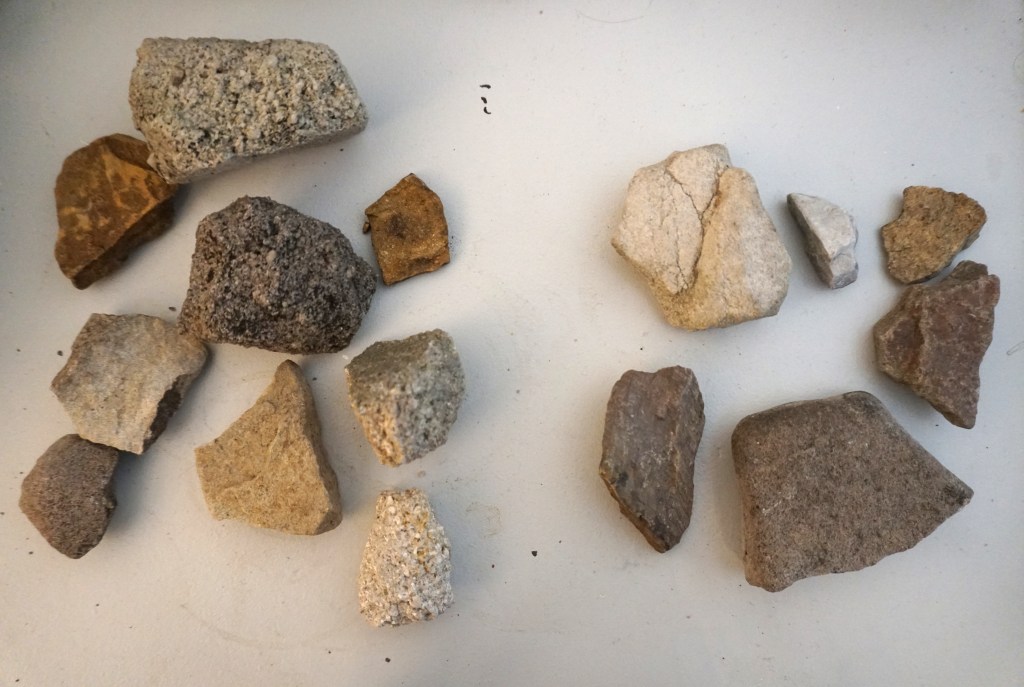
The image above show two sets of stones. On the left are stones collected on the Dark Peak, whilst on the right are stones from the Westmoreland North Pennines. All are from the Carboniferous era, with the exception of a few older rocks to be found from Igneous outcrops in the latter.
Of course, the area I am from wouldn’t exist, at least not as we know it, if it wasn’t for a certain carboniferous rock. Coal, formed from crushed vegetation, was crushed by the sandstone and grit rock that was originally silt and sand packed down, hundreds of feet deep, by an ancient giant river delta.
As a teenager I would hide map books of the local area under my bed when my school mates came around. These maps would often be full of imaginary roads, urban ‘add ons’ I’d attributed to my home town in order to ‘fix’ its disjointed former mining communities together and into a more recognisable urban whole.
I wish i’d had kept these map books. They were, in a sense, indicators of a future life as an artist.
The story of rocks to my life is yet to be realised, and maybe it should never.
All I know is that when I feel stressed in a town centre, if I stare at a wall, I see 300 million years of deep time that is so indifferent to the myriad of contemporary social pressures that it gives me glimmers of peace.
If everything up here is exposed, then this bleached landscape is the necessary negative of the urban spaces below where addiction has become the modus operandi; where every stone is upturned, leaving no secrets, no mystery, no object to desire, just short circuits to quick fixes.
…and it’s for good reason I come here, once optimism has become the junky incarnate
Trying to engage with ‘down there’ has become an overwhelming reminder of how one has made themselves incompatible with a humanity that has found its final expression in the Californian smile and Californian body.
The incompatible have been sentenced. We are the ghosts to an already-dead who don’t even realise it.
The info-sphere’s auto-corrective operating system has invaded our bioRhythms, and to try to fight it merely brings extra suffering, cursing you with an awareness that you’ve been post-humanned. Where the colour-tones of springtime no longer have any more resonance than a computer’s recognition.
‘Woke’ politics is the final expression of generations of political ideas that, bereft of a future, is also unaware of its own nihilism. The deranged, puss-filled fanaticism it provokes in opposition has sadly become not only the last refuge of the scoundrel, but the also final suicidal gesture of a human incompatibility to a machinic way of operating.
I have mined myself for art. But why, when art is now everywhere. Everywhere in a Nowhere.
It is gentrified and petrified into murals that point to White Roses, flat caps, Hendo’s Relish, and meaningless gestures to community that point to a ‘nowhereland’ where you are rewarded for expressions that say nothing.
Art has retreated from its position on the brink of the horizon from where it brought forth strange news of another of world. It now has nothing left to say other than “I am here!”. The assertion of the individual to ‘be themselves‘ is, and always will be, ‘the end of everything’.
Forgive me for purposely walking over metaphorical landmines – this is my longest depression.
Yet depressive space is a safe place, a haven from mandatory optimism, from where “fucked up” is the consequence.
As I’m yet to reach that infamous ‘rock bottom’, I scour for its components in this topsy-turvy landscape where the region’s oldest rocks are at the summit.
Bleaklow is the industrial North’s parent hill. Even more so than Kinder Scout. Up here you can see it all before you as if the entire upheaval of 18/19th century capitalism emerged from it. And in an abstract, geological sense, it did.
In this land of deep time, the addict sees how they have become cut-loose from the temporal textures as they secure our passage from life to death. It is admittedly a safe space for the liver and heart cry that “there’s not long left now…”.
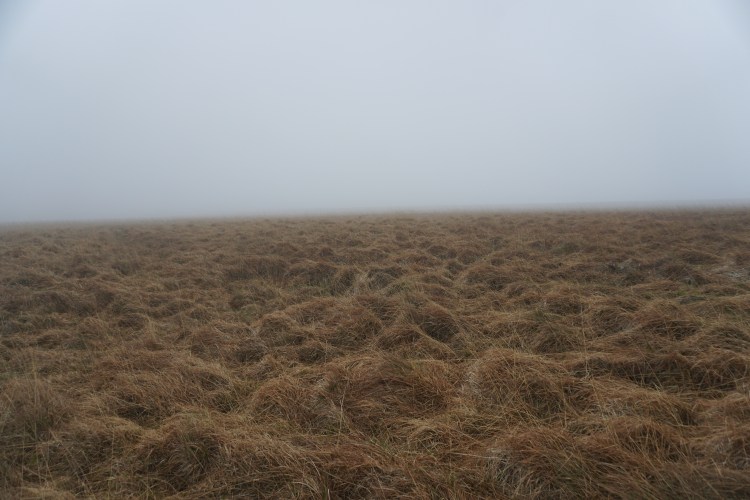
Desperation for something to clutch to, something that holds us to it amidst this senseless storm, can only be admitted when there is nothing in sight except a desert of bleached grass.
Down there, where ageing is failing, and where ones crumbling bones combine with the dust of meaning, we must keep smiling.
You, the unending squabblers, assessing my life – you are all now merely my ghosts. You’ve followed me up to where I had momentarily wished to become out of reach, on some ever-illusive summit.
Yet, the summit is illusive, swallowed inside a sheer horizontal mass that conceals both the beginning and end. There’s even a beach to confuse you. Sand that was once at the bottom of the sea, once again makes coast-like dunes as it breaks free from itself as timeless stone. And you start to think about your own renewal, becoming other than “this” – and starting again.
But it often feels too late. Immortality through different matter is a momentary pain-free thought exercise. Rock bottom and subsequent ego death is not a lifestyle choice, because it chooses you.
To speak with admiration of Blur still stokes fear of criticism, even to this day. I’ve read enough critiques of their class tourism in the 90s; the ease with which they simultaneously pantomimed the working class whilst being socialites in the Camden scene to make me feel like the only culture I’m allowed to talk about visibly has to have coal dust in its veins.
In 2024 we still exist through the colonial gaze of ‘the metropolis’, and well-meaning left-leaning intellectuals still often view the North and its people as exotic. But let’s not forget that the colonial gaze is easily absorbed by the object of the gaze, and I see enough evidence up and down that the object in question has begun to identify itself as it is exotically viewed by the metropolitan gaze.
This object is based on an image of the North that I believe is now also mere pantomime. Growing up in the 1990s , the ‘authentic’ footage of groups of burly young men (not through any fitness program enhancement) at Miners’ pickets in the 1980s looked as distant and exotic as it ever could have been. And that’s where I wanted it to stay.
I didn’t want to become my working class past. The past looked painful, conflictual, full of drudgery, hard faces and unhappy endings.
But to be honest, it didn’t matter anyway, as I didn’t look for what I didn’t want to see. I, in a bespoke playing out of Millennial expectation, became convinced that pain, the pain of working people, of intergenerational drudgery, of conflict, of all conflict, was coming to an end.
This was the 90s, and all I recall was this dominant sense of a dying world being superseded by a new one. And, at the time, it looked like a good thing!
And I genuinely looked up to bands who dressed like soft-faced middle class students, and soft-faced middle class students who dressed like bands, because I genuinely thought we would all be soft-faced middle class from now.
The future would softer, and kinder…
The grass wouldn’t be worn down by angry Sunday League football lads calling you a cunt when you couldn’t kick a ball as hard as ice, it wouldn’t be smeared with one dog shit per square metre, with the occasional syringe left on the top field. In fact, the grass would give way to a beach, and we’d be like Leonardo De Caprio, finding our beach – with All Saints’ Pure Shores playing in the background (although we know how that ended up).
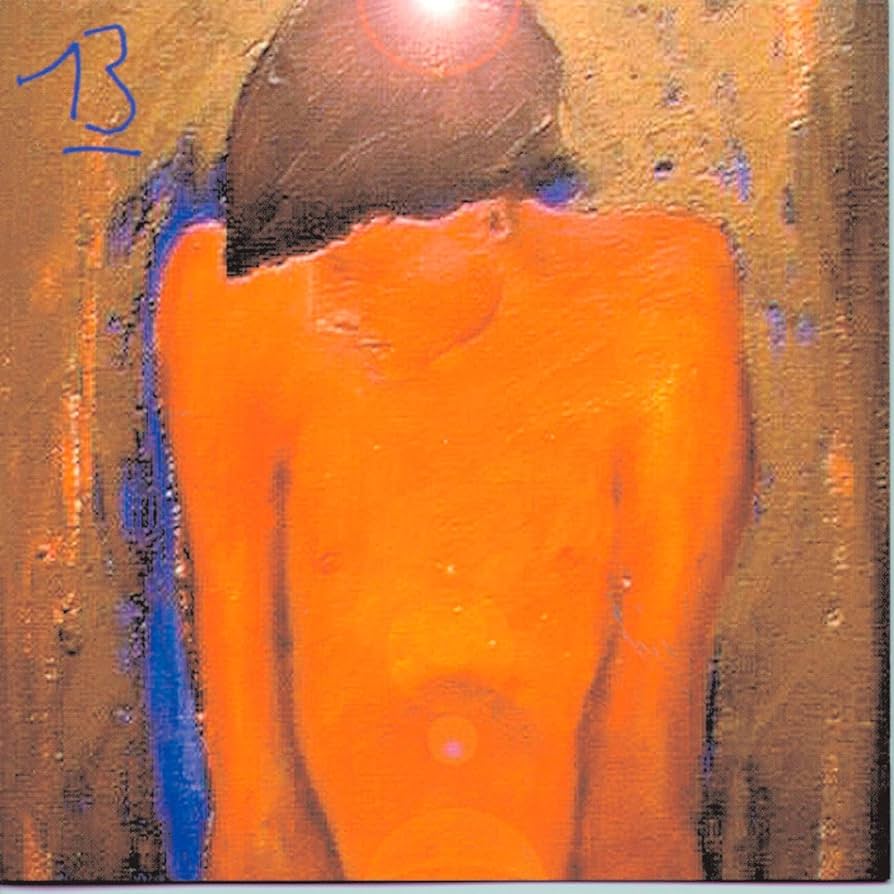
Why am I going into this? Well, when I heard Blur’s 13 25 years ago in the spring of 1999, this sense of a pain-free future on which I depended was unsettled.
I actually encountered it a month after encountering Radiohead’s Ok Computer, and in a way, they were a similar artistic statement, one I’ll try to return to.
In 1999 those months felt like epochs. I’d had my first major encounter with eating disorders and depression (although I didn’t know it at the time) and suddenly life felt long and tiring. I had felt that first mild gust of the void staring back at me.
Both 13 and Ok Computer gave me a taste of suffering without recourse to lullabies, without recourse to warm assurances. And I didn’t want to stay in their company for too long.
Luckily as Xmas 1999 arrived one of my cousins bought me the 10th anniversary edition of the Stone Roses debut album. ‘This is one she’s waiting for’ and ‘I am the Resurrection’: the album’s ending seemed designed to reassure emotionally repressed lads that all this strife would give way to a happy ending. I clung to this album like it was my millennial saviour.
25 years later, 25 years of living with some form of eating disorder and mental illness, I have inevitably kept returning to this 13, for understandable reasons.
In the process I have come to see it as Blur’s greatest record. It may not have been the groundbreaker of OK Computer, but in a way it chartered the territory that Radiohead couldn’t in the gap between their infamous Ok Computer (1997) and Kid A (2000) albums. 13 potentially took that object and went even deeper and darker than either of those records.
13 is conventionally known as Damon Albarn’s ‘breakup’ album – the creative aftermath of his celebrity relationship with Elastica front-woman Justina Frischman. But the idle reductionism of art must be one of liberal journalism’s worst crimes. Most artists find it frustrating to explain their works through a singular meaning. Art is a meeting point of many meanings that would not fit together if it wasn’t for the artwork – the more nodes that remain in the shadows, the better.
The record’s opener Tender, being a massive hit in an age of radio and TV, was absorbed by everyone, even those hostile to ‘indie’. And it brings back awkward but endearing memories of teenage drinking, the kind of drinking nobody really wanted to do but felt obliged to, and one of the ‘lad’s lads’ from up the road causing disturbances by yelling “come on, come on, love’s the greatest thing!” at the top of his voice.
It can’t have been just me who was unsettled to find out that the rest of the album takes a huge diversion away from such emotionally-supportive melodies.
There’s even a mute horror underlying the seemingly pedestrian second single Coffee and TV. In fact the pedestrian is purposeful; it reflects the suburbs, where life goes to quietly die, using anti-depressants as a levee against the pain of a meaningless life in a glorified waiting room for death. Perhaps it was Blur’s response to Ok Computer’s No Surprises?
Having grown older I now hear the sentiment of endurance in Tender. A determination to keep going, despite all, despite that which is around the corner. And with this, it underlies the reason I keep returning to the album. 13 set in motion a life lesson that I struggle to learn, even to this day.
Once in deep into the bleak of the album, I believe that the most important quality of 13 is the ‘in-between melodies’ which are almost between every primary song. Precisely because these small instrumentals are trapped between the primary songs, they become ghosts, in that they are stuck in one place, condemned to perform the same actions forever – in this case they forever haunt the recesses of the listener’s self-doubting mind. They threaten to trap you in the mental state you were in when you first encountered them.
These melodies remain undead; they can never be exercised, and surely it’s no coincidence that many of these instrumentals sound like they could be in the ballroom in Kubrick’s ‘The Shining’? Perhaps Blur accidentally stumbled into the ‘hauntological’ zone before the likes ofThe Caretaker did in the 2000s.
‘That’s just the way it is. Just the way it is. Just the way it is. That’s just the way it is.’
Hitting 40 has been difficult; the problems that developed roughly around the time I first encountered this album 25 years ago still dominate my life.
One thing that the better therapists have told me is that once you’ve had long term experiences with mental illness it will remain something you’ll be working out to the end of your life. Once you’ve encountered such a subjective state, you will never be quite the same. The struggle never ends.
What I have struggled to translate with my own experience is that this doesn’t equate to the situation being hopeless, far from it. And in this sense the challenge before me is to deal with my mental illness by accepting that suffering is intrinsic to all human life but that this shouldn’t be turned inwards as war against my ability to try to have quality of life.
The ‘quality of life’ part is the hardest part. And perhaps this is an existential crisis specific to a large proportion of Millennials who expected a better world than that of their parents, and found themselves encountering the slow dissolution of those certainties, alongside a persuasive sense that the future will be worse than the present.
I, in fear of returning to the textures of a life I was trying to escape from, potentially came to see myself as a tourist in my own habitat.
I thought it was my ‘duty’ to get out, to become that soft-faced middle class man, in his Berghaus jacket, in a leafy outer-city suburb, taking his children to art galleries on a weekend.
“I wasn’t really here, you see!”. I thought I was merely ‘passing through’, but unlike many people I’d encounter in typically more middle class working environments, I slowly came to realise what a real tourist looked like.
There were only so many times I could pick myself off the floor – one meltdown after another. The eating and thinking ghosts of 1999 kept returning, and found drinking, and after a while there was no more second chances. Not that kind of chance anyway – to be ‘like them’, the ‘them’ I felt I was expected to turn out like.
I’ve had to accept that I really am ‘nowt special, if that’, in a time where ‘capitalist realism’ has reasserted the believe that a life of drudgery and misery for the majority is an immovable certainty. And I admit I’m struggling to accept such a philosophy of life, even though it may be only option for the sake of better management of my mental health.
Which brings me to some complicated feelings about those ’90s bands who went to these difficult spaces and encouraged the listener to follow.
Blur were seen as class tourists in the mid 90s, when they collaborated with Phil Daniels to create a pantomime version of working class cockney life. But perhaps they, and Radiohead, remained tourists even when they explored depression, alienation and technology on the eve of the coming Millennium.
Like Jarvis Cocker’s Common People lyrics, which according to Owen Hatherley, he apparently once said were about Albarn as much as the infamous ‘Greek Student’ at St Martins, Blur and Radiohead could arguably always “stop it all, if it got too much“.
Perhaps 13 was Blur’s ‘lost week’, wandering around a landscape they could always eventually leave, to come back sorted and form a new band called Gorillaz (for example). Less fortunate artists, lacking the inner resources that are often formed in our upbringing, such as Cobain and Curtis, couldn’t “pass through the deserts and wastelands” and come back after.
This isn’t a criticism, if they were the tourists of a mental health pandemic that would be born out of the material and technological conditions of a world that just was about to arrive, they made masterpieces of it. And after all, weren’t we all invited to become tourists? With all the museums to working class life appearing in post-industrial areas in the 1990s didn’t we all assume we were all now tourists of a life that was no longer? As the Manic Street Preachers said, we’d all been told that this was the end.
That hard lesson is that it wasn’t. To make the most of what you do have, even as you repeatedly have to collect your own ageing bones off the floor, and put your increasingly diminished self back together again.
Perhaps after 25 years the song that hits me most, emotionally, is Trimm Trabb. Trimm Trabb comes towards the end of the album, rising quietly out of the swampy deadlands of Caramel to reach a crescendo of rage… and then silence. Again, this seems like 13‘s answer to another OK Computer song: Climbing up The Walls. Yet what brings me back to Trimm Trabb is a repeat of the weary-yet-comforting reassurance I had when I first heard it: that the storm is over now...
…Not suffering, not being human, but the traumatic experience. And this is the lesson that I am still trying to teach myself: life, as much as it may have once have been culturally ascertained, can never be pain free. Yet, however, illness and trauma can be overcomeand it is important to fight to remember this.


 John B Ledger