Spectres of Hitler

In the wake of the collapse of ‘really existing’ socialism, after the fall of the Berlin Wall, and then the greater Soviet Union between the late 80’s and early 90’s, a state of triumphalism emanated from the Western nations who had been locked in an ideological battle with the aforementioned for almost the best part of a century.

This became known as ‘the end of history’, as a jubilant and perhaps over enthusiastic statement by the philosopher Francis Fukuyama became a story that the whole world seemingly wanted to believe in. Indeed, there was a willingness (perhaps Millenarian in nature, as we fast approached the year 2000) to ‘wrap up history, for good‘, something Paulo Virno suggests in his book Deja Vu.

And, after the 20th century, who could blame us all for collectively willing for a 21st century where nothing ever happens again? Of course, a desire for a world where nothing ever happens again largely emanated from societies with at least enough privilege to be free of the necessity to keep fighting for a future. And this is why, ten years later, the 9/11 terror spectacle had such a world-shattering impact on peoples in Western countries.

However, the philosopher Jacques Derrida, perhaps realising what was at stake, wrote perhaps the most enduring rebuff of the idea that Communism, and Marx in particular, was now merely something for history books.

Beginning by referring to the opening line of Marx and Engels’ Communist Manifesto, that “A specter is haunting Europe — the specter of Communism.” Derrida explores the nature of a haunting, to argue that ghosts cannot be exercised until the situation that has conjured the haunting in question has itself been exercised – which in this case is capitalism itself.

Marx couldn’t simply be “defanged… [and] then become[] just a philosopher like any other”. Marx may be singular (the man, the philosopher) but Marx is also ‘plural’ – visible in every cry of injustice caused by, and unsolvable under capitalism.

Capitalism cannot exist without the spectres of Marx. And never before was this as obvious as in a moment when any tangible alternative to capitalism was being erased.


But there is one other spectre/figure that haunts our capitalist world. This spectre haunts our world in opposition to Marx, and is the only one with the calibre and capacity to stalk our society like that of Marx: Hitler.

Like the spectres of Marx, the spectres of Hitler will forever haunt a capitalist society, built, as it will always be, upon colonialist and supremacist foundations. And like Marx, the spectre of Hitler can only be exercised when the conditions created by capitalist relations are no more.

Both began to increasingly haunt us more perniciously after the 2008 financial crash. Yet I’m not parroting the lazy liberal statement of ‘two extremes’ that begin to mirror one another. Although the spectres of Hitler arise in the same spaces as the spectres of Marx, the spaces where one must ask “what is to be done?” (about the problems of poverty, alienation, war, exploitation, and now mental health and the global climate), what the worm-tongue of Hitler quietly whispers in ones ear couldn’t more different in nature.

This is because the spectres of Hitler deal with injustice as inconvenience. And this is just about endurable in a more stable time, as was the situation in most Liberal democracies both after WW2 and after 1990. But in a time like ours, defined by crises, the spectres of Hitler develop a pathology that I’d call ‘final solutionist’, named after…well, we all know what it’s named after.

Haven’t we all been feeling sick and impotent as we watch the bombs fall on Palestinians in real time over social media? I suspect it’s a collective agreement almost all of us share in silence. Yet alongside this I have also noticed that some of us have found any way possible to stand up for what Israel is doing. I believe, at heart, whether they are aware of it or not, it is a ‘final solutionist’ pathos, ‘the spectres of Hitler‘.

It is a desire ‘just get rid of the issue [aka the Palestinians] quicker’. And it’s the same attitude you see in mundane conversations over cups of tea in Wetherspoons pubs about migrants crossing the sea: “Don’t care how [even if they drown] just get rid of ’em;.

Yet it would unfair here to focus entirely on stereotypical ‘red-wall’ voters, who may sometimes say the quiet bits out loud.

It’s actually within our silence, the spaces where we don’t make some obscene utterance where the spectres of Hitler are most pervasive. The spectres of Hitler reflect off our sunglasses, as we sit so civilised and politely outside cafes and bars on our gentrified city streets. The spectres of Hitler stalk us as we escape for the weekend on cute country walks. Although it’s the spectres of Marx who call our names as we encounter the army the homeless who haunt our city streets, it’s the silence of Hitler that we find easier to accommodate as we proceed to ghost them. Because at some mute level, a level quiet enough so that we don’t believe it is spoken by ourselves, we wish they could all be erased.
This isn’t an appeal to morality, to make you feel immoral, to make you feel bad. The spectres of Hitler whisper in all our ears. We thought that history was over, we believed that the upheavals and horrors of the 20th century had no repercussions awaiting the next century.

We believed in the dream-work called ‘the end of history’, and even as it becomes increasingly untenable, as we are hit by crisis after crisis, as our personal crises start to overlap, as we struggle to keep up, the ‘end of history’ dream-work of a flattened world, where every contradiction is ironed out into another consumable equivalent seems a far easier story to live a life in accordance with. The push (by ourselves as much as the government) to get ‘back to normal’ during the pandemic was testament to this.

Yes, I am also this person; stressed, overwhelmed, listening to rainwater and coastal sounds on Youtube to try to find peace in a world in which there will be no more ruptures, even as they abound around me. But as I ‘de-stress’ I am haunted not by the spectres of Marx, but by the spectres of Hitler, who promise to ‘make it all go away’.

To maintain our ‘normal’, a flat world where nothing changes, it is the spectres of Hitler that have to perform the background work. Background work that has concrete consequences to the point, that in some abstract way it isn’t hard to see how the entire Israeli nation (for example) has been set up as a murderous meat puppet to prop up this existence in the greater Western world. And once the inconveniences become too loud to ignore, let’s remember that those ‘ugly’ people who wish to see the Israeli’s simply ‘get on with it’, are only saying the quiet part out loud.

But this is the point, existence is all that this situation enables. Life can exist nowhere in a world where active genocide is taking place before our eyes. To allow our world to be permeated by the spectres of Hitler is to maintain existence at the expense of life itself.

I am no heroic Marxist. I am you, perhaps more so. Existence is often all that we feel we can do, when we are burnout, stressed and lacking the ability to find it in ourselves to imagine life lived differently.

But I refuse to accept the given, even as I struggle to pick up a finger in active opposition. I maintain the right to exist in the faith that one day I will find that strength, and that one day I will feel the burning hope of an alternative within me once more. It must be there, somewhere.
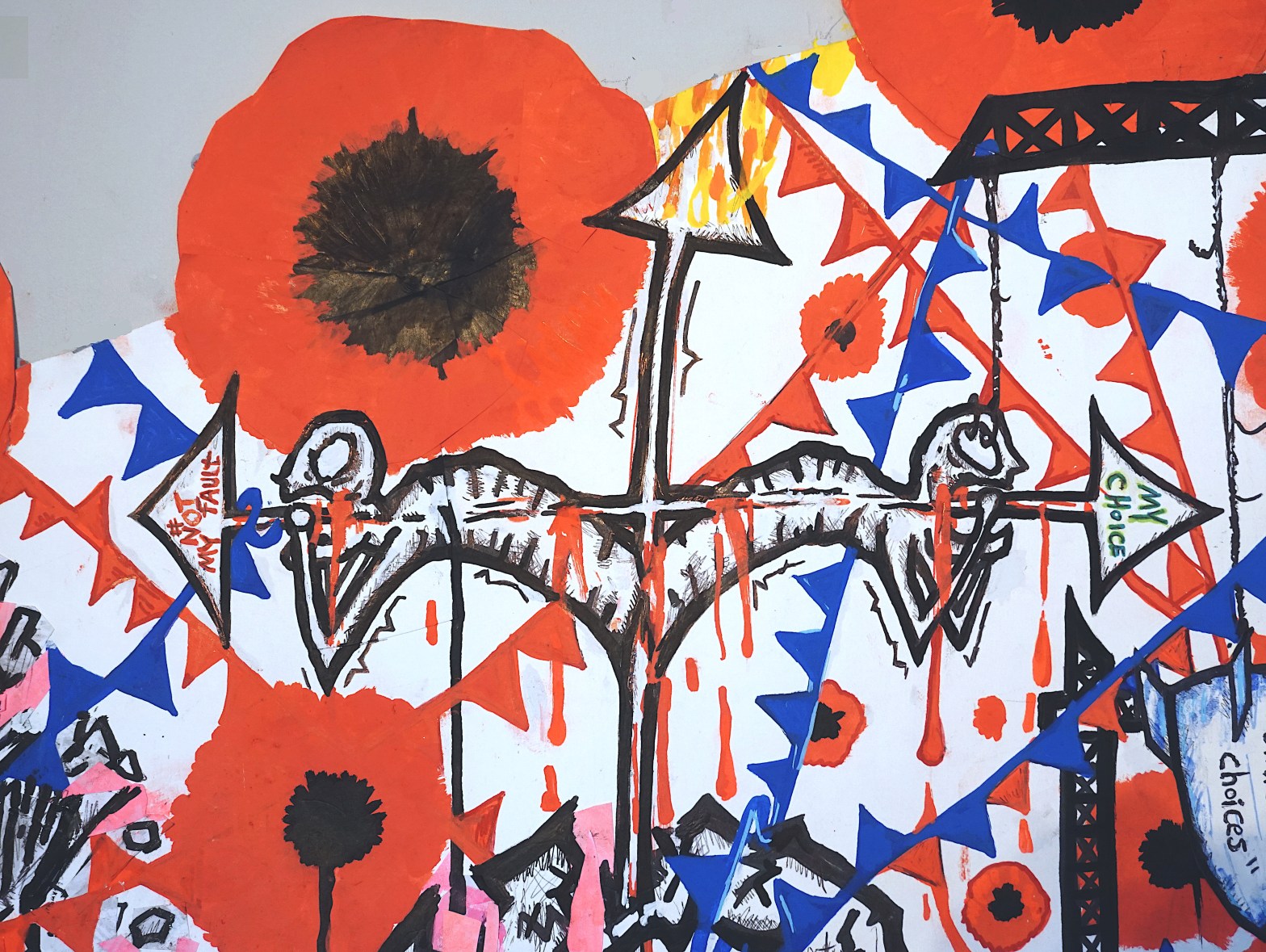
Do you remember life before the internet?

Yes, but I largely recall it in anticipation for the thing in question. The internet, prior to its full realisation, prior even to the MySpace generation, was seen as ‘stand in’ for the future writ-large. It stood in for all things better, and thus was a conduit for a better future, until it arrived.

I actually think some form of national service would be good. But it would be the opposite of this right wing wet dream

The reason I’m writing this isn’t an expected one..

Basically I’m pretty much at rock bottom. The life I have led for all my adult life has become increasingly untenable and intolerable, no matter how many times I’ve tried and tried afresh.

This life I’ve led has been flakey from the start, but the ideal at its core was to find a work/life balance that enabled me to be pursue my artistic talents.

Rewind 25 years, I couldn’t wait to escape lad culture; the groups, the sports teams. The general atmosphere that defined high school was one in which I felt small, often humiliated and misunderstood. My biggest fear was almost respiratory-based: I could never breathe in such an environment. The mere prospect of being in big groups, being barked at by a pedagogical bully was the stuff of nightmares. At least I would never have to go into such an environment ever again.

Fast forward to the present, and I’m increasingly dysfunctional. I feel increasingly isolated and unable to connect with people, increasingly reliant on alcohol and increasingly in despair about ever combating the persistent inner critics that mock my life.

All in all, the line my generation swallowed, that we could and should ‘be whatever we want to be’ and ‘live in whatever way we want to’ has left my mental cogs burnt out. The mental weight of having to constantly pick and choose based on individual satisfaction has left me burnt out – right now, in possibly one of the lowest ebbs I’ve experienced, I’m crying out for someone to tell me exactly what to do next.

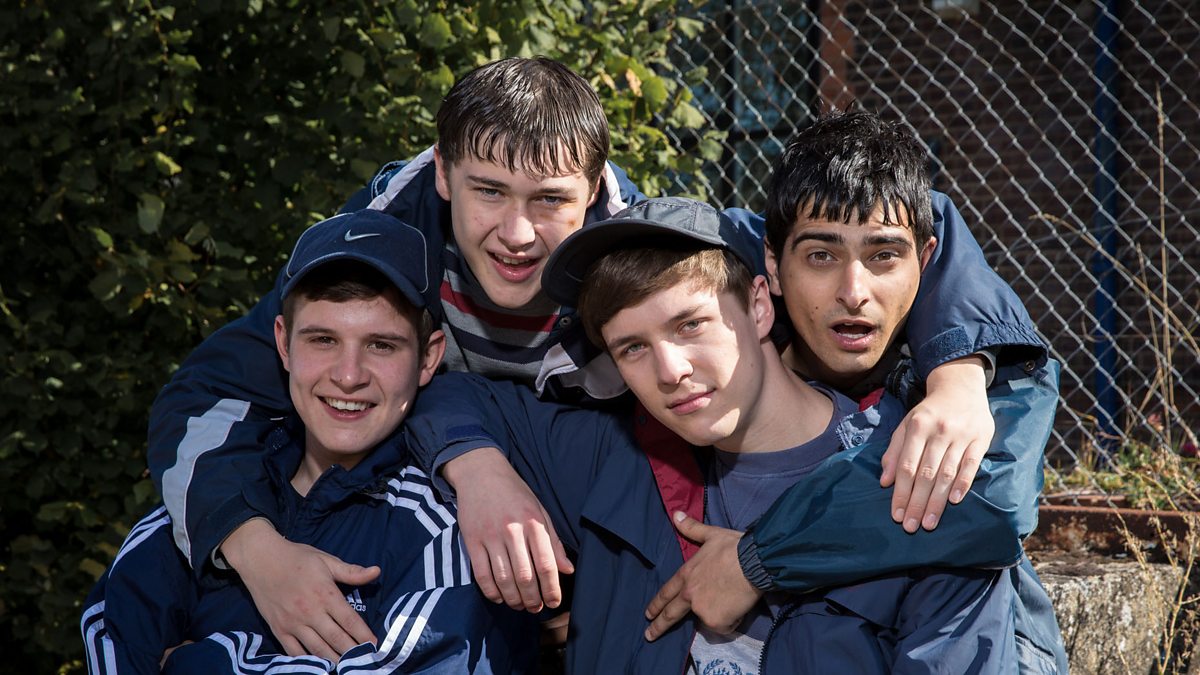
The image in this blog is from a BBC show called ‘Ladhood’. Based in Garforth, I really connected with how close elements of this show felt to growing up in the late 90s/early 2000s, 20 miles down the M1.

If only I’d had a better encounter with pedagogical structures as a young person, if only I’d been socialised and skilled up for this life with compassion and solidarity rather than by macho downward punching, I might have become a much more well-rounded person.

The thing is, when the Tories announced they would bring back national service this weekend, they had no good intentions in mind, it is purely a political strategy to create division in Labour’s electoral base, by putting young against old. We’ve seen it so many times before. The Tories know they’ve no chance of getting the vote from the people old enough to be made to do national service. They are trying to get older people to vote Tory out of resent for young people

However, true ‘progressives’ who want to see the back of the toxically individualistic neoliberal society, shouldn’t throw the baby out with the bath water. A variant of national service, albeit with less of the ‘national’ and definitely less of the ‘military’ to it, could be just what we need to both re-socialise society and in turn help with our catastrophic mental health crisis.

This isn’t to play into patriarchal ideas, but I could have done with experiencing both compassionate and life building male group friendships in my young life. In fact I think I would have been a far healthier and happier person now if I’d had that.

Look around at the community care organisations picking up the pieces at the moment (recovery organisations, Andy’s Mans Club etc), and you can begin to imagine how compassion and solidarity could be at the centre of another kind of national service.

It might be too late to rewire the damage for people like myself, but when thinking of the huge challenges we have ahead, especially with climate change,  or even how we treat the homeless in our city centres, a society of people who feel confident to step up, for compassion rather than any jingoistic cause, cannot be a bad thing.

No more apologies

No more apologies for any perceived erroneous move from a continual striving for respect.

This has been the longest spell of depression I have ever experienced. And I no longer know what I have left that is worth its weight going forward.

What has made it so sustained is that previously, and partly down to being younger, I always maintained some faith in tomorrow being the day when suddenly I would no longer be in a state of perpetual self-demonisation, and this thought itself would lessen the self-demonising, in the knowledge that ‘it’ wasn’t invincible to change.

But since then a perception of the self born from constant self-demonisation feels impossible to escape, because I no longer have the energy, or horizons through which to believe it will go away.

I am fast losing faith in a tomorrow.

I’ve always been in a state of emotional arrrested development. But, on rare occasions, I could at least get to the conversation part on dating apps; I could act in that boysterous (although now red flaggish territory) of impressing women by being loud and silly – all in all I could become alive, and non-ghost.

I used to feel a future.

My own experiences with mental health have always felt like they must look like a self-inflicted joke from the outside. I can’t help but feel like it’s perceived as being my own stupid fault.

After-all, I do have this conviction from childhood that I am the most stupid, wrong, person ever to exist.

I sometimes think people think on behalf of collective energies they do not understand, and sometimes people think other people dead. Seriously, we collectively unconsciously exhale people from life, because they are ill-fitting to any script and they jot out and need to be jotted out.

“They CHOOSE to be that way” , of course.

But there is no choice when your head is literally made up of ‘other peoples’ arguing about whether of not you are justified in your existence.

Sometimes I fantasise about doing something far more destructive than my old technique of smashing a smart phone against a wall. Now I have a car, I often imagine smashing my car against a wall. Because, sometimes prison, condemnation, the taking away of normal liberties, feels like the biggest liberty I could have.

I have been granted a highly disputable freedom, but let’s just call it freedom for now. But I am not me. There is no me. The only me, is ‘fuck you’ and ‘fuck off’ to the overbearing ‘them’ in my head. And how this has grown so tiring in middle age.

I’m not really bothered that my writing will never be venerated, and at best will be noticed for its inability to leave the self. The reason I cannot escape myself is because I am not able to have a self. And I cannot see my life as a ‘creative practitioner’ overcoming this.

The war against yourself

“Other people do it. Other people manage, Other people can, Other people can’t!!”

My biggest dream is to go somewhere where nobody knows my name, where I have no friends, no memories, no hooks back into the person I am.

What this means is my biggest dream is to be able to escape my own life; everything that reminds me of me, makes me think of me, see me, and remember me.

it all leads to inner warfare.

The thing is, I don’t really have an identity. I am composed of ‘other people’ things, what the ever-changing ‘they’ say I ‘could’, ‘should’, ‘am’ and. ‘aren’t’.

My identity is a battleground of ideas about who I am, and I am fucking mentally exhausted.

The world isn’t an idle summer forest through which we can take our time, and listen to the earth, we are instead, locked inside a maddening house, as capitalism insanely turns inwards, onto us, attacking us, through weaponised information.

Nobody has the time to do what they need to do, because fear is always dragging them back into their defensive positions. And nobody grows in a defensive position.

Lots of people (“”Other people do it. Other people manage, Other people can, Other people can’t, nananananananaa) do it. But my head is now merely a engine that can still growl as the wheels turn in the mud of all that I’ve achieved.

No empathy is afforded to those who try to connect their own struggles with a madness bigger than themselves.

A friend said that how I describe this sounds like schizophrenia. But I know it’s not.

I don’t hear voices, it’s more that I am constantly in 3rd person. My head is interpretations of myself that critique my every move. It’s ruining my life, to be honest.

Share a story about someone who had a positive impact on your life.

Garry Sykes. Who passed away earlier this year.

He taught me on my Bachelors degree in art at Barnsley College.

Although it was a Bachelors degree, this wasn’t a university education. Barnsley is a post-industrial town, and certainly not a university town. I didn’t go to university in that respect.

However, what we had at Barnsley was special, and this was largely down to a people like Garry.

Whilst we lacked high-flying lecturers, and had to always have one foot grounded in day to day reality (with there being no university culture to immerse oneself into), we had teachers who were always there for us, who spent time trying to nurture both us and the future of people in the town they were also from.

Garry’s positive impact was special because it was collectively owned by a large sporadic group of people who were taught by him, and this made it have a stronger impact individually.

This collective impact was captured this month, when many of us attended his funeral to show our respects. His wife Linda died a month later – so they had a joint funeral. As tragic as they this may seem, there is also a romantic beauty there for two people who were with it each other since being kids.

Garry taught me to have the courage to keep going as an artist. He taught me that if one had the urge to create, they would create whatever their situation, and this urge wasn’t like a force of nature, it was a force of nature.

What a great bloke, with a a great mind, and great vision for his town, that will surely carry on.

Self-hate

I can’t explain how much self-hate I experience towards myself on a daily basis, without wanting to punch you, kill you, expose myself to you – anything to prove what a piece of worthless wank I am, so as to justify my non-existence.

It’s been a driver in my mental make-up for most my adult life, but it has become gradually worse since I hit my late 30s, early 40s.

It’s an hard world, we all know that. But self-hate doesn’t make you want to stand up to injustice, it merely makes you think that you deserve no sympathy for whatever you are experiencing: after all, people in other countries are being slaughtered en mass – why does somebody with a safe roof over their head deserve the privilege of life?

Self-hate, on a minor, micro-level, has ensured that I spend most of my time by myself. Initially time spent trying to ‘better myself’ in order not to be self-hating, so I could become part of something, has become a life of literal loneliness. And only people who like themselves can truly embrace loneliness.

Maybe there’s a case of arrested development. I have never felt intimacy, love, or an embrace of an other to the point that I have learned can change that person, and take them out of their own head. But, again, that’s just another reason to blame, shame, and despise one’s ‘wrongness’ in knowing how to live.

I know there’s people who read this who know me who tell me I disclose too much information about myself. “You shouldn’t be so honest they say”. Crawl back into your nicey nice profile projection.

All I say back is I won’t stop – I don’t owe you anything. This may be a big joke, that you are all secretly laughing at and criticising me for. But that’s how I feel anyway, so what’s the difference?

A Uk bank holiday in 2024

HEAD HELD DOWN

Negativity isn’t a perception of a world outside, it’s a projection of that world inside: how you feel about yourself, as you continually manoeuvre the inner furniture, trying to feel at home.

This reminder gives you rest-bite from the habit of being hard on yourself. But it splutters and withers as you see the next status car in your rear mirror. A predatory form almost designed to interrogate the souls of those not ‘up to scratch’.

“Just ignore it!” – but it’s no use.

You catch somebody’s eye as you drive past a micro pub; he’s younger than you, and successfully pulls off the veneer of a competency that the game applauds.

You drive on, breathing a sigh of relief as you park the car in a liminal lay-by.

But this space is another compromised space. A sports car creeps slowly past, then reverses and pulls in front. The pink top of a man’s bald head is enough to make you realise what this space is used for. You quickly move on.

All escapes routes are tracked by the dopamine circuit.

Those wretched feelings. The war upon yourself that goes from cold to hot. You realise there is no space – at least not the kind you so desperately need.

Driving around for ages, you feel like some human bonsai tree, trapped in a teenage cage. You hear mocking tones in your head, and its a relief to let it hang low as you accept defeat to the fight pitched by this bank holiday evening.

BACK TO NORMALISM

The train, the bus, the roadside path; all those roads that led to a relationship with the city have become nauseating over the past few years.

Have I changed or has the city changed around me?

Strong perfume and the Peaky Blinderised hyper-smart-casual. Necks craning, with eyes to be avoided.

“I’m trying to read a book, mate, please leave me be“. …please.

Overcrowded weekend trains seem almost designed to turn Back to Normalism Britain into the kind of yoke it more or less is. Infantilisation and senility meet one another, as we all melt into one pink, gooey, shape. Nobody gets out clean.

‘Binge drink Britain’ was, at best, meant to be a momentary exercise in self-obliteration until a better tomorrow came along.

The ‘better’ tomorrow became the financial crash.

The city oozes and leaks a gaseous blandalism, an odourless intoxication, which leaves you dehydrated and gasping for air.

Hobbies. Everything must become an hobby! An attribute to our profiles. Hobbyists abound as much as addicts, nowhere is free from one or them. Which one are you?

Back to Normalism Britain looks weirdly familiar, but it’s an overpriced remake of life before ‘the event’ – the crash, the austerity policies, the pandemic, whatever. Stage sets for the infinite uploads to Instagram; look too close and it becomes grotesque, a mimicry of yesterday’s desires grown out of the undead yoke it left behind.

Since ‘Back to Normalism’, my mental and physical health has been continuously running on empty. Bereft of redemptive plans and, most of all, an horizon.

Too tired to be what I used to have to be, you will now find me on the peripheries.

THE AGE OF MICRO-INSTRUCTION

Who remembers the relief of April 2020?

Amidst the primal fears and sacrifices, ‘micro-instructions’ – essential for up-keeping neoliberal relativity – momentarily ebbed away.

Like a tide that had been high for generations, suddenly a hidden landscape became visible. Just as you found yourself momentarily admiring the geometric beauty of empty motorways, previously invisible infrastructure for the daily anxiety-grind, those self-worth anxieties also temporarily loosened their grip on reality.

Neoliberalism could never have succeeded without a contemporary information age. In fact, neoliberalism only really got going once it died: the disorder of the financial crash and the subsequent rise of social media was the perfect climate for its undead triumph.

Micro-instructions are the body-snatchers for this neoliberal culture. Once abundant in the information we consume, they are absorbed so as to emerge from within us as if they were our own volitions. Micro-instructions work to autocorrect our biorhythms to the standard of entrepreneurial selfhood.

This really got going once social media had the omnipotency to allow us to enforce it within our social circles, to the point that our mental and physical health became attributes frogmarched to the same dance as financial success.

But in March 2020 it was weirdly liberating to have to “do as we were told”. Micro-instructions suddenly felt silly. In this momentary blip, as the government begrudgingly moved away from the neoliberal script, it felt like we were part of a society.

It wasn’t the end of Zombie neoliberalism: its facilitating of wealth from the poor to the rich became more frenzied – state-facilitated robbery was rampant. But enough of us experienced a reprieve from the self-hate, the anxieties – all emotions that make us less able to stand up for ourselves – that the micro-instructions produce.

Perhaps it was an hallucination? I had staked my future mental well-being, my quality of life, on the conviction that seismic social change had to be the outcome to be born out the conditions of the 2010s.

I thought it had happened.

But it didn’t happen…

THE PERIPHERY THROUGH WHICH THE WHOLE IS SEEN

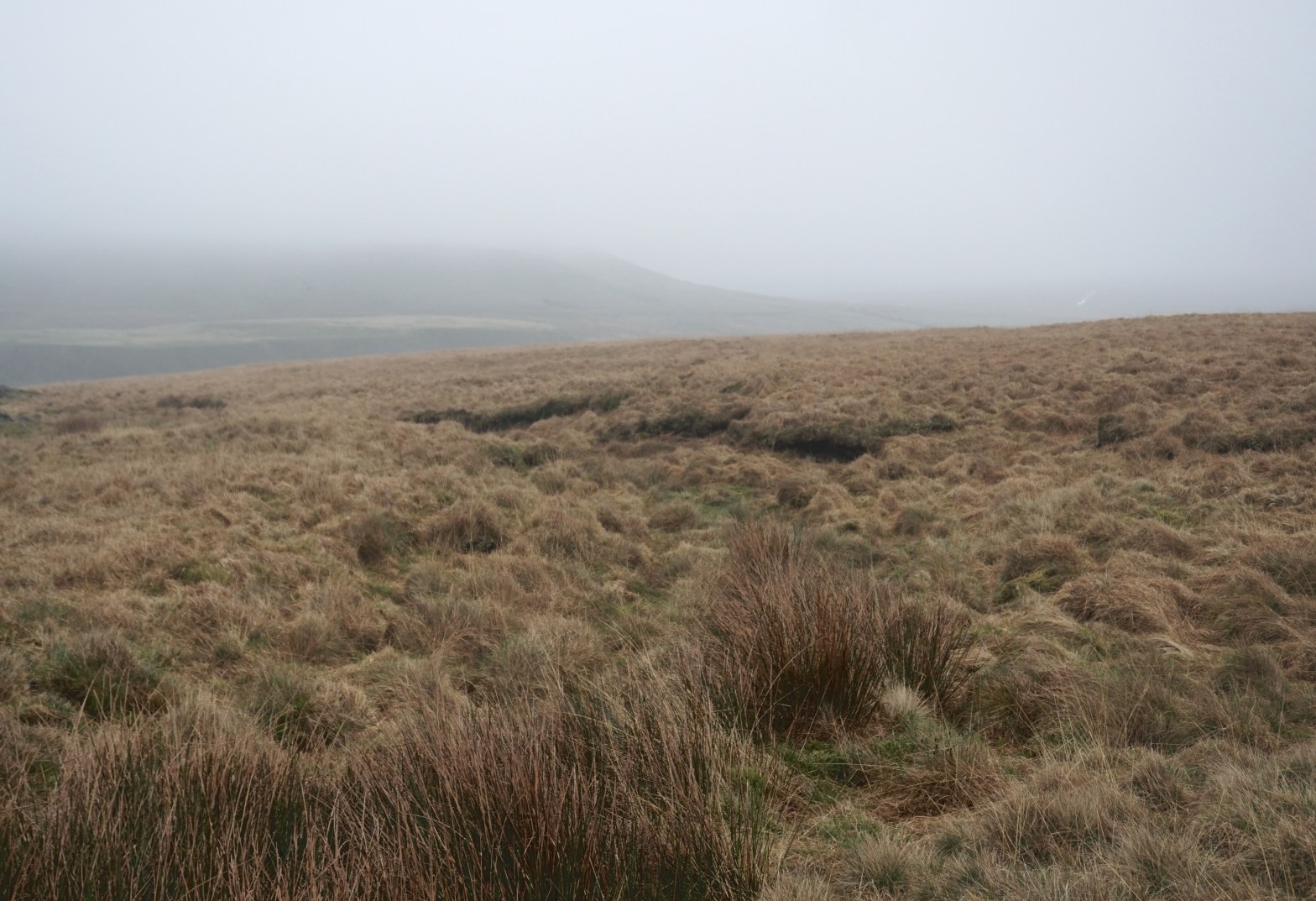
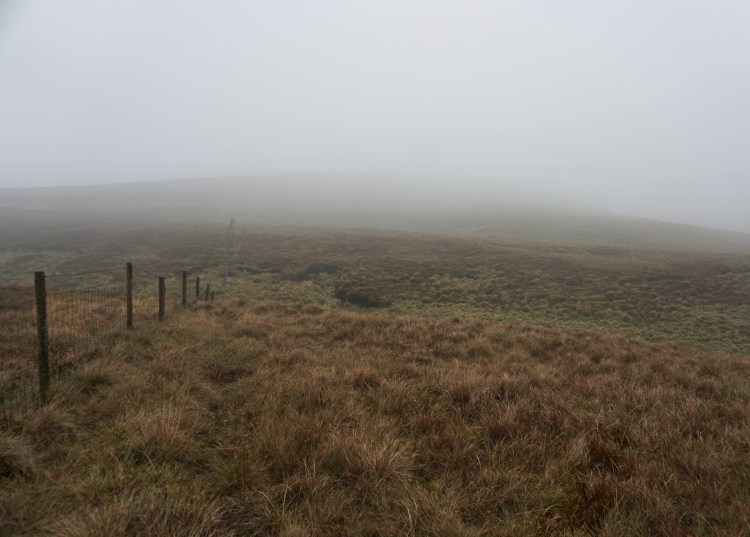
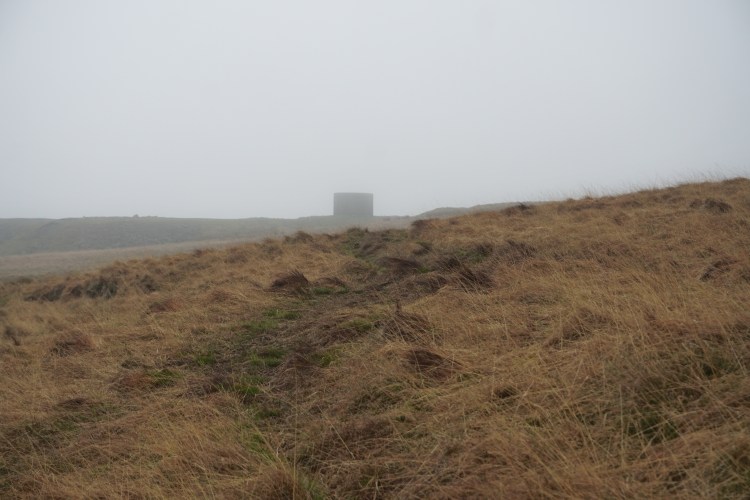
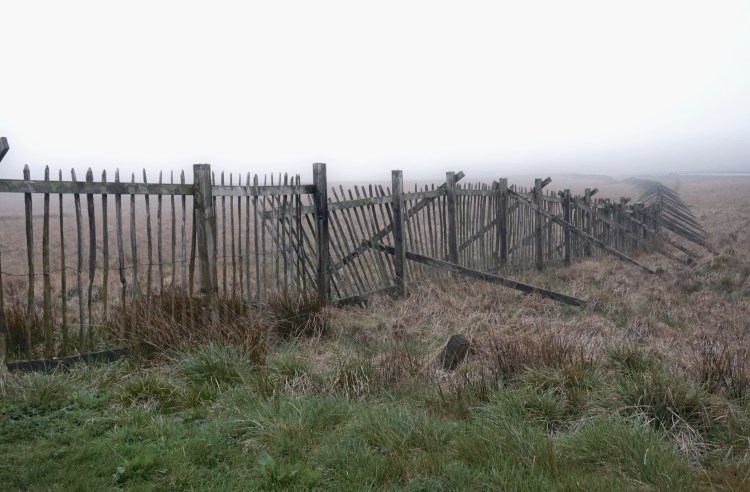
The lunar-like barrenness of ‘the tops’ allows for extracorporeal meditations, and the climb up here is the closest thing to an astral escape route I have ever had.

At the farthest remove visible on this horizon, and through this bridge, meet three historic counties. But if you stray a little too far you merely walk through the skewed mirror and head back into the same.

Without your body, the machine and its micro-instructions are nothing.

I came up here in my teens, in my early twenties, and in my late 30s, because I did not know how to be a body.

I did not know how to be present. Didn’t know how to manifest into a form that could occupy space in this kind of world.

I have searched urban areas in this wider region for a space in which I could be, and become, only to find exhaustion.

Now I realise that occupying the periphery is not escapism, but that it is currently the only place from which to interrogate the whole.

This isn’t a full stop…

Hope itself has now become extracorporeal in a way I never could have thought it, because I thought I could feel it.

It lay in the periphery. It cannot be located in the ‘down there’, where we consume hundreds of images of genocide in-between thousands of images of fancy.

When images of butchery become mere equivalents to images of ice cream, or images of porn, when our need for the next fix overpowers all commitment to moral obligations, it can be hard to believe that humanity, my humanity, counts for anything.

Hope begs for its return into the social body. It begs to fill the watershed, and the springs, and engulf ‘down there’ with ‘warm streams‘ that wash away the heavy headedness of having seen ‘too much’.

Do I believe this, in my heart of hearts? No.

But the willingness to want to believe what I know is worth believing as part of the fight-back is currently the most valuable thing I have.

This isn’t a stale serving of platitudes, to round off a blog. So, it doesn’t matter if all of this sounds crass and contrived – for it may not be written for you. It’s a new manifesto to myself.

A call to work on the exhausted mind’s conviction that it’s all been said before. In the sustained post-pandemic disillusion I misinterpreted the word impossible for what it only initially conveys.

It felt like a grave error believing this break-through was latent in the 2010s. But the biggest error of all would be to think nothing is possible ever again.

My secret love of rocks

Like many kids who have been allowed the space to be interested in things, I had fleeting fixations. Having initially been WW2 obsessed, collecting and subsequently breaking Airfix models, I went on to be obsessed with snakes, fossils, and trees.

When I started secondary school in 1995 I came to the conclusion that the only way I could prevent being a daily target for bullies was to ‘fit in’.

‘Fitting in’, as I surmised, meant not really being ‘into’ anything…at all.

Even football, adidas or Eclipse clothing and boyband haircuts were bad if you were into it a little ‘too much’.

Somebody at secondary school found out that I could’t do my alphabet from A to Z in order, and for a month or so I was routinely bullied.

One memory I have is of naively trying to prove my knowledge in other fields, by naming the geological eras from PreCambrian right up to the Cretaceous (the ridicule that this provoked used to haunt me for years later).

However, After that, I would make sure that nobody would humiliate me ever again.

Yet, although this interest was crushed into the ground, it couldn’t be killed.

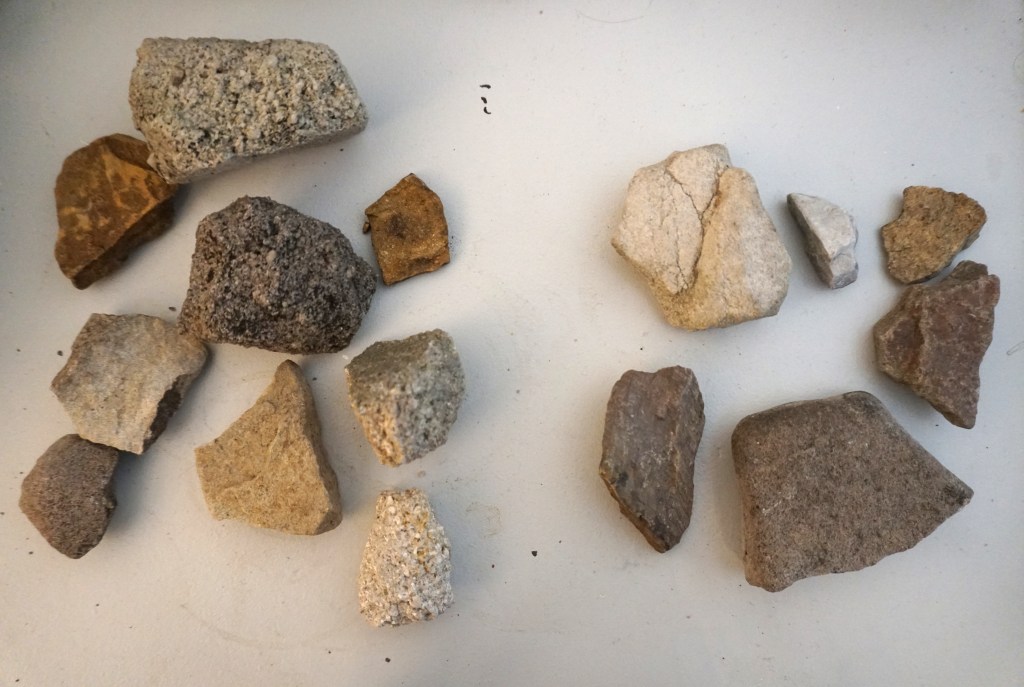
The image above show two sets of stones. On the left are stones collected on the Dark Peak, whilst on the right are stones from the Westmoreland North Pennines. All are from the Carboniferous era, with the exception of a few older rocks to be found from Igneous outcrops in the latter.

Of course, the area I am from wouldn’t exist, at least not as we know it, if it wasn’t for a certain carboniferous rock. Coal, formed from crushed vegetation, was crushed by the sandstone and grit rock that was originally silt and sand packed down, hundreds of feet deep, by an ancient giant river delta.

As a teenager I would hide map books of the local area under my bed when my school mates came around. These maps would often be full of imaginary roads, urban ‘add ons’ I’d attributed to my home town in order to ‘fix’ its disjointed former mining communities together and into a more recognisable urban whole.

I wish i’d had kept these map books. They were, in a sense, indicators of a future life as an artist.

The story of rocks to my life is yet to be realised, and maybe it should never.

All I know is that when I feel stressed in a town centre, if I stare at a wall, I see 300 million years of deep time that is so indifferent to the myriad of contemporary social pressures that it gives me glimmers of peace.