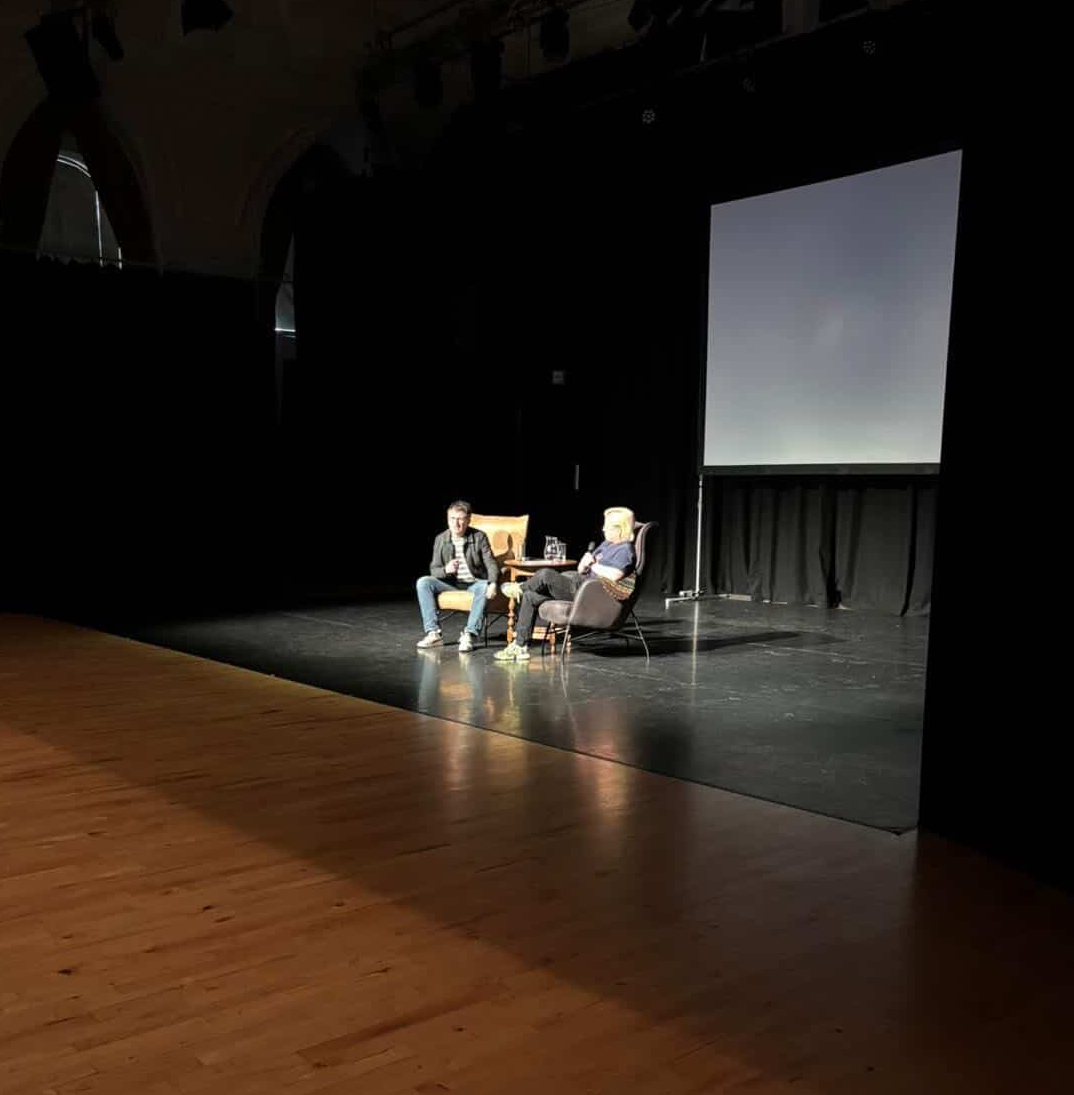
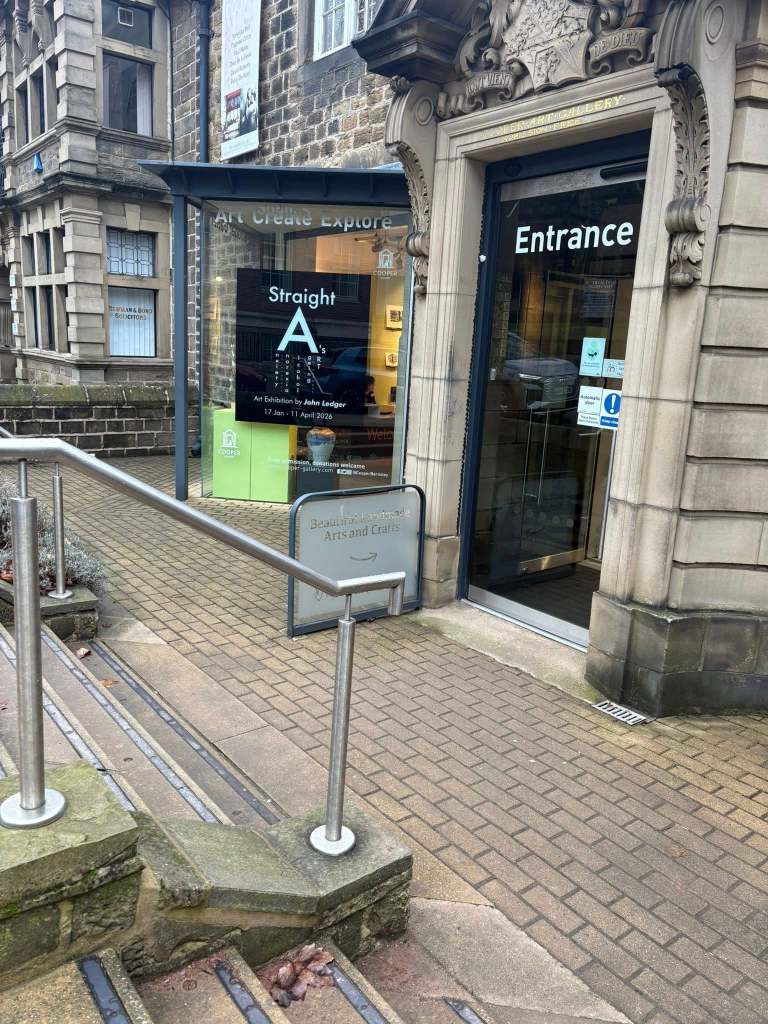
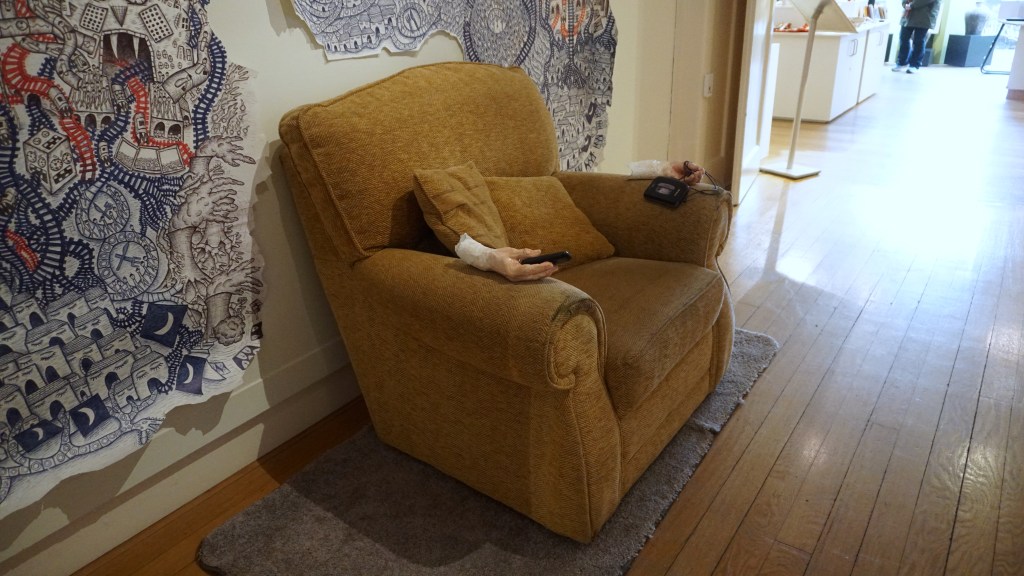
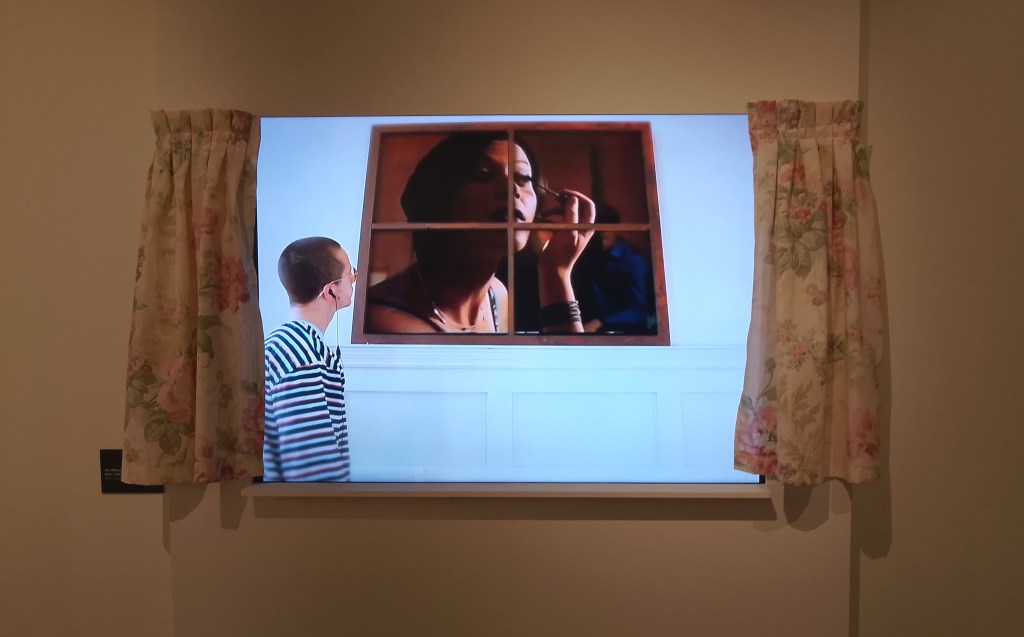
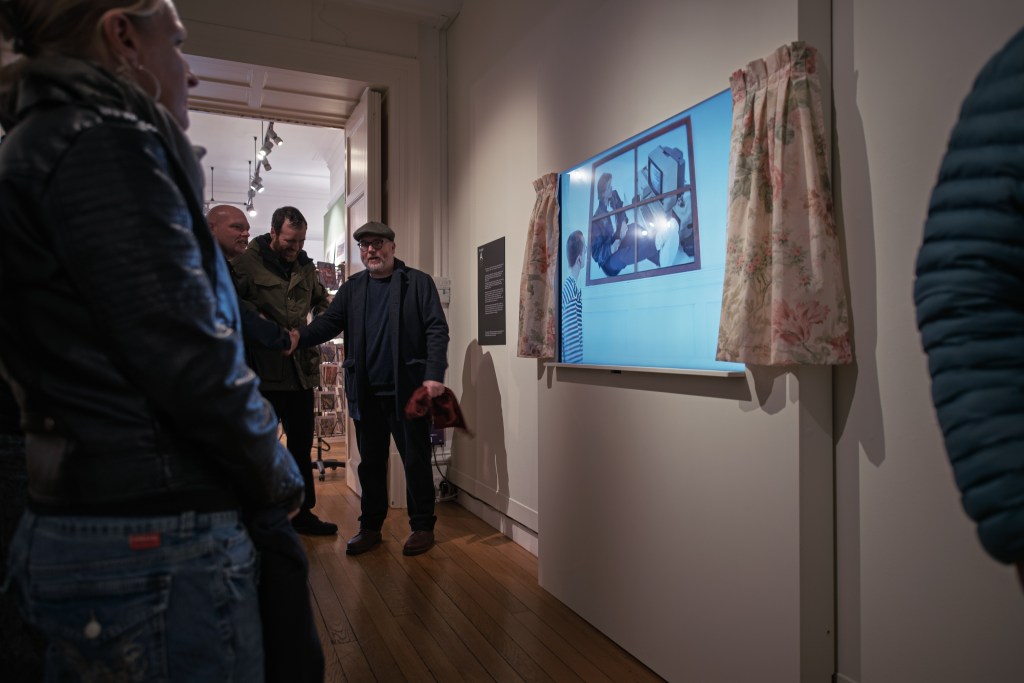
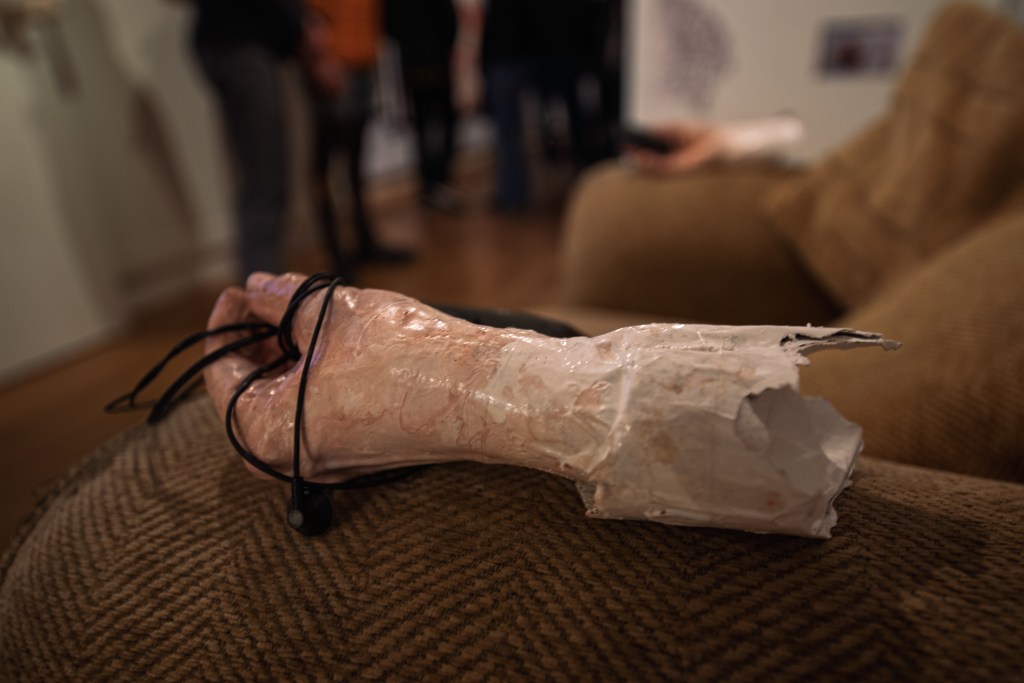
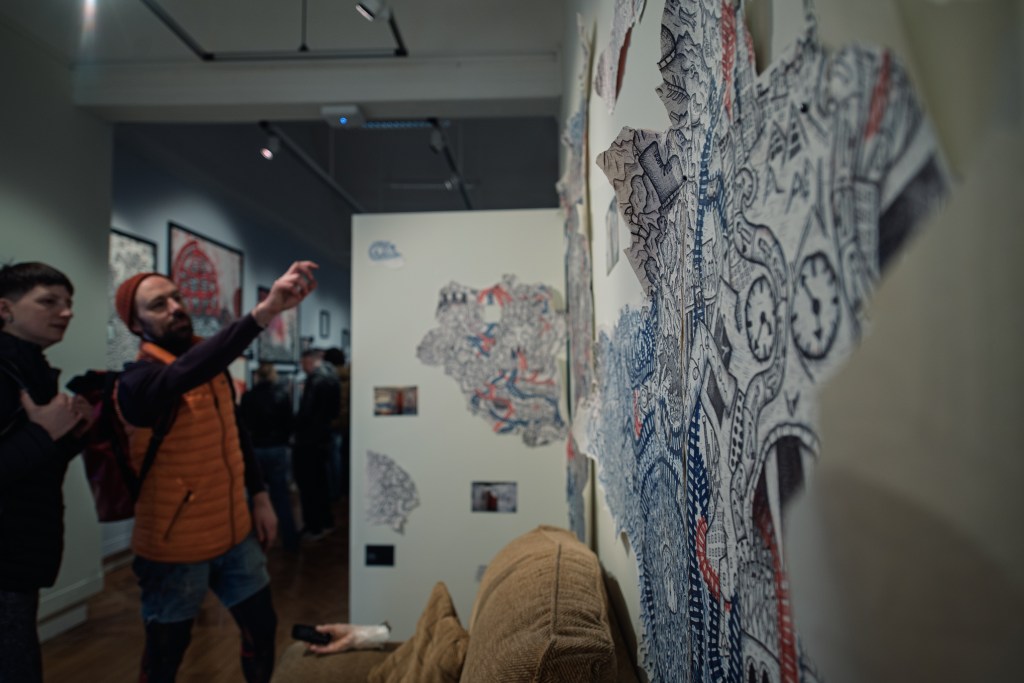
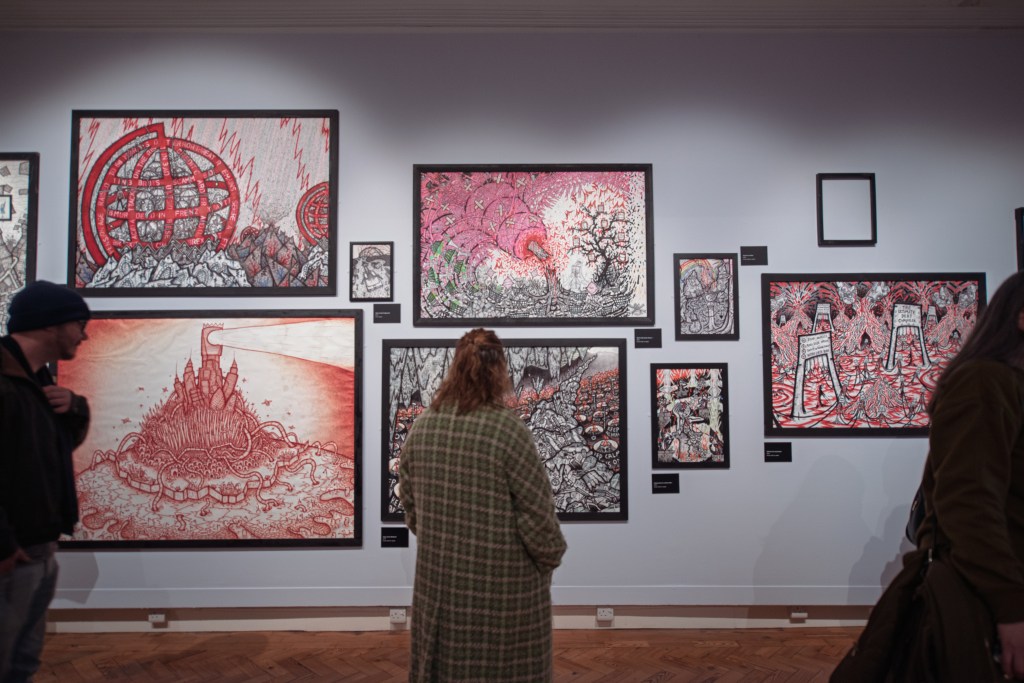
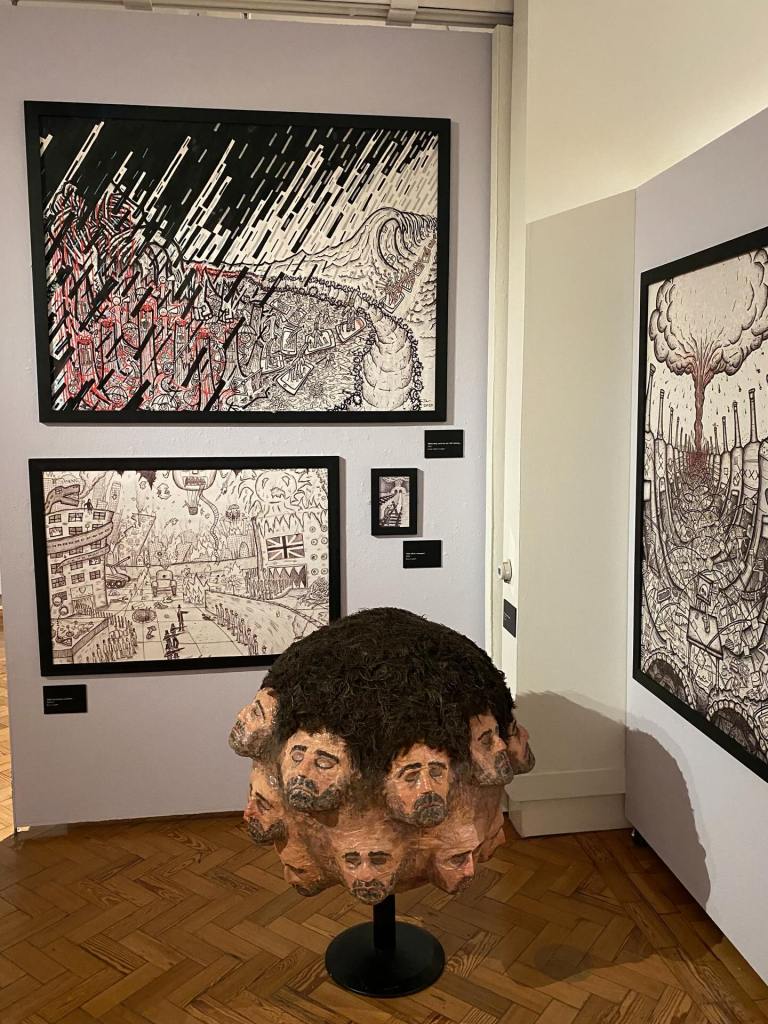
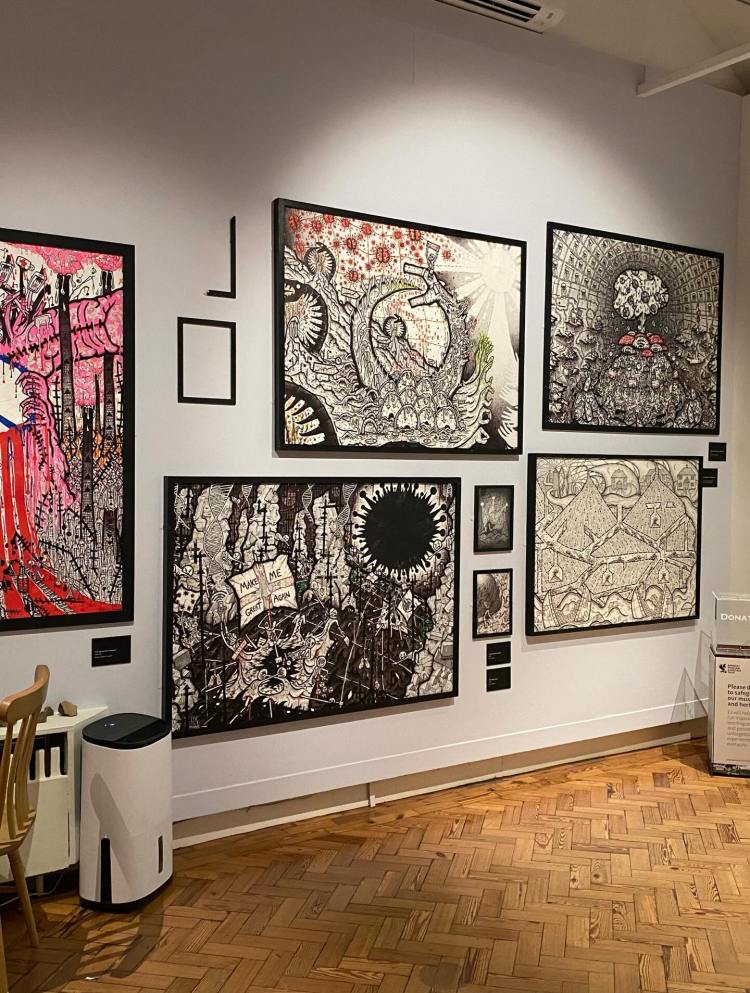
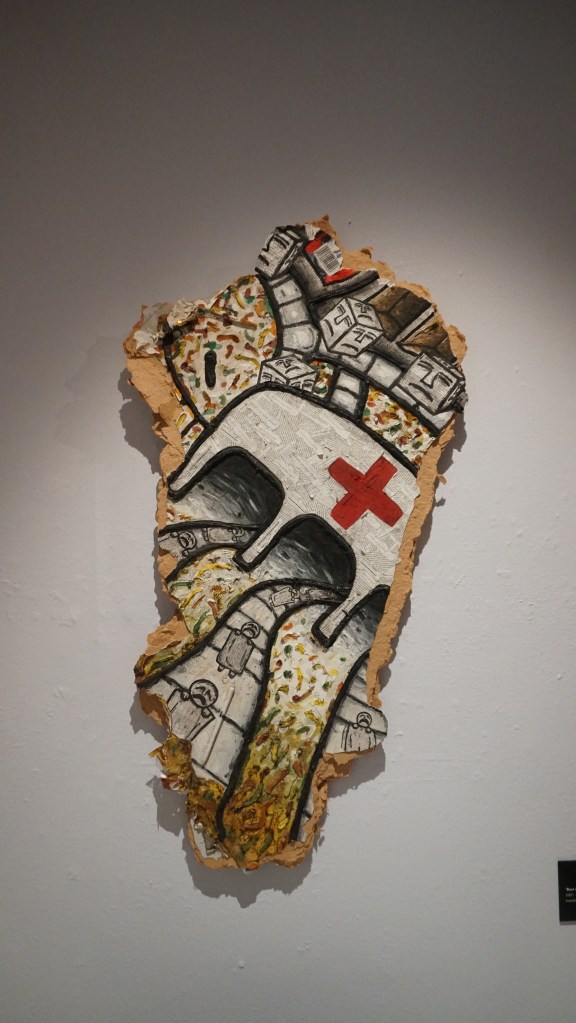
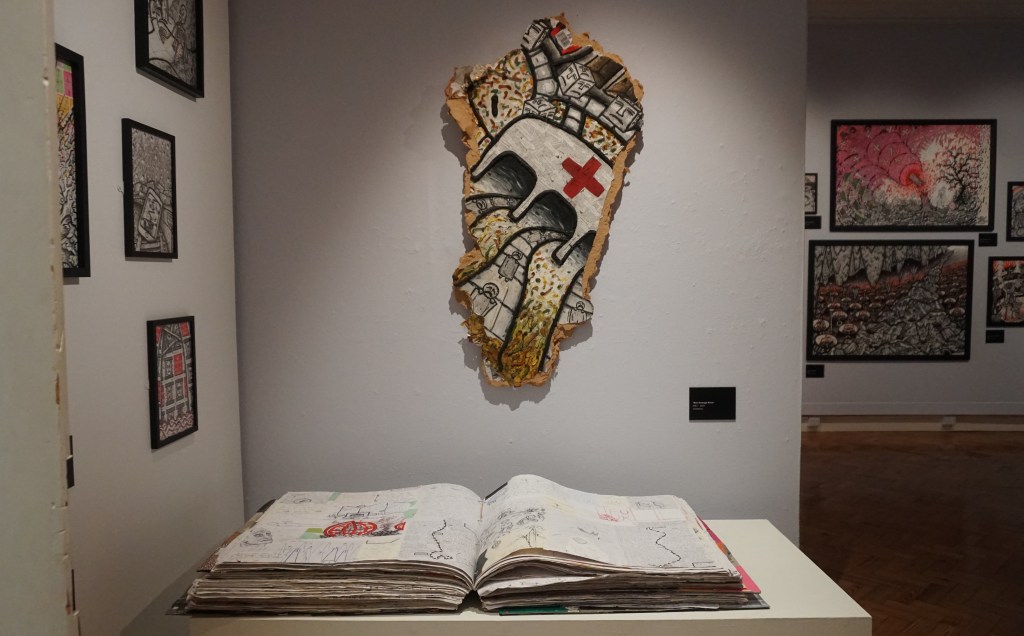
Thank you everyone who came to the Barnsley Civic for ‘Canary in the Coal mine’ on April 11th, a talk and screening to close the exhibition Straight A’s at The Cooper Gallery.
Big thanks to Lucy Dewsnap for brilliantly chairing the event.
‘Canary in the Coal mine’ was a substitute title that I never used in the Straight A’s exhibition, that was originally going to be a work relating to my experiences with anorexia in my late teens early 20s.
I am always very conscious about how to relate to the history and culture of my home town. Some post-industrial towns have in recent years, in my opinion, had their present and future cultures weighed down by the habit of making art that constantly speaks to a refined version of what a place used to be.
Yet I am from Barnsley, a post-industrial mining town. I remember coal mines, albeit defunct ones on the demolition death row.
For those who are not aware of the ‘canary in the coal-mine’ analogy. Some of the worst pit disasters, including the worst one in England which happened in Barnsley in the 1860s, were due to gas explosions. Canaries were historically taken down pits by miners because they were more sensitive to toxic gases, and if the canary became sick or died it was a sign that the miners were also in danger. ‘Canary in the coal mine’ means ‘early warning sign’.
I don’t underplay the sense that some of the struggles I experienced in my young adult years felt like ‘early warning signs’ for a time, 20+ years later, where disorders are part of everyday life, and have basically become normalised. I’m not saying I have clairovoyant or visionary powers, but somehow the struggles that sent me backward, or least sideways in life, have, ironically given me experiences and thus artistic interpretations of things before they became common-place.
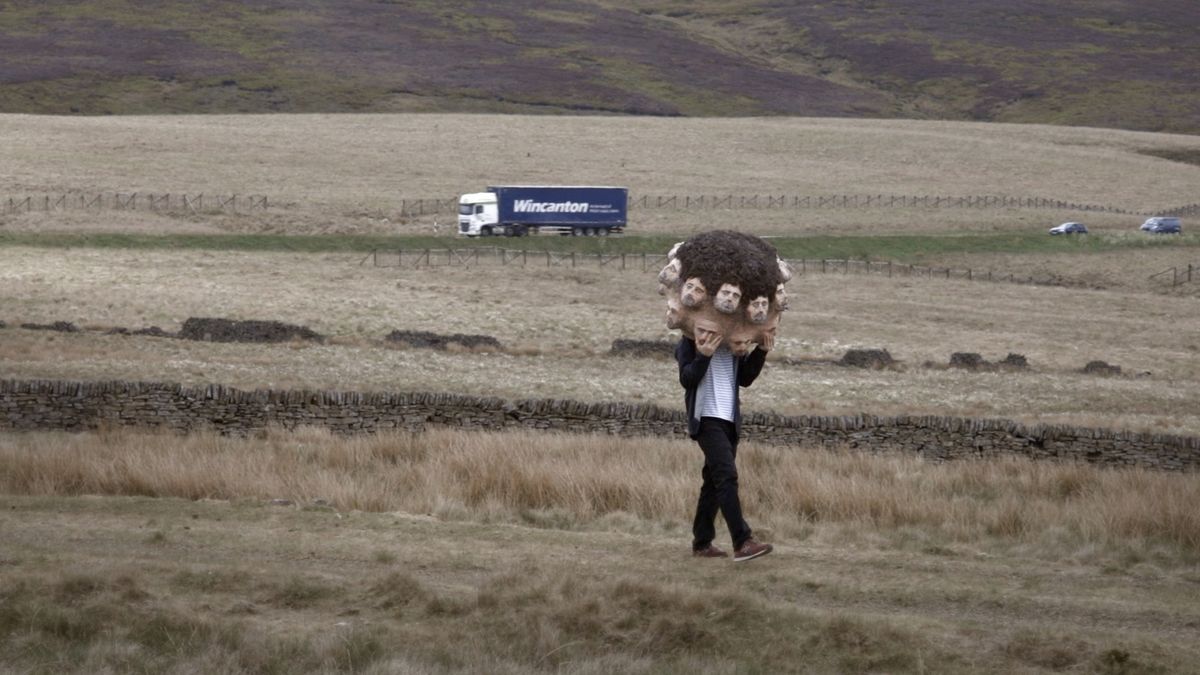
I used this opportunity and screening to show a much more edited down, and (in my opinion) aestehtically mature version of my 2019 film ‘Wall, i’. If Straight A’s is the most important project I have ever undertaken, Wall, i is a close 2nd. Both deal with the crisis of self-hood in an age where individualism is promoted above and beyond everything else – the age I grew up into, the age after the fall of any competing ideology to capitalism, specifically neoliberal capitalism.
unfortunately due to issues that were nobodies fault, there were quite a few technical issues with the film whilst it was being screened. Due to this I have posted the film here for anyone who wished to watch the re-edited version.
In the 2009 era-defining book Capitalist Realism, the writer Mark Fisher defined ‘reflexive impotence’ as state beyond that of apathy and cynicism; a reflex of impotence to the state of the world, societal affairs – the very things changing and affecting our everyday lives. The belief that any possibility of changing anything has already been made impossible.
Fisher published Capitalist Realism in the dying days of a New Labour mode of governance that he laid the blame on for naturalising Margaret Thatcher’s claim that there was no alternative to capitalism (no alternative to a world where everything including our own identity is subject to market forces).
I first read Capitalist Realism in the summer of 2010, 2 months after the Conservative Party formed a coalition with the Lib Dems and 2 months before the total reversal of Lib Dem leader Nick Clegg’s promise of abolishing University tuition fees, which in turn triggered the most angry protests by young British people in a generation – the very people Fisher suggested were most affected by the state of ‘reflexive impotence’.
What radicalised these young people, turning them left-ward, was not necessarily an anger with capitalism per se, but that the prospective careers and futures they had been promised by this very system had to now be sacrificed at the alter of ‘austerity capitalism’. This knowledge, this awareness that the future that millennials had expected, was now being taken away, made them frantically look for alternatives.
As Fisher would continue to write before his death in 2017, the emergence of antagonistic forces to capitalist realism didn’t change the fact that everyday public, social and symbolic life was still capitalist realist in nature. However, these leftward desires of the 2010s that eventually found a figurehead in the-then Labour leader Jeremy Corbyn briefly had an agency that was, at the very least, antagonistic to capitalist realism.
I always wonder what Mark Fisher would have thought about the 2020s. Dying so close to that reality-melting moment when Corbyn’s goverment very nearly beat the Conservatives in the 2017 General Election, Fisher had just previously pitched a theoretical antidote to capitalist realism, called ‘Acid Communism’, arguing that although the neoliberal order that had created the state of capitalist realism felt time-immemorial, that, after all, ‘all of this was temporary’.
More specifically, I wonder how the ‘reflexive impotence’ of 2000s compares to our current state in 2026…
I have struggled intermittently with mental health battles all way through my life. But since the 2nd Covid 19 lockdown I have been continually in a state of depression, both with and without medication.
One thing that I feel is a crucial ingredient to the state of ‘reflexive impotence’ is self-hate, or more specifically the lack of an innate conviction that your life is ‘worthy’ . Positive political action, the kind that makes you joyously want to participate in collective action, requires you to first and foremost believe you are worthy of the life you have.
Whilst cynics resign themselves to a state of life in which they don’t think very well of themselves at all, those like myself, self-aware of their own self-hatred, and their lack of political involvement, are tormented by this situation. The cynic has the ability to forget how little they feel themselves worthy of a better life/world – they are able to reframe this pain as pleasure.
I believe that self-hatred is silently rife amongst a demographic of British people who have lost any progressive cause to naturally align with since the destruction of unionism and worrk-place solidarity – leaving them only with affilitions, and relationships with institutions that routunely humilate them.
This situation is identical to everything else stated above, but specifically this is about the erasure of the idea of any kind of social relations that don’t revolve around anything but competition between individuals and the consequential and never-ending state of self-evaluating yourself.
We all remember the 2000s for the reality TV shows, shows chocked full of people who were ‘failures’ in some way or another, for their inability to succesfully constantly self-evaluate and compete, with their bodies, minds and spending power, against everyone else. The noughties most hated, ‘The Chav‘, became a subject who self-identified, consciouslly or not, with cultures and behaviours that were viewed as degenerate, and low-life. 2016’s Brexit was, as much as it was racist/imperialist, about rejoicing in the disgusting, degenerate, destructive (this time with rare political agency).
Yet today, reflexive impotence and self-hated have qualitively different expressions. The evisceration of the opportunities for another political agency in the 2010s have led to what I, at least personally, am experiencing as ‘the dark night of the political soul’.
The term ‘doom scroll’ didn’t exist when Fisher first wrote about ‘reflexive impotence’ – it may not have even been in use when he passed away in 2017, in a time before long-form media was truly destroyed by video-shorts and Ai slop.
As an artist, who could, if I give myself credit, articulate the contemporary psycho-political landscape in a way that at least gave me a personal momentary sense of potency, I am deeply lost in a deluge of imagery of slaugther, hatred and pornification.
I am not certain about any of my thoughts anymore. I’m not even certain of my soul.
I recently took part in ‘beyond the scroll’ an event held at the exciting ArtBomb in Doncaster. These talks and performances came for everything that could be accounted for, and they were brilliant. I performed ‘Non-stop inertia: I’m too busy to meet you’ with my friend John Wright, fellow member of the largely historic artist collective ‘the Retro Bar at the End of the Universe’.
The performance went well, but I was haunted by a sense of deadness, of merely going through the motions.
I asked myself “This is something I do, this kind of thing? Right?”.
…yet, what has vanished since the last time we did this performance in the 2010s is a sense of life that could be different.
The political and the personal are recklessley misunderstood by our focus on the binary between altruism/empathy Vs selfishness. There is no real seperation – even though our personal lives aren’t other peoples lives, when we lose sense of meaning in one, the sense of meaning begins to give-way in the other.
I like many, have countless thought attempts to reach for an escape route that are continously foreclosed by images and accusations bubbling up from our state of omnicrises. Woke and anti-woke are already antiquated words in our era of Trump 2.0, yet these categorisations both became dominant in an age where accusation became the one remaining conceivable action for a population that could once more no longer see a way out.
Yet, as Fisher reminded us, ‘all of this is temporary’.
The dark night of the political soul may feel endless, but yet, it may end tomorrow….
I sure hope it does, because it is unbearable…for me…and for you…
Canary in the Coal Mine John Ledger: An Art/Life Story (Talk & Film Screenings). 11th April/ 1pm
To mark the final day of his milestone exhibition Straight A’s: Anxiety, Anorexia, Alcohol, Ageing and Art at the Cooper Gallery, the Barnsley artist John Ledger will present a semi-autobiographical journey through his life as an artist through two of his film-works. People are encouraged to view John’s exhibition one last time, then come down to Barnsley Civic to listen to John discuss his work, whilst engaging with increasingly topical subjects and themes that his work explores, such as the connection between loneliness, self-hate, the politics of resent, toxic masculinity and political extremism.
The film works screened at this event are It’s War Then and Wall i and will be followed by a Q&A with the artists and a chance to socialise in the bar afterwards.
Some of the themes and content broached in these screenings are aspects of John’s work that was omitted from the Cooper Gallery exhibition. Some people may find the themes in this work triggering or inappropriate for a younger audience.
My solo exhibition at The Cooper Gallery is still on for exactly another 2 months, and will be open from 10am-4pm except on Sundays.
The exhibition is running alongside “Expressing the Walls in My Mind” Children and Young People’s Emotional Health and Wellbeing.
In collaboration with artist Tony Wade and with support from Barnsley Civic, this exhibition is on display until 21 March in the Sadler Room. Just us are a passionate group of young people from Barnsley VCS organisations (Chilypep.YMCA Barnsley and the Youth Association) who work with Public Health to make a positive difference to children and young people’s emotional well-being and mental health.
It’s been a while since I posted anything ‘adequate’ on here. In fact I have deleted most of the posts as they were often more incoherent cries for help during the most challenging moments in the last couple of years – far from posts that I valued for any sense of their merit.
I have kept a blog since the summer of 2007, when I graduated from a University Centre building, literally 5 metres across the road from the landmark exhibition that this post is about. Caught between being hyper-focused on this project, stuck between a demanding job, social media distractions and internalised commands to making more of my life, I have found little time to develop the quality of writing posts.
The exhibition had to take up all the remaining energy I had.
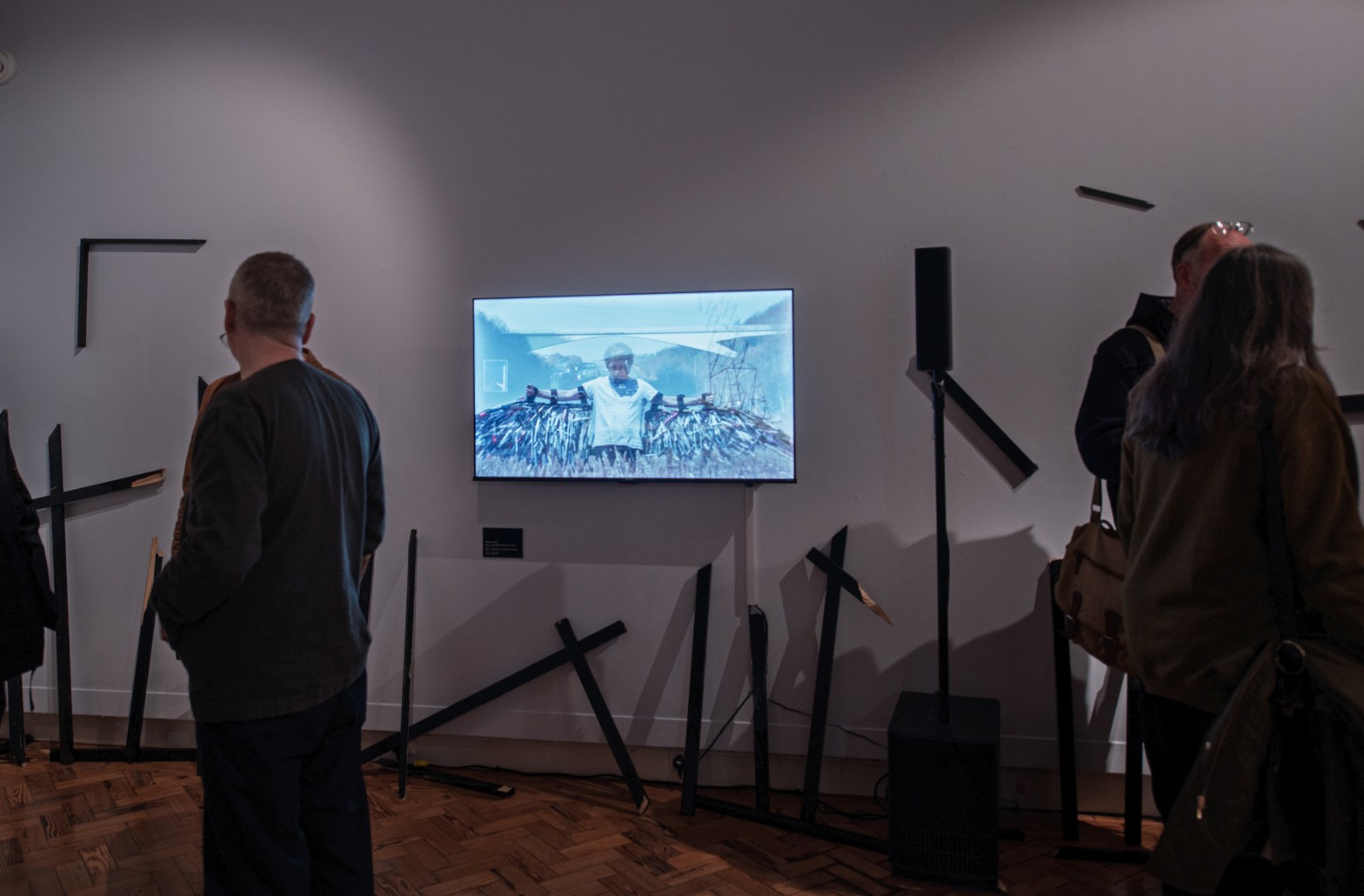
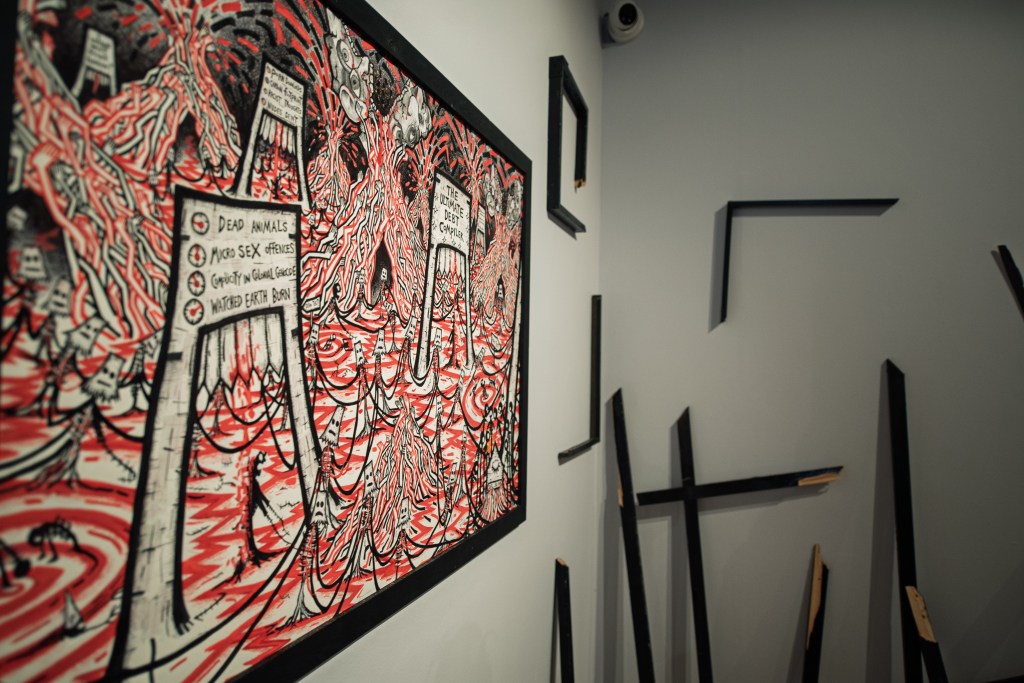
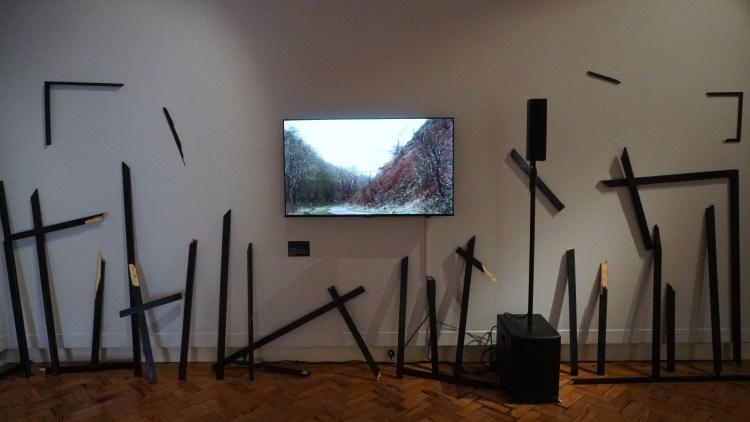
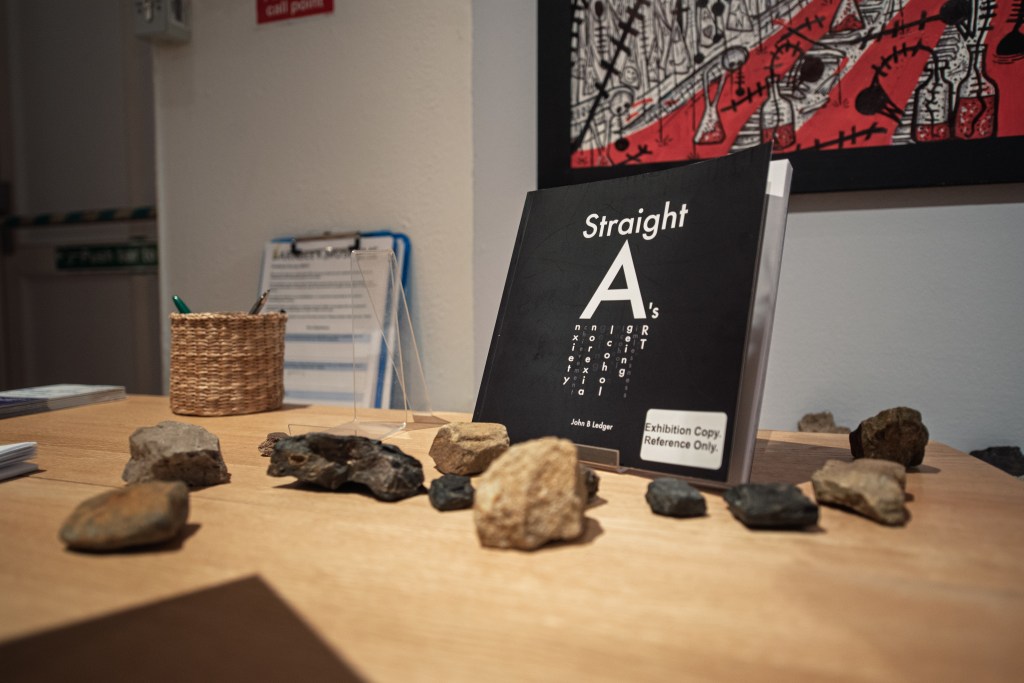
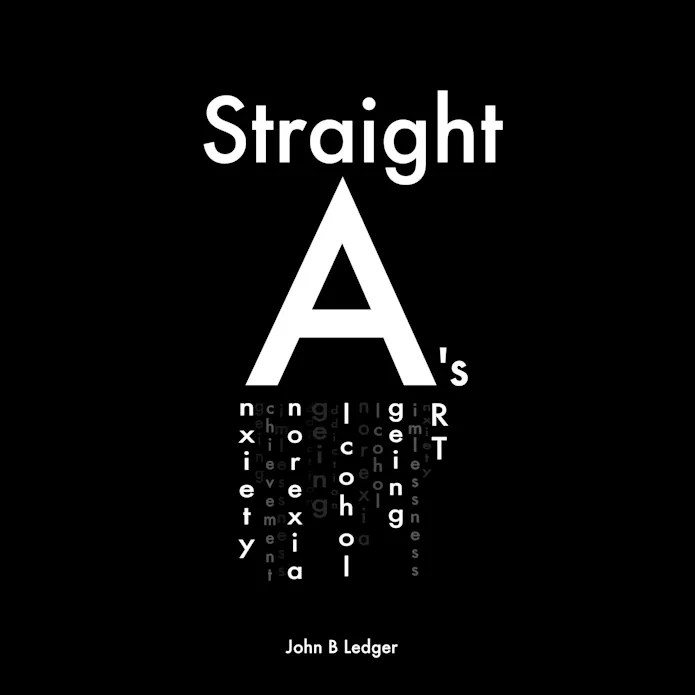
And this week I finally managed to open Straight A’: Anxiety, Anorexia, Alcohol, Ageing and Art. An exhibition that is an honest account of my life story, through art, becoming an adult at the beginning of the 21st century, and my experience of the first 25 of it. It is also about my relationship to my home town, the landscape that fixes itself into our subconscious and the people and culture that does the same.
So the exhibition was always going to be collaborative, as much as it would be a project spearheaded by myself.
Because this exhibition is one of the most important of my life, I have a full gallery presentation for this post, from the opening and the week after. Some of the photographs are courtesy of Lucy Dewnsap, Richard Kitson and Jamie Ward.
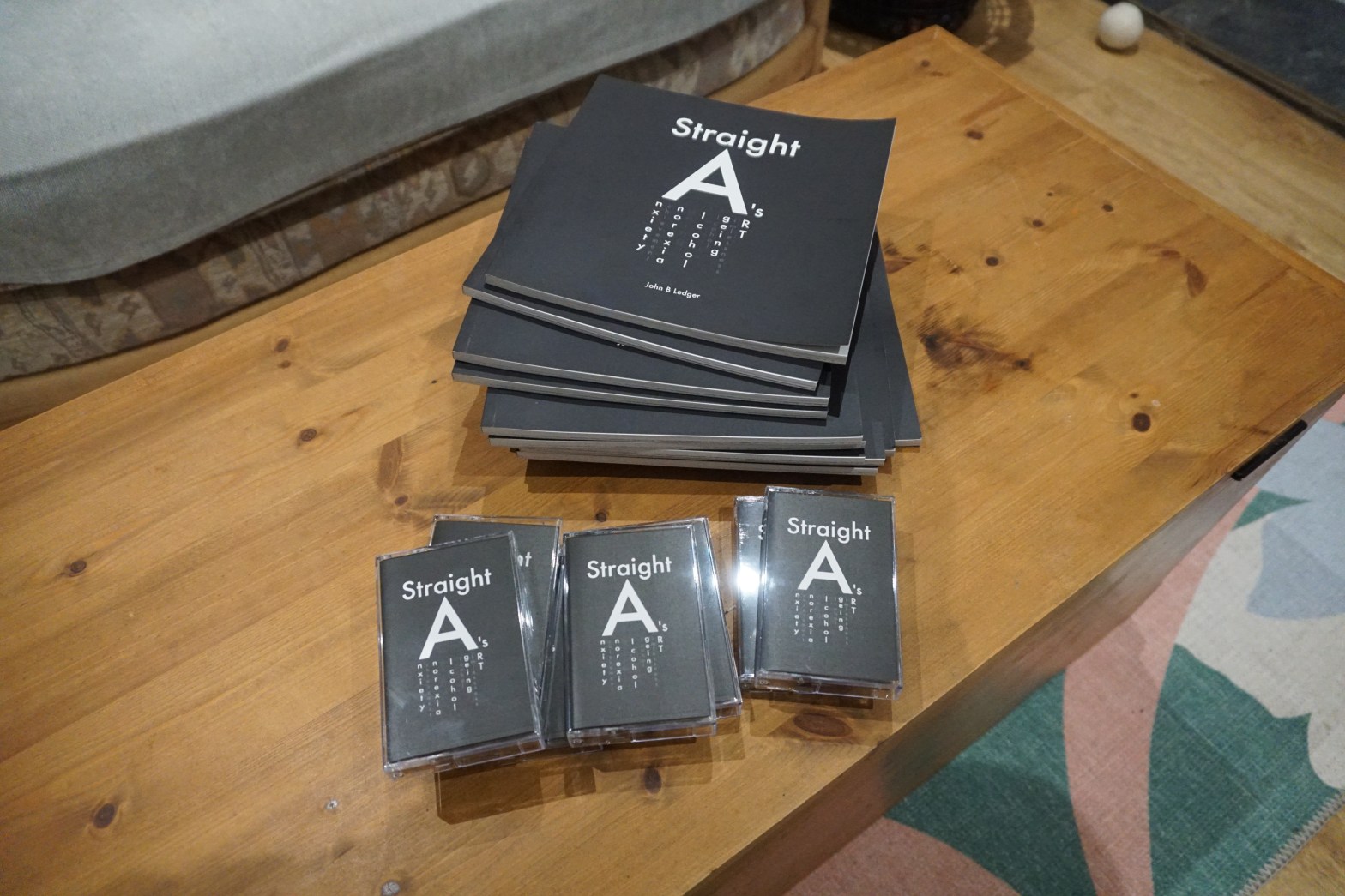
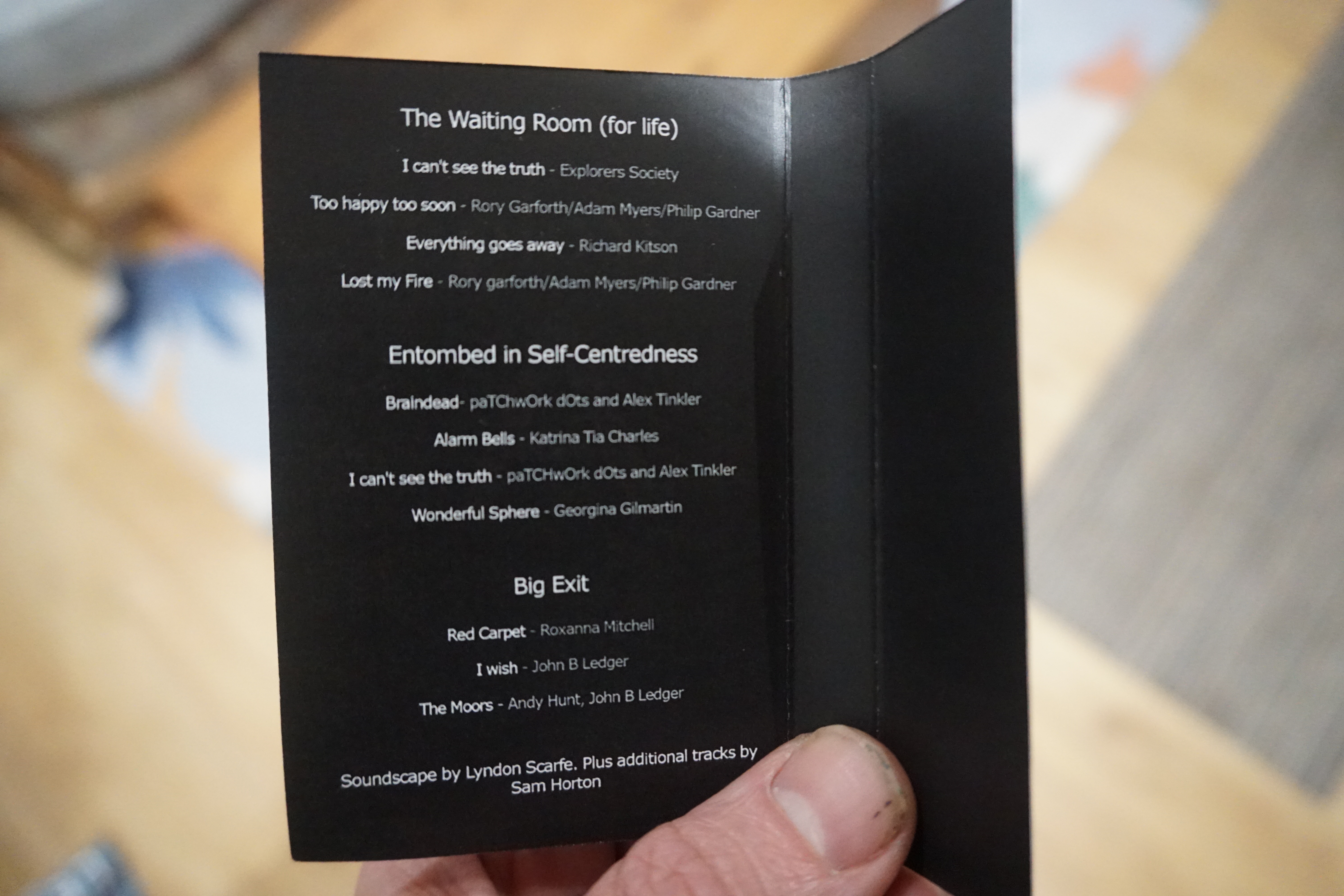
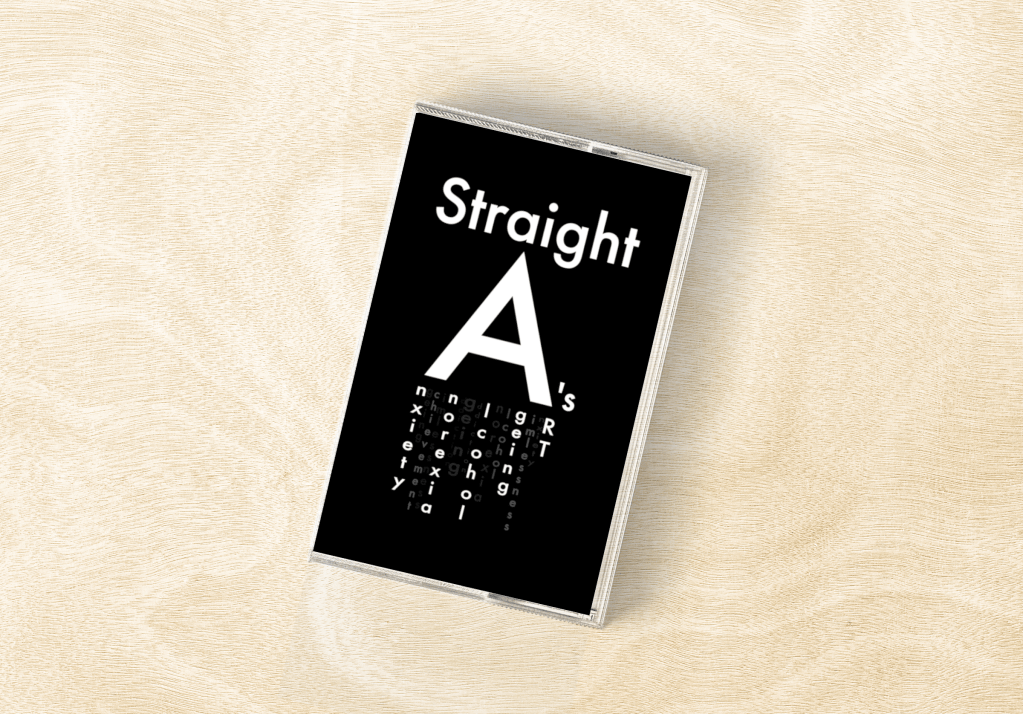
I can finally unveil the books and collaborate album that have been made to mark my upcoming exhibition in January of 2026.
For those people who bought them as perks by contributing to my crowdfunder, I will be delivering/sending them asap. But I’m planning to make the rest available on the opening of the exhibition!
Walking from St Pancras to Kings Cross, I’m eager not to keep John waiting in the train station bar, but also to not appear out of the sync with the pace of London. There is also an anxiety about ‘getting it right’, not missing another sailing ship.
Coming to London always feels like touching base. I can’t put my finger on it, it’s not quite a recharge, maybe more like having your thumb on the start button on of another stopwatch, as if each ‘last chance’ was a fresh stopwatch, only for each one to be smashed against a wall at an high point of failure, like all those phones you literally did that to.
It’s as if London is always a starting point, out of which arises the same old impetus to do that thing that’s always been on the precipice of cognition.
Extortionate drink prices aren’t really that more unbelievable than anywhere else in the country, and you’ve mentally prepared for it here. London remains instantly recognisable even as it continuously changes; the many skins of gentrification that you see, you have already seen everywhere else, especially in the overly proud North. What is different is that last time was before the burn-outs, a state of being than neither myself, or potentially an entire generation who expected something different to ‘this’, can regain.
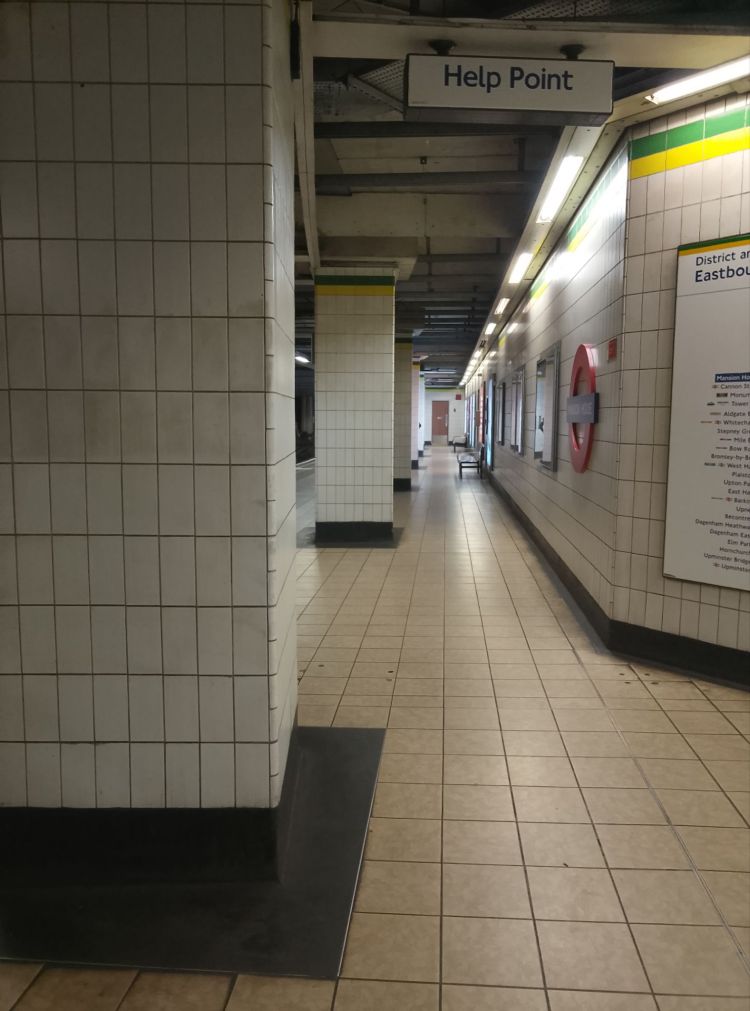
Tube and Overground to New Cross Gate
I begin to question my idea to travel down to New Cross as the train is far more crowded than anything myself or John are used to these days, and we wonder if this is the busiest train we’ve ever been on, as two delivery cyclists board into spaceless space, something that was probably novel even in London last time I spent time here.
Opposing thoughts cross my mind upon seeing miserable Friday faces cramped together as they head south of the river. I recognise that despite this city’s vastly superior transport system to the rest of the country, they are also sucked of joy by the same mechanisms as the rest of us (probably more so) and lack the liberation that you’d think such transport could afford them. Yet I equally feel both guilt and envy for not being a ‘Londoner’ – this heroic breed of human.
New Cross will admittedly always now be a ritualistic pilgrimage I feel driven to make once I’ve been absorbed into the belly of the city, and if I’m with a Northern friend I will drag them here. A part of me was made here, and in a brief 3 months another part was lost here. I’m still searching for it, as silly as I know this sounds.
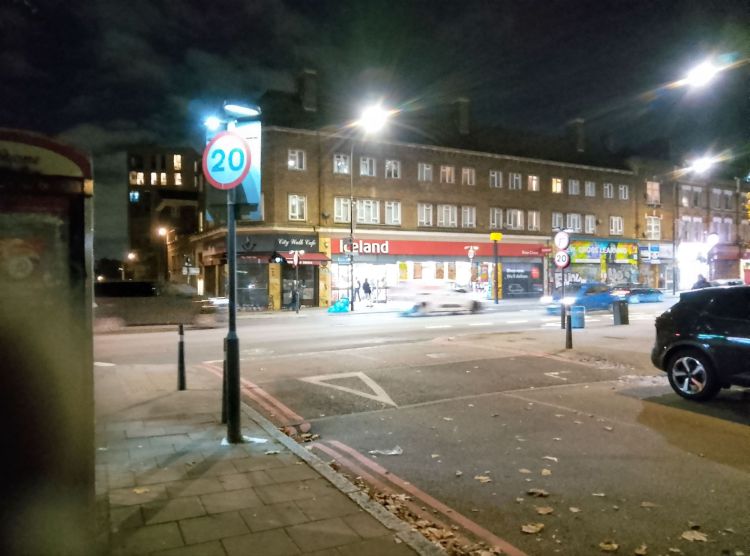
New Cross
The first recognisable site as we approach New Cross is the large Sainsbury’s that projects its orange glow into the urban night sky. Strong memories cling to such inglorious spaces, perhaps because nothing else stakes any claims to them.
As we climb the steps to the wooden walkways, I’m reminded that there’s a ‘look’ to certain older architecture in South London that feels intrinsically ‘south of the river’, chalk-like, mimicking the south downs and the white cliffs. Yet memory has shrunken this place like long-term anxiety has shrunken my lung capacity, because I have totally forgotten how expansive this maze of a walkway is.
John suggests going to a pub that I’ve never heard of, which turns out to be a bland makeover of the previously boozy ‘Hobgoblin’ where I recall New Cross undergrads making the dance music of my childhood fashionable again, as New Cross students always do. Yet no transcendence, no convergence was ever personally achieved down here, a pattern that would continue through my 30s.
Yet apart from this makeover, New Cross looks like it hasn’t really changed one bit. No posh makeover (not really), and all that seems to have vanished is the internet cafes that once provided a necessary function. It looks like my default 2012 picture of the place, unlike Manchester which has altered beyond recognition to my default memory of it.
The Marquis of Granby equally feels cut loose from the mass nationwide gentrification of our souls. Somehow the kids down here, although donning fashions from previous eras, do not seem to reify and cgi the hell out it like everywhere else, and still seem to mix with tutors in and out the pub. It’s always easy to romanticise on a flying visit, but perhaps I’m seeing what I want to see as a prompt to start myself up again
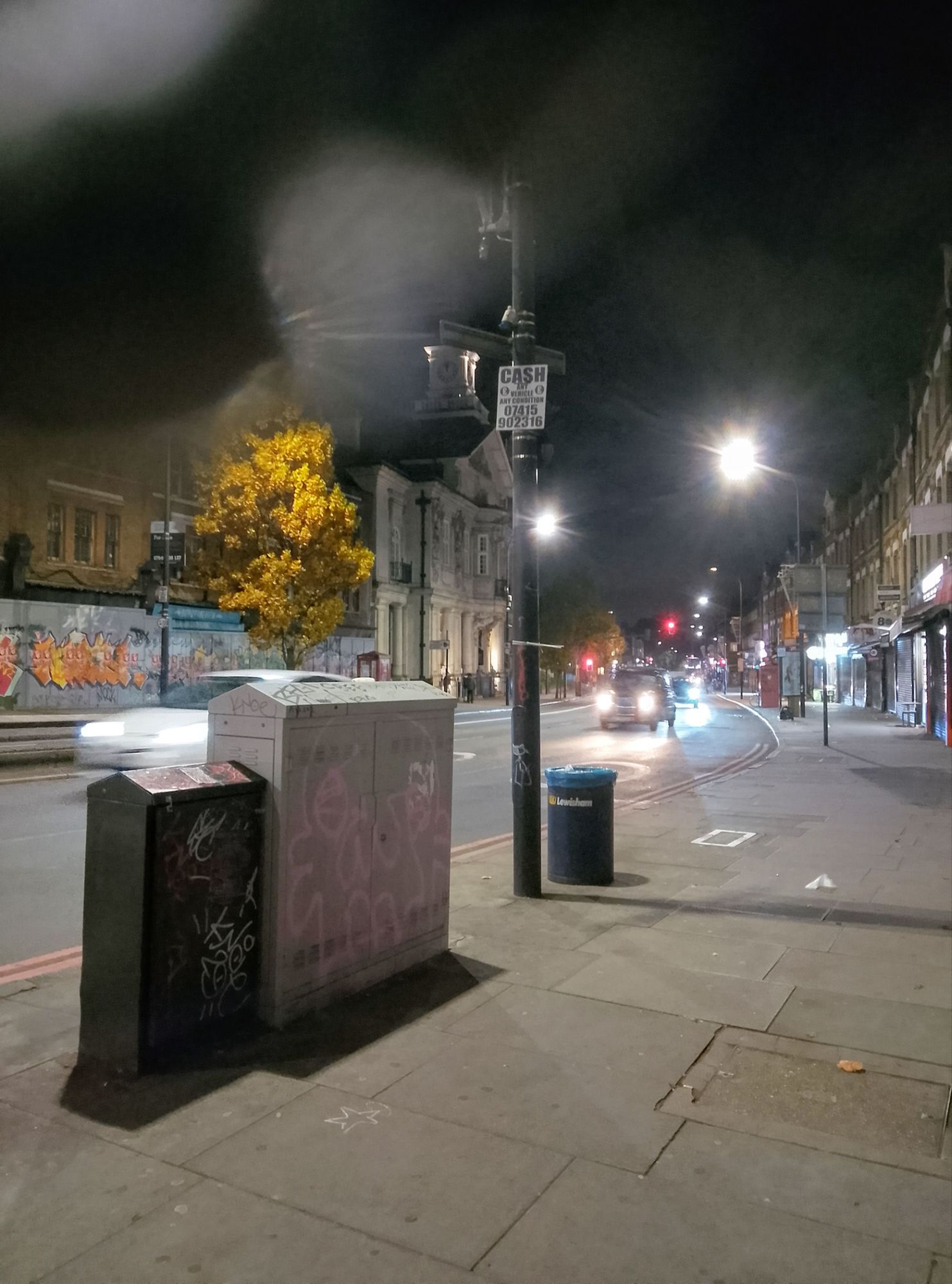
Saturday Morning: Lewisham
I try to employ a ‘military mindset’ to evade the nauseating limbo of this hangover, and especially the embarrasment. The rumbling sound from the close proximity of trains, sometimes I could smell it as the trams rumbled by in Sheffield, but it now feels so exotic, from a long-lost pathway.
I head out onto the street with haste, leaving John to catch up, and I am spooked by the friendliness of the shopkeeper as I buy the necessary bottle of Lucozade, as if the childhood magic trick will finally work. But nothing is working at the moment: last time I was down here the hangover was part of the process of a lifestyle I still had faith in leaving behind, but now I am haunted by the prospect that this is permanent.
We walk through Lewisham centre, noticing the rare point of exposure of one of London’s many hidden rivers now condemned to exist like concealed sewage systems. Above us is something resembling a citadel made up of the kind of architecture that seems like it gleefully wants to double down on the flattening process done to life by smart tech. This kind of architecture would have once sparked intense debate between myself and John when the affects of smart tech and gentrification still possessed a element of novelty to them, but now the conversation seems reliant on what, between us, are basically dead sentences.
Once again I have fallen victim to false memory, miss-measuring the stretch between New Cross and Lewisham, perhaps to my younger lung capacity and tolerance for urban walking. I am worried I have messed up the gallery trip we came here for, and as we pass by the places in which we drank too much the night before, I worry that my tendency to try to rekindle a past moment has made me lose sight of the present.
As we pass by Goldsmiths College I recall how a receptionist gave me pennies for an incredibly necessary phone call when I’d financially and mentally reached rock bottom. This perhaps make me feel more embarrassed about this hangover, and I daren’t ask to stop for another Lucozade when we are already running late. We head straight for the next train to London Bridge.
Green Park to Embankment
After we visit the gallery we aim to find the river, what else would you walk towards? But I feel nothing as we walk through this area of London, it means nothing to me. The Mall, the galleries, it all feels pertaining to something I am almost aggressively indifferent to, especially when hungover with little tolerance for meaningless avenues of pomp.
Yet I cannot help but make a potentially inappropriate joke upon seeing the flags outside the Italian embassy, in that in the UK you could easily just think it was a pizza restaurant. But the joke is really on me, or on us: a time where this country had an ability to laugh at others and take others for granted has long passed, and nothing reassuring is guaranteed now as we solemnly cling onto warm meals provided to us by other countries.
My bones are heavier, everything is heavier. I recall that catalytic year of 2011. Even I was here! Sat on the plinth upon which Nelson’s Column stands, surrounded by Red Flags, at a fiery anti Austerity March. Myself and John respond with surprise as to why people were so angry back then, compared to how things are now. But that’s just it: we had every right to demand better back then, but after 15 years of austerity it’s not just me, but everyone who lacks that lung capacity to demand such a thing. I cannot imagine hauling my heavier bones onto this plinth now.
The waste of hangovers, it’s bothering me so much as I try to stare into the river and retrieve something, some sense of purpose, something to match the earnest aims of the ‘quiet activism’ myself and John are now collaborating on. Countless immigrant workers riding ‘vejazzeled’ rickshaws cycle past us, pumping the music of Abba and Dua Lipa onto the road. I shy away in embarrassment for them, and in shame for how I can’t pertain to the mantra of my home town to ‘toughen up’ and take whatever job you have to. So much shame clings to me as I follow this river.
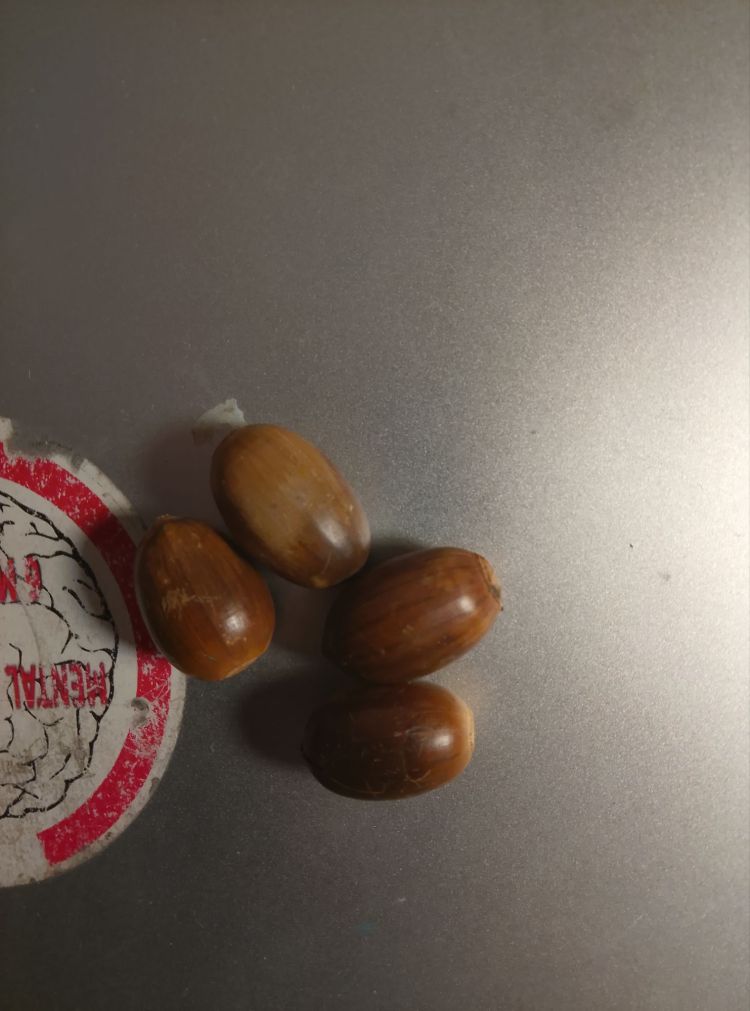
Yet I came here with acorns from an unusually fertile oak tree down the road from where I’m from, whilst John collected some conkers from his home city of Leeds. Planting them is little about whether they will grow or not, it’s entirely about the rebirth of something; something the starts at the impulse to create despite the circumstances and reaches towards the impulse to fight for what you believe in despite the circumstances. Planting these seeds is meaningful because of its seeming futility, and I need to hold this thought close as we walk and walk slowly towards our exit out of the city.
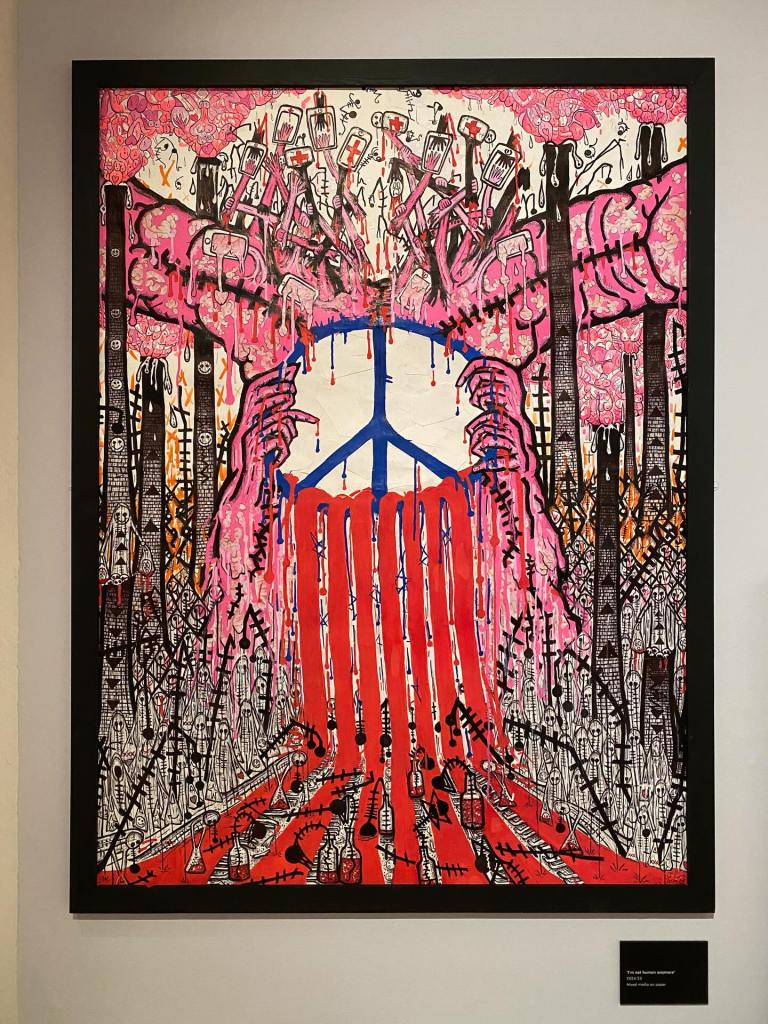
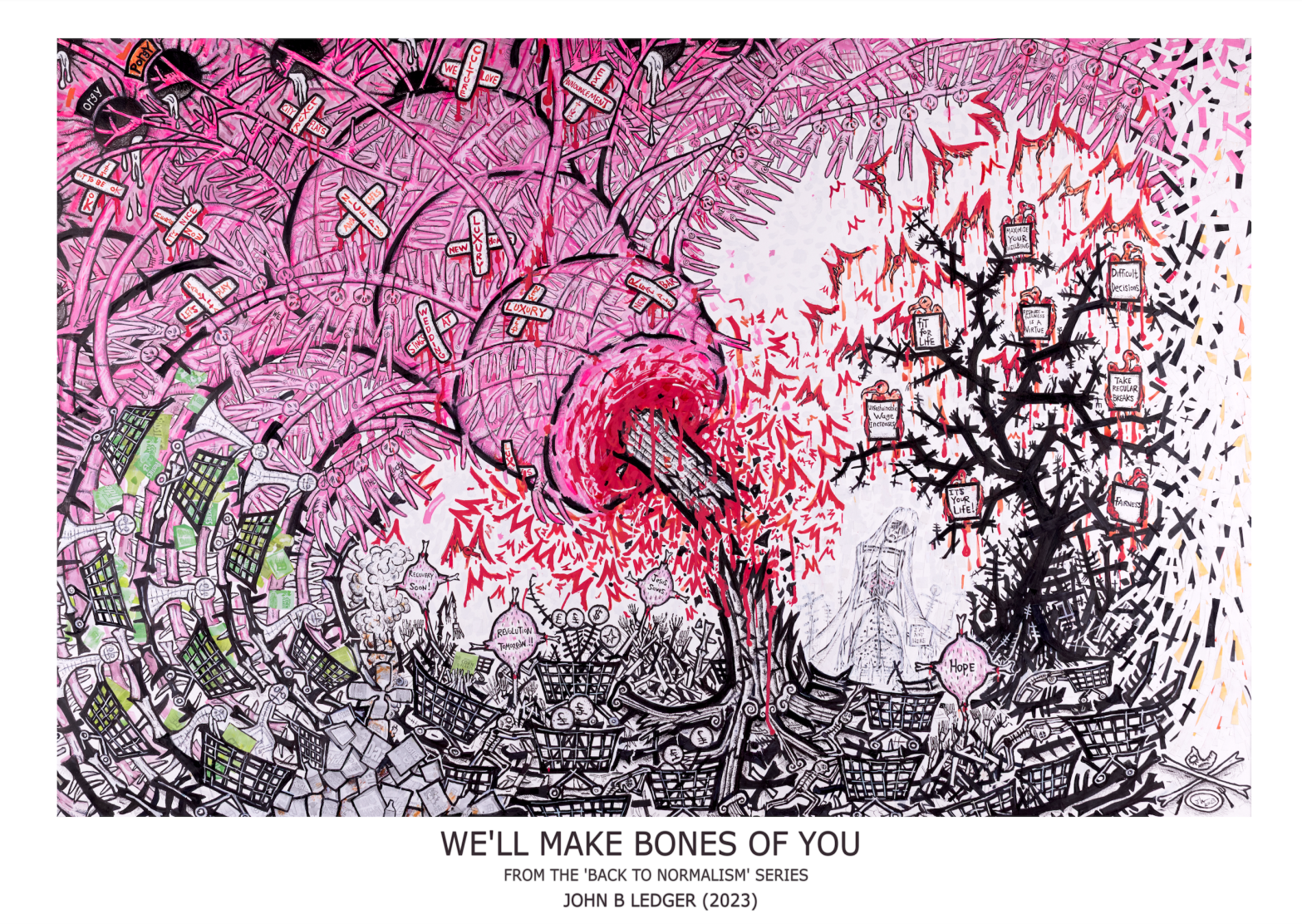
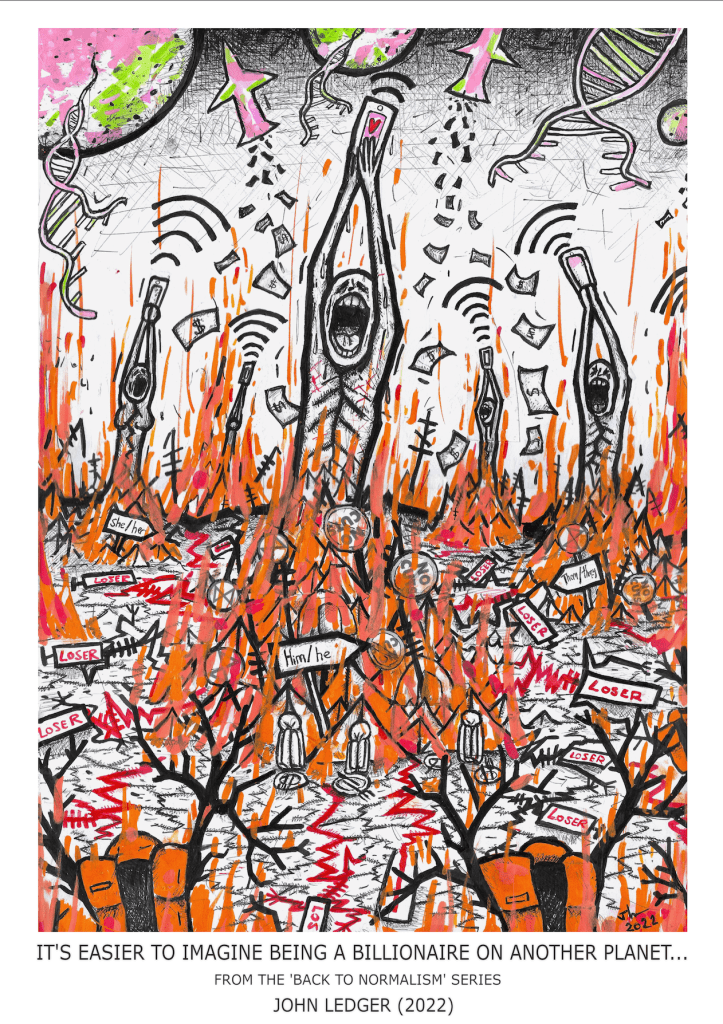
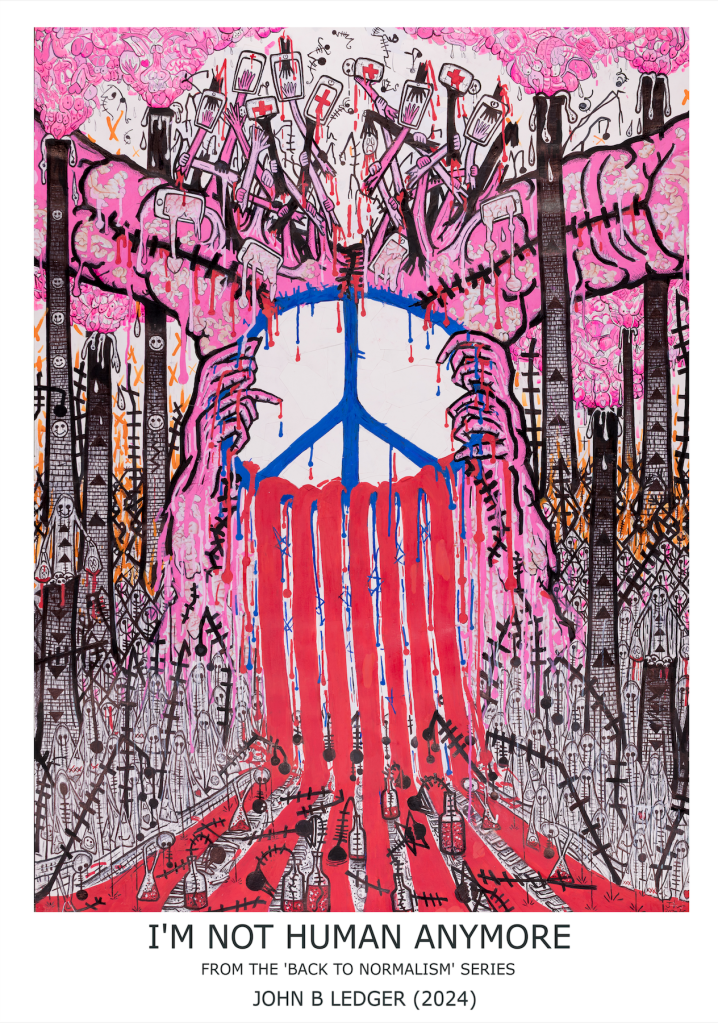
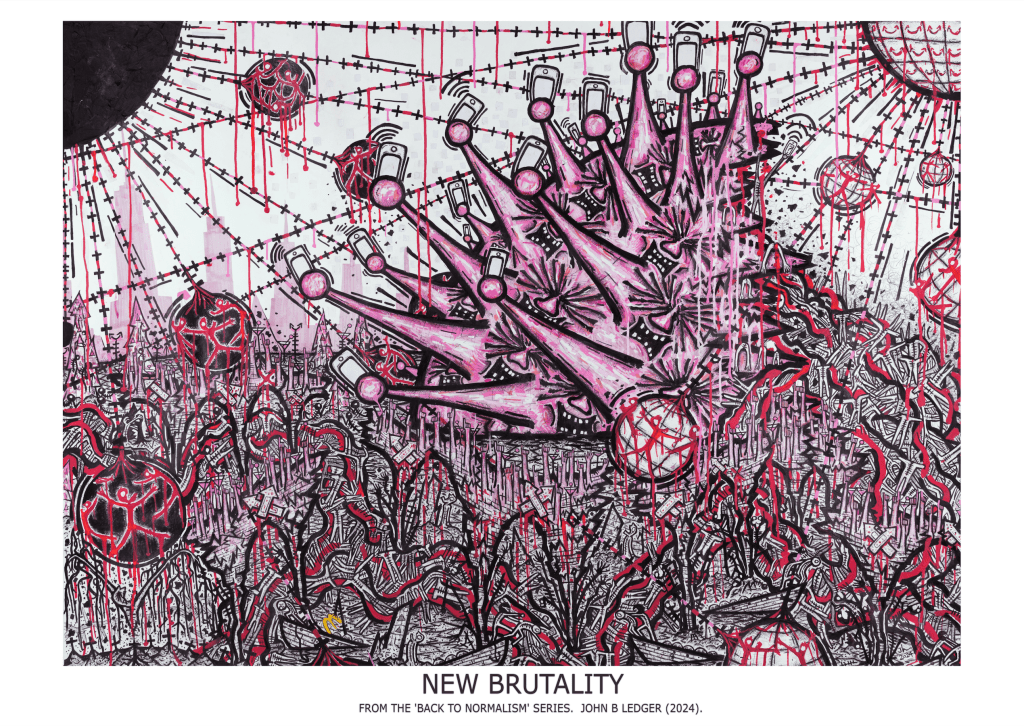
Finally, I’ve developed my ‘Back to Normalism’ print series that I’ve been working on a while.
‘Back to Normalism’ is a series of works that speak of the post-pandemic world, culture, and are my best way of summing up the times we’re in.
I am making available a limited number of 20 of each work, all signed. The first 4 images are available in size A1, whilst the final 2 available in A3 size.
I’m aware that I have released this at the same time as running a Crowdfunder but both things fee necessary to be done now rather than later, for differing reasons…
My A1 signed prints are £60 each,
Whilst the A3 signed prints are £30 each.
1. “I’m not human anymore”.
2. New Brutality.
3. Running on Gaslight.
4. “We’ll make bones of you…”
5. The ever-aftermath.
6. “It’s easier to imagine being a billionaire on another planet…”
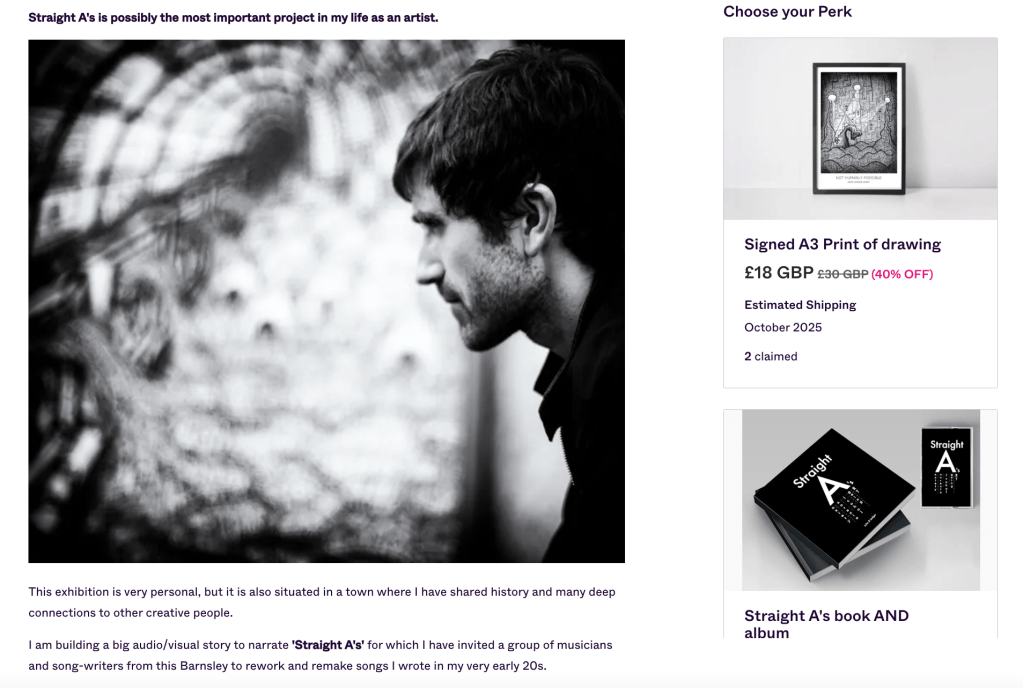
This fundraiser brings together 3 things that mean a hell of a lot to me.
Firstly, this is the first opportunity to put together a properly printed book that others can buy and read. The writing is milestone writing for me, it marks something.
It is also that this book will mark an upcoming exhibition that is a deeply important one for me. As something, art, that I have given my life to, I’m seeing this show as a way of rebuilding what hasn’t been plain-sailing to say the least.
Finally, I have people in my hometown collaborating and contributing to this projet, and for that reason, this crowdfunder includes both the book but also the album of the musical renditions, and I genuinely feel this needs to be recognised in its own right.