Green Graffiti: Junction 38 tree still going strong

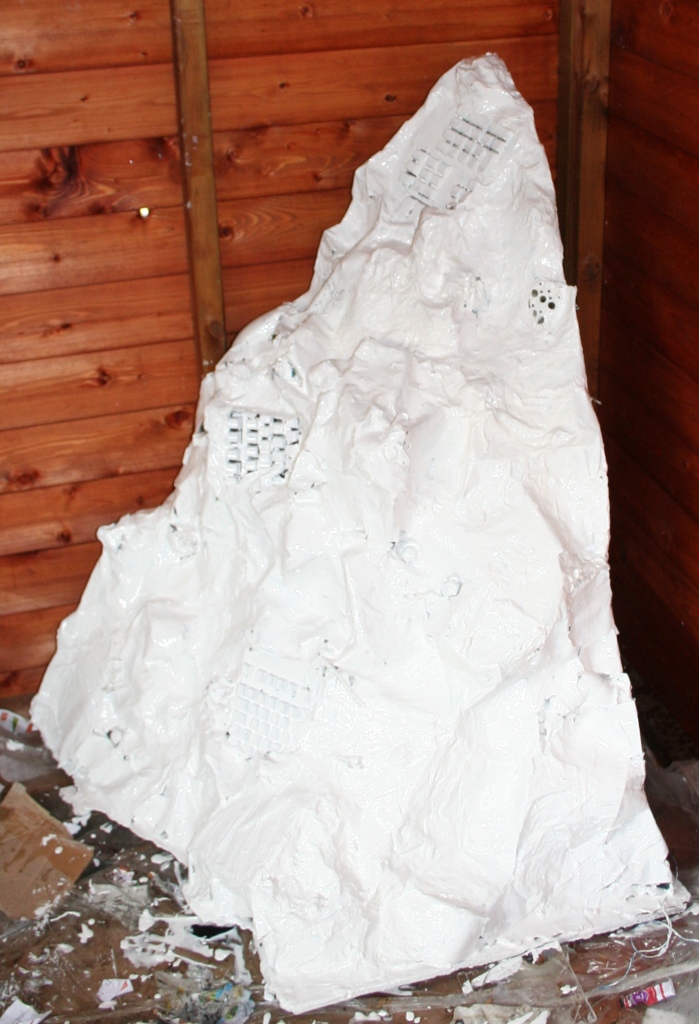
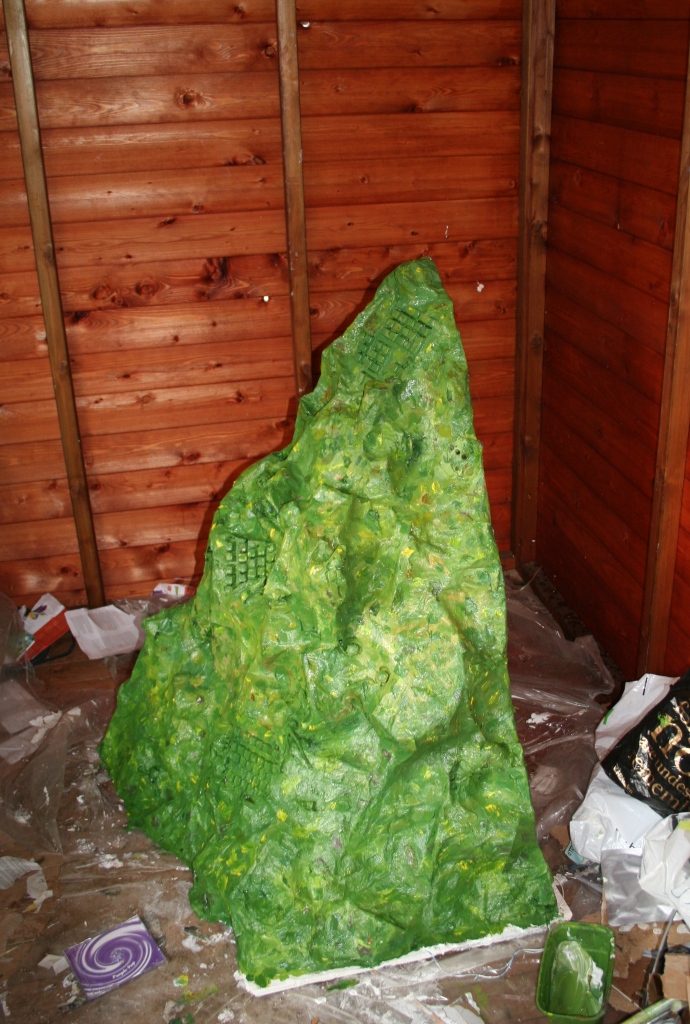
My ‘Green Graffiti’ oak tree tree, planted on the island at junction 38 of the M1 (at the border between South and West Yorkshire), is still going strong. After every council grass cutting, i nervously look around the corner of the roundabout hoping that they have left it be. and, yes: so far they have left it. it may just have been a little too big for any grass cutter without a love for trees to mow it down with a grass cutter. Maybe they like it? i hope so.
I’ve put some photos up of it over the past 3 or so years.

May 2007

junction38tree

June 2008

junction38tree1
img_2023

June 2010

junction38treejune2010
junction38treejune201028229

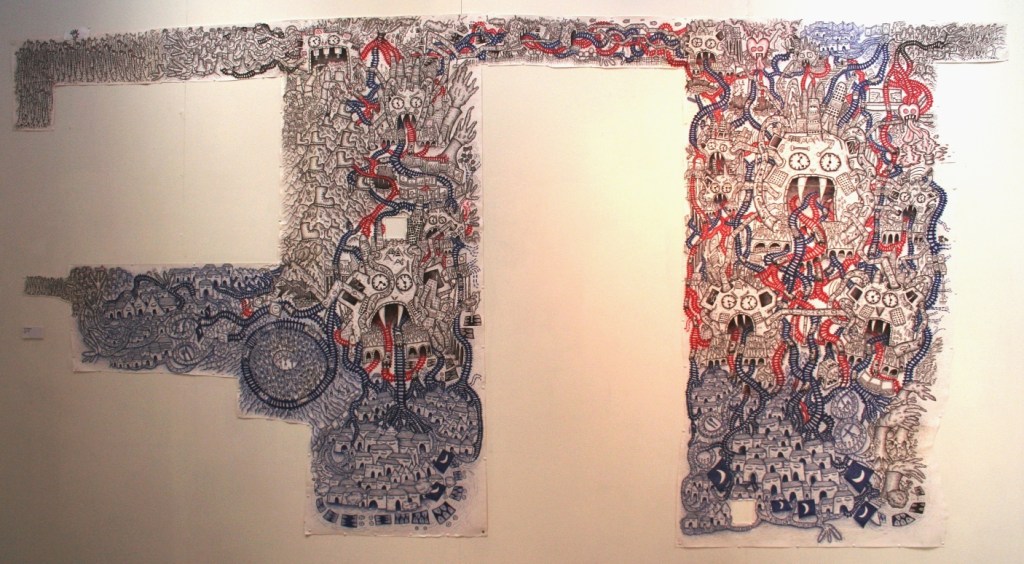
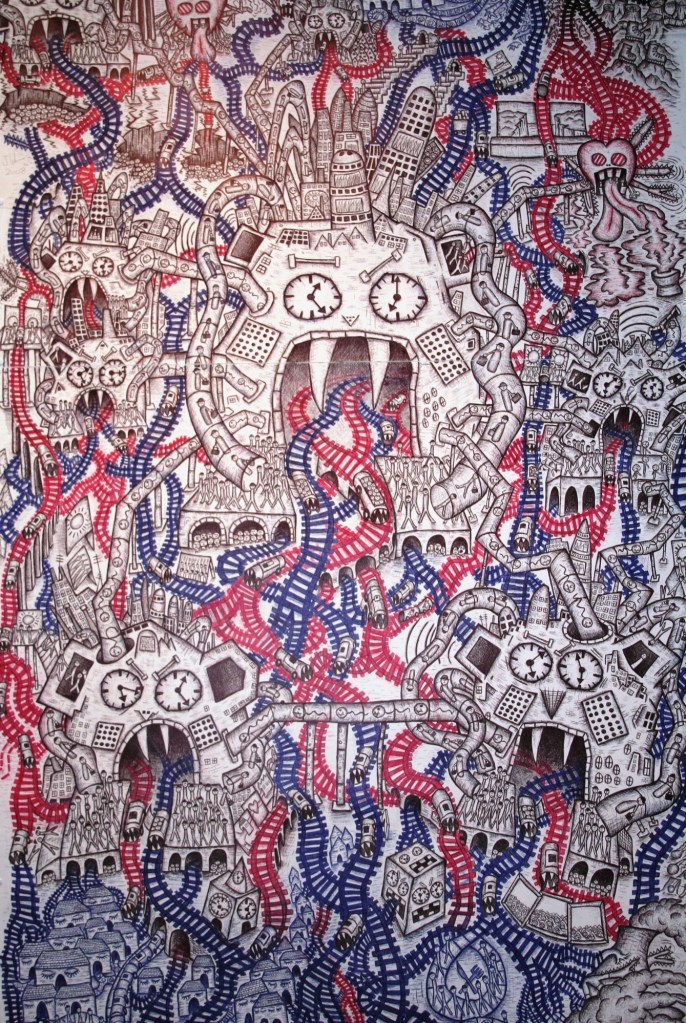
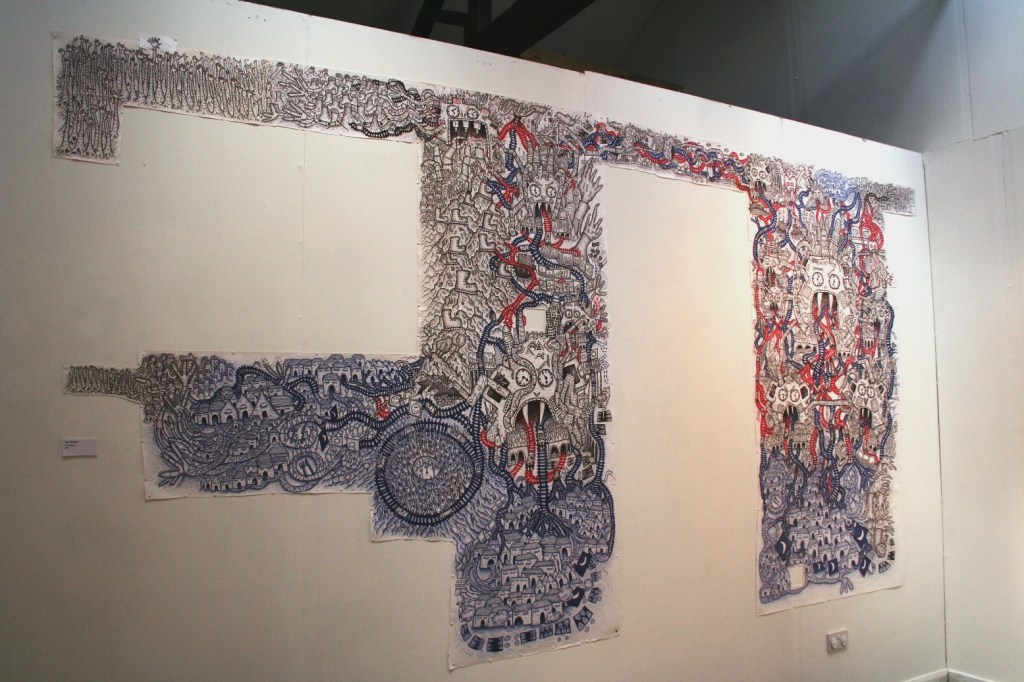
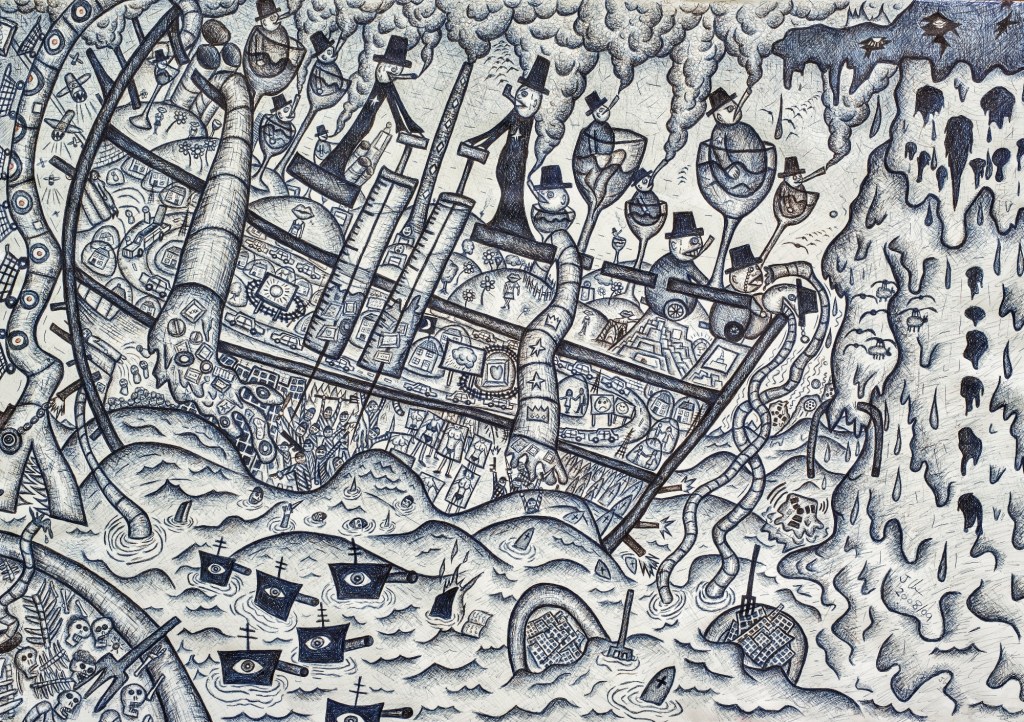
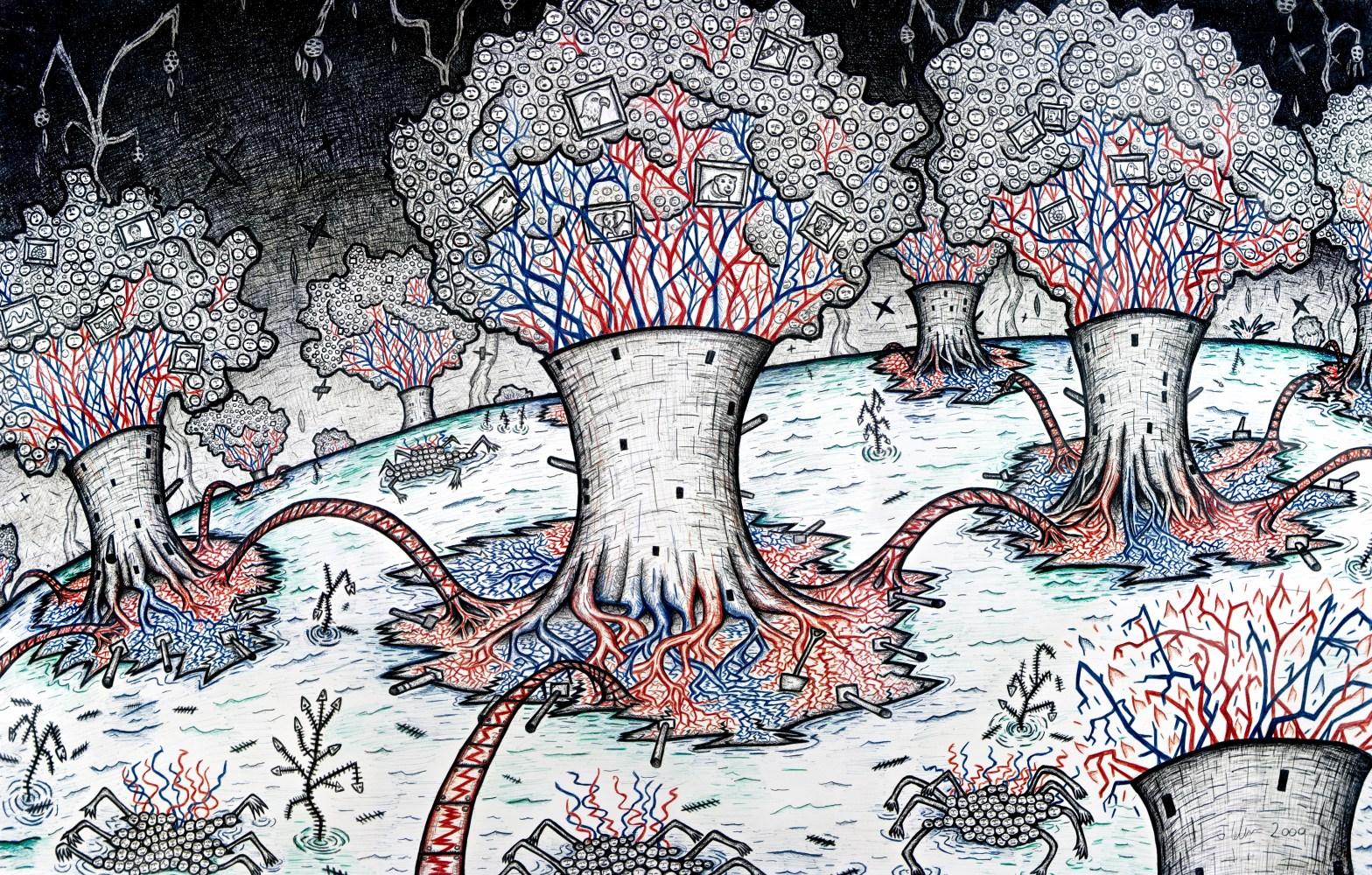
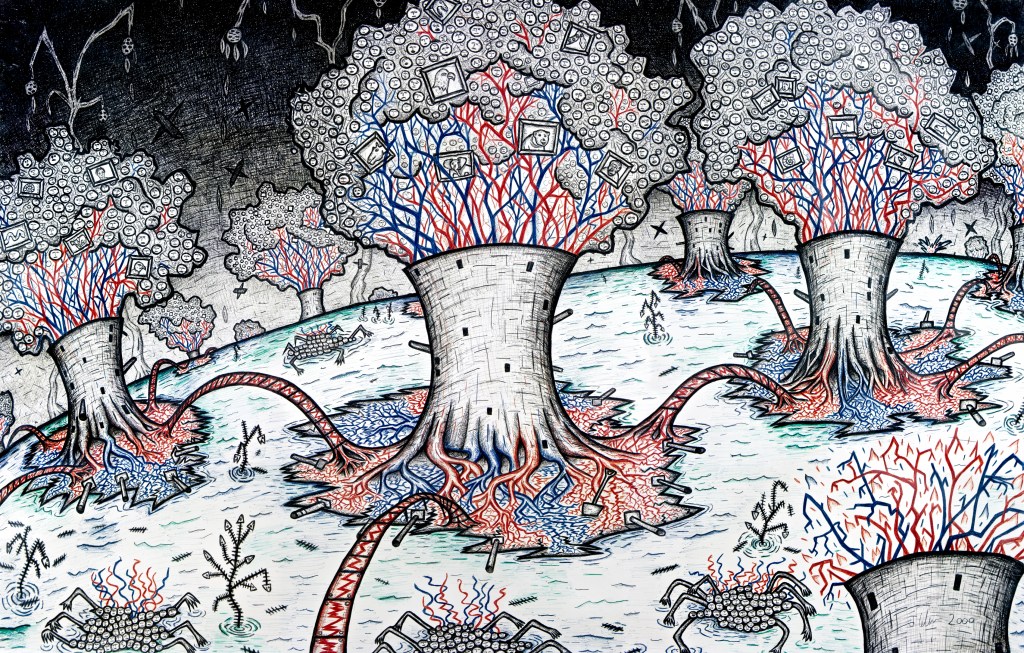
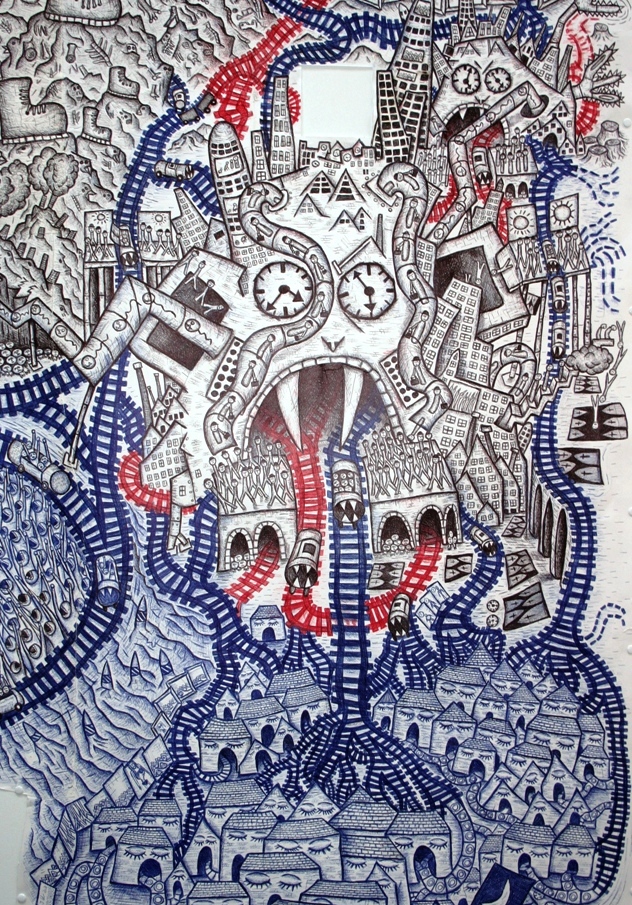
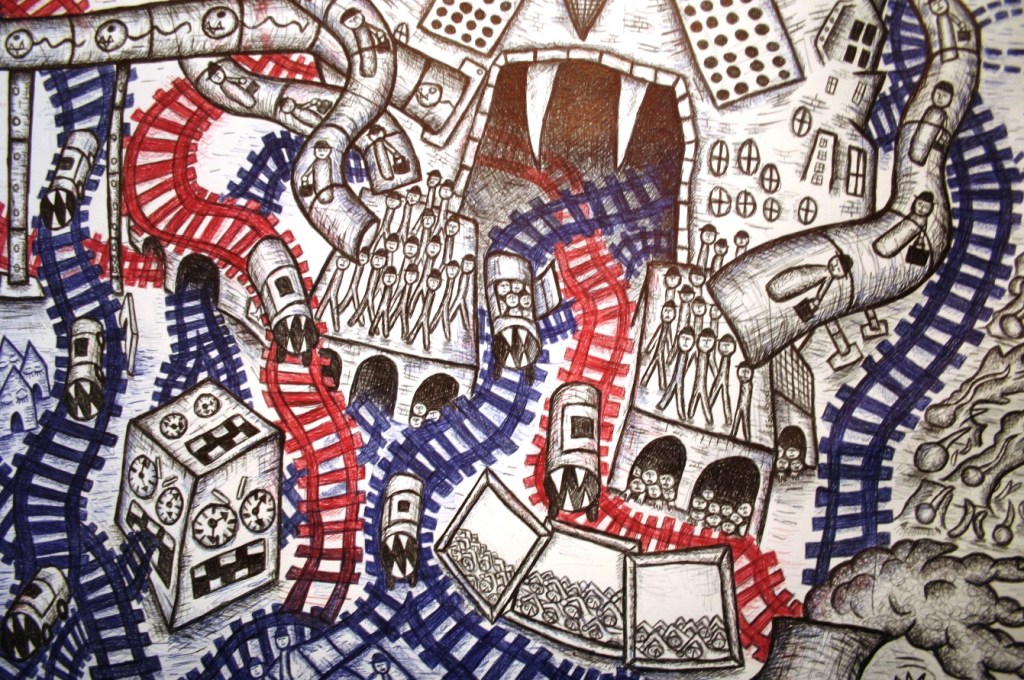
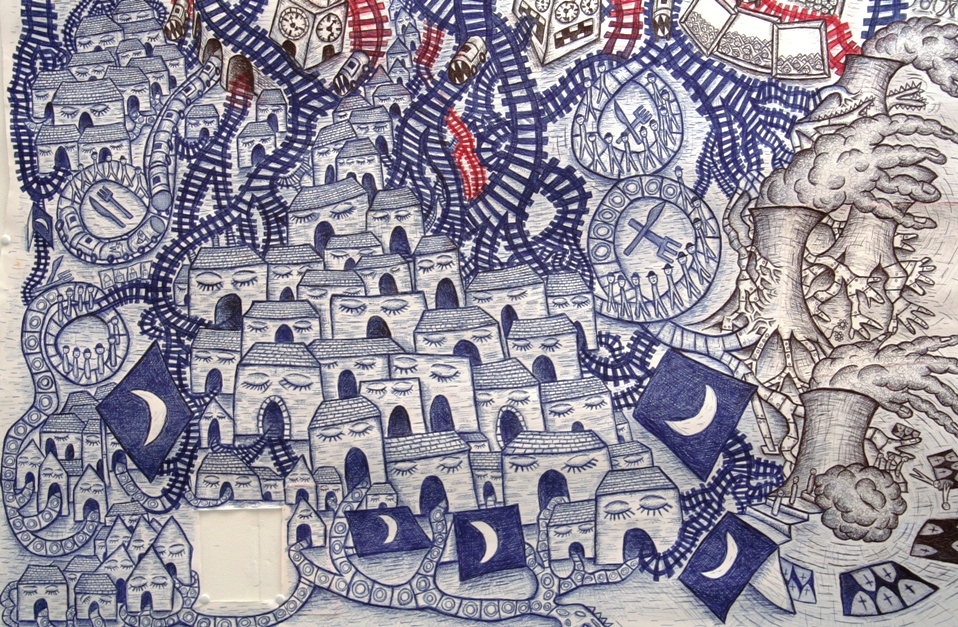
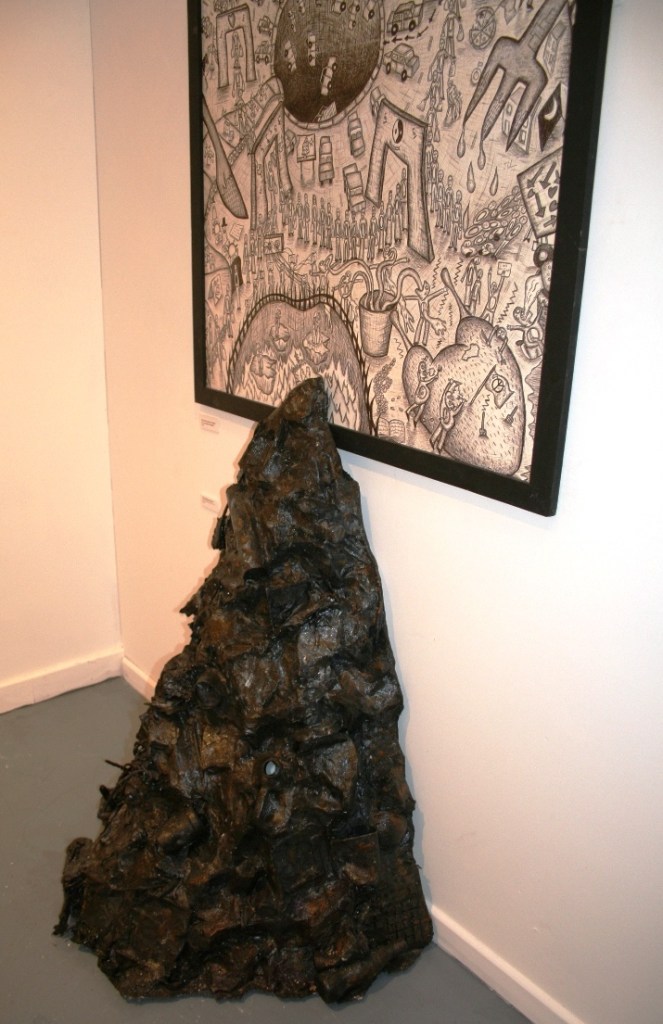
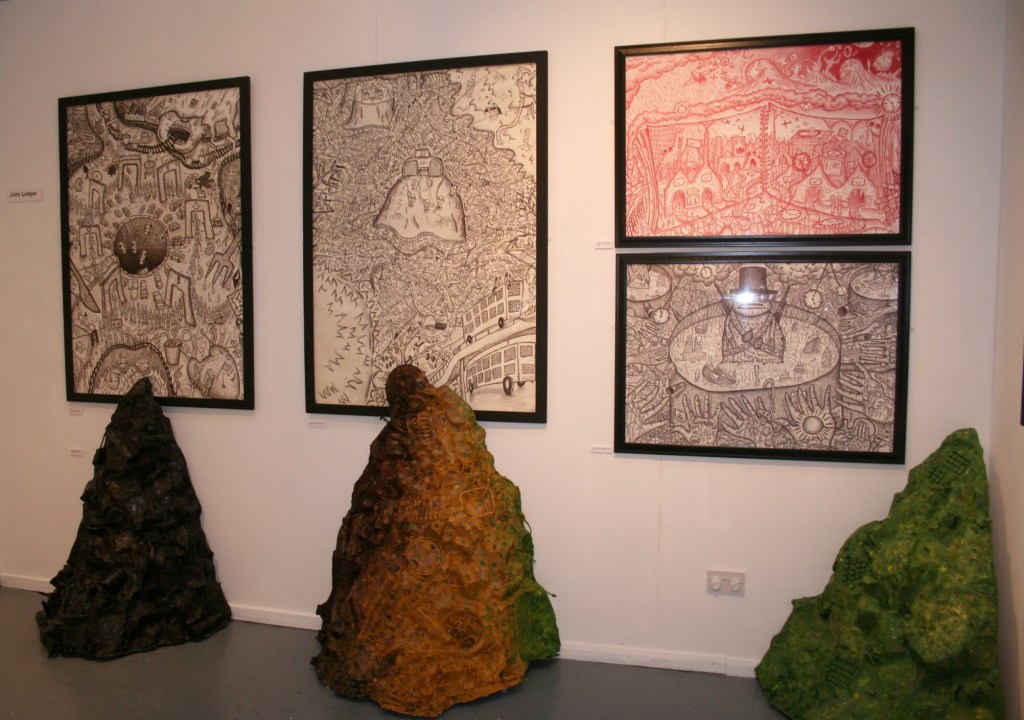
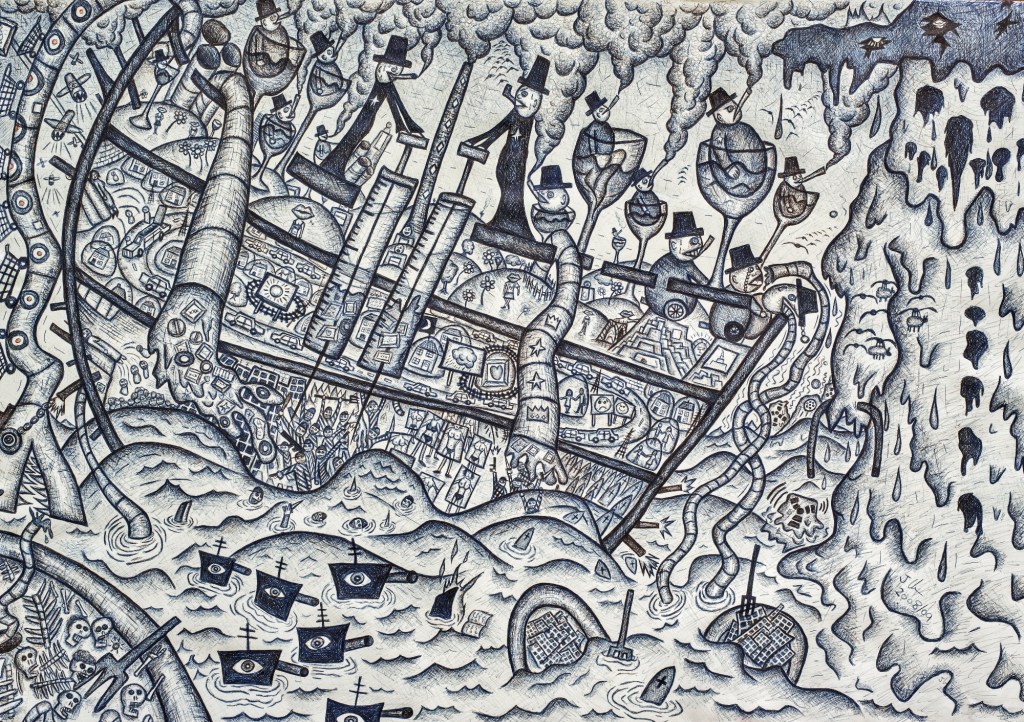
“The Red Drawing”

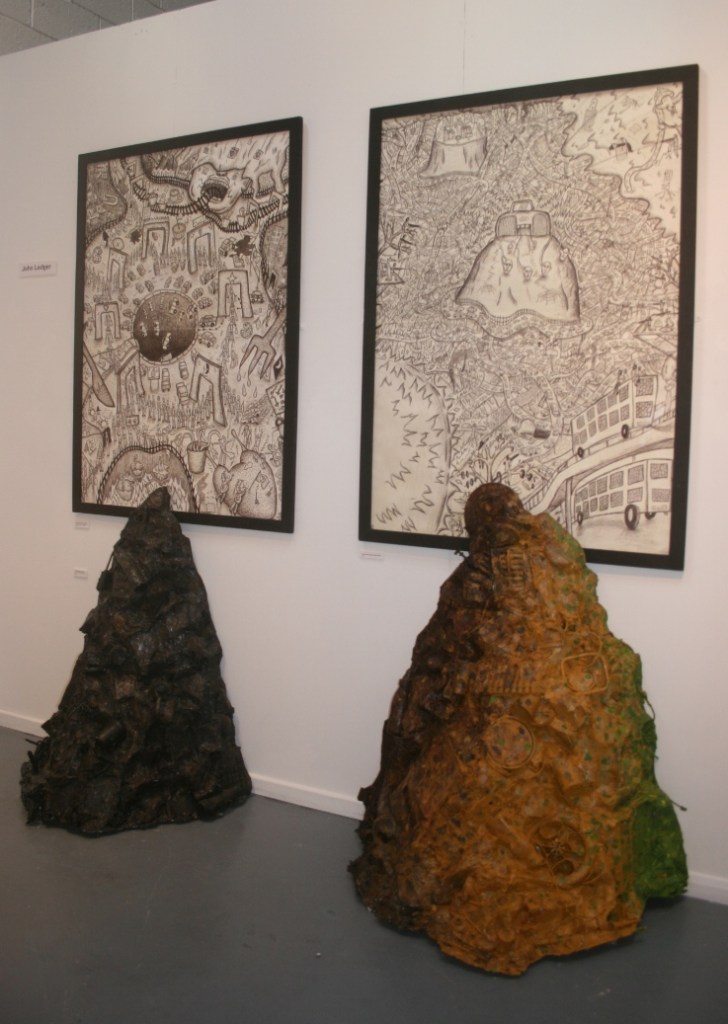
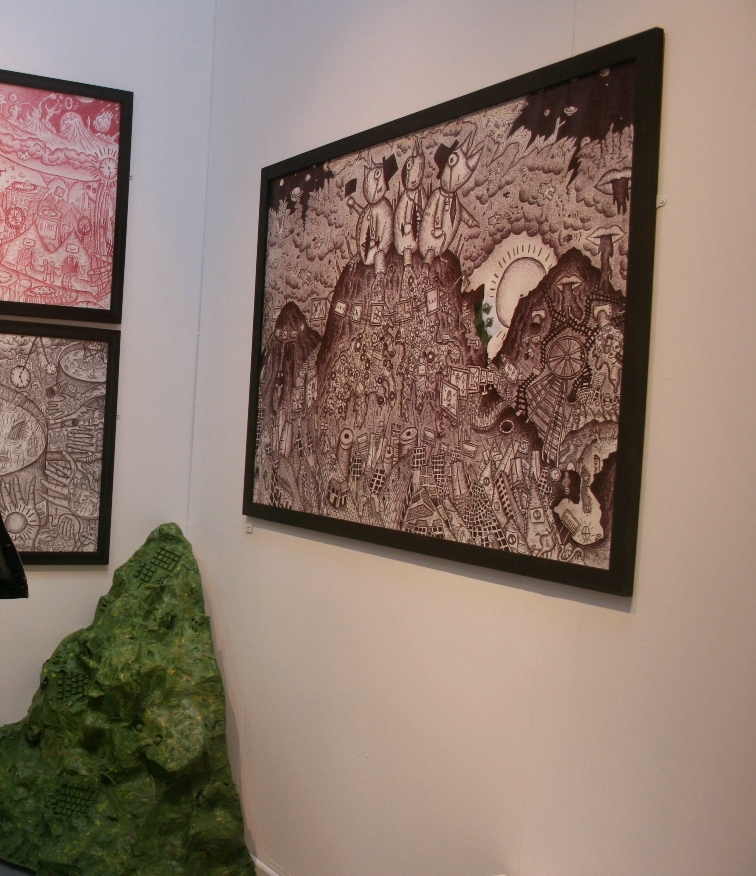
“The Red Drawing” (2010)biro on paper, 120X160cm


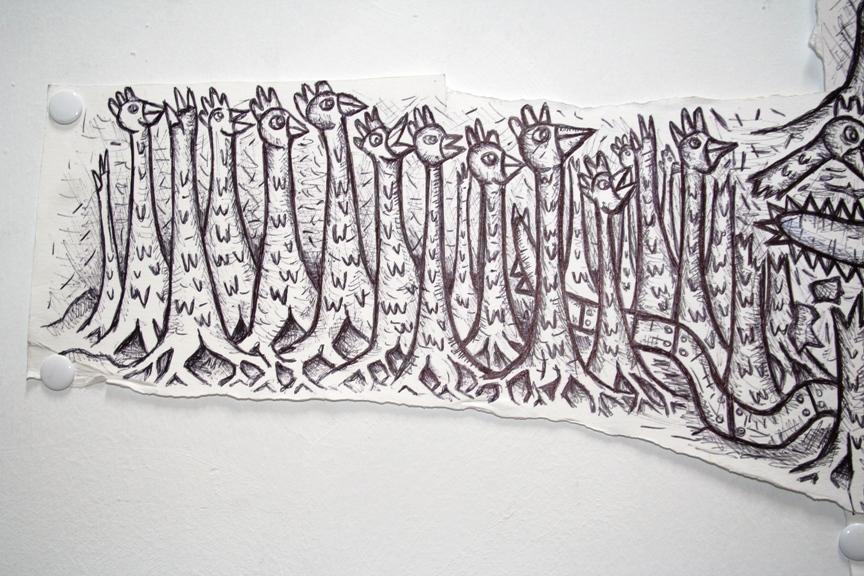
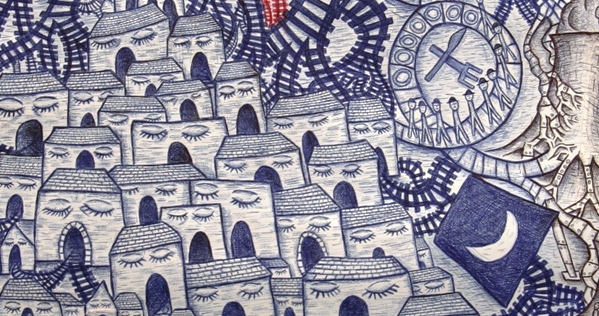
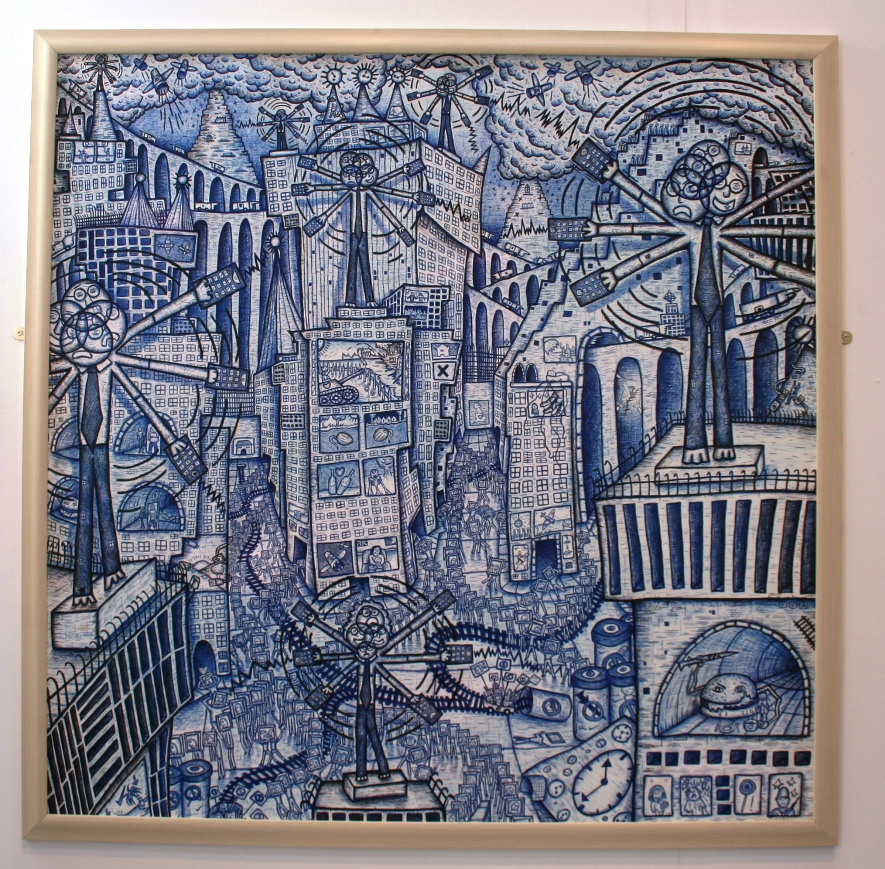
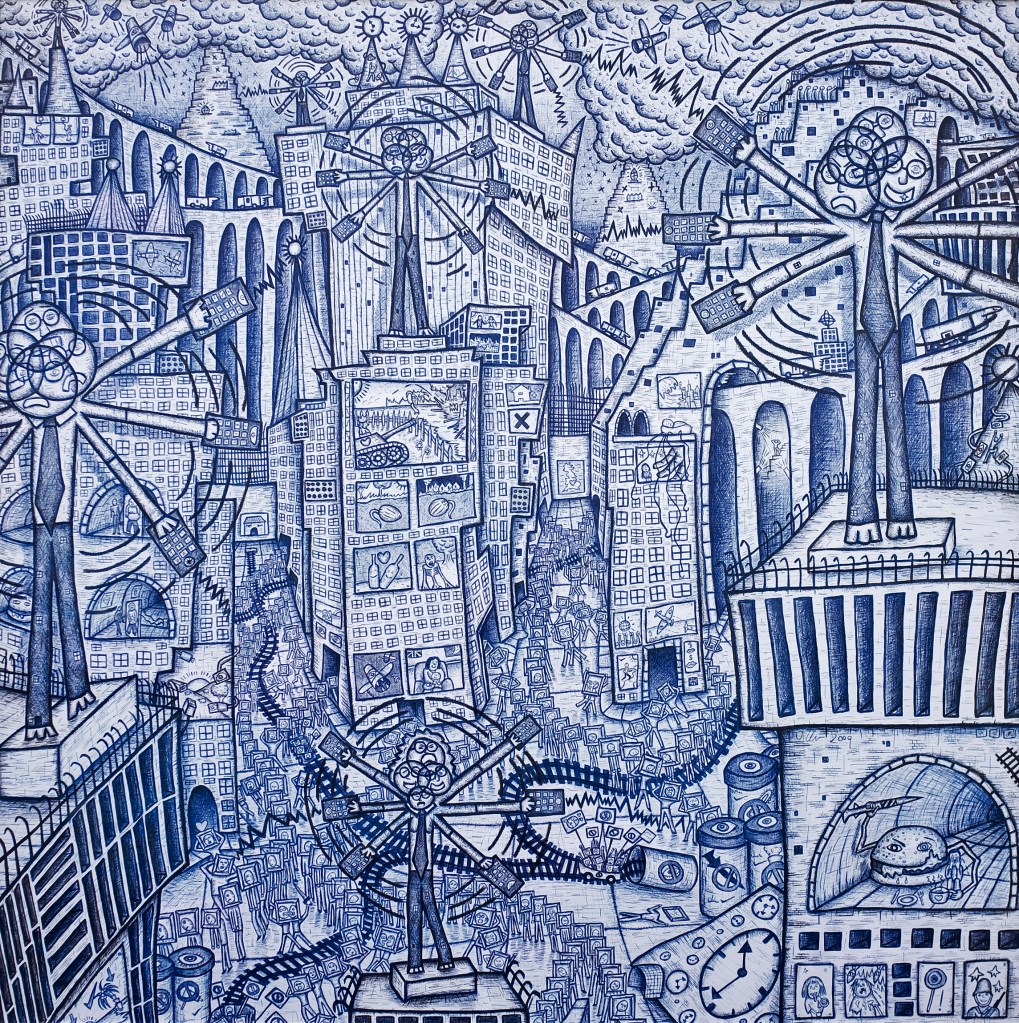
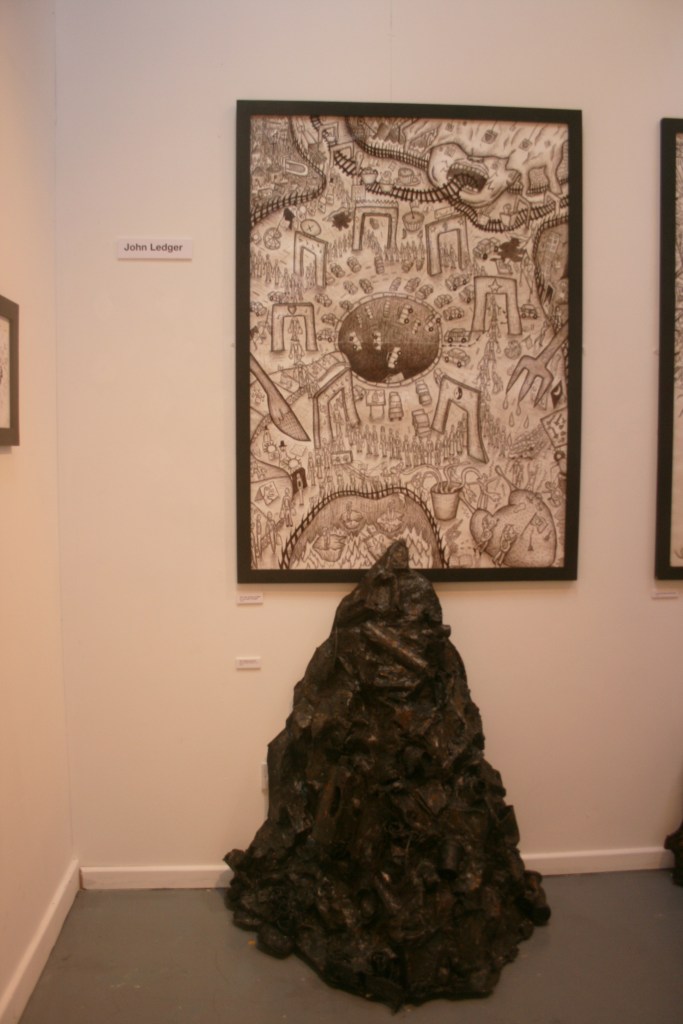
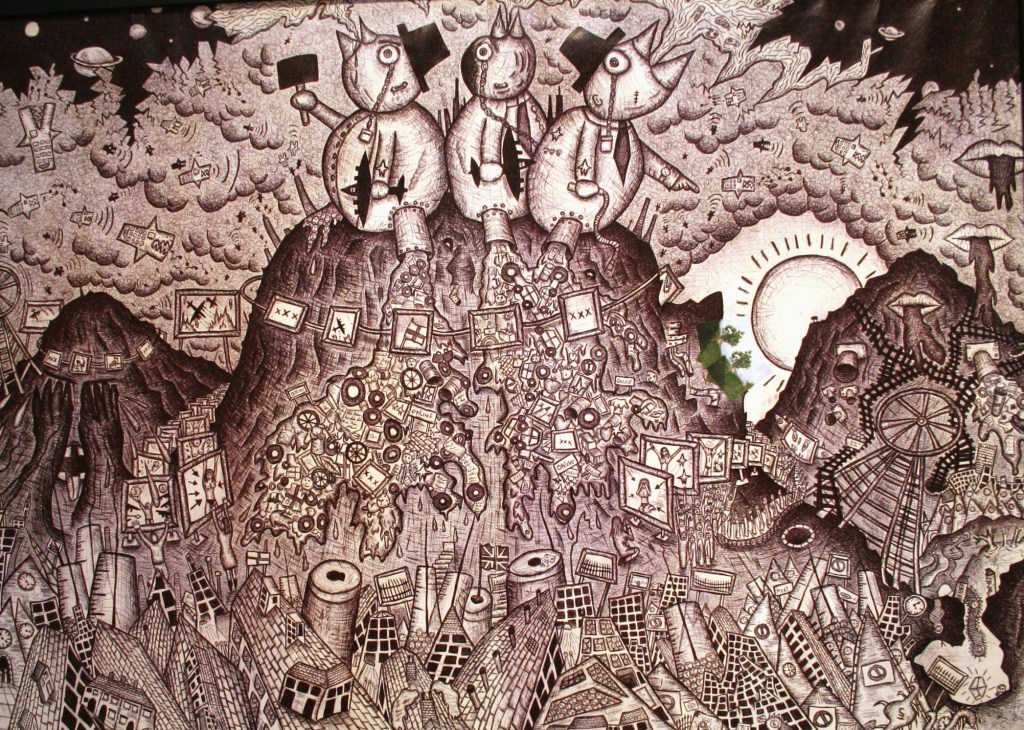
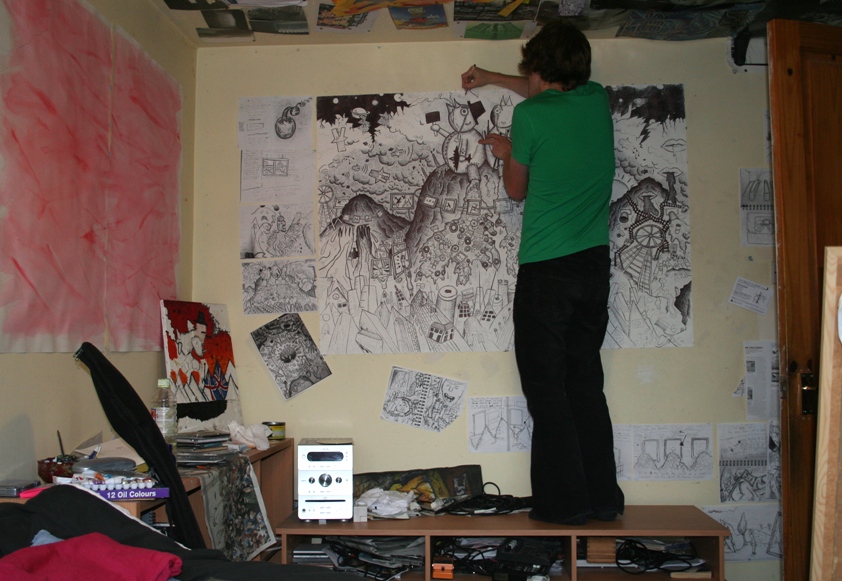
My drawings require me to under go shifts of manual labour; seemingly endless daily repetition. I could be almost undertaking a factory duty, and sometimes I feel like I am using a production method which rivals, in scale of input, that of the mass produce of the system I am trying to stand up to. For this task, the sturdy, bog-standard, office-like nature of the ordinary biro seems fitting.

T

The Revenge of a Discarded Friend

This piece of work is some years old now, but because of the nature of its theme it is one I have always wanted to leave in an outdoor situation. I wanted to leave it in a nearby city I had never left a work in before. I chose a spot in central Leeds, on the towpath of the canal (now used for leisure not industry), right under the the central rail station. The ‘Discarded Friend’ is nature, human beings are the ones who turfed it out of their homes in favour of a concrete, plastic and virtual world, but it is an eviction which it doesn’t have the power to permanently enforced.

IMG_4725

Uses of Technological advances in a Commercially-driven society

On one of my days off from work I was going to take my camera out with me, but I lost the heart. It felt as if I would just be adding to the mess which consumer capitalism has created. “Well” I thought “maybe I can just keep them for my own use and not feel compelled to paste them on to the net?” However, I had just had the privilege of viewing the new updated Google maps.

“Technological advances in a consumer society render everything pointless!!” – I very much believe this now, thanks to the Google Empire.

I’m no technophobe; I believe in technology for the benefit of humanity. However, something isn’t quite right; the Utopian visions its advancements seem to suggest are always far from being realised. And instead of making life more fantastic and meaningful, it seems to be making it appear more and more pointless – a feeling which says “been there, done that; nothing great happened; what’s the point of doing it again?” Yet we have to do it again; we are a generation transfixed with the web. We have become glued to technological advances which serve no benefits to us or the advancement of our species, and there is a straight-forward reason for this: the triumph of commercialisation.

Today whilst searching the web, I discovered that something had happened that I had been expecting to happen for a long time: Google had taken over the world!!! OK, well that’s not entirely the truth, but Google Maps does now contain a comprehensive street view of almost every street in the UK. At some point (in the summer of 2009 – certain advertising banners on the street confirm this) Google’s high tech ‘camera-car’ has whizzed around every street sapping every house and every person who happened to be on the street at that moment.

If you were unfortunate enough to be one of these people, Google now has the Commercial rights to let the entire world see your body – it has been kind enough to blur your faces out, as if you were an innocent bystander in Google’s war on uncharted land. These bystanders look towards the camera with helpless bemusement, as if looking up at some medieval conqueror parading victoriously through their streets.

My first reaction to realising that the world-wide-web has got virtual access to my street, was to do something which I usually try to restrain myself from doing; I posted a feed onto my Facebook community wall, highlighting my exasperation to, what felt like, an infringement of some age old right, which had been lost under layers of insane commercial growth. Of course this was counter productive; Facebook (and the other SNS’s) already have the majority of the UK constantly updating their feeds, letting a small-town-sized virtual community know when they are eating, laughing, shitting or crying; what difference would it make if the world could see the windows of the rooms in which they do this?

After an hour or so of no ‘comments’ or ‘likes’ I decided it would be best to delete the feed, after all, I knew that most of my Facebook ‘friends’ would have glanced briefly at the feed and thought this: “John’s a right technophobe; he’s read 1984 far too many times”

Maybe I am little too ‘Over-Orwellian’ with my feelings about what’s happening. The thing is though; we wouldn’t even need some all-seeing power watching over our every move and facial expression; in the 21st century we’re quite happily showing our entire lives to the world anyway – we seem want the world to know everything about us, whether it wants to or not. Even the disconcerted cannot escape the tidal shift towards this way of living; they cannot live without the needs that Internet communication has created.

This use of technological advances is not the be-all and end-all of what it can offer us a species; this usage is intrinsic to a consumer society; free market capitalism can have no other use for technology, but profit-making. There is a difference between a technophobe and somebody who is severely disconcerted with the speed that technology is advancing to solely cater for the needs of a dictatorship of commercialism.

The predatory mechanisms of Consumerism have become ever-more powerful on the internet. Facebook and the other SNSs may not directly sell a certain product but they most certainly function by playing on the individual’s social insecurities and desires, and create an insatiable social void, by using the exact same formulas that can be seen being used by Consumerism to sell products. It may even be apparent that, just like there is a higher intensity of Consumerism in less equal nations, social networking site usage may also be higher as a percentage in more unequal and more hierarchical nations. The UK is one of Europe’s most unequal nations, and has a much higher number of Facebook users (roughly 23 million out of a 60 million total) than other European nations with higher and similar populations but with a more equal distribution of wealth such as Germany (roughly 7 million out of an 80 million total) or France (roughly 15 million out of 65 million total). It is a fact that there is more social anxiety in less equal nations so, obviously, more people will be on social networking sites, feeling compelled to maintain or improve their social status. (On this note, I would recommend that everybody read ‘The Spirit level’ why more equal societies do better, by Kate Pickett and Richard Wilkinson; a book which goes very far in explaining the social consequences caused by inequality).

In the age when to be seen in the looking-glass, to be a celebrity, is an inescapable desire, we are all trying to prove our talents and creations. However, this now endemic desire has been rendered impotent by the culture that spurred them on; the omni-presence of cultural, visual, audio artefacts on the web has brought culture to the brink of valueless, and all that we can do is add to that decreasing. What can a photographer bring to a world which has been covered head-to-toe by the hi-tech camera abilities of Google street view? What can a songwriter bring to a world which consists of possibly over 1 million Myspace music artists also screaming to be heard? No doubt this rant will end up on my blog page; me, just another of millions of ‘me’s’blogging awaytrying to be noticed as having something of worth to contribute; ignoring our doubts that inform us that we are merely just adding to one great mess.

This accessible but futile ‘celebrity fuelled’ dream is working side by side with the advancements of commercial interest on the internet to the ends of making everything, once of value, worth nothing. However, this omnipresence is an ever growing pacification of the masses. Everything is instantly accessible, instantly there to consume; photo’s of everywhere, every song ever, every possible porn fantasy. If we aren’t strong enough to pull away we may already be plummeting ourselves into the completely dilapidated environment described in Brave New World.

The suggestion of an increasingly powerful virtual dominance controlling the mass, sometimes seems too stronger a suggestion to merely dismiss as an irrational fear. And the recent discovery of Google’s surveying of the land, was what recently got me feeling troubled that there is something seriously wrong with the uses of technological advances in our current society. I’m no conspiracy theorist, yet I just cannot see what commercial benefits Google could receive from photographically documenting back-alleys, and cul-de-sacs in small villages. One cannot help but wonder whether Google is being funded to be able undertake such an extensive survey of the nation’s roads. One could argue that the nations with the most extensive Google street-views on the net are the ones with the most national security paranoia, over issues such as terrorism, activism and immigration; The USA, The UK, Spain, France and the Netherlands are some of the few nations which have been extensively surveyed by Google. There is a decreasing level of trust in Capitalist societies, from person to person and from the state to citizen. This is only an unfounded suggestion, yet Google’s extensive surveying seems a little ‘over the top’ for the purpose of allocating advertising space.

Perhaps it isn’t impossible to imagine that Google street view will become a useful tool for the state once the poverty line lifts above most of the population, as climate change/peak oil make resources and jobs much more scarce – these environmental consequences are destined to happen if we carry on ‘business as usual, that’s for sure. The poor will need to be monitored ever more and possibly crushed ever more as their needs become greater. This may sound more like a terrific sci-fi dystopia, but are we not close to this situation already, without the consequences of climate change?
It doesn’t require much imagination to see that the current homogenising forces of consumerism could quite easily be utilised to control the masses in a much more direct and brutal manner; the gradual increasing of surveillance in society seems to be sneakily expanding, almost in-time to suppress the social unrest which would be caused by unchallenged climate change and peak oil. Google street view, presently a consumer accessory could be easily utilised for state surveillance; signing up to social-networking-sites could become compulsory; all those who are already signed up wouldn’t be able to leave. And finally, let’s not forget the structures of the out-of-town shopping complexes; these places would make ideal holding pens/prisons; indeed, my nearest shopping complex ‘Meadowhall’ was actually built with the original intention of it being a prison! You may say I have got a very vivid imagination; I say that I am merely monitoring the tracks of the inevitable.

Without the conspiracy, one thing still remains apparent as I look at the bemused passers-by caught without consent by the camera: the rights of enterprise seem to overrule all other rights; we can’t touch Google, just like we cannot touch the billboards which bombard our minds, however it is allowed to drive down our streets, and look in our windows, all for the apparent benefits to enterprise. Nobody and nowhere seem to be exempt from these rights of passage. More worryingly, few seem concerned, as they passively tell the world-wide-web about there private lives, whilst being satiated by omni-present consumerism to an extent to which the need for democracy doesn’t seem that great.

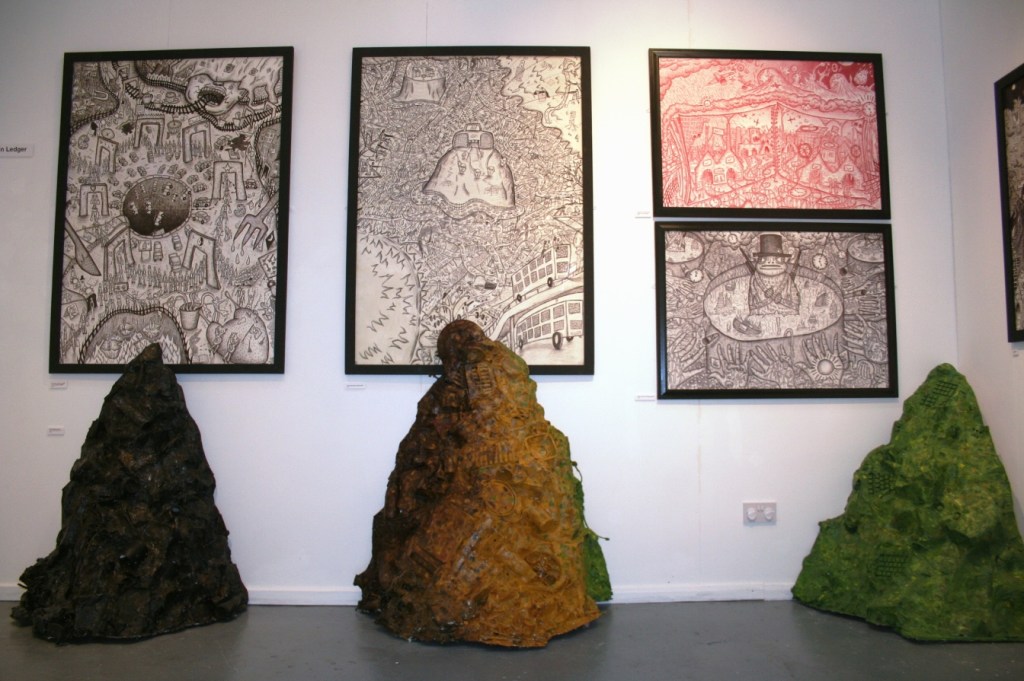
Photos of ‘Tunnel Vision to Copenhagen’

 The preview/Vigil will be held this Friday (11th December) at 7pm, George Yard, Barnsley

Artists involved:Sarah Maddern, James Pierce, Louise Wright, Mikk Murray, John Ledger, Bradley Sharp.The importance of the number 350 – in relation to the vigil.

350 ppm (parts per million) of c02 in the atmosphere – the level we are being urged to cut our emissions to – is not a randomly picked number: it is scientifically proven that aiming to cap our emissions at anything higher than 350ppm, say above 400ppm, would lead to run-away climate change from which positive feedback loops would occur, pumping stored C02 into the atmosphere – eventually leading the a mass extinction of life and inducing devastating affects on humans.
In his book ‘Six degrees – Life on a hotter planet’ Mark Lynas explains that aiming to cut our emissions by 90%, by making sure they peak then begin to fall in the next 6 years, is essential if we are going to keep global temperatures at no more than 2 degrees above the current global average: the agreed stable level. This may be difficult to achieve, but if we do not , the average global temperature will rise even higher and, above the 2 degree threshold, the planet is very likely to lapse into a ‘meltdown’ of which we have no control over.
I believe that Capitalism, especially in its evolution into Consumer Capitalism, cannot arrive us at this safe point. We need a ‘sea change’ in our perceptions of how we should live upon this planet.
From the perspective of the governments of the developed nations, and the representatives of the large Corporations, Copenhagen is merely about getting the best deal for Capitalism to continue ‘business as usual’. It doesn’t matter if this is to the detriment of millions; these advocates of pure Capitalism are blind to any other way forward. However, Capitalism cannot co-exist with a stabilised global temperature of 2 degrees above the current global average; one has to give-way, but which one will it be?

Location: George Yard, Barnsley

(bookshelf by Mikk Murray)

(works by Louise Wright)

(untitled – Bradley Sharp)

(Chernobyl photos – James Pierce)

Our exhibition will be part of a Global ‘VIGIL’ organised by 350.org

AS PART OF OUR ‘TUNNEL VISION TO COPENHAGEN EXHIBITION’ WE ARE COMBINING OUR PRIVATE VIEWING EVENING WITH A MUCH LARGER AND GLOBAL EVENT. WWW.350.ORG HAS ORGANIZED A GLOBAL CANDLE LIT VIGIL, WHERE PEOPLE ACROSS THE WORLD UNITE TO BRING TOGETHER THEIR DEMANDS FOR RAPID AND DRASTIC ACTION ON CUTTING EMISSIONS AND SLOWING CLIMATE CHANGE.
350.ORG is named after the Parts Per Million of Carbon dioxide which we need to get down to to aim for safety – 350ppm. We are currently at 389ppm and rising into the wrong direction.
(www.350.org)

THIS EVENT WILL BE CLOSE TO CHRISTMAS, SO WE EXPECT TOWN TO QUITE BUSY. WE HOPE PEOPLE WILL DROP IN. EVEN IF YOU DO NOT LIKE OUR ART WORK, I HOPE YOU APPRECIATE THAT WE ARE TRYING TO BRING IMPORTANT ISSUES TO OUR HOME TOWN.
THANK YOU

INFORMATION BELOW IS TAKEN FROM WWW.350.ORG – THE CLIMATE ACTION WEBSITE THAT IS COORDINATING THE GLOBAL VIGIL.

Here’s our sense of what will be happening at the UN climate talks in Copenhagen, and why we’re hoping some of you will start or join a candlelight vigil at a strategic or iconic location in your community on Dec. 11th or 12th.

The weekend for these vigils falls smack in the middle of the two-week Copenhagen talks. President Obama just announced that he will visit Copenhagen on December 9th–and there’s no doubt that he’ll deliver a rousing and eloquent speech. The following day, December 10th, he’ll go on from Copenhagen to Norway to collect his Nobel prize.

We need to send a signal to say that speeches and prizes are good, but action is what’s really required–enough action to head us back towards 350 parts per million.

Obama will bring an emissions target to the table in Copenhagen, a bittersweet development in this political drama. Sweet because having any sort of commitment from the U.S. increases the chances of global collaboration on a climate deal, bitter because US emissions target represents a paltry 3% reductions below 1990 levels*–far from the ambitious cuts scientists say are necessary to get back to 350.

The United States now holds a big key to unlock this process, and we need Obama and the U.S. Congress to turn that key–which is why many of the candlelight vigils will take place at U.S. senate offices, and at U.S. embassies and consulates around the world.

The timing here is crucial: the vigils are part of a huge mobilization on the weekend of December 12th, mid-way through the negotiations. The climate talks will build to a head a few days later, as our allies and champions–people like President Nasheed of the Maldives–struggle to get a document that represents “a survival pact, not a suicide pact.” They have said repeatedly that their survival depends on getting back to 350, and it will help them immensely if delegates from other nations know that back home people are keeping up the pressure and demanding a real deal. I’ll be in Copenhagen on the weekend of December 12th to help organize a vigil with the 350.org team–and my hope is that you can join this effort by organizing a vigil locally.