I’m not as sharp as I was in the 2010s (although, who is?)
Wounded and winded by the personal and political over the last 5 years, improvements to my general quality of life as I entered middle age became the only real priority.
The mental gymnastics involved in trying to understand why people in my milieu think and vote as they do, in the hope to make some sort of progressive bridge, contributed to the aforementioned injury.
I instigated participatory art projects with my friends in an artist-led collective, to try to do my best to circumvent the trigger labels, and to ask how people really felt about life. It was a DIY project that received little attention, but I saw it as contributing towards a memetic grey matter of information that was slowly transforming the world over social media – and, as violent as the dialogue was on the senses, it was undertaking the impossible-yet-necessary from the bottom up.
How old that all feels…
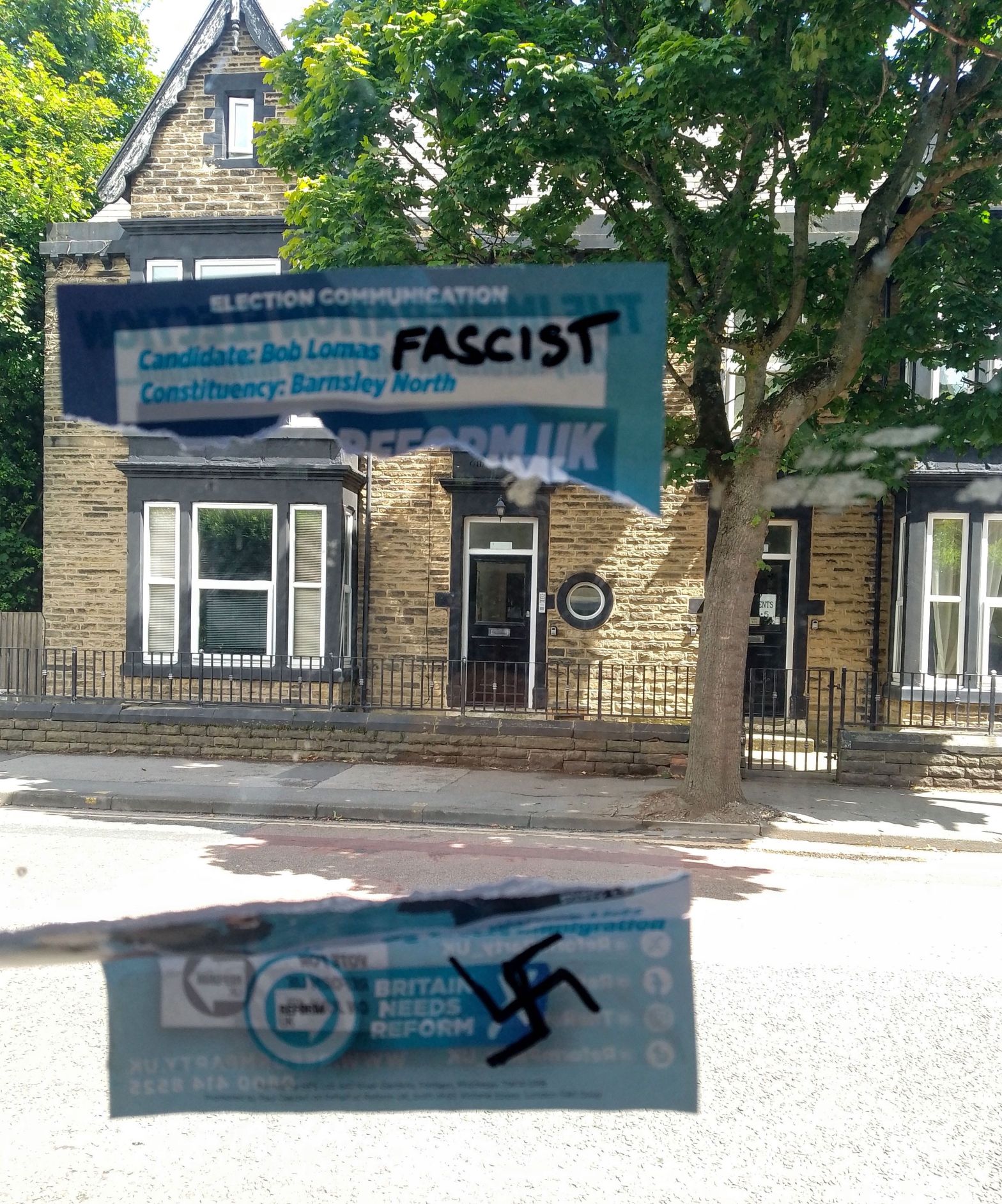
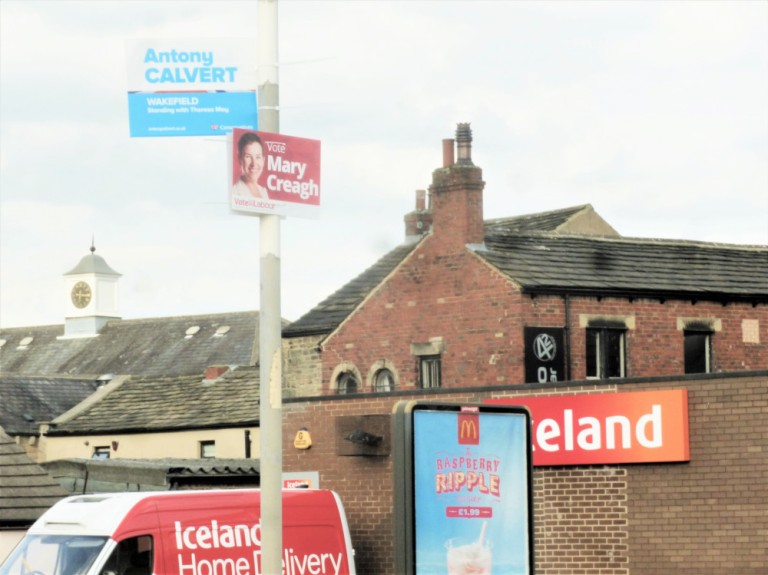
Yet, I’ve awoken this week to find out that Farage’s Reform party are getting close to overtaking the Labour Party in the voting intentions for Barnsley North, the constituency where I live.
The title quote, playing on the famous quote attributed to Marx’s interpretation of history, feels the most adequate to the current situation.
I will hold my hand up and say that I had sympathy for some of the motivations for voting Leave in the 2016 EU referendum.
It was ugly, it was racist, but it was also justifiably angry at a political orthodoxy that presented everything as being fine, when it clearly wasn’t for many people, for many reasons.
That this dissent was easily activated through racism, through scapegoating immigrants, was just as much the fault of culturally liberal politicians and institutions who endorsed inclusivity and tolerance whilst subscribing to the economically right-wing agenda (neoliberalism) that is at the root of so many of our problems.
Brexit was and has been a tragedy.
Reform is its return as farce.
Around the time of the 2016 results, I genuinely thought that the racism and xenophobia could be deactivated if a politics that genuinely served people, and moved away from an economic system that was tearing up the social fabric around us. This never happened: the main progressive alternative was demonised and the general population gaslit into believing it ‘unelectable.
The farce of Reform is the farce of not learning from our recent past. Both the electorate, who cannot see that Farage is nothing but a wrecker in the service of disaster capitalism, and the political and media establishment who did everything they could to prevent an alternative that may, may, have just tended to needs that are once again being exploited.
There’s clearly so much at stake. During the last 14 years we have experienced a horror show, and despite the potential epochal collapse of the Conservative Party, the path before us is far from reassuring.
But I just cannot find something that pushed me forwards for so long: my political pulse.
Where did it go?
Half way through these 14 years, exactly 7 years ago, we almost had a government that pledged to bring about the kind of 21st century we once expected in those childishly optimistic moments of the late 20th century.
A collective energy had built around the unexpected Labour leader Jeremy Corbyn and even when the Tories under Teresa May managed to cling to power after the 2017 GE, there was a sense that the near future was on our side.
I have never been as directly politically engaged as my conscience suggests I should. An adult life devoted to thinking about the state of the world, making art about the state of the world has been matched by an inability to know how to be, both with others and with myself.
From my observations the average political activist doesn’t make themselves, but is made – often by where they end up in their early adult life, what community they become an adult in, university or otherwise.
Likewise the politically disengaged are made and do not make themselves, by the same factors, or, more so, by the lack of them.
I found myself in the middle, literally. Between larger towns and cities where I would more frequently come into contact with politically active bubbles. And the more politically disengaged culture of the people I grew up around and still lived around.
This political disengagement was formed in two stages. The first was that a lot of people were traumatised by the post industrialisation of the 1980s, especially round here, because of the Miners Strike. Secondly, the design for life had shifted massively. New build housing estates encouraged us to focus more on the nuclear family than the community, and retail parks encouraged the same.
Around this time, my political mind was formed from personal distress, a deep questioning born from an inability to cope in my own skin. It was born in isolation rather than collectively.
It certainly strengthened my thinking and artistic direction, but it didn’t necessarily do anything to strengthen any sense of being part of something; I found the heated disagreements that would erupt with people I’d grown up with, or the disdainful reactions to my residual provincial town lifestyle habits in more urban bubbles eventually too stressful without a support network to ease it.
To deal with this, I found myself perpetually trying to square circles and circumvent divisions. This was aided at the time by an almost Millenarian conviction that a more just and equal world was coming, which would brush all minor differences away.
I, like many, have yet to properly recover the person I was before the 2019 general election and the conditions during the pandemic eviscerated any conviction that a better future was imminent . I could never have imagined the 2020s would have felt quite like this.
I, again, also like many, have felt more isolated and cut off since the aforementioned events. Whether it is a lack of ability to go where I once went, mentally and physically, or just a kind of brain damage caused by losing faith, I no longer find it easy to feel my political pulse.
With this in mind, the election next week feels pretty much like laying in bed, knowing you have somewhere important to be, but not being able to motivate oneself.
And I want to be. Christ, whatever happens, to likely see the back of 14 years of Tory rule, horrible nasty rule, should fill my heart. I want it to. But at the moment I don’t feel anywhere near the amount that I want to and know I should do.
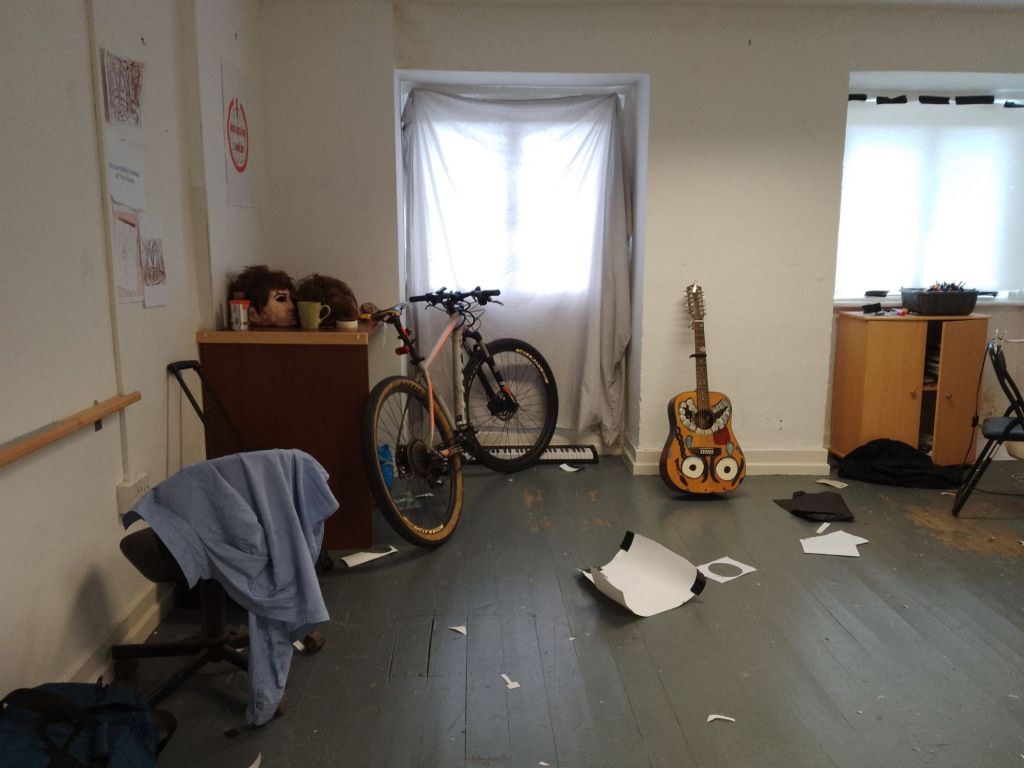
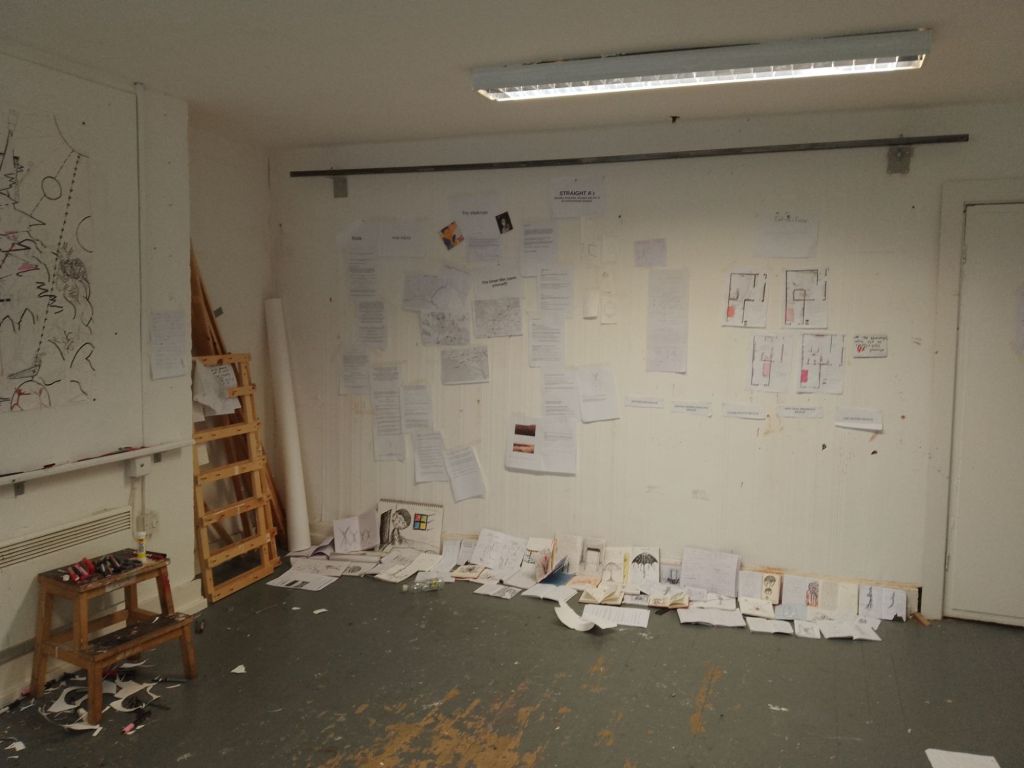
I’ve finally got a studio space. It’s in Wakefield, the next town down the road. It’s a little more than I was wishing to spend, but after a series of difficult years that have forged a kind of internal inquisition into my devotion to my work, I now feel like I’ve got a concrete commitment to make this work out.
However…
Sadly, I was unsuccessful with an Arts Council bid that I put my heart and soul into.
I even paid for mentoring for support. I was as honest as I could be about how much I need help right now without playing the metaphorical violin.
Arts Council funding would have boosted my self-worth, which, over the last few years, has been crumbling and affecting my behaviour in deeply regrettable ways.
But I feel confident that I’ve passed a turning point. The studio space has for the first time in a long time let me feel self worth in that which i have devoted my life to.
I can’t recall early childhood crushes, but I distinctly remember one from the spring of 1996 when I was 12 years old.
It was the kind of Spring that lived up to its name. I was in the first year of secondary school, and after a first term of hurtful bullying I undertook a lot of (unfortunate) editing of my appearance and personality. Whether this action altered the situation or not, life in the second half of the year became far lighter and brighter.
I felt the flutter of early pubescent vibrancy that was outshining the fear that stalks those new to secondary school, and it was as if I was blossoming just like the cherry trees in the courtyard.
I became fond of a brunette girl in my class. She wasn’t the most glamorous girl, and had a bit of ‘street cred’ coming from a tougher estate, which equally intimidated me and drew me in.
I had no idea what do with these feelings other than romanticise the situation over school chip dinners and the second side of a tape recording of ‘What’s the Story (Morning Glory)’.
I’ve always been naive and sensitive in equal measure, and always erroneously gambled on a New Now where the ridicule and soft-bullying I so hate as part of life gave way to softer kinder relations. But as I walked around a nearby village, looking in every Bookies and pub to find a newly-made friend’s unemployed dad, I realised I’d made a massive mistake by telling 3 friends who my secret crush was.
As you can imagine, it ceased to be a secret. After the disclosure, the 3 friends got me to the floor on a built up street, and sat on me until I disclosed more further. By this point I felt routinely humiliated.
They promised me that they would tell everyone once we got back to school.
And as great as my memories of this summer holiday are, I also recall beig haunted by the fear what was coming.
What came was quite humiliating, as they stuck to their word, and before I managed to get to the block where our form room was on the Monday morning, they’d already told everyone.
To be fair, nothing happened, apart from the girl in question losing her shit with all the silly little 12 year old boys giggling and making rude things up. Equally she was far more grown up than I was. She was street wise, she was already dating lads, whilst I was still eating ice pops in the summer and pop tarts in the winter.
I don’t like modern dating apps. I don’t know how to communicate with photos of people. But a month ago I decided to have another go and the first person I saw was the girl (now woman) in question. Now with a life and with teenage children of her own, I found it hard to swipe left.
I swiped right. But then deleted the app 2 minutes later.
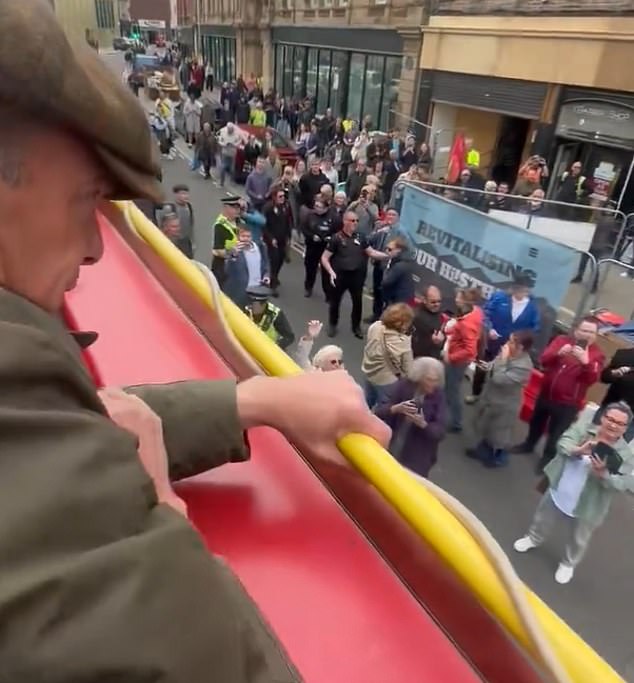
I didn’t intend to stay away from Farage and his Vampire’s Vortex as it swirled through my home town today, I just had no idea it was happening.
I feel the rush of excitement to see my home town on the front pages, and the grip of Fomo as I’m sat in the distant exotic place of Wakefield, trying to sort an art studio, and hopefully a small step towards a new life path (I’m feeling a little more myself already, but I know it won’t be easy).
But I should be glad I missed out. The Vampire’s Vortex has one aim: to suck you in and feed off your energy.
I don’t particularly want to speak about what ReformUK stand for, and try to unpack why it means one thing to some people, and something terrifying to others: “stay away from the Farage Vampire-Vortex” is the best advice I can give myself.
Of course, this only works if everyone else stays away from the Vampire’s Vortex.
All successful enterprises in our information economy have to be part vampiric: they rely far more on what we give to them than in what we get in return. If we ignore them it has no energy and dies.
In a more self-sufficient society, of strong communities, we could even ignore the General Election entirely, because we’d find it easier to do our bidding on the streets.
But on the streets all we can do is yell and lob bits of broken plaster from a construction site, from the despair of abject disempowerment. Farage Vampire-Vortex loves this.
Farage and his Vampire”s vortex love this.
It also loves the hate towards one another we project on the comments section – especially the hate towards the “scruffy-looking” lad who threw the objects, who, judging by a 5 second clip, and being from Barnsley, is a “unemployed scumbag”.
It’s the absolute pinnacle of the ‘negativesolidarity‘ that permeates such an exhausted and atomised society. And it’s the kind of bait which is hard to resist diving into the comments section for, and the kind that gets the Farage Vampire-Vortex fat on our blood and guts that I wish we could use for something better.
For when we are blind we must be led
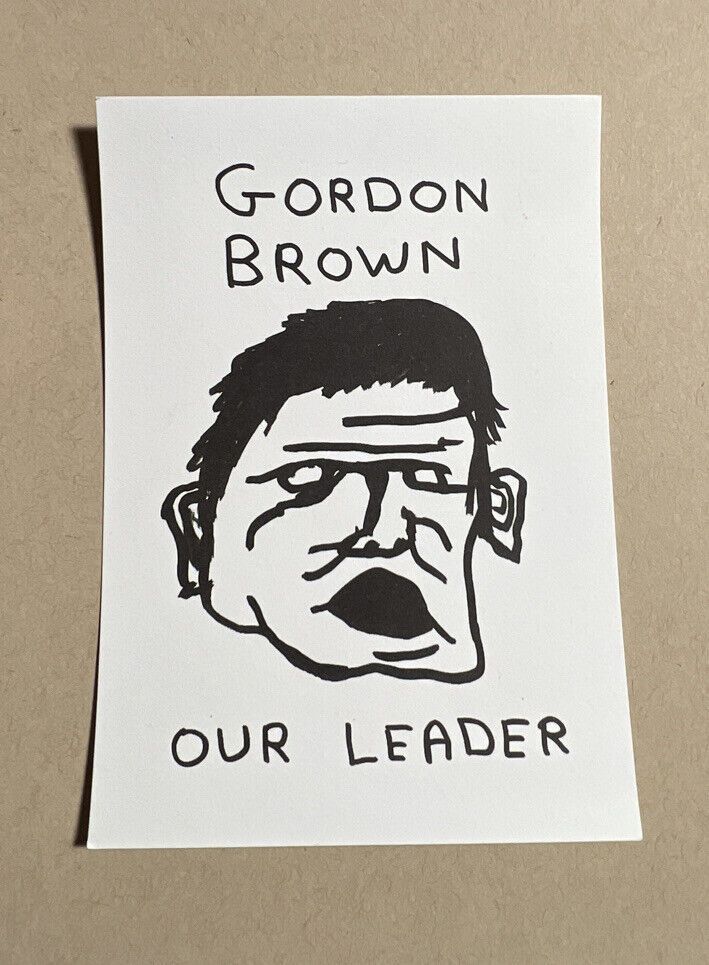
Artwork made before the 2010 general election by David Shrigley
As the Far-right grows on the continent, the author and journalist Naomi Klein remains forever-rooted to a centre left position in a world where the Overton Window hasn’t merely shifted, but seemingly fallen into a ditch.
She has issued a warning to the UK Labour Party that if they do not implement something that addresses the most urgent needs of the country, such as a wealth tax to restribute at least some of the country’s wealth then this void will almost certainly be capitalised on by the Far Right.
The former prime minister Gordon Brown and even a former aide to Blair have stressed the same message.
Not for me to go all left-centrist, but genuine left-centrism, as in not simply more neoliberal technocrats, could save us from calamity.
Even those with contempt for small boats can still feel pain at the silent social murder of many on our town centre streets since austerity kicked in. You can appeal to people’s social spirit, or you can ignore it, and let the void be filled by the likes of the Farage Vampire-Vortex.
The artwork above is very David Shrigley, in that what looks at first like simple satire is very multilayered, and between these layers is love, perhaps even the desire to be led as if we were blind. Back in 2010 this poster almost got me voting for New Labour, even after all that had made me and many others my age so apathetic by the end of the Noughties.
Yet, as I chose to vote for a fringe left party, I can’t help wondering what the present would have looked like if Brown had remained in power.
And as we stand, after nearly half a century of Thatcherism, we are a blind society: we cannot see collectively
Because of this we still have to engage with what almost feels like the impossible mental gymnastics of voting in the hope of genuine change.
We aren’t going to do it ourselves, on the street, because we don’t know how to bring ourselves towards one another. The more atomised we become hereinafter, the more the far right will grow.
Somehow we need to be led together towards Social Sight.
What if a heart is turned to stone before it’s had the chance to be broken?
Slow trauma.
Fast trauma.
What’s the difference in the end?
You pour over maps, with the longing to finally get on the right track. Maps are both an aspect of our alienation and a comfort from it.
Whatever this mental health ‘thing’ (and it must be a disorder, judging by the way it shapeshifts every time I think I’ve sussed it out), I still feel caught by some late teenage snare, staring at that missed moment from where life branches out, from where the ambience and assets of our future are roughly predetermined, unless we hit some middle age crisis.
At this delicate moment I was in the throws of Anorexia.
I’m not bitter, and not asking for pity. It’s just been hard to move past a crucial part of my life that I believe that if I’d had it I’d had been a lot better equipped to deal the standard trials and tribulations that life throws at us. I missed an important life lesson, and it’s absence is filled by some inner Jeremy Kyle-esq figure whipping you with ‘hard truths’.
My home town is a traumatised town. The young adults who remain and don’t join the university flock, tend to be more vulnerable, damaged, traumatised. It’s something I’ve observed year after year.
Without sounding like a nobhead, I wish I’d had an experience of friendship building and recreational habit-forming with others who weren’t like myself trying to hide the emotional lesions from where pain perpetually oozed. I say this with nothing but empathy, but I needed to see horizons that didn’t reflect my interior landscape.
More and more desperate for connection, any diagnosis that I may or may not receive in later life may be no more than a conciliation prize for my own stability, and will do nothing for the consequences of my mistakes that have oozed quicker than pain can ooze.
I have been lashing out in the void. The void that exposes itself in every form but in the one that craves to scream “help me”.
I had just finished my Bachelors degree in Art and Design at the local university centre in my home town, and all I knew is that I wanted to progress and get more exposure as an artist.
That summer was messy. My entire social world in my home town revolved around an indie bar which became a more toxic and paranoid environment as a larger reality loomed. The party was over – both for up and coming indie bands and socialites and for the larger economic order.
I was increasingly in a state of anxiety over my future, infused with a growing sense of distrust and paranoia, and I agreed to go to the Leeds Festival with a gang from this scene. After 2 days of insomnia, which led me into a hyper-paranoid state I had my only ever psychotic episode.
In a moment of narcissistic hell, everybody in the entire festival was calling my name. “John Ledger, John Ledger!”. I’d only had a small bit of public accolade and exposure from featuring the local paper after the degree show, but this had escalated into a sense that everybody had eyes on me. And, momentarily, I could hear things that weren’t real.
After that, I got a job at a local gallery. Which is in the fact the Yorkshire Sculpture Park. Which is only a few miles from my home.
And the rockiness began to subside, and for the next two years, I had started to build myself up as an artist and writer. Increasingly using blogging to share what I was creating.
It was originally on Blogspot. I was encouraged by a more cock-sure artist at the high-flying Glasgow School of Art, who happened to be the brother of a woman I thought I had a chance of a relationship with at the time.
I transferred my blog to WordPress in 2012, at a time when the social media giant Facebook was perhaps at its most popular.
When I began blogging in 2007, Facebook was still a bit so-so. It had no more gravitas than Myspace. I’d never heard of Instagram or Twitter. Did they exist way back then?
As we all buckled up for the austerity ride, full of misleading statements that gave us a sense that we ‘were in it together’ and that there was even a ecological morality to the cut backs, none of us except life’s chancers could have been prepared for what came next.
I imagined austerity as a great leveller, but soon I began to see a society more divided and exclusive than ever. Social media initially seemed like a tool to ignite change, but quickly became a tool to enforce high maintenance social envy, or what we’d begin to call ‘fomo’, and to enforce and escalate divisions. What once seemed like a tool to seek a better future quickly became what my late art tutor would come to call ‘the last battle ground of Thatcherism’.
Over the coming years, my work improved, but got heavier and heavier, as my 30’s closed in, and I found myself increasingly isolated and in need of a better income, but lacking any sense of how to do this. The need for connection became greater, but so did shame and self-hate. Drinking became a more lonesome and regular evening pursuit, and addictive and destructive behaviours began to play out on social media.
I cannot find a better word to describe what the experience of what has happened over the last 15 years+ but ‘traumatic‘. I wonder what my life track would have been like, without this transition towards ‘instant everything’. And with a background ambience of every thinkable catastrophe, I cannot help but wonder what shape they’d had taken, minus the collective induced-effect of social media on all of us.
The cruelest aspect of shame and self-hate is that it sets up the conditions to act in ways so that it becomes justified: if you spend most your day thinking your repulsive you’ll likely act in ways that begin to prove it. I think about this when I see certain criminal actions, and I think about my own future plight with cold-blooded dread.
Art, artist, me as an artist. This is something I have clung to for identity and self-worth increasingly more desperately over the last ten years. But it increasingly causes more pain than pleasure, I try to find self-worth keeping the oil burning, but then start succumbing to seriously negative thinking and then start drinking. All my biggest regrets in life began on evenings like this.
I’ve never been what is now called ‘normative’, I’ve never been good in competitive work environments – which is most work environments these days. Advice of all kinds ricochets inside my head, none of it makes sense anymore. I don’t really know what to do anymore, and cut and paste advice to this doesn’t make sense either.
So many ‘should haves’. Wish I’d learned how to stand up for myself at school. Wish I’d had the opportunity for an Autism assessment whilst young. Wish I’d had stayed longer at the Eating Disorder clinic. Wish I’d never got into the drinking culture. More than anything, wish I’d had recognised where all of this was heading at an earlier stage.
I’ve deleted social media. It really doesn’t matter anymore if I’m viewed as an artist or not. It all merely feels like a pantomime act for a past life now. But I can never delete this blog. Bloggers, the infamously ridiculed ‘balding middle aged losers still living with their mum’. Who cares what they think anymore? This blog will survive until WordPress dies.
List three books that have had an impact on you. Why?
Three books that have had an impact on me.
1. FEED – M.T Anderson.
For me, this partly satirical novel from our near-past (2002) painted one of the most prophetic visions of what would come to be.
FEED’s target audience was a teenage/young adult one, so maybe it will never receive the accolade of a more ‘grown up’ Science Fiction novel like 1984, but I believe it deserves it.
Revolving around the teenage protagonist Titus and his friends we are shown a vision of a world of constant connection to an information sphere in a consumerist society, and how this affects both the psyche and society at large.
This may sound a little bit ‘so what?’ in 2024, but it wasn’t in 2002. Our current relationship to technology didn’t seem inevitable back then.
In FEED, Titus has access to any information pouring into his head 24/7. You get the sense that everything from the most important things in history, in life, no longer has any more significance than a new brand of coke. We see a hollowing out of depth, both in society and the psyche, and as the novel eludes to a background ambience of climate breakdown and escalating geopolitical situations, it isn’t only the teenage protagonists who lack the capacity to care less, but also the parents of the teenagers who sometimes seem more infantile than the children. Sound familiar?
It is only when Titus experiences serious loss in his life that a thin vein of hope for the future of humanity is made visible.
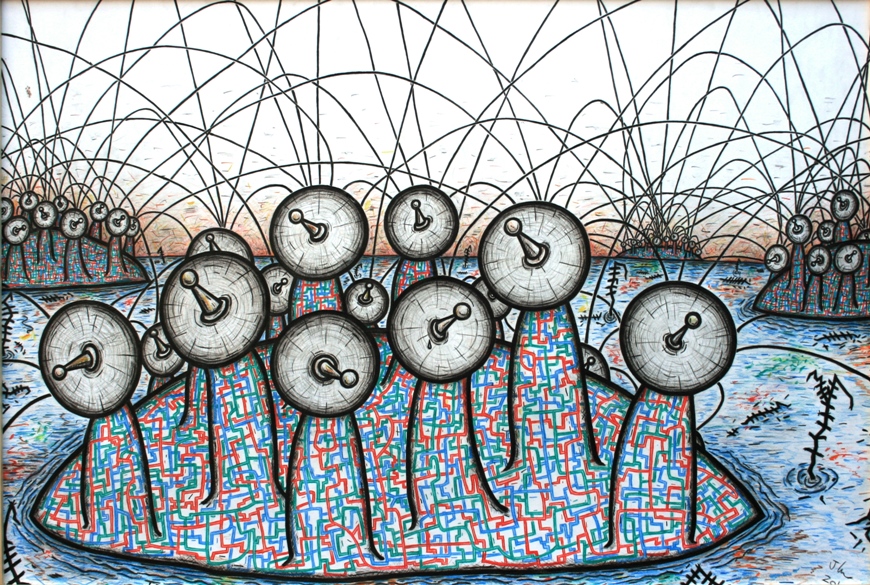
(The image is of ‘Ill-equipped’, a work I made in 2011 which was partly inspired by reading FEED).
2. Capitalism Realism – Mark Fisher
“When I first heard Joy Division, aged 14, it was like that moment in In the Mouth of Madness when Sutter Cane forces John Trent to read the novel, the hyperfiction, in which he is already immersed…”
How Mark Fisher describes first hearing Joy Division is pretty close to how I felt when I read the first 3 chapters of ‘Capitalist Realism’ between a Cafe Nero in Sheffield, and a Wetherspoons in Barnsley, on a warm August afternoon back in 2010.
Fisher put words to things I was experiencing but still unable to express. Reading Capitalist Realism in 2010, I instantly understood my own experiences with depression, and other disorders. Reading Fisher’s interpretation of the suffering of famous musicians like Kurt Cobain helped me understand, maybe for the first time, that my own struggles with mental health weren’t merely down to something ‘wrong’ about me.
More than that the book would open a door to a world of critical theory, and in turn greatly influence the work I would go on to make.
1984 – George Orwell.
I don’t really need to go into this book too much, it doesn’t need an introduction. If anything the vision it paints often problematically provides a crudely simplified reading of our current world.
This said, when I properly read the book aged 20 in 2004 it was one of the first books I had ever read. I wasn’t a childhood reader, I came to reading later on, and perhaps already overly-prejudiced by life experience towards what reading I would do.
But this book allowed me to prove to myself that I could read a book, and not just read it to say I’d read it, but get properly engrossed in it.
In the wake of the collapse of ‘really existing’ socialism, after the fall of the Berlin Wall, and then the greater Soviet Union between the late 80’s and early 90’s, a state of triumphalism emanated from the Western nations who had been locked in an ideological battle with the aforementioned for almost the best part of a century.
This became known as ‘the end of history’, as a jubilant and perhaps over enthusiastic statement by the philosopher Francis Fukuyama became a story that the whole world seemingly wanted to believe in. Indeed, there was a willingness (perhaps Millenarian in nature, as we fast approached the year 2000) to ‘wrap up history, for good‘, something Paulo Virno suggests in his book Deja Vu.
And, after the 20th century, who could blame us all for collectively willing for a 21st century where nothing ever happens again? Of course, a desire for a world where nothing ever happens again largely emanated from societies with at least enough privilege to be free of the necessity to keep fighting for a future. And this is why, ten years later, the 9/11 terror spectacle had such a world-shattering impact on peoples in Western countries.
However, the philosopher Jacques Derrida, perhaps realising what was at stake, wrote perhaps the most enduring rebuff of the idea that Communism, and Marx in particular, was now merely something for history books.
Capitalism cannot exist without the spectres of Marx. And never before was this as obvious as in a moment when any tangible alternative to capitalism was being erased.
But there is one other spectre/figure that haunts our capitalist world. This spectre haunts our world in opposition to Marx, and is the only one with the calibre and capacity to stalk our society like that of Marx: Hitler.
Like the spectres of Marx, the spectres of Hitler will forever haunt a capitalist society, built, as it will always be, upon colonialist and supremacist foundations. And like Marx, the spectre of Hitler can only be exercised when the conditions created by capitalist relations are no more.
Both began to increasingly haunt us more perniciously after the 2008 financial crash. Yet I’m not parroting the lazy liberal statement of ‘two extremes’ that begin to mirror one another. Although the spectres of Hitler arise in the same spaces as the spectres of Marx, the spaces where one must ask “what is to be done?” (about the problems of poverty, alienation, war, exploitation, and now mental health and the global climate), what the worm-tongue of Hitler quietly whispers in ones ear couldn’t more different in nature.
This is because the spectres of Hitler deal with injustice as inconvenience. And this is just about endurable in a more stable time, as was the situation in most Liberal democracies both after WW2 and after 1990. But in a time like ours, defined by crises, the spectres of Hitler develop a pathology that I’d call ‘final solutionist’, named after…well, we all know what it’s named after.
Haven’t we all been feeling sick and impotent as we watch the bombs fall on Palestinians in real time over social media? I suspect it’s a collective agreement almost all of us share in silence. Yet alongside this I have also noticed that some of us have found any way possible to stand up for what Israel is doing. I believe, at heart, whether they are aware of it or not, it is a ‘final solutionist’ pathos, ‘the spectres of Hitler‘.
It is a desire ‘just get rid of the issue [aka the Palestinians] quicker’. And it’s the same attitude you see in mundane conversations over cups of tea in Wetherspoons pubs about migrants crossing the sea: “Don’t care how [even if they drown] just get rid of ’em;.
Yet it would unfair here to focus entirely on stereotypical ‘red-wall’ voters, who may sometimes say the quiet bits out loud.
It’s actually within our silence, the spaces where we don’t make some obscene utterance where the spectres of Hitler are most pervasive. The spectres of Hitler reflect off our sunglasses, as we sit so civilised and politely outside cafes and bars on our gentrified city streets. The spectres of Hitler stalk us as we escape for the weekend on cute country walks. Although it’s the spectres of Marx who call our names as we encounter the army the homeless who haunt our city streets, it’s the silence of Hitler that we find easier to accommodate as we proceed to ghost them. Because at some mute level, a level quiet enough so that we don’t believe it is spoken by ourselves, we wish they could all be erased.
This isn’t an appeal to morality, to make you feel immoral, to make you feel bad. The spectres of Hitler whisper in all our ears. We thought that history was over, we believed that the upheavals and horrors of the 20th century had no repercussions awaiting the next century.
We believed in the dream-work called ‘the end of history’, and even as it becomes increasingly untenable, as we are hit by crisis after crisis, as our personal crises start to overlap, as we struggle to keep up, the ‘end of history’ dream-work of a flattened world, where every contradiction is ironed out into another consumable equivalent seems a far easier story to live a life in accordance with. The push (by ourselves as much as the government) to get ‘back to normal’ during the pandemic was testament to this.
Yes, I am also this person; stressed, overwhelmed, listening to rainwater and coastal sounds on Youtube to try to find peace in a world in which there will be no more ruptures, even as they abound around me. But as I ‘de-stress’ I am haunted not by the spectres of Marx, but by the spectres of Hitler, who promise to ‘make it all go away’.
To maintain our ‘normal’, a flat world where nothing changes, it is the spectres of Hitler that have to perform the background work. Background work that has concrete consequences to the point, that in some abstract way it isn’t hard to see how the entire Israeli nation (for example) has been set up as a murderous meat puppet to prop up this existence in the greater Western world. And once the inconveniences become too loud to ignore, let’s remember that those ‘ugly’ people who wish to see the Israeli’s simply ‘get on with it’, are only saying the quiet part out loud.
But this is the point, existence is all that this situation enables. Life can exist nowhere in a world where active genocide is taking place before our eyes. To allow our world to be permeated by the spectres of Hitler is to maintain existence at the expense of life itself.
I am no heroic Marxist. I am you, perhaps more so. Existence is often all that we feel we can do, when we are burnout, stressed and lacking the ability to find it in ourselves to imagine life lived differently.
But I refuse to accept the given, even as I struggle to pick up a finger in active opposition. I maintain the right to exist in the faith that one day I will find that strength, and that one day I will feel the burning hope of an alternative within me once more. It must be there, somewhere.
Do you remember life before the internet?
Yes, but I largely recall it in anticipation for the thing in question. The internet, prior to its full realisation, prior even to the MySpace generation, was seen as ‘stand in’ for the future writ-large. It stood in for all things better, and thus was a conduit for a better future, until it arrived.







 John B Ledger