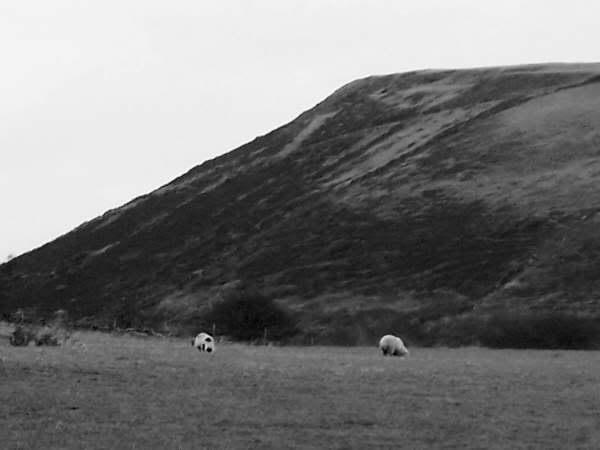
A short story of my last 10 years.

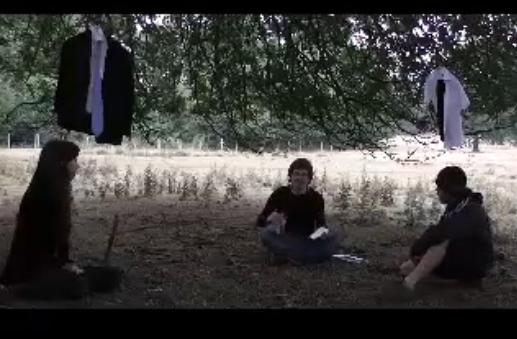
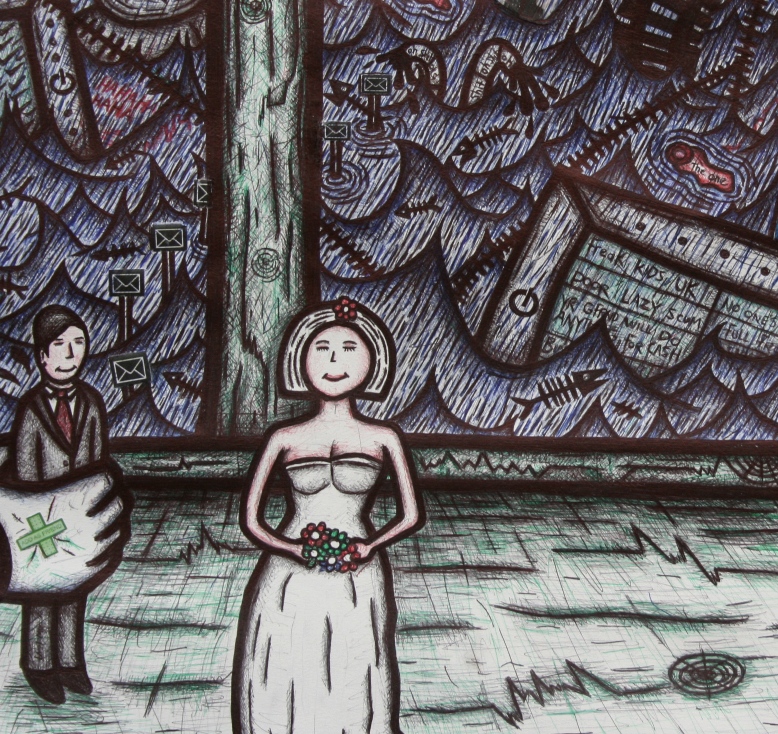
(an image took within January/February period of 2005, when I was 21)
I began writing this (using ‘blind cell-phone-keying-in’, a skill picked up in a time of an information frenzy and endless precarity) whilst walking upon the Pennine hills to the west of the urban settlement I have lived in all my life.
I Return to the hills I roamed in my early 20’s for a sense of resonance with my own mental landscape..
It takes the best part of 2 hours, walking fast, to get to these hill tops. Some people reading this may be perplexed as to why I would walk at such a pace at which it is difficult to absorb/pay good attention to the obvious charms of this landscape, and I sometimes find I have slipped beneath this wheel of general common sense on how one ought to experience this minimalist landscape.
However, in my life I often need spaces that act as mental runways.
They have always been present, but my relationship with them was formed when I was 21.
I have now found myself having to explain all this because they have returned and are almost as acute and extreme as back then. It is becoming clear to me that many of the things I used to do, think about, and the music I listened listen to, were not just signifiers of a late arrival of teen angst but were aspects of the adult I’d become, and the adult would have to be, in order to deal with the world I saw around me.
In 2011 I think I have finally located the explanation lying behind a lot of these things I did.
First off, this reason for walking up to the hill tops was never about the need to walk amidst nature’s beauty. I needed a bleak minimalism, an emptiness that enabled hauntings.
They lie just before the dark heathland starts to take over and the Peak District starts proper. Objects in this place, due to the scarcity of them, take on a monolithic feel, and have a presence that sucks in all significance: they do not seem to move as distance would demand of them, like coastal outposts (the wind turbines upon these hill tops always feel a little bit like lighthouses).
The emotional completion of the minimalism of this landscape comes from the sometimes painfully long, walk on its straight roads.
The idea of stopping to absorb it all feels irrelevant – the totality is experienced through the exhaustion of all thoughts of intrigue and titillation. The emptiness and the seeming futility of the slightly gruelling walking down these roads demands a march of a walk rather than a stroll. .
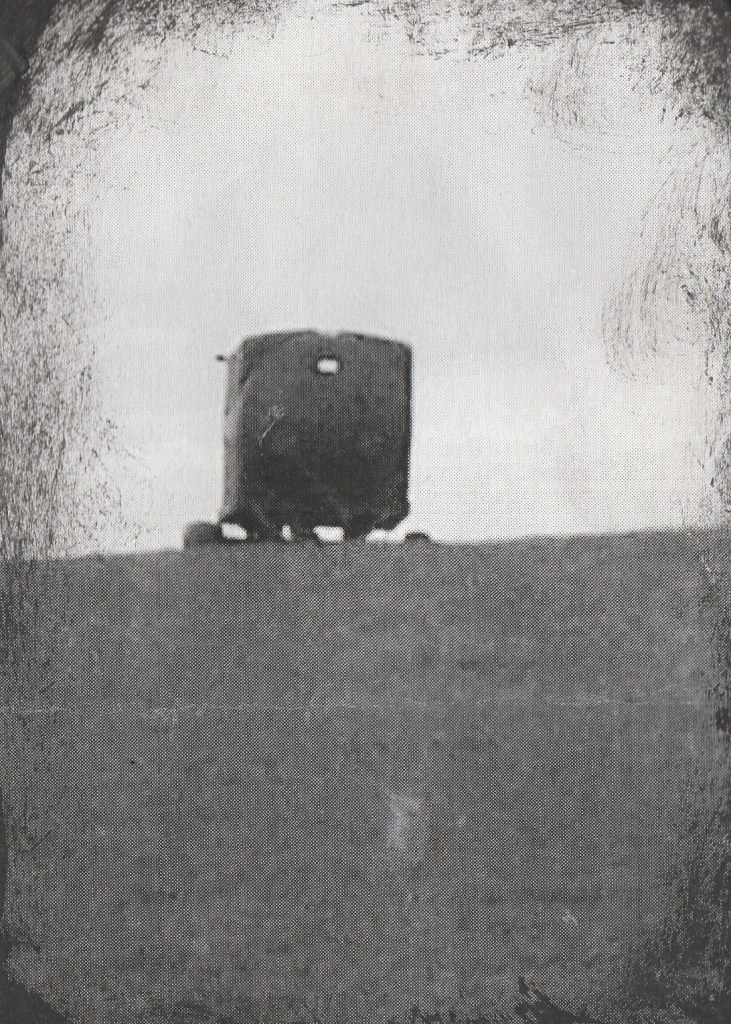
To drive up to these hills would completely miss the necessity of ‘marching’ away from where I felt trapped – the feelings of things ‘closing in’ as I recovered from the illusionary bubble-like protection feeling of anorexia.
Anorexia, as I experienced it, was like trying to seal my life off from a world which I was beginning to struggle to look at, once images and thoughts of how bleak the world could be had captured my mind – this was provoked, in particular, by the dust of uncertainty stirred up by witnessing the awful events of Sept 11 2001, beaming from every screen into every memory.
It was an attempt to get out of a humans’ body; to not have to live a life within this world which seemed to promise an unbearable experience.
Only after this experience did I encounter a sample in a Manic Street Preachers song that summed it all up in a way I hadn’t yet acknowledged”
“I eat too much to die
And not enough to stay alive
I’m sitting in the middle waiting”
The day I saw the Sept 11 attacks, I fled the house on my pushbike and escaped to the aforementioned hilltops, and would do the same most of the days of the summer that would follow on in 2002..
A long solitary summer lay before me once college and stopped, and the existential terrors that 9/11 had stirred up threatened to hunt me down.
I listened to a few cassette tapes including a copy of Louder than Bombs by the Smiths. I would form a deep connection with them, as I used them as a life raft, as the album track ‘Rubber ring’ would encourage. I was desperate to land on the seemingly safer shores of autumn.
But some songs were etching apparent truisms into me that began to freak me out.
.“This night has opened my eyes, and I
will never sleep again – and I’m not happy and i’m not sad”,
The intensity of routine and control that made me anorexic followed on from this summer. But I would be returning to these hill tops at the other side of Anorexia, and returning to the music that had freaked me out just before I went through anorexia, because it offered no illusions and cosiness from this bleak nihilism thrown my way. It was music I could only return to once there was no going back into the frozen world of anorexia: the music of Joy Division, in particular.
Life is shelved when anorexic. To live a life seems so hard, that making your own prison cell seems far easier. Everything that is human is harshly regulated to avoid a ‘breach’ of the prison rules – food, relaxation and socialising are all dangerous in this rule book.
The inward-looking watch tower makes sure there’s no indulgence. ‘why sit when you could be standing? Why walk when you can run? Why lay down when you could be doing sit ups? Why talk to other people when you could be ‘winning’ at the routine?’.
You are constantly telling yourself that you’re ‘winning’ and ‘getting better’…. at slipping between the cracks of life; not touching anything that may taint your innocence.
Anorexia isn’t despair or hopelessness; it’s an illusion of freedom from mortality in a body you cannot bear being in. It’s inevitable that you will crash at some point. The only despair I experienced from within the anorexic cage was when life (convention, enjoyment, merriment, tradition) was imposed on you from the outside.
Of course, the terror of being overweight also owes much to the advertising industry and the image world of late-capitalist ideology itself, but these causation’s aren’t separate to the other causation’s; the images of horror (buildings collapsing/people jumping to their death from buildings) and the images of glamour (which may make you feel anxiety about your own body) double-up and are part of the same visual language which we are (force)fed.
The anxiety about my own body needed fears embedded by events inflicting a bleak nihilism in my mind for it to take such ruthless control over me. Maybe one can stay froxen in the photographs of all that has been show to you to be perfect and pure, and exempt from participation and blame.
. “May I bud and never flower”
(4st. 7lbs, The Manic Street Preachers).
Once I began on the road away from anorexia, I knew that I’d have to walk towards a world I was trying to escape – and how would I do this?.
I had to face what I’d ran away from 2 years previous. I quickly learned, as my body began to re-establish itself as a 20 year old male (as I regained weight) that I could no longer completely hide myself from the world, no matter how much I struggled to cope with what I saw and what that made me think of. And I began living the life that I have lived ever since.
My first steps out into society, after coming through the other side of anorexia, were in (re)finding old friends and venturing out to where society informed me everything that is meaningful could be found within: pubs.

For a short period I had what could be called an honeymoon period with the ‘the real world’ – it was all knew to me (after missing the usual inauguration period which is roughly between 16-18).
I was socialising with friends who were now in relationships and with stories to tell and new places to show me; I was enjoying other peoples’ company; enjoying finding the opposite sex attractive again (anorexia’s sexlessness is part of its appeal, but it’s a joy when you feel it again).
I had re-started university and was also full again of creative juice. It felt like I was in bloom again.
Unfortunately it was merely an honeymoon, a soft crust of optimism that had greeted me as soon as I found my way back into social circles. I knew this despair and this inability to forget thus cope with life was still there underneath – I’d been battling through it for a couple of months before I finally re-found my friends after anorexia, holding on due to this very promise.
I was foolish to think that I could be saved by encounters found through an hedonistic life.
I was going to have to pay the price. Glitches had started to appear. Downers started to intervene.
I knew that when I was getting hooked on the dark euphoria of the track ‘Digital’ it was because I was relating closely to the lyrics:
“I. feel it closing in, feel it closing in…..day in, day out, day in, day out”,
knowing that my own walls were still closing in on me and I’d have to face them at some point..However, as soon as I was housebound/immobilised for that short period, and the hedonism of the honeymoon period was out of reach and fading, I started to realise that I had been fooling myself. .“So what you gonna do when the novelty has gone?”
(Novelty by Joy Division)

Housebound, and with what had sustained my optimism out of reach, I fell into the depression that the ‘honeymoon period’ with the real world had made ‘out of mind out of sight’. In 2001/2002 the fundamental environmental worries/worries about our species’ future (a previously unlocked door for my eyes to see now via the ‘atrocity exhibitions” I saw on television and in newspapers) seemed far away; voices I respected scoffed at such ideas, and information proving things like climate change didn’t seem to be there. In 2004, these concerns, far from going away, felt like they were still slowly closing in. I’d found out that climate change was a real and big threat, and, although it couldn’t recreate the shock of my introduction to the bleakest of thoughts, it certainly reinforced the story that they told me.
As I mentioned above, the battle with my inability to cope did come back for some time between exiting anorexia but before my honeymoon with the real world period began. When I fell into depressed spells my eating habits kind of performed what my previously anorexic self has always warned me of whilst I became slowly obsessed with food as my body needed it more: I ate and ate way too much. This came back to haunt me again now I was immobile and stuck in the house with only my own thoughts to keep me company. Eating way too much, when the fear of being overweight for all the previously mentioned reasons clung on, magnified the depression.When I finally managed to get out and attempt to restart where I’d left off, I was already in an uphill struggle; the aspects of me I had foolishly thought had been left behind had returned, and I felt that it was now a rush to get something meaningful from these nights out/and other socialising situations before these aspects caught up with me. I thought I had to get a girlfriend because I believed that this would ‘eventually’ be the anchor to secure me. I was still relatively happy with the way I looked – that gave me, even if not inner confidence, at least a belief that “something would surely come along sooner or later…” – but I was terrified of the depression chasing my tail, because if it debilitated me and I started overeating permanently then I would truly be left to rot in a pit of all my worst nightmares. The level of my naivety was well and truly put to test by the fear of losing to my depression.Thus, with more expectation and desperation placed on nights out in a provincial town, uncontrollable disappointment was always on the cards. Every pub/club I went into, I would ask for Joy Division (preferably the track Digital) and dance endearingly but awfully to their tracks (which, on a side note, has made me concerned that the ‘let’s all dance to Joy Division’ song by the terrible indie-pop act The Wombats may have been written about me; although, to save me the crippling embarrassment, this is highly unlikely, as I think the ultimate death disco feel of Joy Division’s tracks has an almost universal appeal within our anti-depressant-dependent generation, mainly because it resonates with our general complete lack of optimism for the future; “get pissed and dance now, because there’s no point in saving it for the future”). In almost one out of every two nights out, I would end up getting on a massive downer, and running away from my friends and out of the club to head home.

(an image took within January/February period of 2005, when I was 21).
The days after would be low days. I would feel stuck for reasons to do anything, whilst eager for something to do be done, for better or for worse, either to get me out of it or to at least allow the depression unconditional confirmation. This probably explains why I would then proceed over eat, which would exacerbate the unhappiness to dangerously low levels. That’s when I started walking up to these hill tops. Cycling up there wouldn’t have been enough; I needed to feel like I could keep walking further and further up onto those hills as if I wasn’t coming back. I couldn’t cope with the world I saw around me, so when bad things happened in my newly found social circles (girls fighting, friends getting their head stamped on, people saying things to me that hurt) it made everything unbearable and I it felt like it was all was closing in on me faster and faster.
.
During this period right at the beginning of being 21, suicide wasn’t just a passing thought that strangely comforted when you’d just like the ground to swallow you up, it was much closer and much more pressing. I had no coping methods, no thick skin against the world, but I was no longer in a place to avoid life like I was when I was anorexic, I was now well in deep like everybody else. The walks up onto these bleak hillsides seemed like the only route available to me.“I’ve been waiting for a guide to come and take me by the hand,
Could these sensations make me feel the pleasures of a normal man?”
(Disorder, Joy Division).
If I wasn’t struggling so much to cope with living I am sure that the events around me wouldn’t have made the impact they did. I’d left a massive gap in my growing up years 17-20, when I did almost zero socialising, which didn’t help things when situations did start to go awry. This vague idea that if I found a girlfriend that it would somehow create a safety net preventing me from free fall, a safety net against all my biggest fears about humanity within the 21st century, got more desperate. More desperate in general, than desperate for love itself, I found walking up on these hill tops and listening to Joy Division (more than any other band) the only safe mental environment whilst either escaping from the state a bad night out had put me in or waiting for the next one, with the hope that something ‘great’ may happen within it. The grueling-ness of these walks, which I tried to push further and further onto the moors each time, also tamed my despair over eating to much (linked to the despair of becoming undesirable thus unable to find this ‘safety net’, as the walking felt like I was “keeping the weight off”), as my mind was in a trance-like muteness-to-scattering-fears once I was well and truly within the middle of one of these walks.

(an image took within January/February period of 2005, when I was 21).
The landscape up there is beautiful, but it is also a bleak and minimal landscape, a landscape that offers no niceties, no signs that would point to false hopes, nothing that could find soul and and prise out this inability to cope with life. On the long, quiet roads, where I couldn’t see where they ended, it felt as if I was walking up to the moon/never coming back down to the town below, and that was some sort of comfort I suppose.The long walks felt like a suspension of the closing in of things, as if there was no decisions/no other roads in life that had to be chosen whilst taking these roads further and further up on to the hill tops. Because there was inability to get on with my life, once I stood still (making an already ecological-Armageddon-battered vision of my future even harder to look at) I could not move forward in life. I felt stuck. Yet again this vague idea of getting a girlfriend/partner felt like the only possible way forward, and without it these problems would close in more and more. The possibility of this being actualised seemed to far away though, just whilst suicide-as-the-only-viable-option-thoughts were breaking free from the safety net of passing thought..“How could anyone know me, when I don’t even know myself?”
(Giant, by The The) .What happened next? well, on one these nights out, I went up to a young (and very attractive) lady to tell her how much one of my friends liked her, only for her to turn around to me as I spoke and say “you’re gorgeous you are” followed later on by “if I didn’t have a boyfriend, I’d go out with you”. Due to a ballooning naivety, made so by a desperate need to hear (these kind) of words said to me, I failed to understand the wider context of the situation; that it was a young person (not yet out of her teens) saying the kind of thing lots of young people say to other people they find (reasonably) attractive, when they are young, giddy on alcohol, and being flirtatious. It was just unfortunate that these words had a little more poise and intention than the usual flirting banter..But these words sunk themselves deep into my mind, because nobody had ever said words like these to me before regardless of their genuinity. I’m ashamed to say, that this lady was very conventionally attractive too, and, for a western child reared on an image-diet of endless advertisements of conventionally attractive women, which seep into day dreams and expectations, this all seemed a little too good to be true. I’d been anorexic, I already knew how misleading this world of images could be, yet I was too naive to prevent myself being mislead when it came to appearance of others. (which shouldn’t be read as a statement saying “all pretty girls are shallow and self-consumed” but should read as a confession about the fallibility of my visual stimulation)..The big problem here was that I had spoken to this young lady on behalf of a friend who I had very rapidly become very close friends with. The last thing I would want to do is to pursue somebody with the likelihood of severely upsetting someone, who in his own way was as sensitive to the world as I was; but at the same time I thought that this could be the very thing that could, well, ‘save me’..“This is the day your life will surely change”
(This Is Day by The The) .In stepped the only record that could ever find its place within the desperate moments when Joy Division’s music seemed like it was the only music that would suffice: Soul Mining by the band The The. The tracks seemed to engrave themselves as meaning to the events that were occurring.
.“I’ve filled up my mind with perpetual greed
And turned all of my friends into enemies
And now the past as returned to haunt me”
(Giant by The The) .

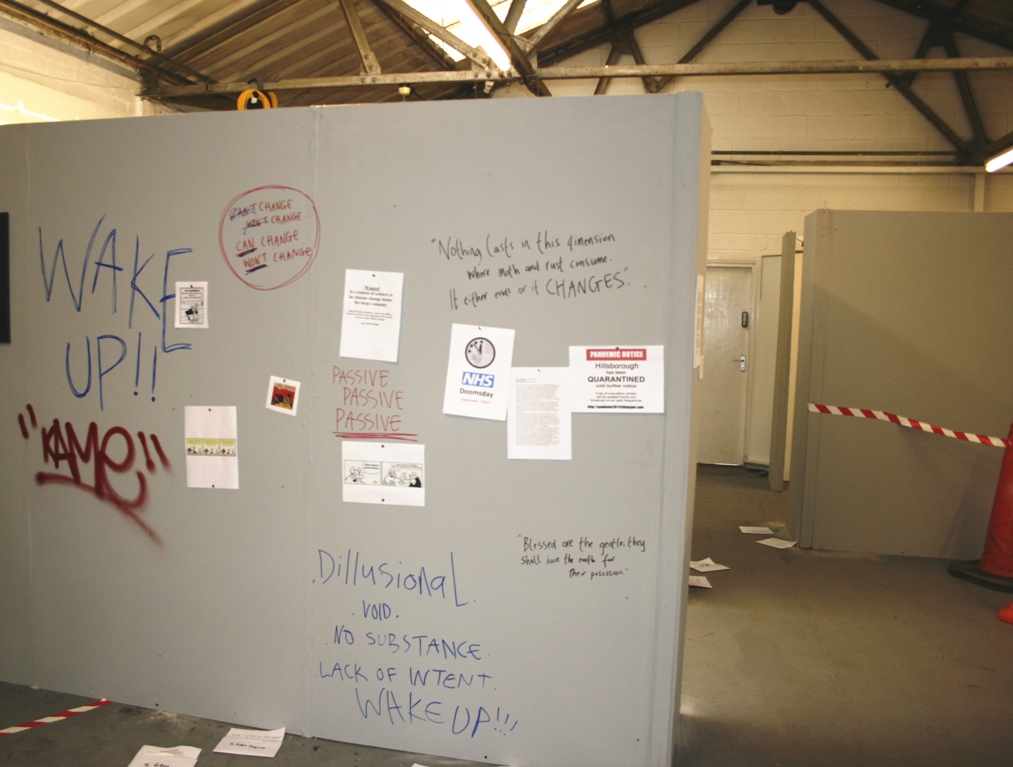
Down came the repeating bursts of guilt, then excitement that something great was going to happen, then despair that nothing was happening anyway near fast enough; then massive guilt again for wanting it to do so. If I couldn’t deal with bleak nihilism, I certainly couldn’t take on board nihilistic hedonism as my life philosophy; “fuck your mate, you gotta look after number one – ask her out man! life is shit man – gotta take what you can when it comes!”. My mind never worked like this, and I’m very glad it didn’t (but the realisation of the perpetuation of self-satisfaction as meaning of life by capitalist ideology, creating memes such as these, was still years away)..Suffering from guilt on top of everything else was bringing me closer to suicidal thoughts – everything seemed to be closing in; I needed meaning and if anything helped it was the belief that I was a good person doing good things, as, if I wanted to see a good world, I too mustn’t be selfish and greedy. But once narcissistic tendencies seeped out (through an obsession with the self due to attempts to confirm to oneself that others may be able to find you an attractive person, worth pursuing), there was a massive boat rocking of what I was, and what I wanted. It was too much too soon, I wasn’t prepared for the world outside my solitary impressions of it. No thick skin could settle and harden whilst I was being rocked around within this new-found experience of reality. Dabbles with overdosing were both immature and ill-thought through, because I never actually intended to properly do it, only to affirm to the outside world that I was caving in and need some help, whatever the stupidly naive idea of help I thought I needed was (a mess that should be best-forgotten about, maybe, but it all plays a crucial part in my outlook and politicisation that would begin onwards from this spell)..I needed to sort something out, I eventually spoke to the friend, who, luckily, was getting attention from other members of the opposite sex at that point – people he also found attractive. I needed something to sort this mess out, my life was spent either walking up on to hills, waiting in anticipation for nights out; waiting then escaping, waiting the escaping. So I pursued this young lady. Because of my predicament I’d built this whole situation up into something that none of the other early 20’s/late teens people involved/or just there at the time, could have foreseen. This is why when I tried my laughable (to anyone with experience of how the real world works) attempts at chatting her up (coaxed on by friends around me who couldn’t grasp how much of a thing I’d made out of it all) I just completely cracked when she said to a friend (who then said it me) “I don’t like him – he’s too nice”..Regardless of whether it’s wrong or right, or down to media manipulation of our desires, to not like someone because they are too nice -meaning that they are not the personality that the images convinced they would be – it wasn’t anyone else’s fault that I’d allowed my naivety to balloon to a dangerously high size. The let down was internally catastrophic; catastrophised further so by the fact that my aforementioned close friend also received a crushing (to his own sensitivity to the world) rejection that very same night – it felt like what we stood for (trying to be good and honest) had just received a massive kick in the face..Of course, this wasn’t the case: it was my naivety that had ballooned so much it had reached into dangerous territory. And it would be completely missing the point of writing all this down to then make a point of holding resent against certain individuals; we live in a society of consumers of spectacle, where we are reared to desire “the image of reality, rather than reality itself” (to quote a poster from the related Pandemic organisation), so if it wasn’t this young lady, then it would have been another young lady with her own imaginings of reality hurting me as I was guided along by my own imaginings of reality. Nonetheless, I found myself in dangerous mental territory. It felt like the walls had finally caught up with me. .“Something always goes wrong when things are going right, you swallowed your pride to quell the pain inside” (Soul Mining, The The) .

University was over for summer, in fact it had been over for some months previous, but me and my close friend still spent any time between night outs milling around there in the canteens and corridors, possibly hoping for a positive sign if some passing fellow student made an appearance, and to avoid the unstable solemn moments spent in solitude in our edge-of-town houses. But now it seemed so futile to be there. So embarrassing, in fact, that I’d been hanging around in an almost empty building as a suspension of an unnerving closing in of a depression, between times of soughting after/day dreaming after this perceived saviour, only for it to result in nothingness. .Now, with the walls feeling like they were in front of my face, everything that spoke of escaping/moving sideways from the deadlock in front on me intensified. Ill thought out dabbles with overdosing restarted; my walks started stretching further and further, and I desperately needed the music of Joy Division and The The. I doubly needed everything that seemed to suspend time, just as time itself seemed to reveal no future; I needed everything that reflected and understood the clash with bleak nihilism that I was experiencing down there, beneath the hills..Two songs conveyed the feeling of an environing fear that was getting closer: the epic track Giant by The The and Dead Souls by Joy Division. They contained a despairing energy that seemed to feel like it is circulating you, like a airborne predator, waiting to finally strike. The exposure upon the minimal landscape of these hill tops, seemed to visually justify this feeling within the songs. Whenever I listen to Dead Souls now, I picture these slowly-turning viewpoints of moorland, moving to the circulatory-like rhythm of the drum beat, getting more vivid and closer, until Ian Curtis’s words burst through, some 2 minutes into the song….“Someone take these dreams away
That point me to another day
………They keep calling me”.
The music seemed to create a euphoria of despair, which made all the trouble in ones life to be darkly savioured, as documentation on why one ought to feel this way.The year would drag on, as a mess of excitement for something vague, and then destructive depressions, that lingered for days on end, when the nothingness appeared where vague once stood. But, over all, I was coming down with a bump. I would need to rebuild myself, I couldn’t let my ill-conceived dabbles with doing myself in carry on. The next year and a half was start and stop; finally accepting my creative endeavours within art and music to be my only possible saviour. But I still couldn’t picture a future I could inhabit, without this perceived safety net of a lover in place..Over time, people around me were (and are; social drinking groups continuously seem to have a younger and younger average age, as others move on) moving on, following more linear/normal pathways in growing up, by getting careers, having long term partners, getting their own places. It all seemed to be part of a world I just didn’t get and couldn’t maintain as a possibility. It just didn’t make sense to me (even as I often wanted it to, for the safety nets it seemed to convey to me). The urge to create art as necessity in the face of my huge concerns about the 21st century (intertwined with concerns about a possible nearby fall into mental destitution), whilst maintaining order and morale to to it by having a softer-than-when-anorexic routine of exercise and eating control, was the only method that made sense to me..But the acuteness of the sense that my despair catching up with me had become momentarily muted, with only short relapses. I knew there was going to be a time when I would no longer be able to use the urge to create art, blended with weekly blastings with alcohol and daily jogs around the block, as one huge procrastination, to avoid confronting it; I knew that there would be time when global issues would be too large to procrastinate around. But my defence mechanism was also rebuilding/thickening up the barriers that I had whittled down greatly after the control anorexia had over me. The production of art and music about the inseparable cases of personal and world problems was becoming the essential part of a routine, that build blockades to stop me actually confronting these problems in The Now. Then the exercise and eating control would keep a lid on the anxieties of being too socially inadequate (the unwanted one who is left to drown on a sinking world) to get anything from life, by actually perpetuating a control that prevented precisely this from happening; I was creating my own carrot on a stick, but its illusion seemed like the only way, as long as denied them to myself. After previously trying to weaken these walls, I now knew that weakening them created a danger-zone, and realisation after realisation of this in 2005 continued to make them harden up to the point where life is just one big poker face.

.
A couple of years later, one further flirtation with the possibility of having a partner, seemed to set in the stone the truth about my inability to deal with life and relax into the world, as the chance vanished the more my desperation and neediness of a safety net shone through. A safety set for my life, in the face of a more informed and growing expectation of life getting bleaker and bleaker as the 21st century dragged on, is what drove the hopes of ‘being saved’ from it ( I was still being fooled by an instilled consumer-mindset day dream; knowing otherwise but believing that these good things will certainly come to me).
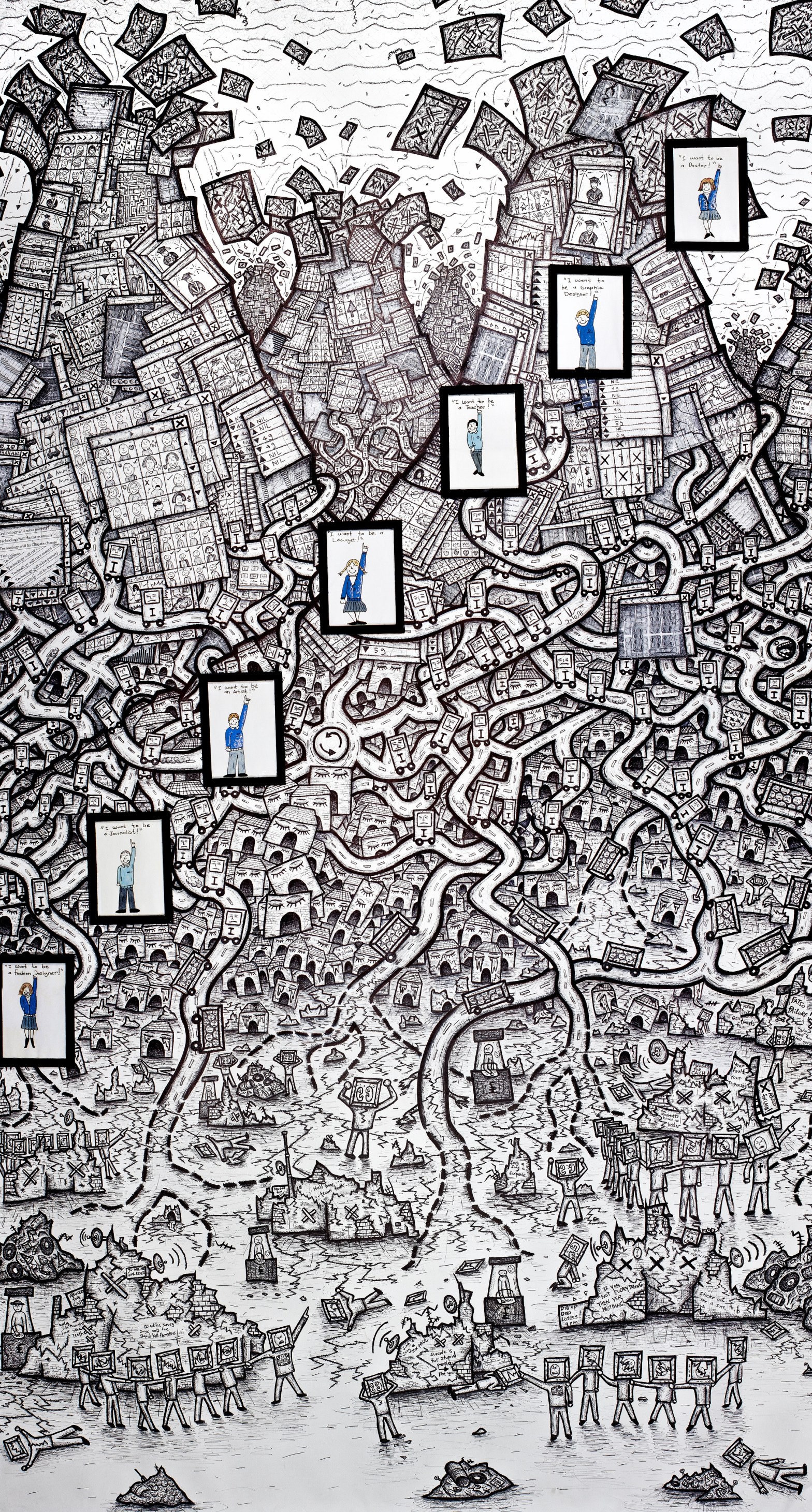
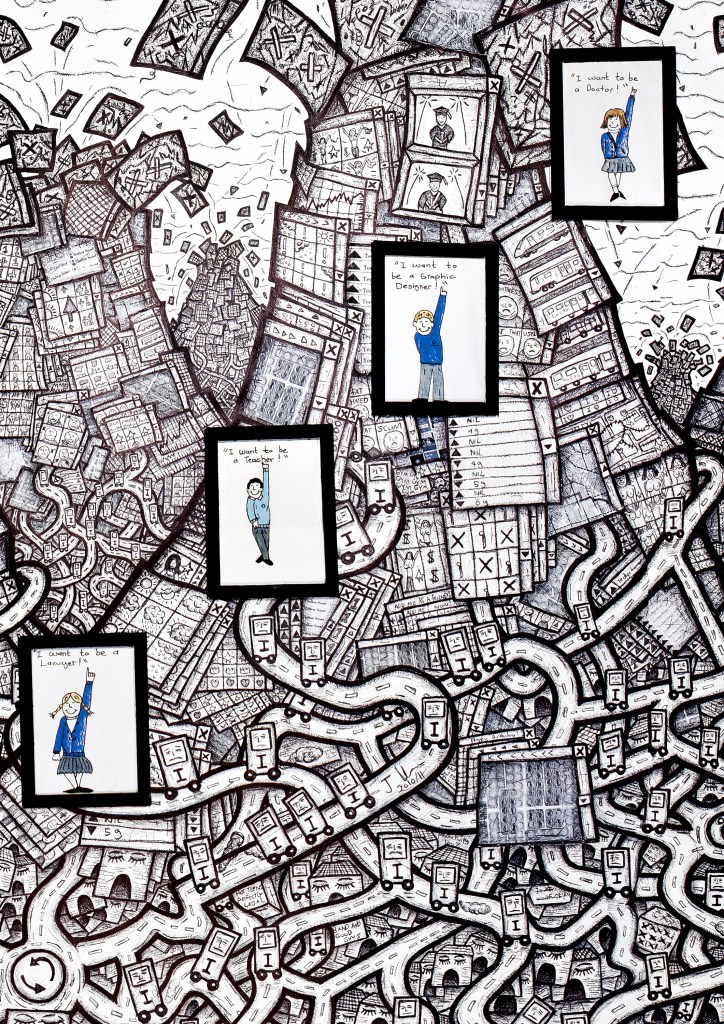
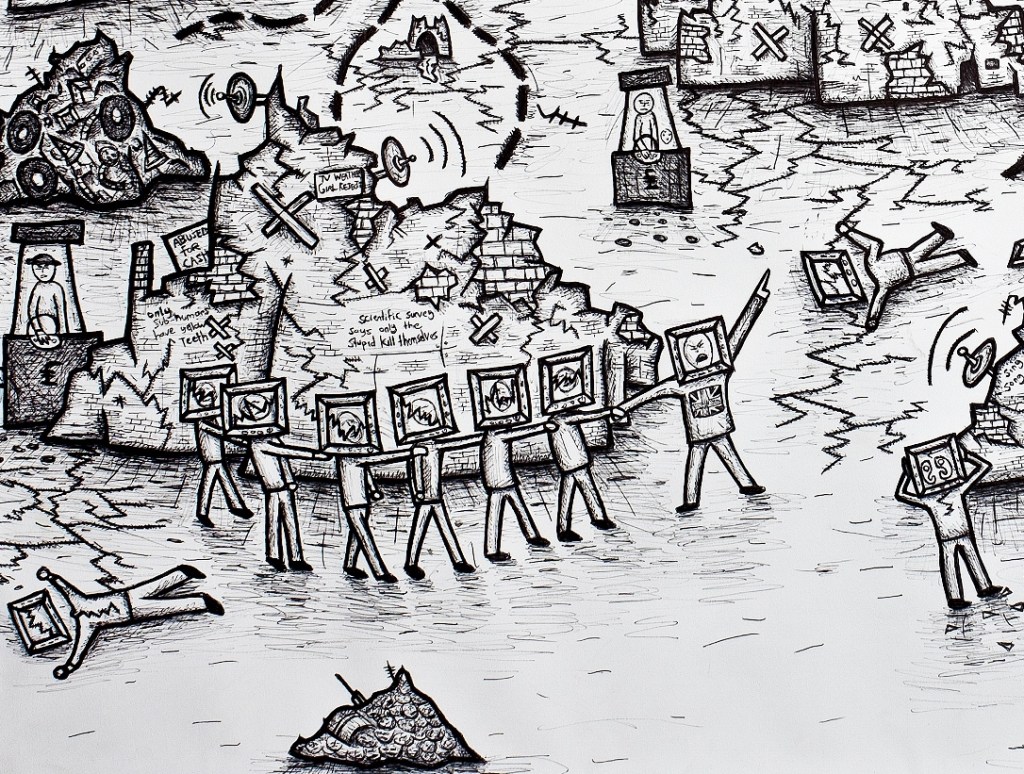
The crash didn’t just coincide with the end of my university course, and a helping-handed feeling of “going somewhere” (which university provides), but I had just finally found what I’d been looking for, regarding my artwork: what I had been wanting to do/say had finally been pieced together. A tutor, who seemed to have an eerily good knack of envisaging what one was trying to say before they had even realised what it was they were trying to say, suggested to make climate change the main thing my work dealt with from now on; as opposed to what it was at that point; a stop-start-try-again jumble about my own mental state, worries about society, and climate change.
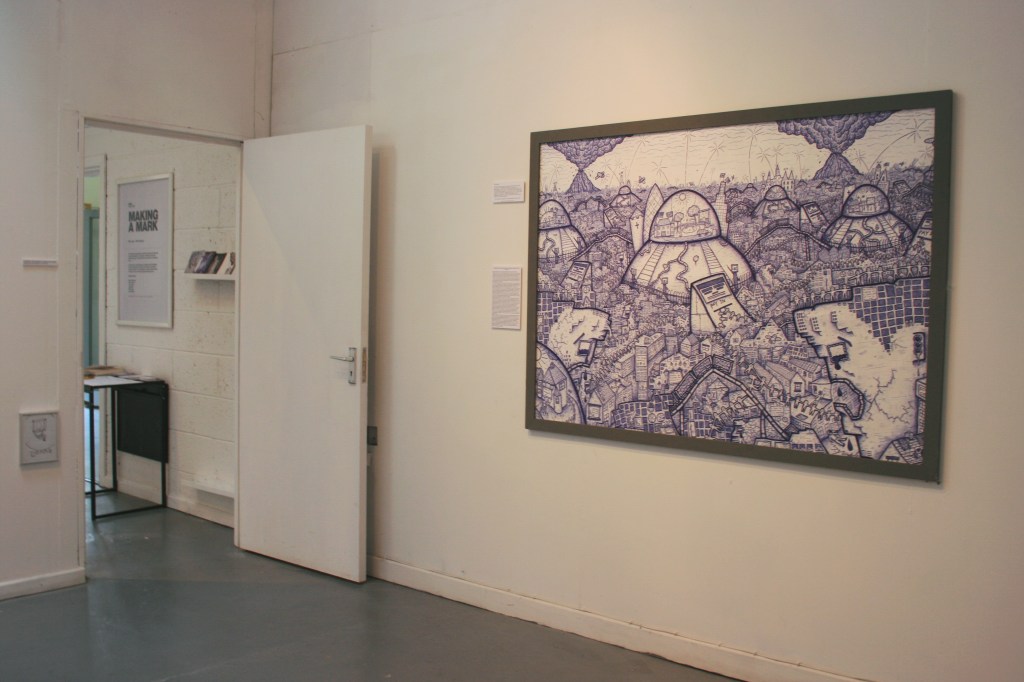
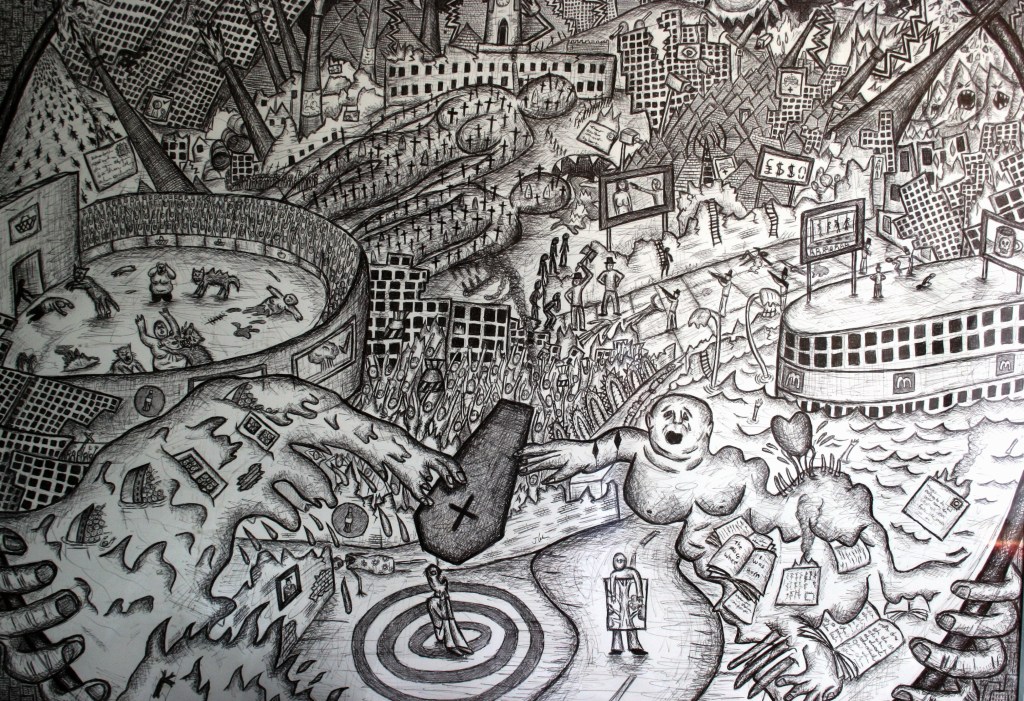
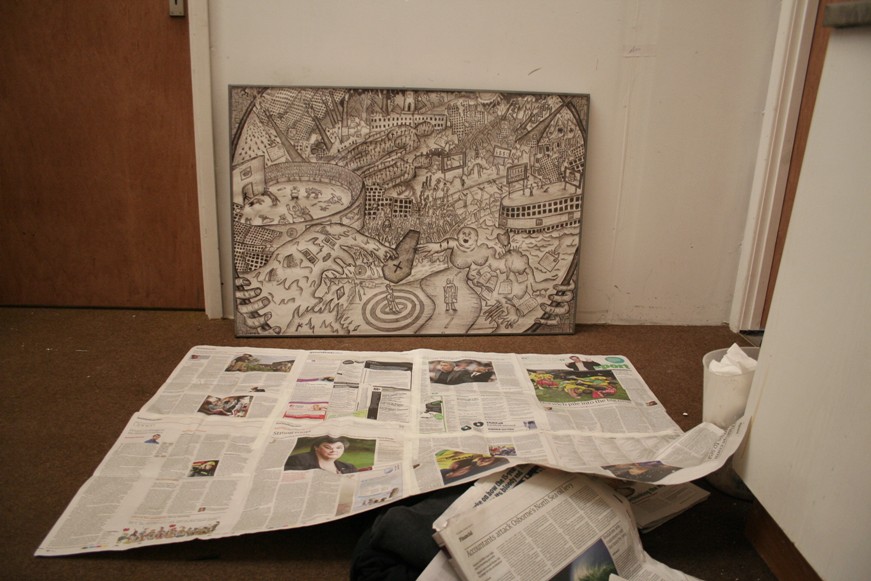
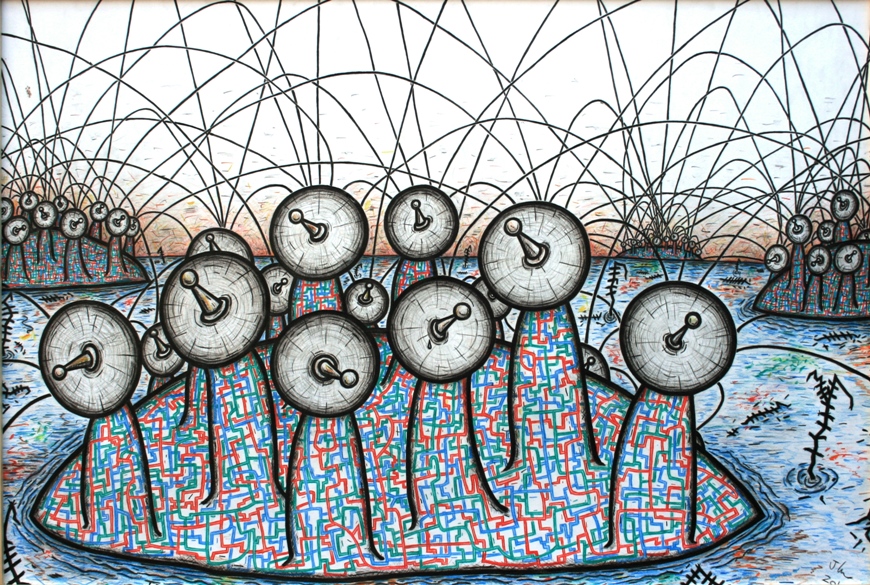
But the interesting thing was that by turning to focus on climate change, the large landscapes of ecological nightmares I began to make simply absorbed the entirety of these issues, embodying the whole. He (the tutor) seemed to get what was burning away at me which, by helping me focus on the large scale (the environmental), was shown to be the entirety, big and small. I was now at where I was always trying to get to: making a case against life as I saw it as a whole. (a realisation that came to me years later after reading an essay called Nihil Rebound: Joy Division from the K-Punk Blog, where the blog’s writer Mark Fisher says how Ian Curtis’s’, seemingly naive lyrics from earlier Joy Division/Warsaw tracks about the atrocities of war, despotic leaders of men, were parts of the case he was making against life itself, as the horrors of the 20th century, and the slow tragedy of the defeat of the working class, washed us up on the nihilistic shoreline of the so-called ‘end of history’. Indeed, I’d say that this essay possibly provided me the open doorway to realise that my early 20’s obsession with this band wasn’t something that can be signed off as immature morbidity – the way that many people refer to the adored music from their so called ‘angst years’ – but is music that appeals very much to the way, not just me, but many of us experience the world, existing whilst the amoral brutally of industrialised forces takes everything away from us, and gives us a uncomfortable meaningless back in return – hence their rising popularity as the industrial capitalist machine drags us further and further into hopelessness).
This breakthrough, felt like it should have been permanent, like I could have been in in forever, because nothing could really come afterwards. And other things I hoped for were vanishing, in a normal course of things that I just couldn’t deal with. I was in free-fall again. But I couldn’t dabble with suicide again, as the desublimination of stomach pains the next day were a warning that you cannot escape so easily and so purely. It doesn’t end easy, it lingers on. Just as the horrors of the 20th century didn’t end so easily at the dawn of the so called ‘end of history’, at beginning of the 1990’s – they are still happening; history didn’t peacefully end and fold itself nicely into an holiday package; we are fooled by the images we are shown of truth, forgetting that reality isn’t quite as streamline as this.
The emotionally exhaustive summer of vanishing (what I foolishly thought could be) certainties, a summer metaphorically and literally clinging onto bottles, had weakened my sense of who I was and what I was capable/incapable of, to the extent that I was accepting any guides’ directions on how to live my life; forgetting the mental minefields of mistakes, caused by a void when it came to the task of enjoying. I agreed to do something I would never have felt such nessecity to do if my routine had been ruining smoothly on the inside my mental barriers: I went to a music festival.
For starters, I struggle spending time in other peoples’ company for full days, especially when the people stretches far beyond ones vision – I get paranoid, exhausted, wanting to walk off for a good while, then paranoid about what people think of me for attempting to do this. Then there’s the fact that I have a very low tolerance for noise when I’m tired; I need a muteness to, and a dimming of the world when I’m too tired for my barriers to protect my wellbeing as they do in the day. When tired, after a while the sound begins to feel like violence. But it was the paranoia about things that made this event what it became.
Leeds Festival is notoriously not one of the most laid-back festivals; as well as the entire event sometimes seeming more like a Topshop fashion parade (losing sight of friends within a sea of unfestival-like manicured girls, wearing hot pants and shades, and guys wearing leather jackets and Pete Doherty-inspired straw hats; so many people, at once, looked advert-friendly-perfect, aloof and identical) it also seems to have a feeling that something could kick off at any moment, due to there being a football hooligan-like tribalism.
Then there’s the drugs. It’s not the pressure to take them in itself, it’s the sense of complete alienation from groups of people, when they are on them. “And you’ve got 4 days of this alienation mate – that Strongbow won’t suffice, that’s for sure”. Low on sense of self, I got convinced that legal highs would be a OK alternative for someone who doesn’t take drugs. Again, due to being low on sense of self, I felt a much more acute need to fit in to the group I would be spending 4 days with. I’d be lying if I denied that the first herbal high I took felt very good, but, due to this, and the relentless noises outside, I had no sleep. Got up next day having had no sleep, and paranoia started to kick in. Only slightly, but everything seemed a little more tinder-sticks to me, like it would take just one false step for everything to blow its top off.
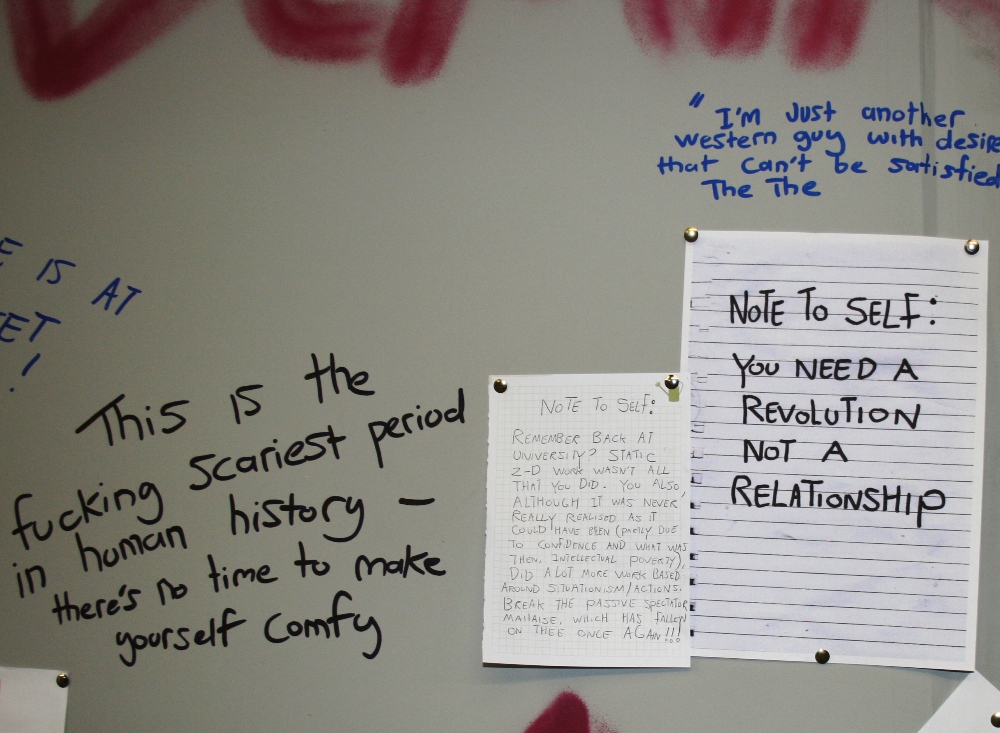
Nobody is to blame for the general deterioration of things from this point, my inability to cope with a life lived eclipses any claims that people who knew me should have discouraged me to do things, and taken into account that their own free choice may have alienated me: like with the young lady mentioned above, this was young people doing what young people come to believe they ought to be doing; trying to have a good time, thus wanting everybody else to be joining in in the good time that they are having, by doing the same things to confirm the legitimacy of the reason for having this good time – but music festivals are a staple of the mass design of how to enjoy life, which not everyone can assign themselves to. Over the course of the next day it was becoming clear that sleep wasn’t coming, and this fact itself caused me further anxiety and worry. After spending a very uncomfortable time around a camp fire, I made my way back to the tent. I was becoming more paranoid. I can never relax (caused by a perpetual unease instilled into us by capitalism’s constant rebuilding, reshuffling, re-demanding that creates a society based on precarity, where your foremost desire to inhale oxygen and then exhale carbon dioxide is nagged to death by the reminder not to “get too comfy there, mate”) so how I expected to enjoy an event that demands relaxation or a right old mess is completely down to my loss of sense of self during the summer of 2007.
Walking back to the tent there was these human-shaped sleeping backs on a banking. Security was hovering around with torches, talking on radios. It looked bad. I got back to the tent. Couldn’t sleep. I was getting stupidly paranoid by this point. I thought the friends I’d gone with to the festival were about to run into the tent and beat me up. Why did I think this? Because they had been ever-ever-so slightly off with me in conversations earlier. My paranoia expanded this to an illogical extreme. I thought drugs had sent them violent. They’d done nothing of the sort. Every sound I heard sounded like them coming to get me; the noises I heard were being twisted by my mind into other noises to do with me.
When I went back towards where I have left off in the early hours, the place where the bodies in the sleeping bags had been was now a spot of grass surrounded by police barrier tape (something which was seen by other eyes as well as mine, but, for some reason, was never mentioned in the local news). This was the most awful feeling, and I couldn’t forget the shape of the sleeping bags the night before – a shape that was in between that of a butterfly pupa and a body of someone who perished in Pompeii. It sent my current state of mind into overdrive. Something felt damaged in my brain. The words ‘dead bodies’ were being repeated over and over again in my head, like a film real of words taking my mind into canyon inside itself that it never should enter. My anxiety grew and grew.
I was hearing all sorts now. Every time I heard a reveler at the festival speak, my mind altered what they’d said so that they were talking about me. I Kept on walking trying to shake it off. Didn’t want to find my friends, because my mind was convinced that they were after me. Kept on walking. It kept on getting worse. This was, what I could only describe later as hyper paranoia. Everybody in the festival was saying “John Ledger, John Ledger” in my ears. The more worried I became, the more I panicked the worse it became, until it started to feel like I was in the middle of my own real-life version of the trippy Disney film Fantasia.
I eventually ran out of the festival. And after being scared out of wits by noises in a local village that came from no rational source, I finally found a bus back to central Leeds, and then a train to Barnsley. That night was spent at a friends because I thought I was going permanently mad, and didn’t dare go home for that reason. I thought this was finally some kind of end. It felt like everything that I’d tried to wall myself up against was bursting through all at once. The day after when I went to the hospital after several days without sleep, I wasn’t looking for help back to a sort of normality as much as I was handing myself in, as if I was saying to them “look, I’m a walking disaster, Ive failed to live a life – give me a break” as if the hospital was an arm of an all-controlling authority, and being at breaking point I no longer wanted to be my own person, I wanted them to make me from now on, to make me do what they tell me to do without having to question (which is why this memory of walking into the hospital reminds me of the fate of Winston Smith, towards the end of George Orwell’s 1984, when, in the middle of having the humanity smashed out of him in room 101 by Big Brother, he eventually found himself in the arms of his torturer, O’Brien, as if he was his paternal guardian, weeping for it to end, whilst O’Brien momentarily cuddled and consolidated him – I felt my character couldn’t withstand the way of the world anymore). But after sleeping pills and a Valium, this time issued by the doctor, I was yet again reminded that it doesn’t end so easily.
In retrospect, many knowing voices have told me “you were just having a bad trip man” (which I hated to start with, as if I’d have had sense of self at the time I wouldn’t have gone near pills, legal or illegal), but this doesn’t take into account all the other factors at play, which culminated in this complete mess.
“It is no measure of health to be well adjusted to a profoundly sick society”(Jiddu Krishnamurti – oh, how this quote would have helped if only I’d found it when I was 23, not 26!).
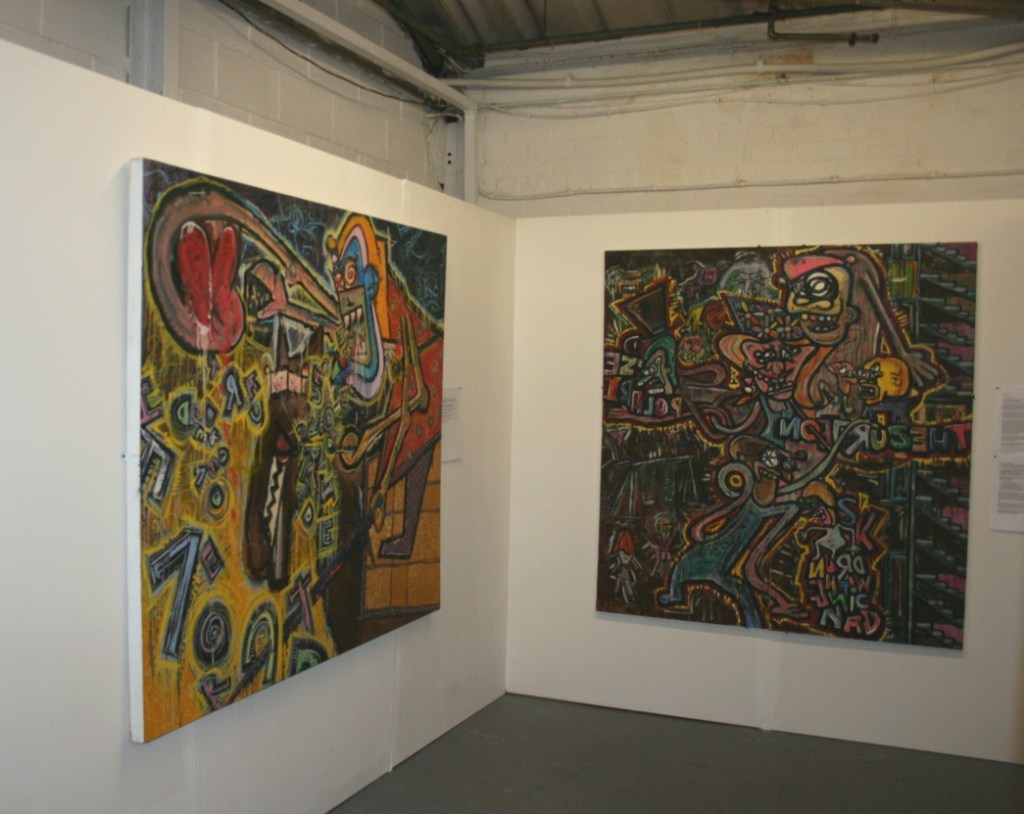
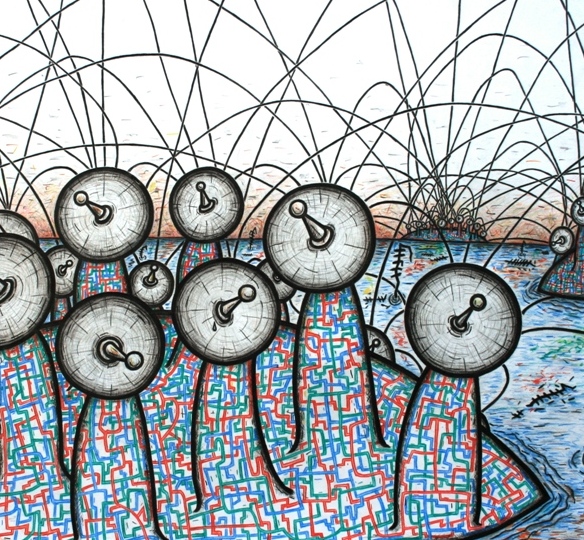
I was a permanently bruised atom in a rotten whole, which exacerbates its illness by refusing to accept its own mortality – this is my predicament within the capitalist system’s predicament. Something I couldn’t quite describe in words at this point, was now making itself clear within my large scale drawings. The tracks towards the politisisation of myself and obsessive dissection of the governing system were originally laid by the breakthrough that my large-scale drawings gave me, but the events of these years made it the only way I could go.
Experience has left me with no choice but to be anti-capitalist. Its offer of no future, save weekly piss ups, is because it offers humanity no future worth living in, which has crippled any vision I would possibly have had for my own atomised future. This was being played out in my walking disaster of a life I was having whenever I tried to live it. Yet I didn’t know this at 21 or 23.
It was only when I luckily stumbled upon a job working as a gallery attendant, just 1 week after the mess I got in at the festival, when I was confronted with an array other peoples’ career goals (which is in no way a criticism or to claim that their goals are futile) that I was aggressively confronted with my relative aimlessness/no-space-to-move-forward-into reality, making it much more pressing, as I began to watch workers come and go as I stood still, that I felt it an urgency to sensibly home in on what I felt were the causes of this entrapment. This feeling was coupled with a expanding inferiority complex about my general lack of knowledge, in comparison with most other people I worked with. But this I began to feel positive about. Whether I was pushed or jumped, I needed to take this plunge into the world of books.
2008 to the present .I wished to read books that could help word the feeling that all the things that mentally knocked seven bells of shit out of me were all connected; that it wasn’t just my imagination that the same thing that caused climate change, was the same as what was making society so homogenised and unknowingly unfree, which was the same thing that had caused my mental illnesses and social calamities, which was the same thing that caused so much internal violence through its endless mediation of images, which (through my eyes) was in general no less Dystopian than the visions I had been reading in 20th fiction books written in the first part of the 20th century. Before I knew it my choice of reading had taken on a very direct course, and the word capitalism was on the tip of my tongue in every conversation I would have..
I knew what I didn’t like in much clearer terms than before. But, whilst further hardening my inability to think long-term/think career plan due to a now growing cynicism to the whole language of aspiration within capitalism (knowing how all consuming of even the arts it is) it did nothing to help my sense of self whilst within social situations. Thus the career goals of those around me, continued to remind me of being left stranded; “no chance of that safety net of a partner now – nobody wants a person who is going nowhere”. And it isn’t that I think all careers are bad or destined to be doomed, it’s just that I have come to realise that I cannot see a future past my next artwork/next exhibition, of which is intended to be the aforementioned case I have been building (which is why since I things changed when I started working I now have most of my lowest moments after an exhibition is over, when life caries on and still nothing feels “confirmed”). Any thoughts that try to go further than this hit a grey screen in my mind.
.
Nevertheless, for a short time, working for a wage and then making my own work in the evening was, although forming a event-less splodge of time, OK – not too bad. A small resignation to nihilism I suppose, but not too much. The lyrics from the first Strokes album, which embodied a quintessential “yeah, but it’s not that bad” kind of nihilism, seemed perfectly fitting (as they did for me before my ‘sigh’ turned into ‘gasp’ between the 9/11 terror attacks and the 2002 world worries)“I’m working so I won’t have to try so hard” (Someday)The problem is, as I was reading more and more, the more despairing and critical of the current world I became, and the drawings made the inevitable descent from climate change causation to the entirety of capitalism itself. Although part of the reason I wanted to understand the system that governed was for self help, I realised I was veering very quickly towards unconditional anticapitalism, this made me feel obliged to try to do more to highlight all the problems it caused and to try to help change things, as “I couldn’t justify just ranting and raving in my work, to then sit back and do nothing in the real world”. But this is when I began to feel even more trapped by those barriers I thought I was actually beginning to pull down; because the more I became aware of the matrix of injustices and advancing capitalist-caused problems surrounding our very existence, the more I realised how much some of these had their tentacles wrapped around tendencies/habits of mine that helped sustain the barriers that I’d instinctively built as necessity for my own safety. The truth is made clear by my compulsively pessimistic creative energy, and the morbid fascination that fuels it; because this was present before I’d even read all the words that would make me realise how trapped how felt. This makes it sometimes seem that the books that I read (including the mindful books that have tried their best to make me just be, just go with the flow in life) in order to free me, have only located the key so that it could lock my chains.
I suppose that I am back in (or never left) the existential situation I was in during anorexia. The situation that is explained so brilliantly by the sample at the beginning of 4st.1b by the Manic Street preachers (if one makes the subject wider than that of food)
.“…… too much to die
And not enough to stay alive
I’m sitting in the middle waiting” .
My mental rooting system is too entrenched in ground that, although is slowly killing it, is stopping it from instantly toppling over. Which one is the worst is debatable, but ones natural instinct is to side with the former rather than the latter. As well as not even knowing how to, I’m pretty sure that this is the force which is preventing me breaking free of my now barred-up, passive (going nowhere) existence: an instinctive awareness that doing so could be fatal; making a big mistake, such as putting my utter trust in something or someone, giving myself to them only for it to leave me where it left me before, but with less naivety/optimism to pick me back up each time it happens, which is why I now don’t dream of finding a partner, and actually wall myself up away from the possibility, consciously now denying the one thing I thought would ‘save me’ and revving up the motor of my routine again, industrialising discontent as a force to keep going.
This is why I sometimes think that my only possible place within life is – due to being unable to deal with the world as it is, but also unable detach myself from it in order to help to think of something better – to be a maker of works that highlight the hell we have made, not as someone to help create the better but to warn and inform those who may be able to go forth and do just this. And I think that, due to the feelings of alienation and messing up whenever I do try to be alive and live for the moment (as the ‘able’ anti-capitalisters would advise to me) always (as yet) winning over, this is my only way.
But the reason for explaining this whole inability to deal with life, isn’t to leave it just as my own inability, because this inability is caused by capitalism’s saturation of our lives, it’s relentless erasing of anything not subject to direct/or indirect commodification, whilst simultaneously entrenching itself within all paths of thought so that any unsaturated spaces we find we instantly tarnish with it so that what was once an alternative is now using capitalist reality to make itself look appealing. The claim by many modern philosophers that “it is easier to imagine the end of the world than the end of capitalism” is so much more cutting once one becomes aware of the sheer scale of the environmental issues that now face us.
We have a mass inability to picture a future worth living in. Some of us are better at denying it, and hoping for that cosy domestic life the system promised to us, but can very doubtfully give to us. But I think the inability plays itself out in the actions of so many of us; the weekly piss-ups instead of saving for the future; the general obsession with that pursuit of hedonism; the obsession with retro; the rising popularity of Joy Division with a generation of young people born years after the death of Ian Curtis. I couldn’t explain this when I was 21. I couldn’t explain this when I was 23. I still can’t explain it as I would like to here and now.
Just as the reaction that it is wrong to put this quite personal account on the net is missing the point, one is also missing the point here, if the reaction to this writing is to tell me how everybody has got problems, and one just needs to learn how to cope. The example used of my own depression/inability to cope is referred to here as an example of the co-ordinates of a certain depression/inability to cope which is specific to our late 20th century/early 21st century era, and is not just an age-old tale of how the young find their way in the world.Our generation lived/grew up in an era coined by intellectuals as the era of ‘the end of history’. On the surface this meant the end of grand narratives that told a story of human progression to an era of total equality of living standards, freedoms and rights between fellow humans. What was also meant by this phrase wasn’t just that we should accept capitalism but that we should all accept that a global capitalism of unrestricted commerce had triumphed as the only system that works; a belief that was shoved into the peoples’ minds by the constant rhetoric of “there is no alternative (to capitalism)” by the Thatcherites and Reagonites. But as well as things seeming so exciting to us, as we lapped up Music Videos, Games Consoles, and then the Internet, I pods, and Cell phones, life all too often also seemed to lack meaning and purpose – there seemed to be a severe void to life behind the good-times-frenzy spewed out by the adverts. Our generation was the first to grow up knowing (without doubt) that our species had made a real mess of the world, and even if global warming didn’t seem such a big threat when we were children, there was still the pressing stories like the one about how an area the size of a football pitch is being destroyed in the rainforests every second. You had to learn to try to cut the truth out, but once you did, what else but a life lived through the images of a consumer fantasy – and there begins so many of our mental illnesses.
Whilst growing up, one also learned to believe that if you aren’t willing/or unable to play the (capitalism) game, then there isn’t much choice of a life left over for you, except one of loneliness and destitution, and that “it was your own fault” if this was the life you found yourself living. If you don’t aspire to strive up the career ladder; if you don’t attempt to immerse yourself in a consumerist fashion niche; if you don’t strive to be beautiful, clean and lean; if you don’t smile and say pleasantries to people when you feel like shite inside, “well, it’s your own fault” if the world feels like it has left you behind to fester in a no-new-messages-for-you-matey misery pit. All of these ‘learnings’ doubtlessly have a major role in the creeping mental illness epidemic of our times..I don’t want it to be true that there is no hope of a way out, and there is maybe hope in the very fact that my inabilities don’t seem to affect others on the same level (regarding the mental gridlock I have). However, when I referred to the able anti-capitalisters, it was with a cautious irony; sometimes questioning whether the stance of those who claim to know how to, in the face of us who seemingly just refuse to stop carrying on as per usual, is itself a niche within the system; another version individualism. This questioning agrees with the description of capital as the unnameable thing; something which can incorporate anything, no matter how anti-capitalist it claims to be, and change into anything for the goal of profit-making – and this poses the scary possibility that it will never die, as long as it can live off the remain segments of humanity. And it is, sadly, true that many people who blame the individual for not stopping its advance-thus planet-wrecking of capitalism, actually start to sound like eco-Thatcherites when they start telling everybody “its your choice – you can make a change – it’s up to you!!”, even if they detest what Thatcher did. This is why I usually find it inappropriate to personally criticise friends when they take steps that, when taken by many, I see as very destructive to both the idea of resisting capitalism and destructive to the planet – steps such as learning how to drive and getting their own car. They are only doing what they feel they have to do within this system to have any kind of reasonable life, and not fall into a life-less-liveable – and that’s not rampant selfishness, it’s just trying to get on with life in the only way they deem to be possible (and many of them are very angry about the way capitalism is taking us, but they feel trapped and “try not to think about it”). But this isn’t to detract from the importance of informing, encouraging and asking individuals to live their lives differently. But to use the ‘blame’ rhetoric ,which just rounds-up on the individual, whilst they are trapped in a system that necessitizes and necessitizes itself further into ones life (the more it recreates/reshapes as it continues to find new things to commodify) is counterproductive and also close to bullying. Thus, it’s hard to picture a future because it’s hard to picture how on earth one can get out of the grips of capitalism; both on a personal and species level. It sometimes seems that our predicament is like a long drawn out take on the fate of an animal caught inside the coil of a constrictor snake: every time we try to fight back, to challenge its grip, the grip gets tighter, and it keeps on getting tighter until there is no space in which to breathe. This brings me to perhaps one of the most appropriate visually-stimulating things written that I have ever read. The passage comes from John Holloway’s recent book ‘Crack Capitalism’. The usage of a room of four walls, and the walls are closing in, as a metaphor for the suffocation of everything under capitalism seems to describe the predicament at every level of the system; our own mental states (where, although “some of us are sitting comfortably, others most definitely are not”) and the entirety which is made up of all of us; both the physical and metaphysical predicaments. It brilliantly describes our inability to see outside the “room” capitalism has shut us away in. .“We are all in a room with four walls, a floor, a ceiling and no windows or door. The room is furnished and some of us are sitting comfortably, others most definitely are not. The walls are advancing inwards gradually, sometimes slower, sometimes faster, making us all more uncomfortable, advancing all the time, threatening to crush us all to death.There are discussions within the room, but they are mostly about how to arrange the furniture. People do not seem to see the walls advancing. From time to time there are elections about how to place the furniture. These elections are not unimportant: They make some people more comfortable, others less so; they may even affect the speed at which the walls are moving, but they do nothing to stop their relentless advance……..As the walls grow closer, people react in different ways. Some refuse absolutely to see the advance of the walls, shutting themselves tightly into a world of Disney and defending with determination the chairs they are sitting on. Some see and denounce the movement of the walls, build a party with a radical program and look forward to a day in the future when there will be no walls. Others – and I among them – run to the walls and try desperately to find cracks, or faults beneath the surface, or to create cracks by banging on the walls……..” .Although more directly to do with both environmental destruction and the undemocratic nightmare that relentless state-protected commerce is taking us it, It also explains my own mental state to a tee. I think it probably explains the majority of peoples’ mental states also. I think has to be the case. .But something prevents me from believing that we are truly doomed, even as I feel so trapped within myself. Something still gives me hope in our species now and again, and something still gets me out of bed in the morning, with hope that something still will coming into my life and things will get better. It has certainly worn thing though, which is why I have found myself requiring the same aspects that resonate with the bleak nihilistic outlook, as I did at other points during the past 10 years.
After each mini-breakdown period my artistic endeavours still drag me along, but more is demanded of me now than it used to be, both from myself and from others who are aware of the despair at capitalism which runs through everything I make or write. But I don’t think I can give what’s needed. The undercurrent motive for writing the events of my past 10 years is to explain why the demands of me now to participate more in activism against capitalism and for something else seem to be reviving the intensity of the feeling of everything closing in, and this inability to act seems to be precisely because cannot end up in back in the place where these events put me, as I have less reserves than I used to in order to get back out again. This is why the more awareness I have, thus the more the demand to act now I know much more, followed by the inability to act is making me revisit the experience of life I had when I didn’t know what I know now, but felt it: it is returning the need for the feeling of a suspension of time, in the landscape that seems to resonate with this feeling of having nowhere to go, whilst things are closing in fast; the hill tops west of where I live, and the need to listen to Joy Division (in particular).
.
But of course I agree with the collective beliefs of all those who are trying their hardest to take action to try to make a world not ruled by money, a world which is no longer in peril from the relentless attack on the ecosystem that sustains us (and there is truth, regarding the undercurrent motive for the writing of all of this, that I’m trying to explain this to those who know me and are perplexed and sometimes frustrated by my inactivity in the face of things I know full-well are destructive). If there’s one good that may arise from writing all of this, it is that by explaining all of this I might actually be able to let the last 10 years of my life now rest in peace, so I can move on; a hope that understanding it all will help me break through the grey-screen which covers all images of my future, a grey screen the events of the last 10 years helped to create. And, with this, I hope that with – what seems to be – a hell of a large amount of thinkers racking their brains on how we can move away from capitalism, now that the need is crucial, that this is also a point of letting our past rest in peace; let it rest so that our species can get over the false dreams capitalism gave to us and move on to something else, something better.



















 John B Ledger
