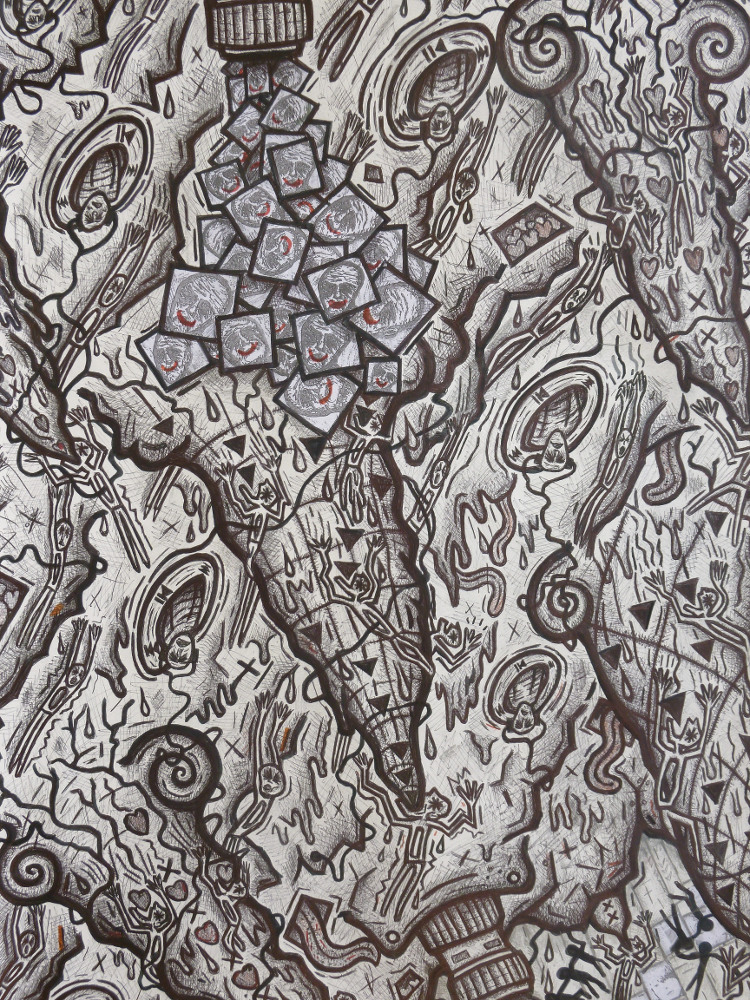
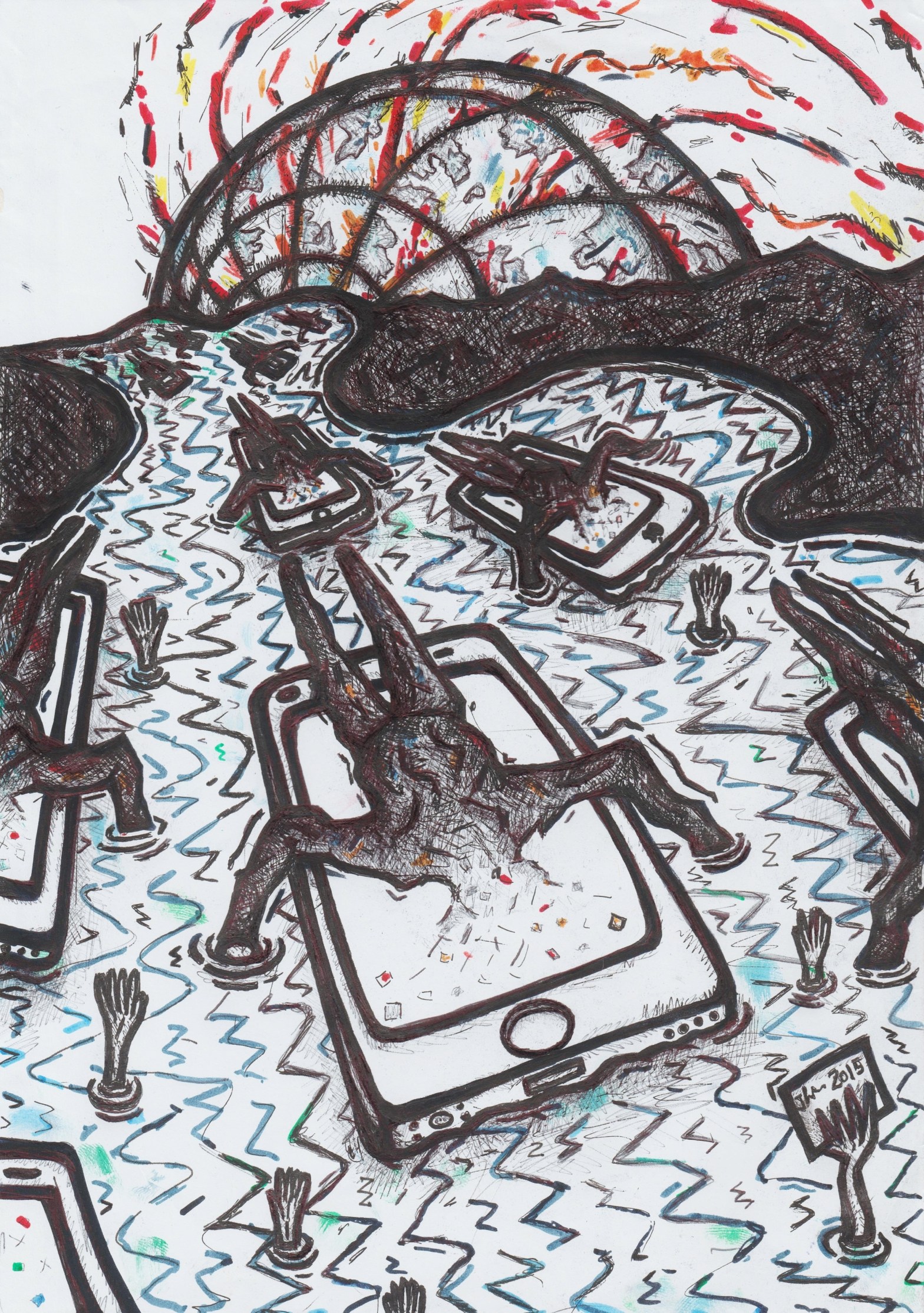
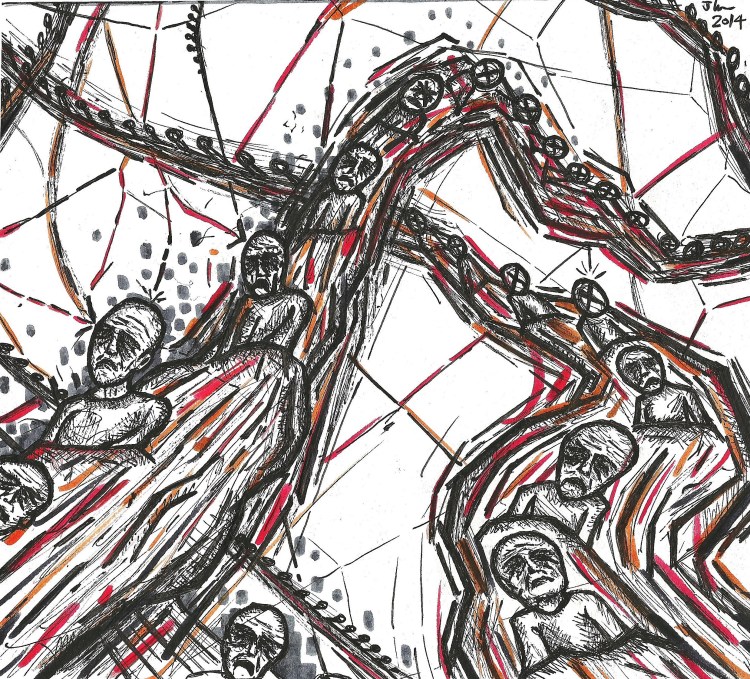
I will be showing my drawings ‘…Coils Tightening’ and ‘Feverish’ in this year’s Electric Picture House Open, at the Electric Picture House, Cross Street, Congleton, Cheshire, CW12 1HQ
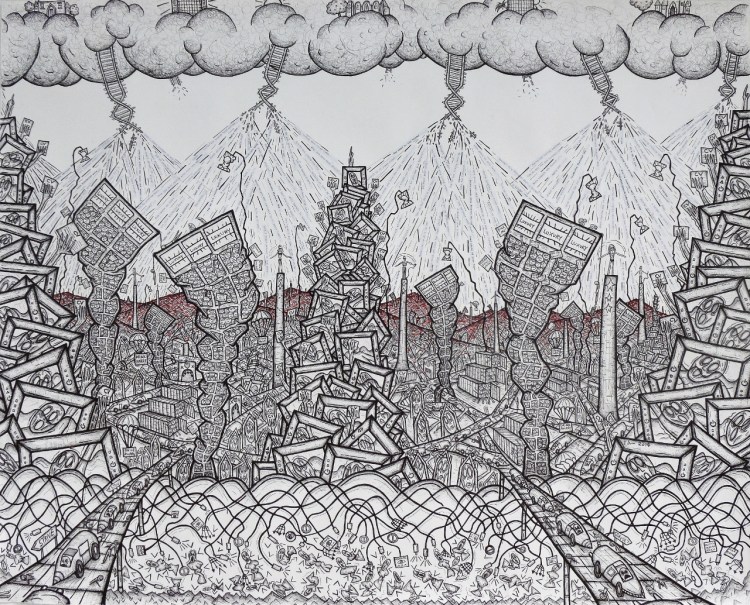
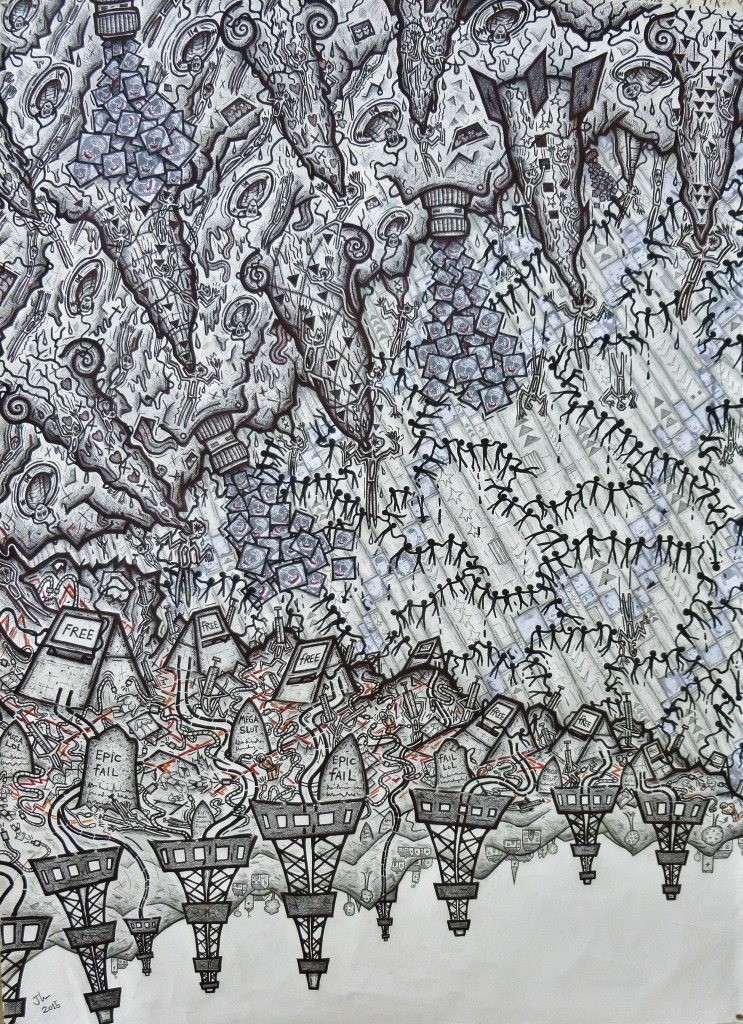
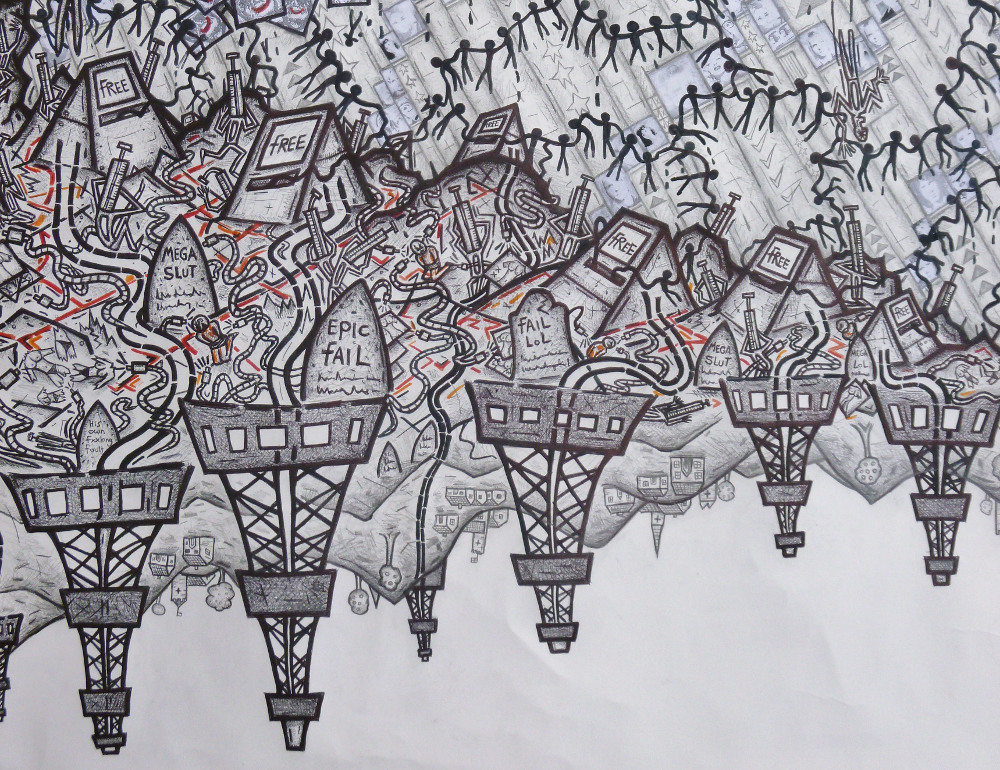
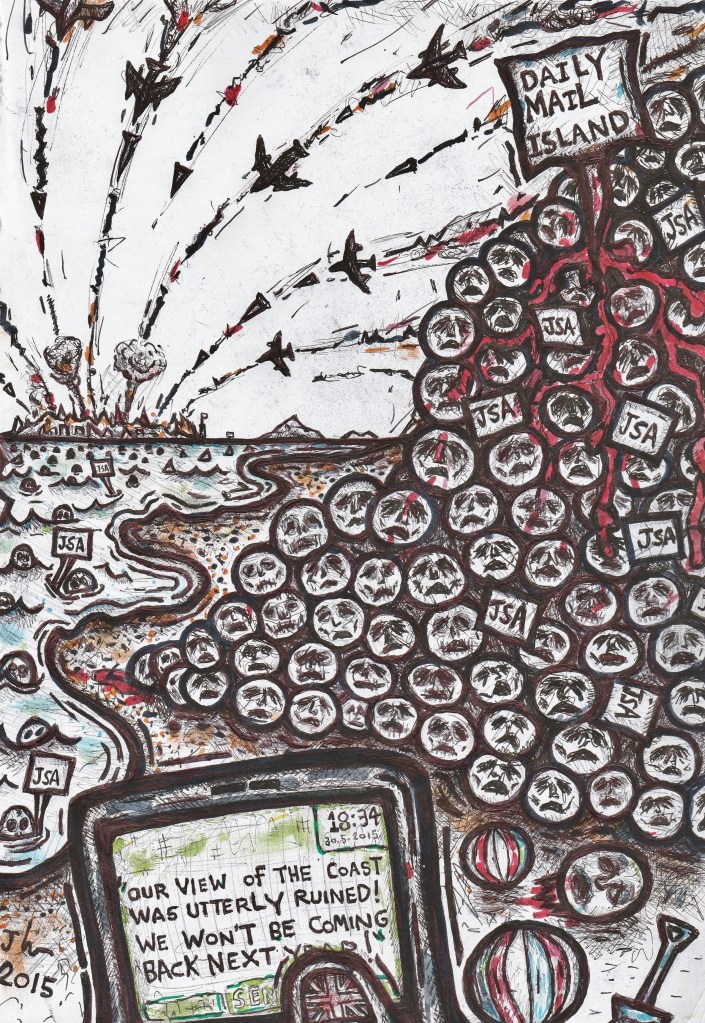
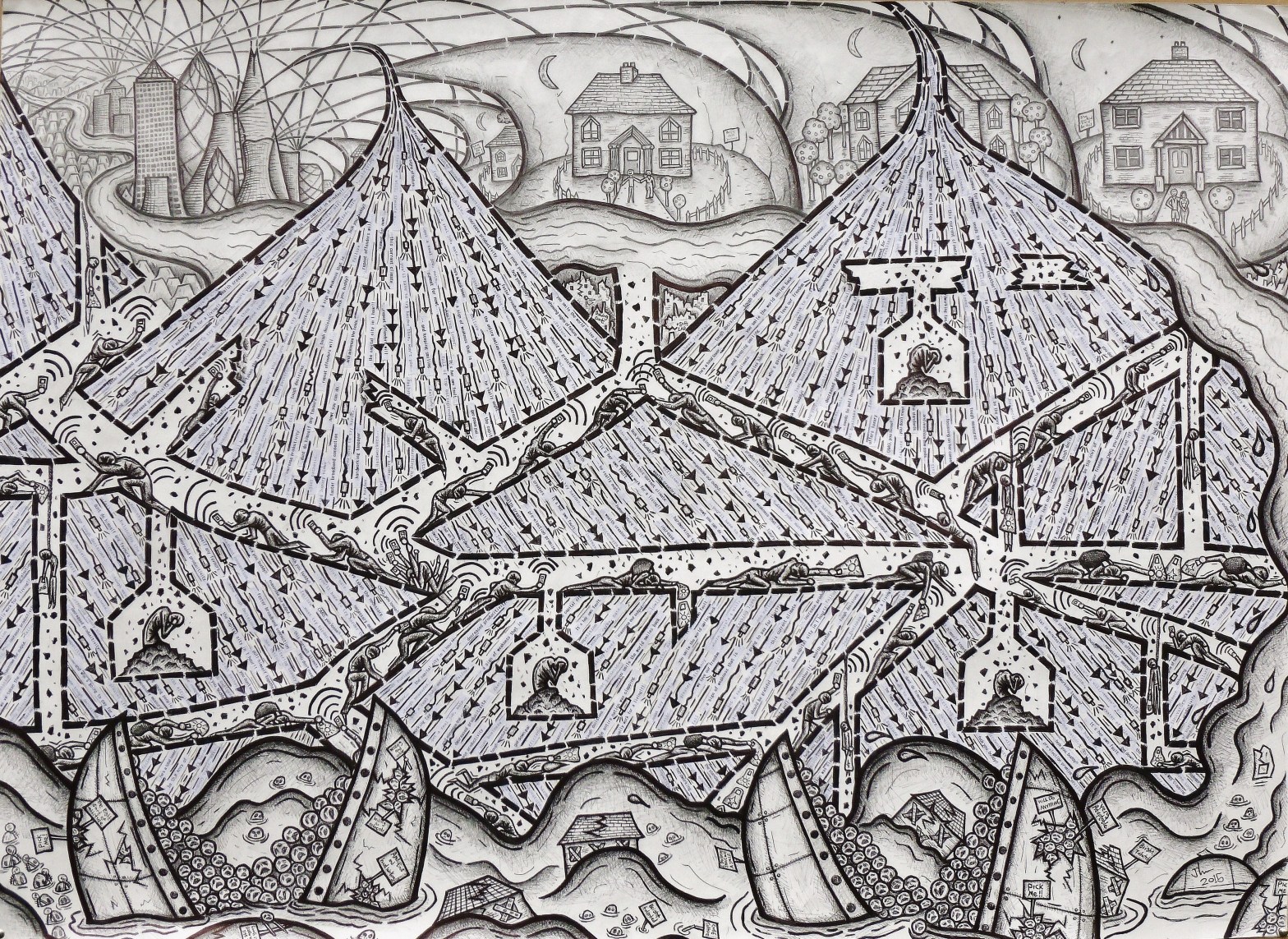
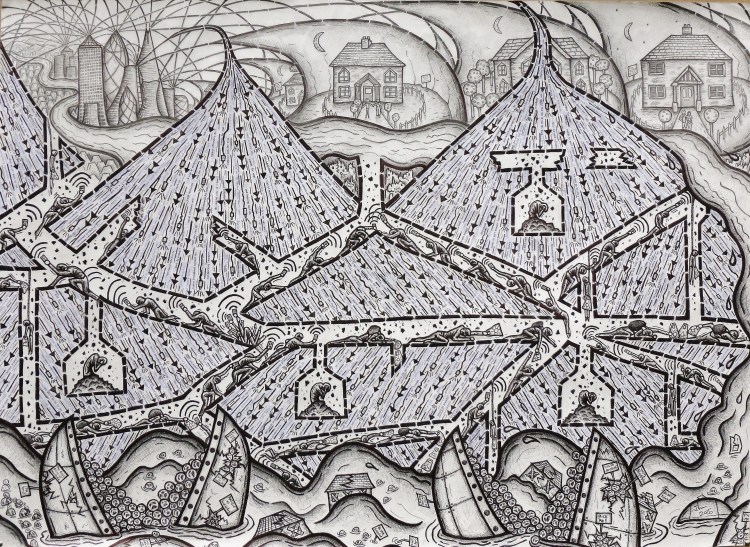
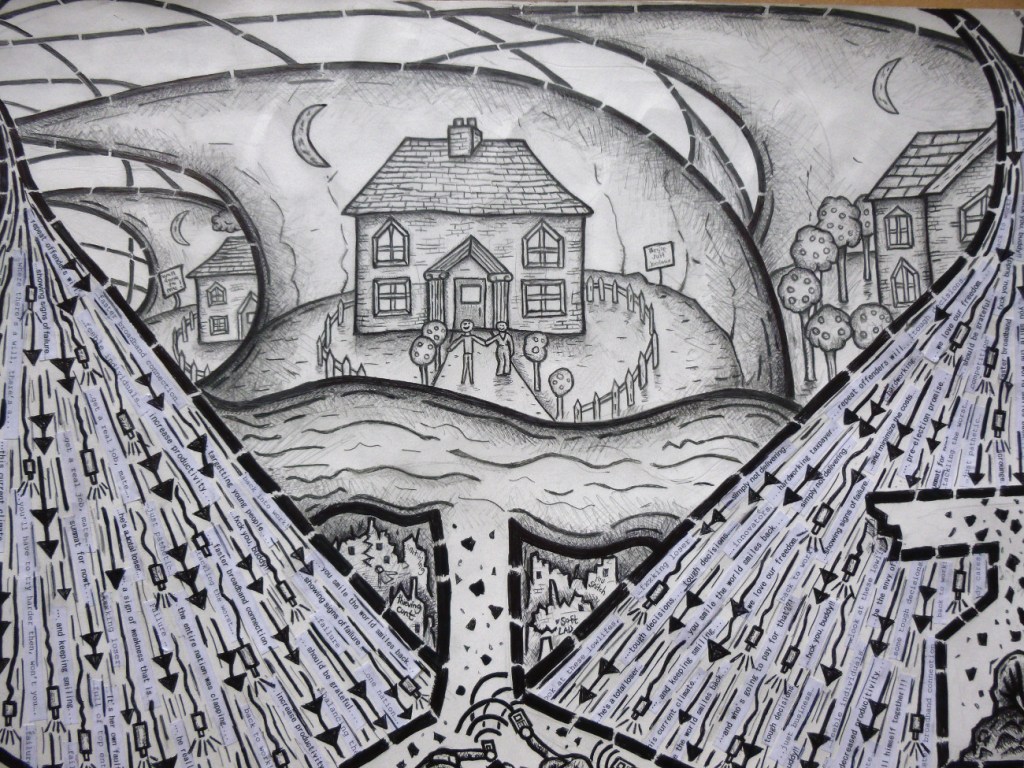
Massively relieved to get this bxstxrd of a piece finished. Sums up just about everything I have ended up agreeing about with just about everybody I am able reach agreements with for just about every day during the past 2 years. I have found the process of fracking to be such an apt metaphor for the broader predicament of our culture.
Everybody’s Fracking (2015, mixed media on paper, 95X130cm)
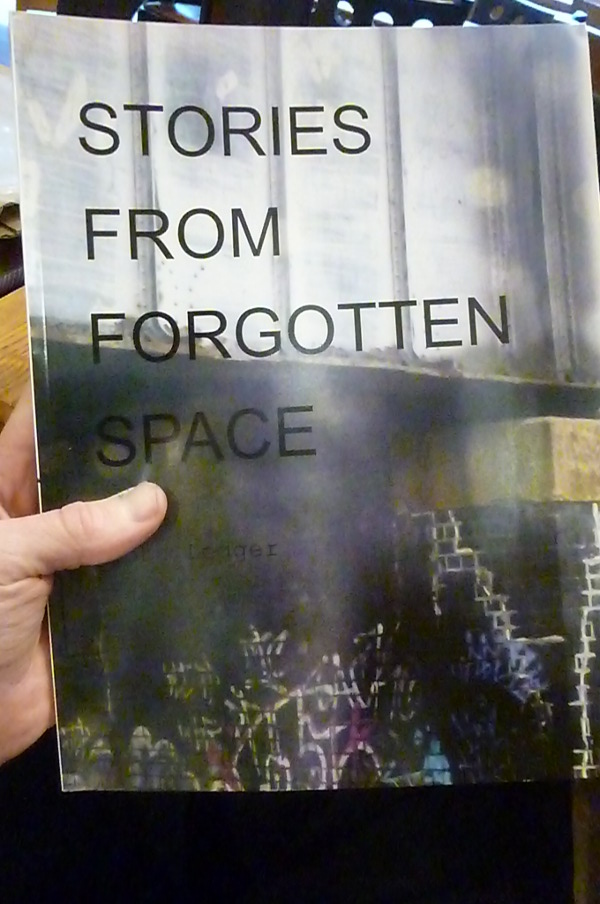
I seem to be at a point of bringing quite a few important works to a point of closure. I and have Finally made my blog series, Stories From Forgotten Space, into physical book form. Despite a few frustrating errors made by Blurb’s book publishing program, the minor imperfections can’t take away the central position this book takes alongside my video The Mary Celeste Project [The Scene of The Crash] in my more recent body of work: I see the book as a work of art in its own right, and intend to exhibit it in my upcoming 2015 shows. However, although I can’t get it done cheaply (unless I find a willing publisher soonish) it can be bought from there http://www.blurb.co.uk/b/6306069-stories-from-forgotten-space
Predominately set in the former industrial heartlands of the areas constituting the former West Riding of Yorkshire, it extends into many other areas within the present day landscape of England. It takes a look at this country through the year leading up to the2015 General Election…
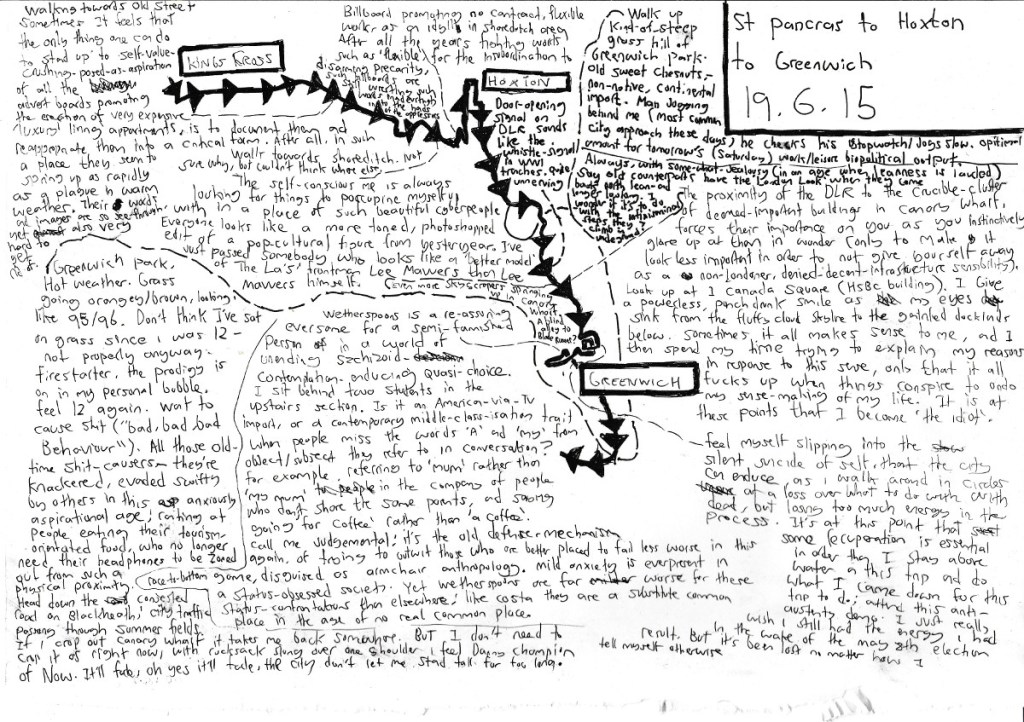
“Walking towards Shoreditch, nearly an hour into walking in the city. The self-conscious me is always looking for things to porcupine-myself-up with in a place of such beautiful cyber-people. Sometimes it seems like everyone looks like a more toned, more Photoshopped edit of a pop-culture figure from yesteryear. I pass somebody who looks like a ‘better model’ of The La’s’ frontman Lee Mavers; more like Lee Mavers than Lee Mavers.”
“The proximity of the DLR train to the crucible-cluster of deemed-important buildings in Canary Wharf forces their importance on you as you begin to instinctively stare up at them in wonder (only to refrain from doing so to hide from public their impact on you). I look up at 1 Canada Square (HSBC building). I give a powerless, punchdrunk smile as my eyes sink from the fluffy-cloud-skyline to the gentrified docklands below. Sometimes it all makes sense to me, and I then spend my time trying to explain my reasons that respond to this sense, only that it all fucks up when things inevitably conspires to undo that sense-making. And it is at these points that ‘the idiot’ appears.”
“Greenwich Park. Hot weather. Grass going all orangey/brown – like 95/96. Don’t think I’ve sat down on the grass since I was 12 – not properly anyway. Firestarter, The Prodigy [spring 96] is playing in my personal bubble. Feel 12 again. Want to cause shit/havoc (“Bad bad, bad bad behaviour”). All those “old school” shit-causers; they’re all knackered now, evaded swiftly by others in this anxiously aspirational age; ranting at people eating their tourist-orientated food, who no longer need headphones to be zoned-out to such a physical proximity. Head down the congested road on Blackheath; city traffic passing through summer fields. If I crop out Canary Wharf it all takes me back, somewhere. But just now I don’t need to crop it out, with rucksack on shoulder, ideas momentarily electrified, I feel Danny-Champion of Past and Present. But such a surge of self-belief is spurred on by the very thing that crushes it; the ruthlessly ambivalent city. It’ll get me, for sure it will, it always does. It doesn’t let me stand tall for too long. But right now, as I text myself these thoughts, it hasn’t.”
Saturday 20 June 2015
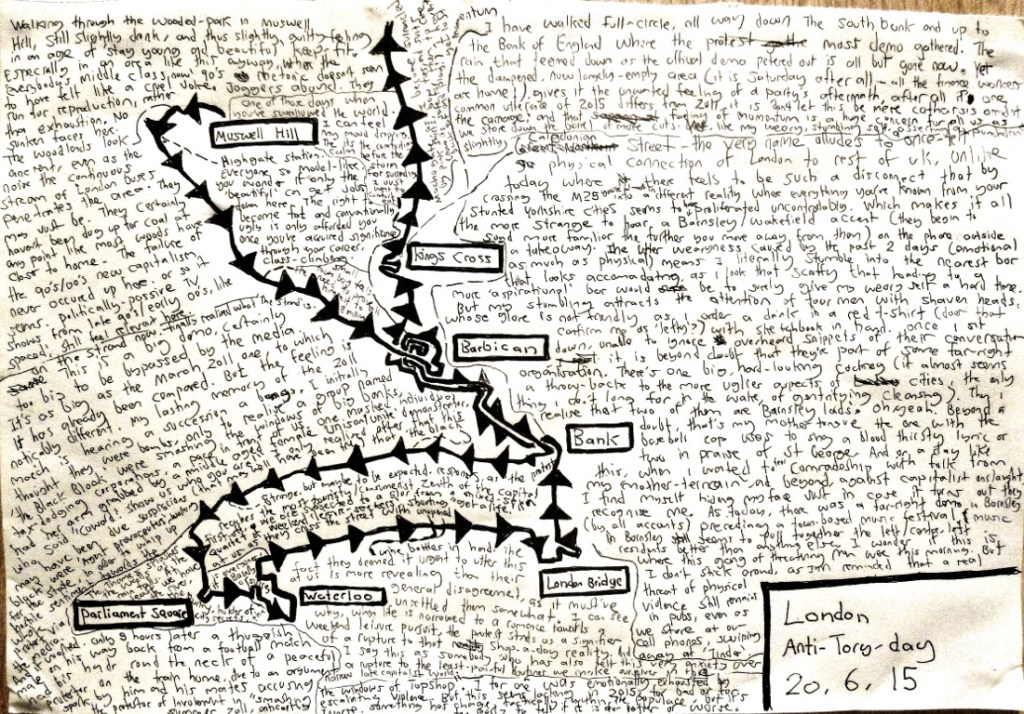
“Walking through the refuge of a wooded-park in the centre of Muswell Hill, after staring down at the horizon-reaching cityscape commenting on how only 100 years back New York was just beginning to take over London as being the biggest city the world had even seen. Still slightly drunk from the night before, and, thus, having a slightly-guilty sensation in an age of “keep young and beautiful; it’s your duty…”. Especially in an area like this where the “everybody’s middle class now” 1990’s rhetoric doesn’t seem to have become like a cruel joke. They run for reproduction, perpetual vitality rather than exhaustion – no sunken faces around here. These woodlands look ancient, even as the noise from the continuous stream of London buses penetrates them. They may just be ancient; this land certainly hasn’t been dug up for coal at any point like most woods have nearer to home. The failure of the 90’s/00’s freshly-veneered/total immersion-capitalism seems to have never happened here. Or so it seems. London-based TV series’s from the politically-passive late 90’s/early 00’s, like Spaced, feel like they could be in their 10th series around here.”
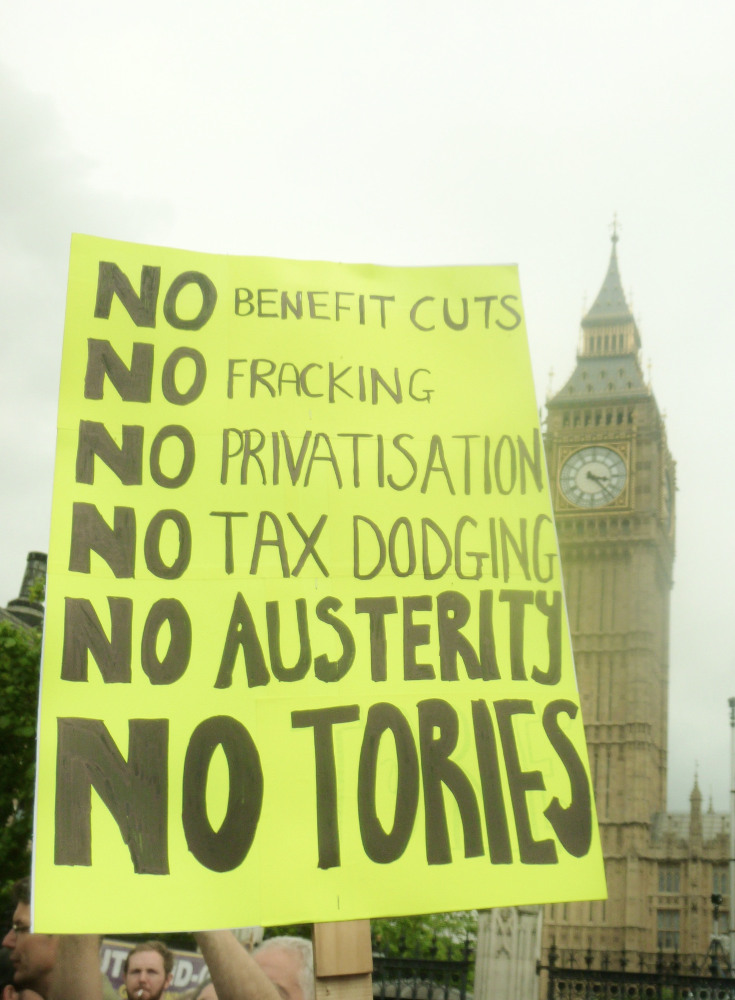
“The demonstration’s on The Strand now. One of those iconic London streets that I have only just located after a few years of frequenting the city more than before. This is a big demo. Surely too big to be bypassed by the media’s gaze…? It’s as big as the March 2011 one, to which it was preemptively compared. But the feeling is noticeably different. My lasting memory of March 2011 was of hearing a succession of bangs, which I initially thought were some sort of explosive, only to realise that a group named the ‘Black Block’ were smashing the windows of big banks and tax-dodging corporations 200 yards ahead of us in the march. Moments after the bangs a masked young woman cut through the march procession, only to have her arm grabbed in anger by a middle-aged woman in a Unison t-shirt, who shouted “cowards! why don’t you show yourself?”. Although I had mixed feelings on what was the correct approach to counter the much rawer anticipation of systemic wounding, in hindsight I realised the angry response from the then-seemingly-more ‘pedestrian’ protest-approach, was due to the possibility that many who said they were in the Black Block were actually Agent Provocateurs, working in order to allow an aggressive police response, and to whip up hostile sentiment towards the wider demonstrations. And it worked. Only five hours later, on the train back to Wakefield/Leeds a thuggish male, part of a group of football fans on their way back home, had his hands around the neck of a blatantly-peaceful protestor, due to an argument between them, largely sparked by the football fans accusing him of complicity in “the smashing up of the windows of Topshop”, which resulted in the police boarding the train at Doncaster. I, for one, was emotionally exhausted as the tinderstick summer of 2011 drew to a close, prepared for a new world where one would be forced to take sides. The tide of society would consequently dampen this energy, and leave many of us feeling like self-aware-zombies in 2013, 2014. But perhaps the clear lack of noticeable ‘trouble’ on this comparable 2015 march isn’t a negative? Maybe something has changed, tactically; a different collective response is afoot, more based on duration?”
“The only negatives we receive are perhaps to be expected, due to being received as the march reaches the tourism/consumerism zenith of the capital. First off, we are subjected to a barrage of slurs from a man-woman-man-woman quartet of weekend ‘leisure-seekers’, with one of the women repeatedly shouting “get a life!” as they cut through the march to the opposite side of the road, with bottles of unopened rose wine in their hands. The fact that they clearly deemed it urgent to utter this to us seemed more telling than any general disagreement with the causes being marched for; beyond the initial feelings of “why didn’t I say something back to them?” was a realisation that the demo clearly caused them great discomfort. I think I can see why: when life is narrowed down to a singular romance focused in on the weekend ‘leisure-pursuit’ and all the promises of happiness, meaning, love it has appropriated, protests begin to be representative of possible huge ruptures to that shop-a-day reality. And I say this as somebody who has had this very anxiety about ruptures to those routines-of-least-pain we pave ourselves in the narrowness of the late capitalist world.
Further on, as we near Downing Street, we sense an hostility from groups of muscular young men in t-shirts. But their gesture (which seems to be one of showing solidarity with the coppers by standing in a line with arms folded in front of buildings in this zenith of nationalist value within the capital) looks almost comical, and the absurdity has not gone unnoticed by everybody I spoke to in the march. Everyone was just thinking ‘what the hell are they doing?”
“My friends head back for their respective coaches back North and rooms in London. I aim for some reflective wandering of the city until my train back later this evening (bad memories of Megabus coach journeys back from my failed attempts to study in London still haunt me). After 30 minutes trying to find somewhere to piss, I end up in Waterloo Station wishing to write expletives on the toilet walls over the lack of public toilets – my biggest pet hate of life in the over-commercialised and privatised UK city. However, due to there being a fault on the pay-in barrier and the migrant-worker toilet attendant politely letting us use them for free, I would’ve have felt bad giving him any extra cleaning up work to do. I head back out into South London, and look for the river. I always feel I need to see the river. The helicopters monitoring the protest are still hovering above. The rain begins to pelt down, but it’s the first time in my life I am carrying a waterproof jacket – a sign of age maybe? If my mood sinks now, and we’ve reached the afternoon it isn’t so alarming, it’s bearable. The Thames splashes against the walls as the rain falls. At least we/I have the river, the murky holder on plenty of secrets, that can’t quite be gentrified – it’s ours whether we are from Bermondsey or Barnsley. I have swallowed the world today; it’s the comforting calm before the potential storm caused by surrender to it all.”
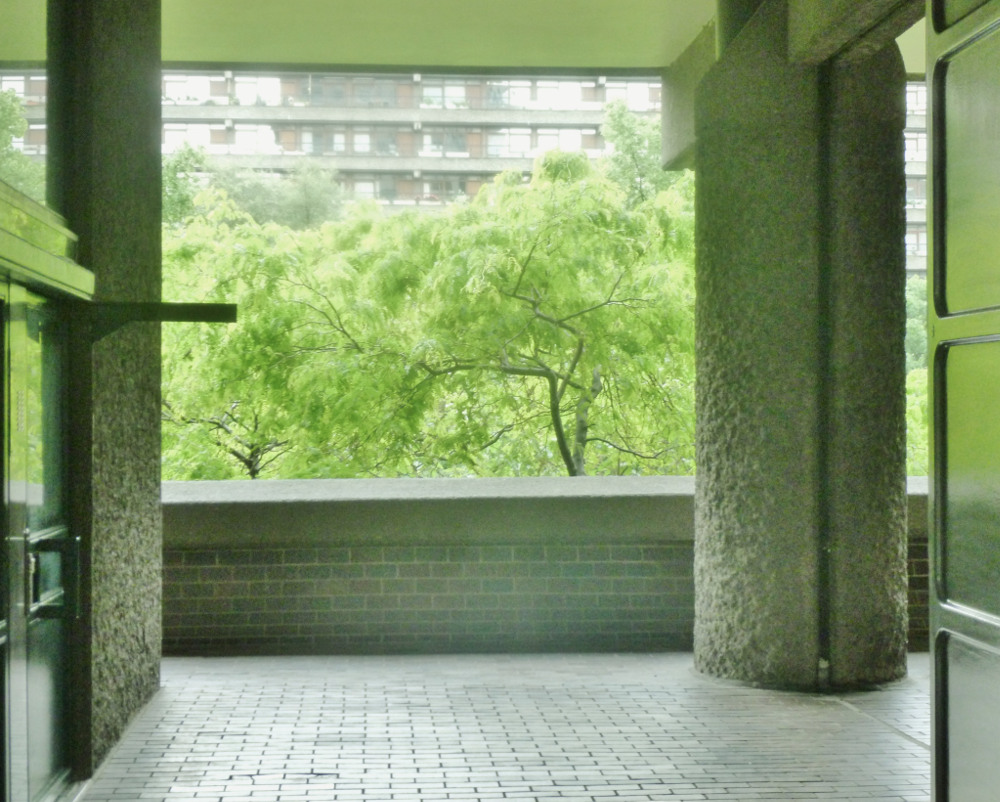
“I have walked full-circle, all way down the South Bank and back toward the Bank of England from where the demo initially gathered. The rain that teemed down as that official demo petered out in Parliament Square has all but gone. Yet, this dampened, largely-depopulated area (it’s normal for it to be eerily quiet on a weekend) gives it an unwanted feeling of the aftermath of a party. After all, one common utterance the stands out about this 2015 demo is to not let it be a mere catharsis amidst the carnage. Fading momentum is a huge concern for all of us as we stare down the barrel of deterioration. However, like my weary, now semi-stumbling self, acquiring a slightly macho-self-defensive gate as I slowly begin to see the tailored shirts, suits and bow ties reemerge, as if they were hiding in burrows whilst the protest was ongoing (“it’s safe to come out and play now!”), there is no resignation, not just yet. I walk just that bit further towards the Barbican.”
“Caledonian Street – the very name alludes to a once-felt physical connection of London to the rest of this Land-mass. Unlike today, where by crossing the M25 you almost feel that you’re in a different reality where everything you’ve come to know from your stunted Yorkshire towns/cities seems to has been given the green light to proliferate, uncontrollably. Which makes it all the more strange when I hear a Barnsley/Wakefield accent (very distinct the closer you get to them, very hard to differentiate the further away you are, geographically) coming from a man on a phone outside a takeaway, across the road. The utter weariness caused by the past 2 days (emotional as much as physical) means I literally stumble into the nearest bar that looks accommodating for a man who currently looks that scruffy that going into a more ‘aspirational’ bar would be to surely give my weary self a hard time. But my stumbling attracts the attention of four men with shaved heads, one of who’s glare is not friendly as I order a drink in a red t-shirt with a sketchbook in my hand. Once I sit down, unable to avoid overhearing snippets of their conversation, it is beyond a doubt that they are part of some far-right, ultra-nationalist organisation. There’s one, big hard-looking Ray-Winston-type-cockney (who evokes an image of more physically violent UK cities, the only aspect I don’t long for in the wake of gentrifying cleansing). Then I realise that two of the blokes are Barnsley lads. Oh yes, it’s beyond a doubt; that’s definitely my mother-tongue the one in the baseball cap uses as he drunkenly slides into chanting a bloody-thirsty appraisal of St George. And on a day like this!? A day when I wanted to feel comradeship with folk from my mother-terrain, and beyond, against capitalist onslaught. But I find myself hiding my face in case it turns out they recognise it from town. As today, there was (by all accounts) a far-right demonstration planned for Barnsley town centre, preceding a town pubs-based music festival, which seems to pull together folks of left/left-of-centre sentiment in the town better than anything else since the mines closed. I wonder whether there was thus a consequential poor turn out for the far-right, and they decided to head down to London instead? Anyway, I drink up fast, as I’m reminded of how the threat of real physical violence can still quite quickly rear its head in pubs, even in an age where we are more likely to yell in solitude into our cell phones. I head back towards Kings Cross station. Bland but less chance of aggro.”
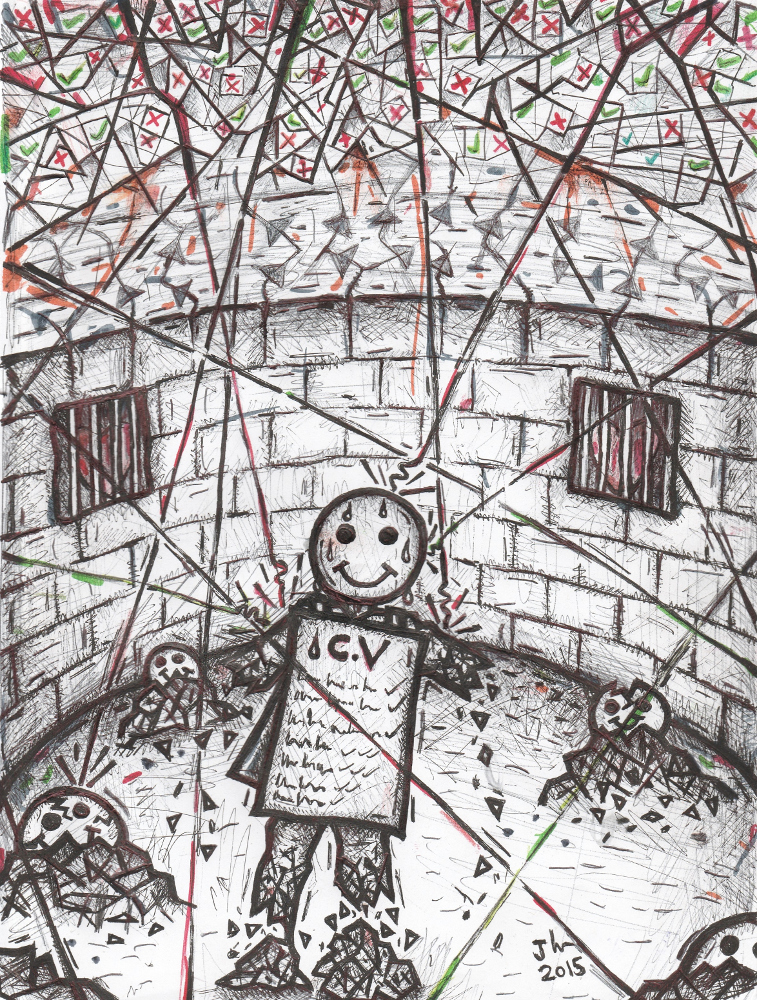
I will be showing my more smallish drawings ‘Hyper-Malaise’, ‘A Cognitive Austerity’ and ‘Five MORE Years…’ in ‘Bells From The Deep’ at The Hundred Years gallery, Pearson Street, Hoxton, London, E2 8JD.
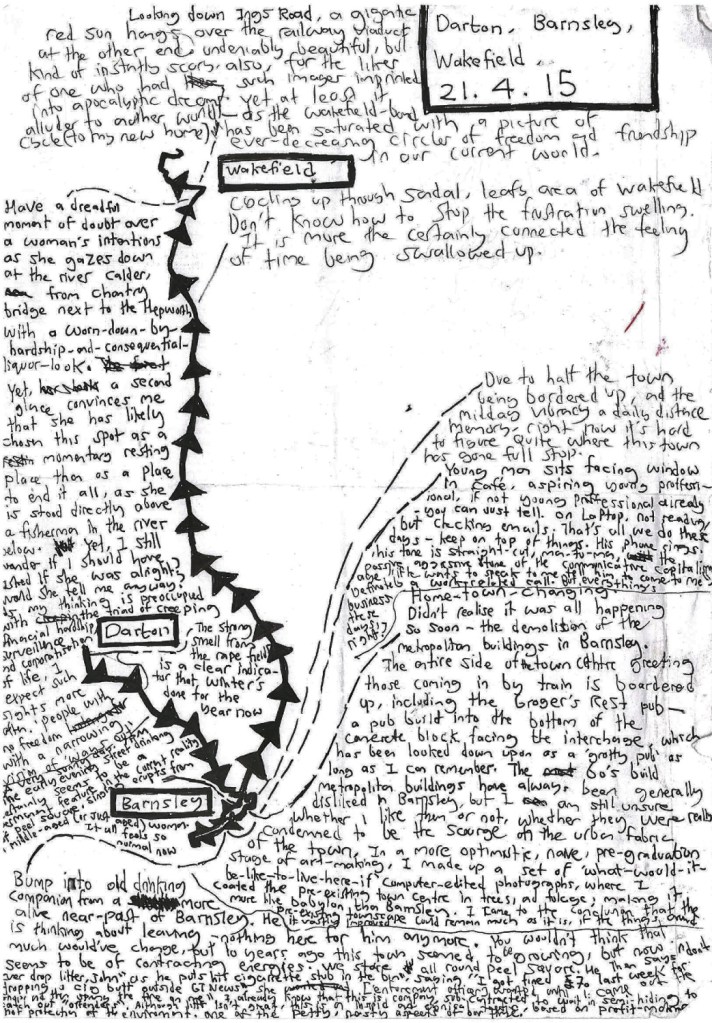
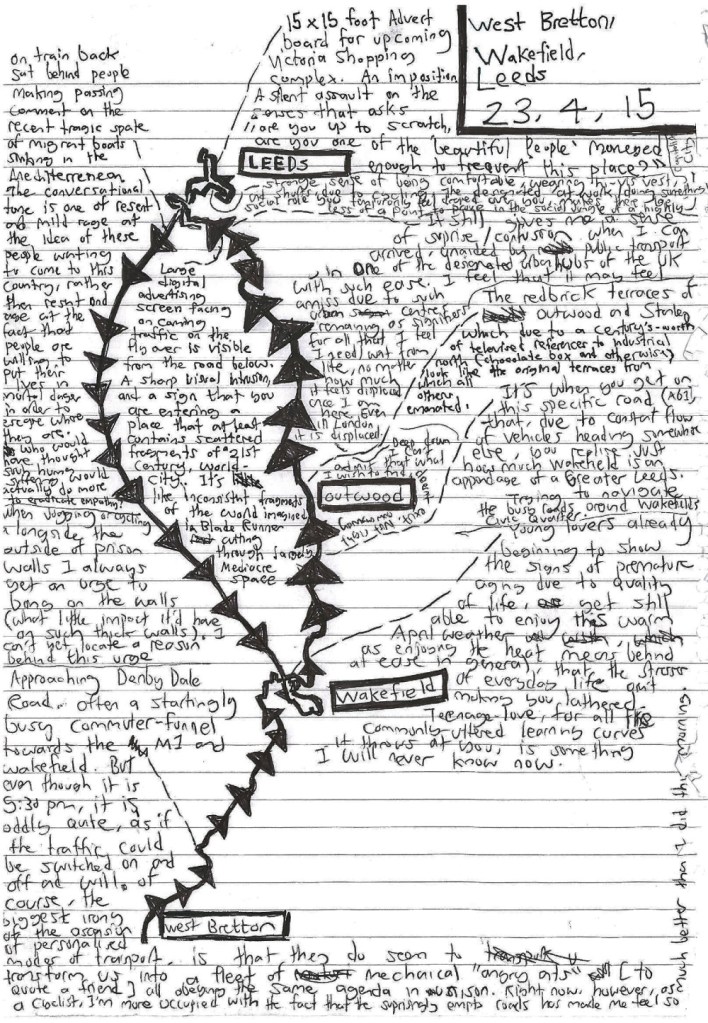
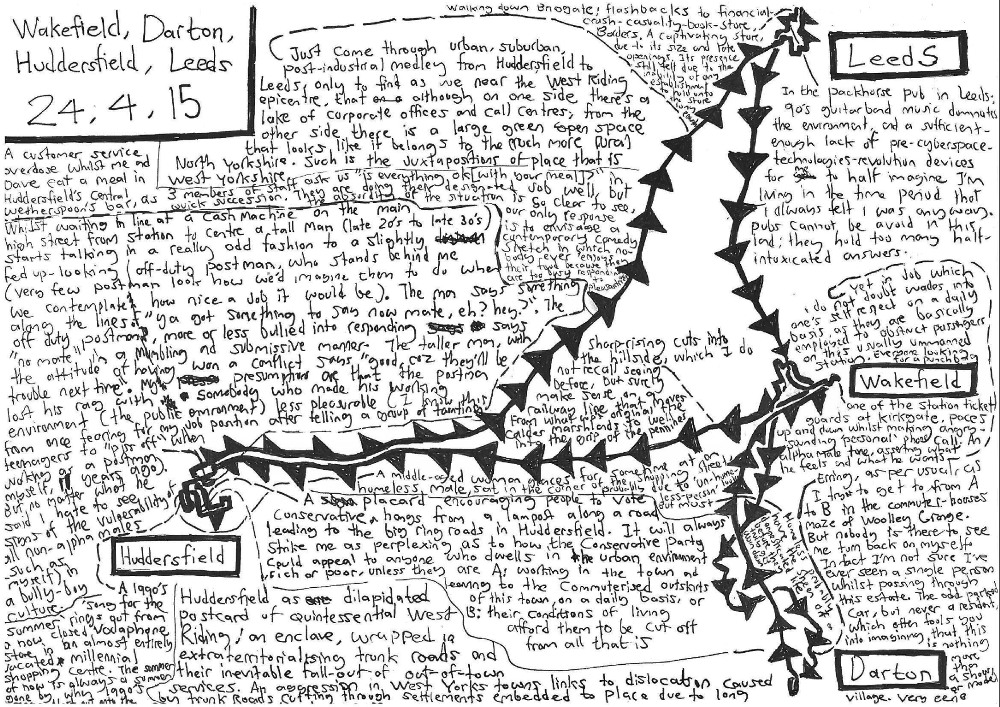
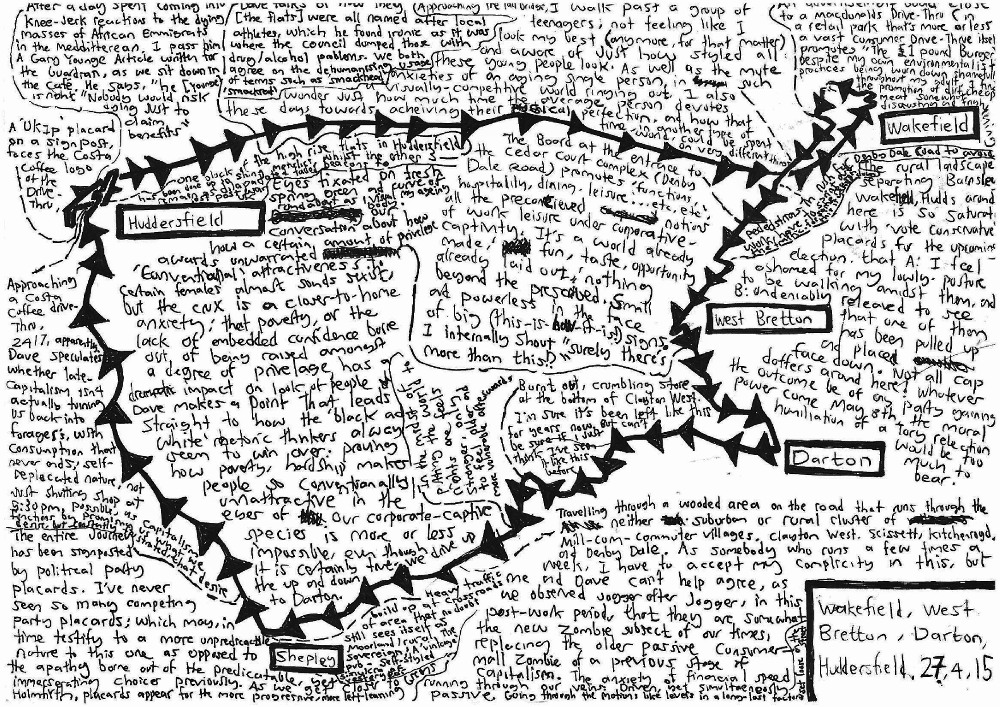
Stories From Forgotten Space builds on 2014 Mapmaking with the aim of taking the most prominent features of the project a little further. It is fact and fiction, clear analysis and emotional garbage, destructive and constructive thinking, but what it is is my truth, recollected through maps made of journeys I make. This section of Stories From Forgotten Space uses lost bus routes and thoughts prior to the UK general election to use spaces to look at what has half-vanished, and what I long for coming into being. Using mapmaking to discuss the fabric of contemporary life may not be ‘everybody’s cup of tea’ (as if that is what everything needs to boil down to?!), but I have always had a love for maps and their potential.
The previous section of Stories from Forgotten Space can be found here:
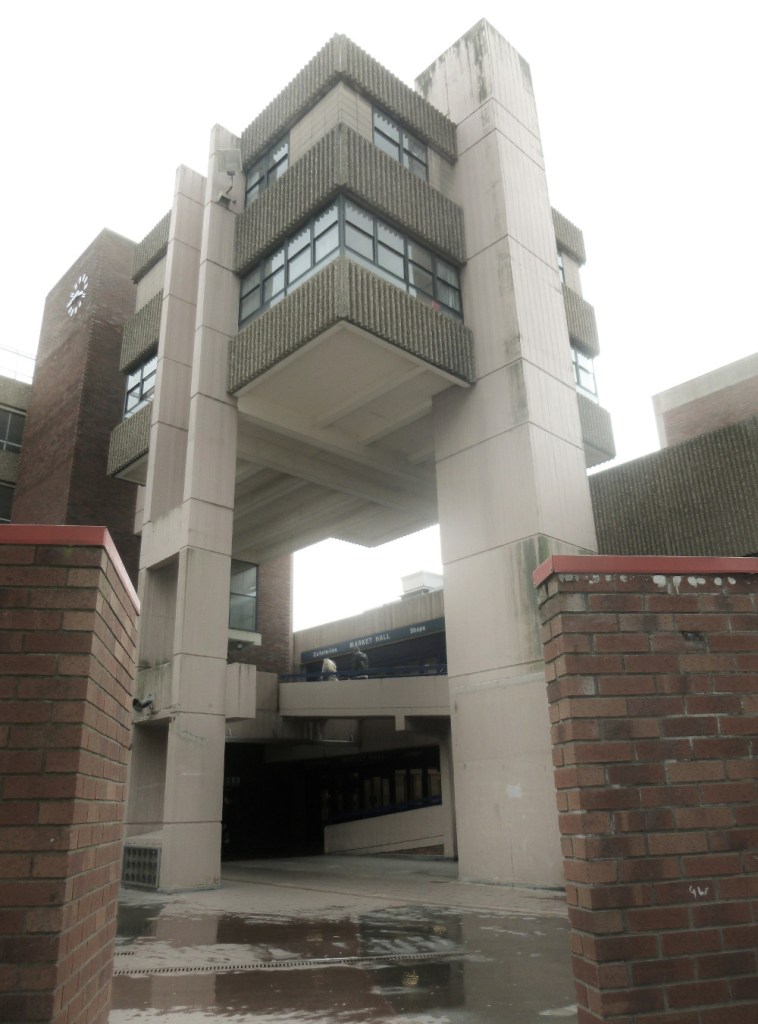
“Bump into drinking-companion from a more alive, pre-recession Barnsley night-life. He liked that specific vibe so much, he left a nearby town to move here. He tells me he is now thinking of leaving – nothing here for him anymore. You wouldn’t think that much had changed, but something’s very different from 10 years back. It isn’t a time I wish to relive, yet at least it didn’t quite feel like the permanent contraction of now. We stare all around Peel Square – expecting it to throw up a preferable answer. “Don’t drop litter, John” he suddenly adds as he butts his cigarette out on the bin, adding “I got fined £70 pound last week for dropping a cigarette butt as I was about to enter GT News [newsagent]. She [the enforcement officer] watched and waited until I’d come back out to accost me. I apologised, but she said it was too late and sprung the fine on me”. I’ve already heard these stories from cousins; “they sat in a car out of view, watching a waiting to see if I dropped the cigarette butt, and when I did they came and sprung the fine on me”. Already aware that this is a company, thus a profit-searcher, sub-contracted by the council authorities, I know full-well that the usage of ‘given’s’ such as “litter is bad”, “protecting environment”, “anti-social behaviour” is a icing-paper-thin veil over the profit-making-scheme-partnership between authority and company, which ends up punishing those who are already likely to be suffering most from the council-services-spending-cuts, which no doubt are the motive for these half-baked schemes in the first place.”
23 April 2015
“It still manages to surprise/confuse me when I can arrive, unaided by public transport into one of the designated urban hubs [central Leeds] of the UK with such ease [having cycled here]. I wonder whether it may feel amiss with my preconceived, due to urban centres still remaining as signifiers for all that I feel I want, and need, in life, no matter how much this sense gets displaced like particles scattering once I am in these spaces. This sense of displacement feels especially acute after a long day in London. Deep down I can’t admit that what I am looking for doesn’t exist; at least not in way I keep on imagining it, nor in constraints of our current social reality.”
“15X15 foot Advertisement board for the upcoming Victoria Gate upmarket shopping complex. An alien imposition. A silent yet strangely noticeable assault on one’s sense of self, that beams down from Nowhere, asking “Are you up to scratch? Are you one of the beautiful people around here, permitted to frequent here once it opens?’”
. “On the train back to Wakefield, sat behind a middle aged man and woman passing comment on the current horror-show in the Mediterranean (the hundreds who have died trying to migrate from Africa into Europe). The conversational tone is one of mild anger and resent, but, incomprehensibly, it isn’t out of the injustice of these desperate human beings dying horribly, trying to escape desperate conditions; it is mild anger and resent at the idea of these people trying to get into this country, because “the NHS is already at bursting point” [as if migrants were the cause of this]. Who would have thought that such suffering would actually do more to eradicate empathy?”
24 April 2015
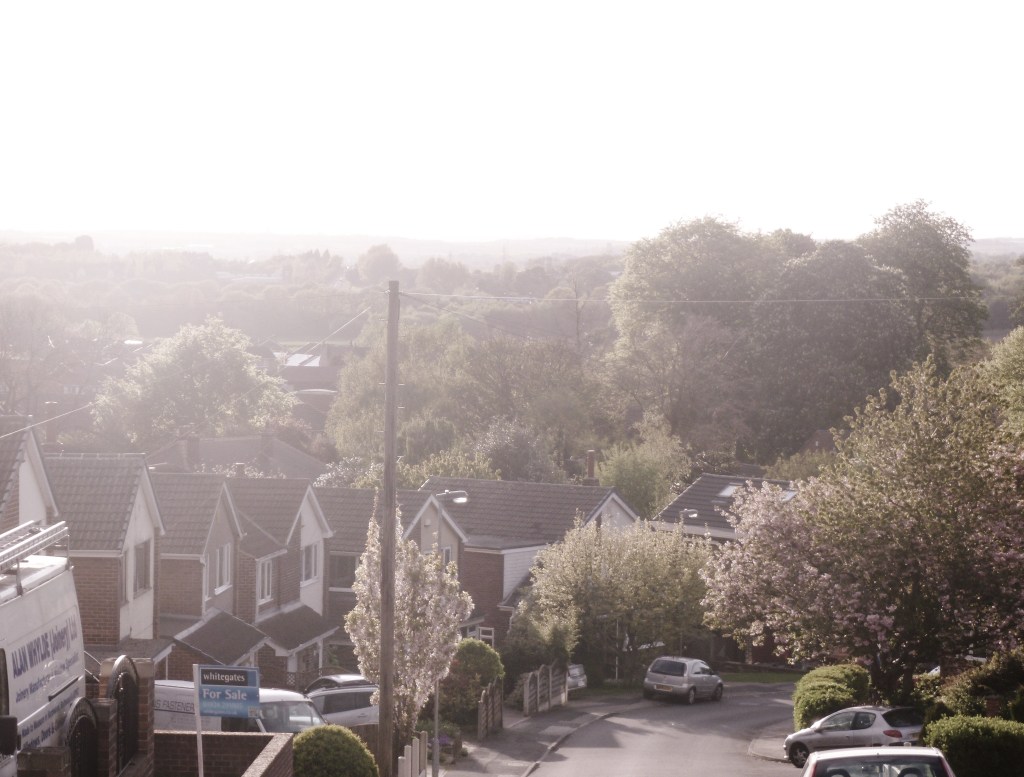
“Erring (as per usual) trying to get from A to B within the commuter-houses-maze of Woolley Grange. But nobody is even there to see me take this pride-sapping uturn. In fact I’m unsure I’ve ever seen a single person whilst passing through this estate built on a former spoil heap. The odd parked car, but never a resident. It often fools you into imagining that it has never been more than a show/model village. An eerie feeling that would make sense if it was derelict, but it isn’t; it’s a new-build aspirational residential area.”
. “Whilst waiting in line at a cash machine on the main thoroughfare near the [Huddersfield] station, at tall man (who could be anything from mid 20’s to early 40’s) starts talking loudly in an odd manner to a fed-up-looking off-duty postman, who stands in the queue behind me (very few postmen/women look how we’d imagine them to be when we contemplate how nice a job it would be). The tall man says something a long the lines of “ya go something to say now mate!? Eh? Hey?”. The off-duty postman, more or less bullied into responding, sayings “no mate” in a very submissive downtrodden manner. The man, now with an attitude of having won a conflict, says “good, coz there’ll be trouble next time”. My assumptions are that the postman lost his rag with somebody who made his working environment (the public environment) less pleasurable during the day (I know this from once fearing my job position, after telling a group of taunting teenagers to “piss off” whilst working as a postman 11 years back). But no matter what said in this probable heat of the moment situation, I hate to see signs of the vulnerability of all non-alpha males (such as myself) in a bully-boy culture.”
“A middle-aged woman gazes for some time at the homeless man sat in underneath a shop window one of the main shopping streets [Huddersfield], probably due to him not yet having the drained and disheveled look of somebody accustomed to such a life. He’s obviously new to this life, he still has the look of household domestication to him.”
27 April 2015
“The board at the entrance to the Cedar Court complex [next to Junction 39, Wakefield South] promotes it’s ‘conference and function suites, for weddings, meetings, conferences, leisure’ etc, etc – all the preconceived notions of work/leisure under corporate-captivity. It’s a world already made for us; fun, taste, memories, opportunities already laid out. Nothing beyond the prescribed. Small, powerless in the face of big (“this is how it is!”) signs, I silently shout “surely there’s more than this?!”‘
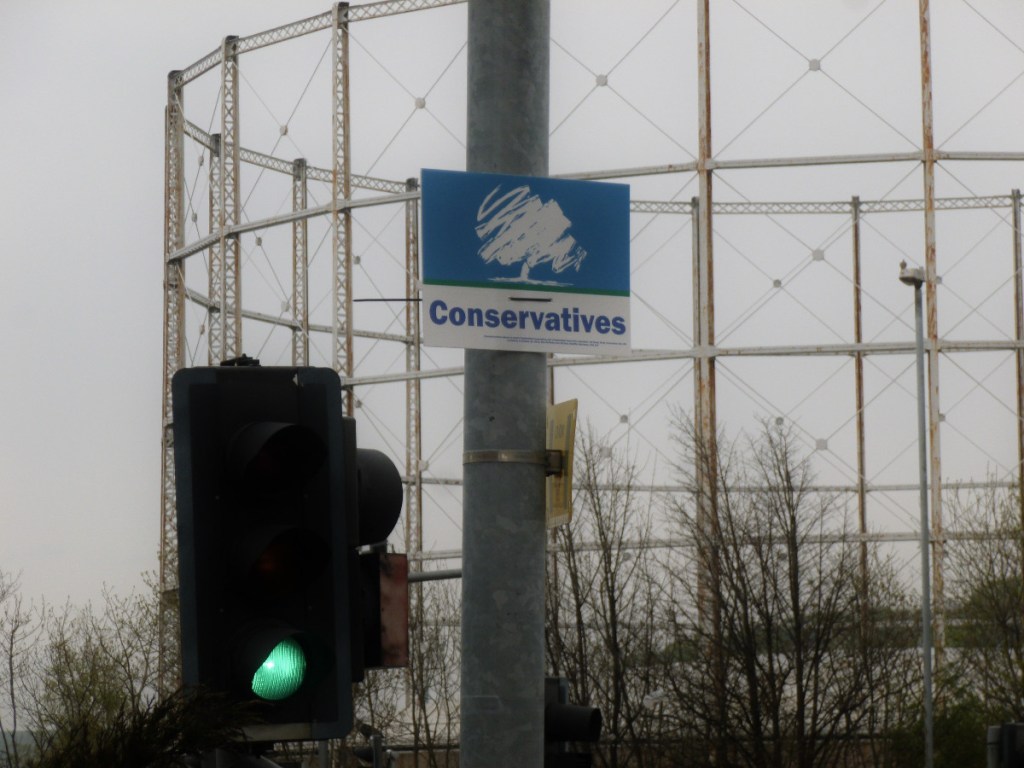
“The roads cutting through the fields between Wakefield, Barnsley and Huddersfield are so saturated with ‘Vote Conservative’ placards for the upcoming election, that (A) I feel ashamed of my lowly posture to be walking amongst them, and (B) undeniably relieved to see that one of them has been pulled up and placed face-down. “Not all cap-doffers ’round here!” Whatever the outcome may be come May 8, the moral humiliation of a Tory victory could prove too much to bear.”
“Travelling through a wooded area that runs through the neither suburban-nor-rural mill-town-cum-commuter-village clusters, Clayton West, Scissett, Denby Dale and Kitchenroyd. As somebody who goes out running a few times a week I have to accept my complicity in this, but me and Dave can’t help but agree, as we observe every jogger, in this post-work period, that they are somewhat the new zombie subject of our times. They have replaced the older passive consumer-mall zombie of a previous stage of capitalism. Financial speed re-channeled as undead-anxiety running through our veins. Driven, yet simultaneously passive. Going through the mechanical motions as if the levers and cogs of the long lost factories merely spilled out onto the streets after their closure.”
1 May 2015
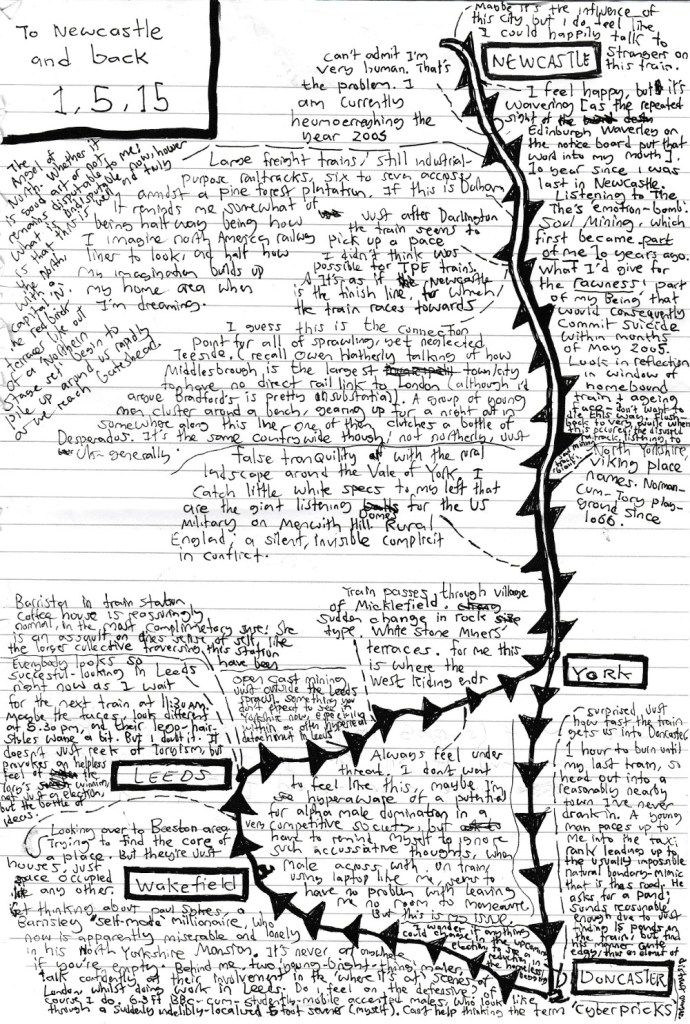
“Looking over to the Beeston area [Leeds]. Always trying to find the core of place. But they’re just houses, or spaces in shops or pubs. Just space occupied like anywhere else. Get thinking about Paul Sykes, a Barnsley “self-made” millionaire, who is now apparently lonely and miserable in his North Yorkshire mansion. It’s never at anywhere if you’re empty. Behind me two ‘bright young thing’ males exchange information of their culturally-exciting, upwardly mobile ‘where it’s at’ lives, spent between London and Leeds. Do I feel on the defensive? I course I fucking do. 6.3ft BBC-cum-highended-student accented males, who look right through a 5.7ft, suddenly-indelibly-localized denizen (myself). Judgmental or not, I can’t help thinking ‘cyberpricks’.”
“Everybody just looks so successful-looking in Leeds station right now, as I wait for the connection train at 11:30am. Maybe their faces look different at 5:30pm, and their Lego haircuts wane a bit. But I doubt it. It doesn’t reek of Conservatism, but provokes an helpless feeling within of the Tories not only winning this upcoming election, but also the battle of ideas.”
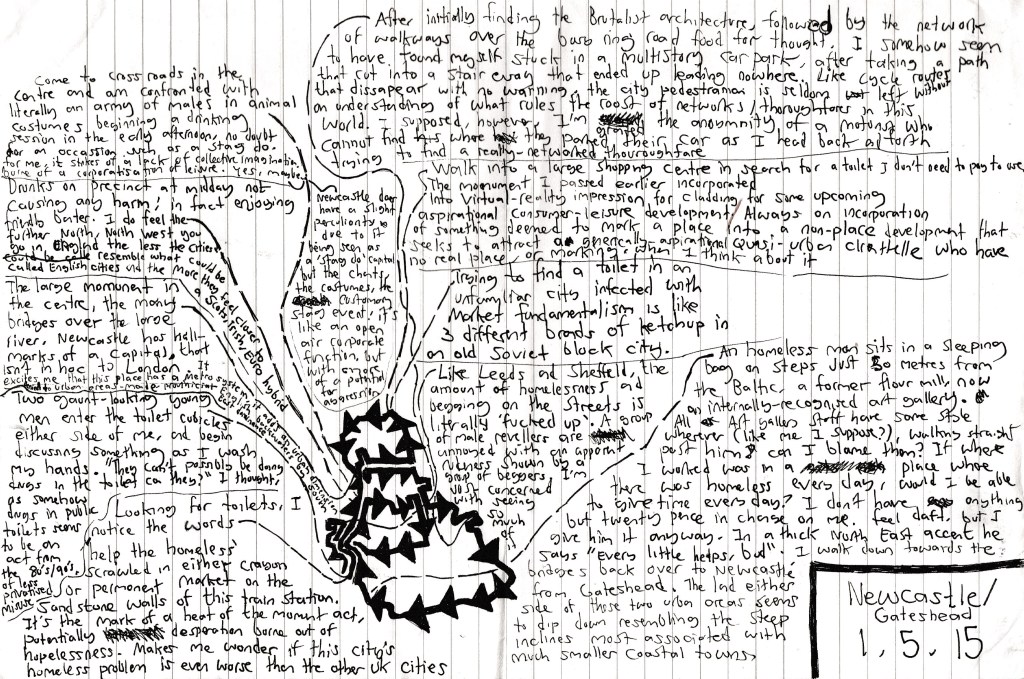
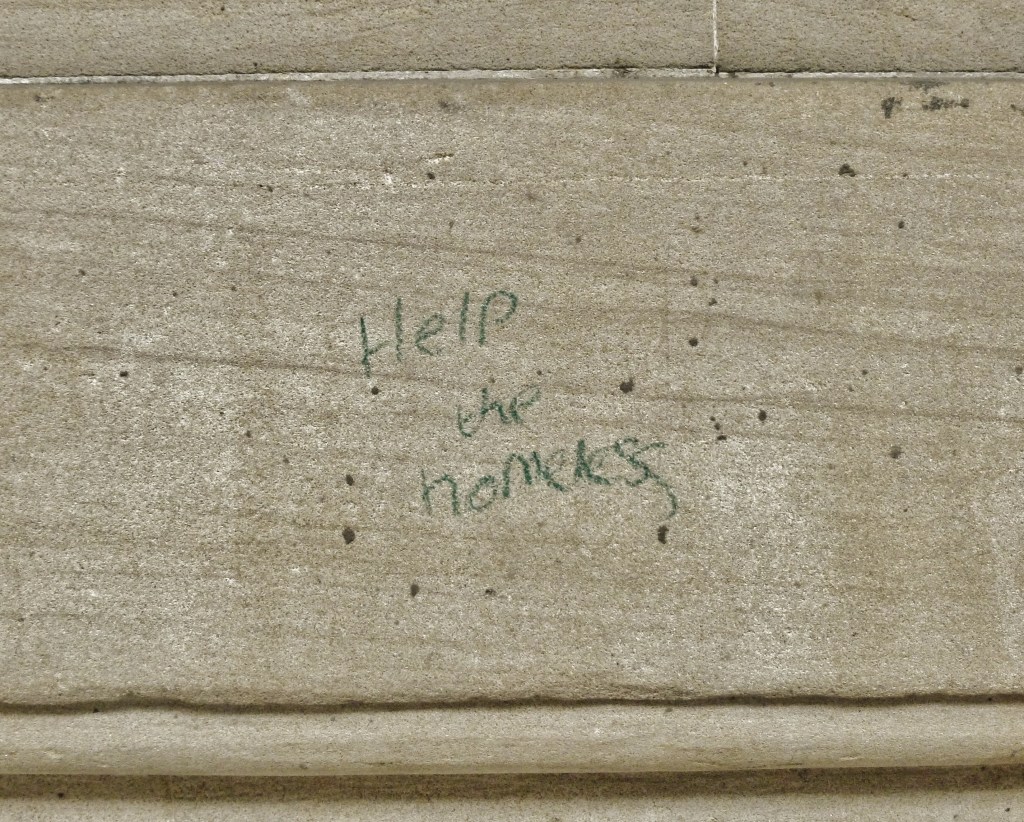
[In Newcastle station] looking for toilets, I notice the words ‘help the homeless’ scrawled in either permanent marker or crayon on the sandstone walls of this station. It’s the mark of a heat of the moment act, potentially desperation borne out of hopelessness. Straight off, it makes me wonder if this city’s homeless problem is even worse than the other UK cities.”
“Trying to find a toilet in a city infected by market fundamentalism is like trying to find 3 different varieties of ketchup in a old Soviet Bloc city.”
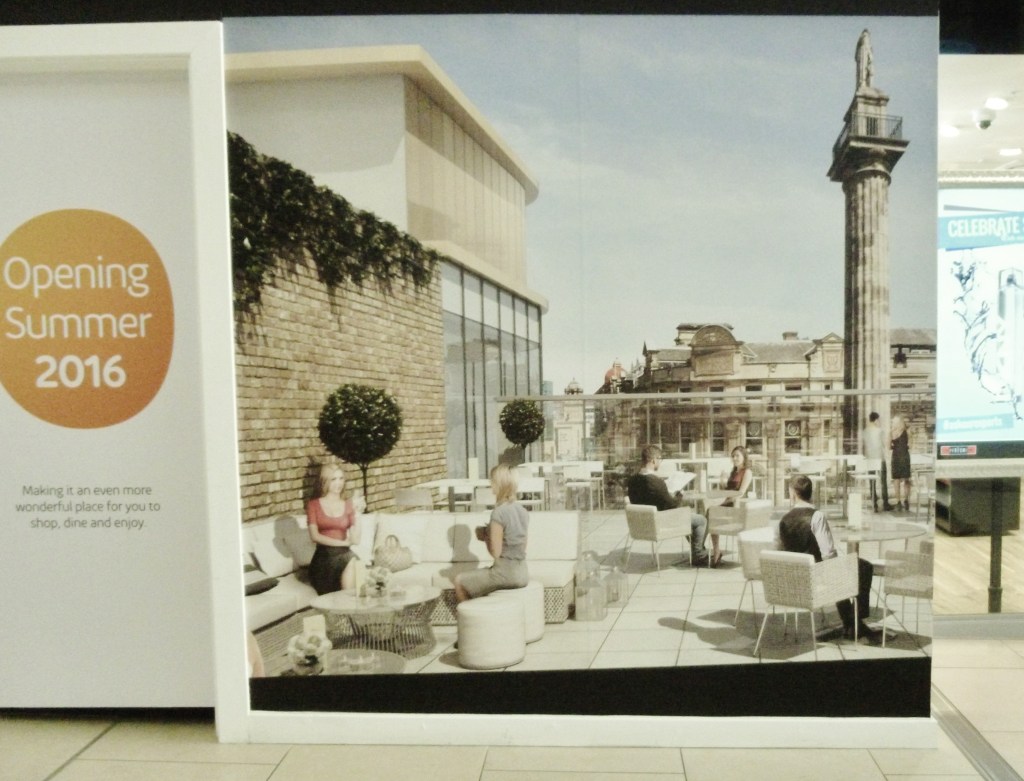
“Walk into a large city-based shopping centre [Newcastle centre] in search of a toilet that I don’t have to pay to use. The big monument I passed earlier appears again, this time appropriated into a virtual-impression draped on cladding for some upcoming aspirational consumer/leisure complex. Always an incorporation of something deemed of place and character into a non-place development that seeks to attract a generic-yet-culturally-powerful aspirational quasi-intellectual clientele, who, themselves, have no real place or character to them, when I think about it.”
“An homeless half sits/half lays in his sleeping bag on steps just metres from the Baltic [Gateshead], a former flour mill now an internationally-recognised art gallery. All art gallery staff, who also look the same no matter where (including myself) walk straight past him. Can I blame them if it’s a daily experience? What can they do? I don’t have anything but 20 pence in loose change on me. Feel embarrassed, but I give him it anyway. In a strong North East accent he musters up cheer to say “Every little helps, bud”. I walk back down the river towards the bridges back over to Newcastle. The landscape either side of these two closely-knitted urban centres dips down in a way that resembles much less urbanised coastal settlements.”
7 May 2015
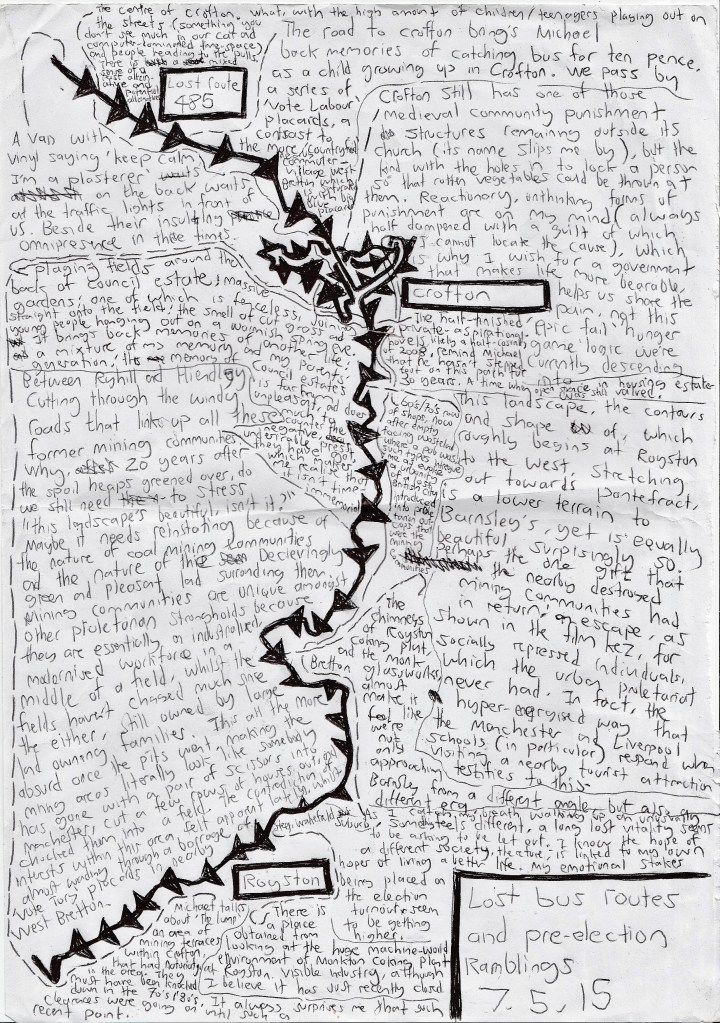
Lost bus routes. Crofton
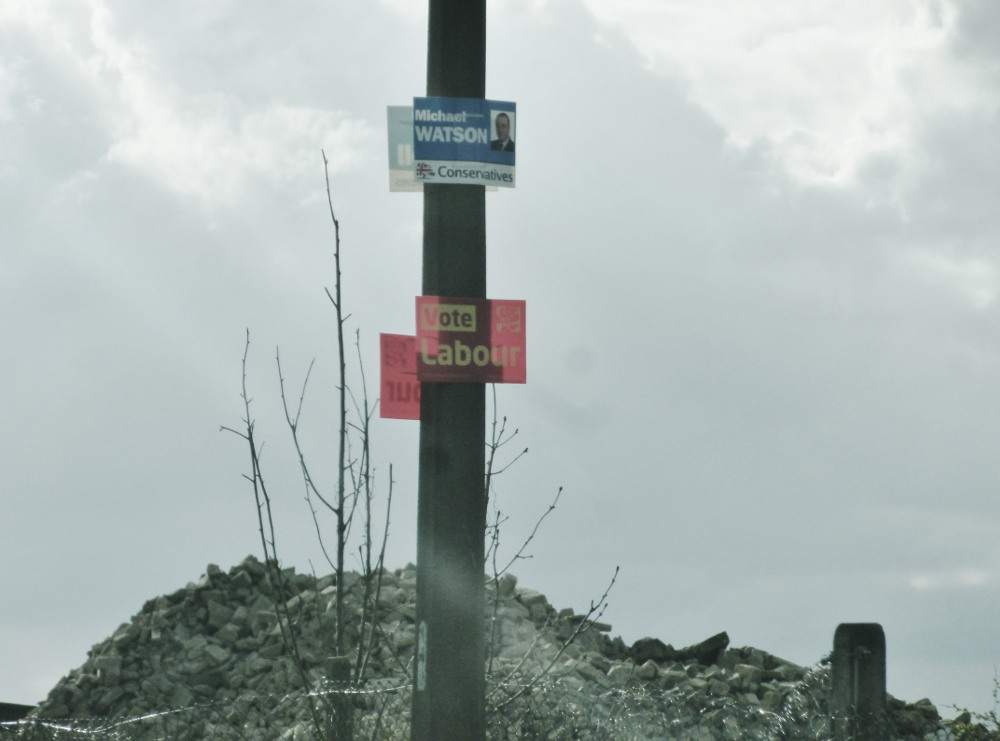
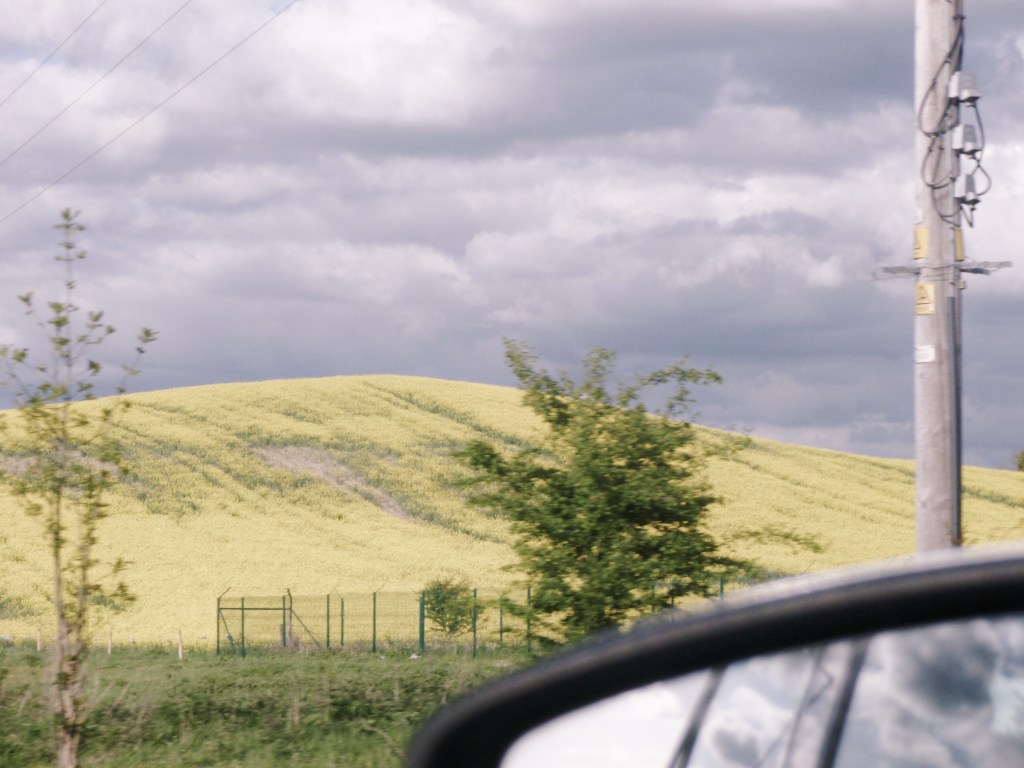
“The road into Crofton provokes many memories for Michael. A perfectly sized-rape seed-covered hill that became terrain for (old skool)Doctor Who-provoked nightmare-scenarios; catching a bus all the way to Leeds; a ten pence bus ride to Wakefield centre; memories of growing up here. We pass by a series of ‘Vote Labour’ placards, in contrast to the more countrified nearby village of West Bretton that is drenched in big, no- doubt costly, ‘Vote Conservative’ placards. I am worried that size sometimes makes a difference.”
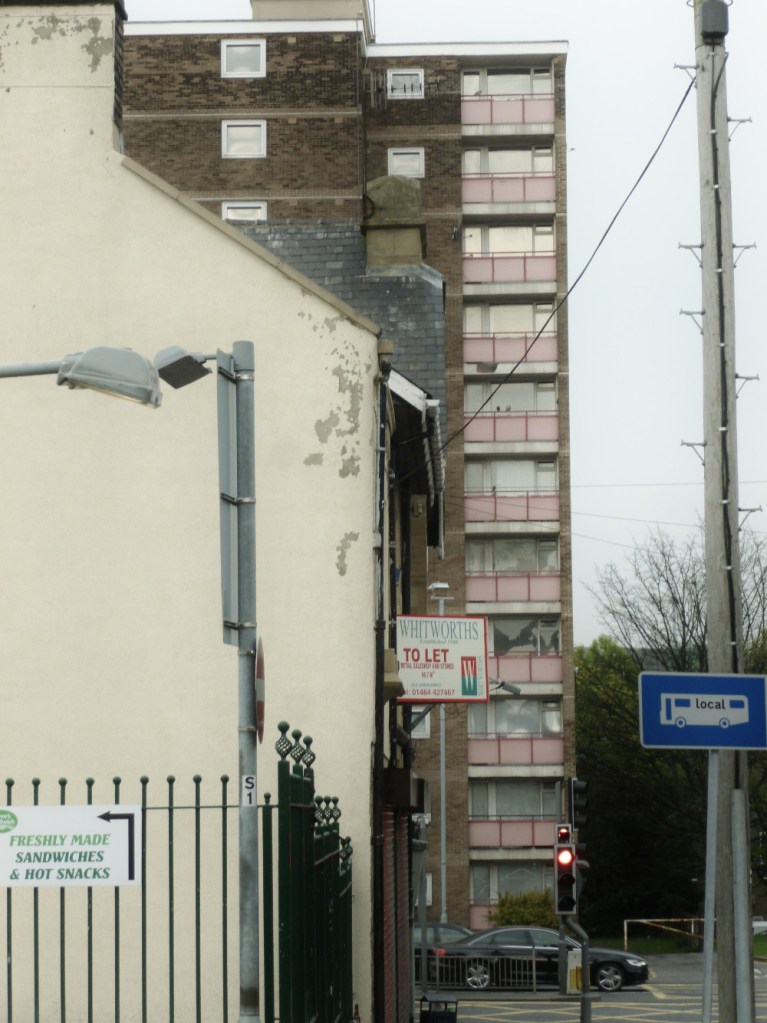
“1960’s (70’s?) small shopping/flats complex [a similar complex in nearby Outwood], now part-derelict, and facing fenced off wasteland where a pub used to stand. Such complex’s intrigue me, evoking an urbanity of a Lost British City, introduced into these proletarian outcrops sticking out of farmland – known as former mining communities.”
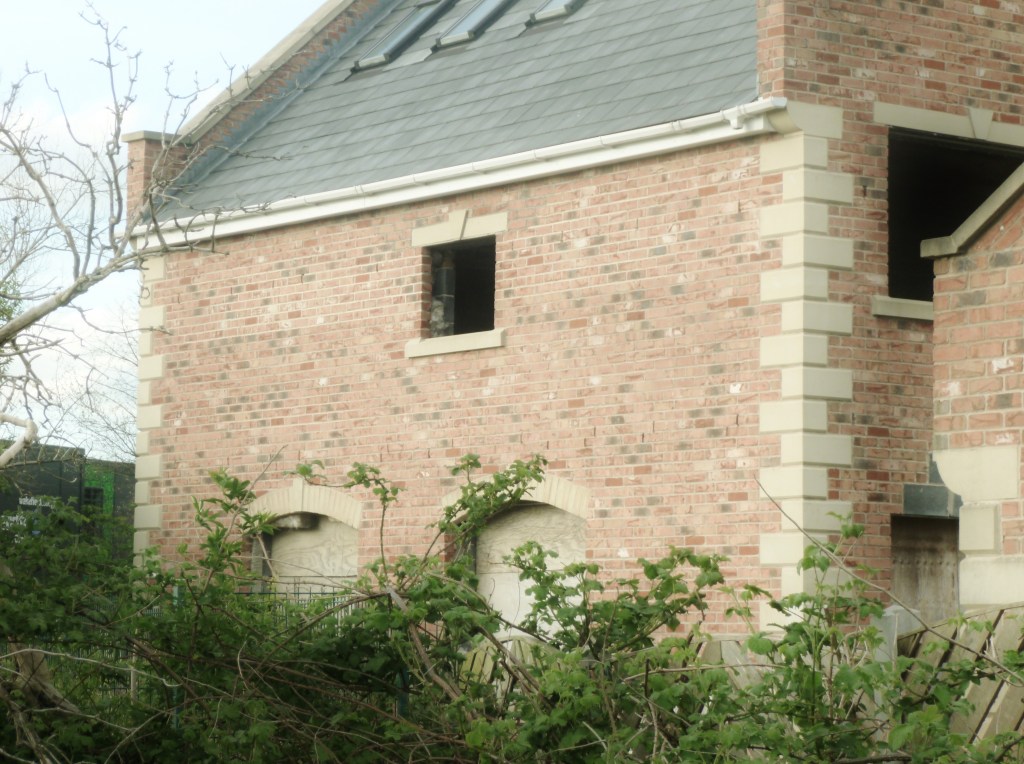
“Cutting through large playing fields around the back of a council estate, a familiar experience to people born into the 2nd half of the 20th century all around the UK. Massive Gardens. One of the gardens is fenceless, merging with the field, something once quite common but now almost unthinkable. The smell of freshly cut grass, young people hanging out on a warmish Spring evening. It brings back memories of another life; a mixture of my own memories and no doubt those of my parents’ generation. This memory of council estates is far from an unpleasant one, and is far from being in line with the contemporary narrative of them. Fond memories, of world that seems to have only half-vanished do much to counter the negative, and (of course) ‘undesirable’ ‘un-aspirational’ press that council estates get. Which makes me realise that this story isn’t time immemorial. We walk towards some newer, yet never-finished, private, aspirational hovels – no doubt casualties of 2008. They remind Michael that he hasn’t stepped foot down here for gone 30 years.”
“As I catch my breath walking up an unusually steep suburban street [Wakefield is by and large ‘flatter’ than other West Riding towns], a long-lost vitality seems to be knocking loudly at the inner walls of the half dead person I have become. I know why this is. Yeah, this election doesn’t really offer much; but the unusually-high level of uncertainty regarding the outcome has conjured an emotional fidelity to the chance of a different kind of society, one where I can look to the future again. This feeling of vitality, like a plant that only flowers once a generation, is checking the atmosphere to see if it could become suitable. In this moment I recognise just how closely tied my chances of a better life are linked to the chances of there being a better world. It was certainly not planned, but emotional stakes place on the election result seem to have grown higher over the course of this day.”
Between the villages of Ryhill and Cold Hiendley, on these windy old lanes that link up all these former mining communities. Why, after 20+ years since all the spoil heaps and slurry pits greened over, hiding the near past, do many of us still feel the urge to say “this landscape’s beautiful, isn’t it?” Maybe it constantly feels like it needs to be restated due to the nature of mining communities; they are unique amongst other former working class strongholds, because they are a proletarianised workforce cut off in the middle of fields, whilst the politics and ownership of the ‘green and pleasant’ ocean they are lumbered in hasn’t really changed since feudal times. This became all the more absurd once the pits went, making the mining communities look like somebody had literally taken a knife and sliced a few rows of houses out of the city of Manchester and chucked it into a field. The opposing interests in close proximity around here has become all the more apparent again since the political placards appeared.”
Lost Bus Routes. Mapplewell, Darton, Kexbrough. 7 May
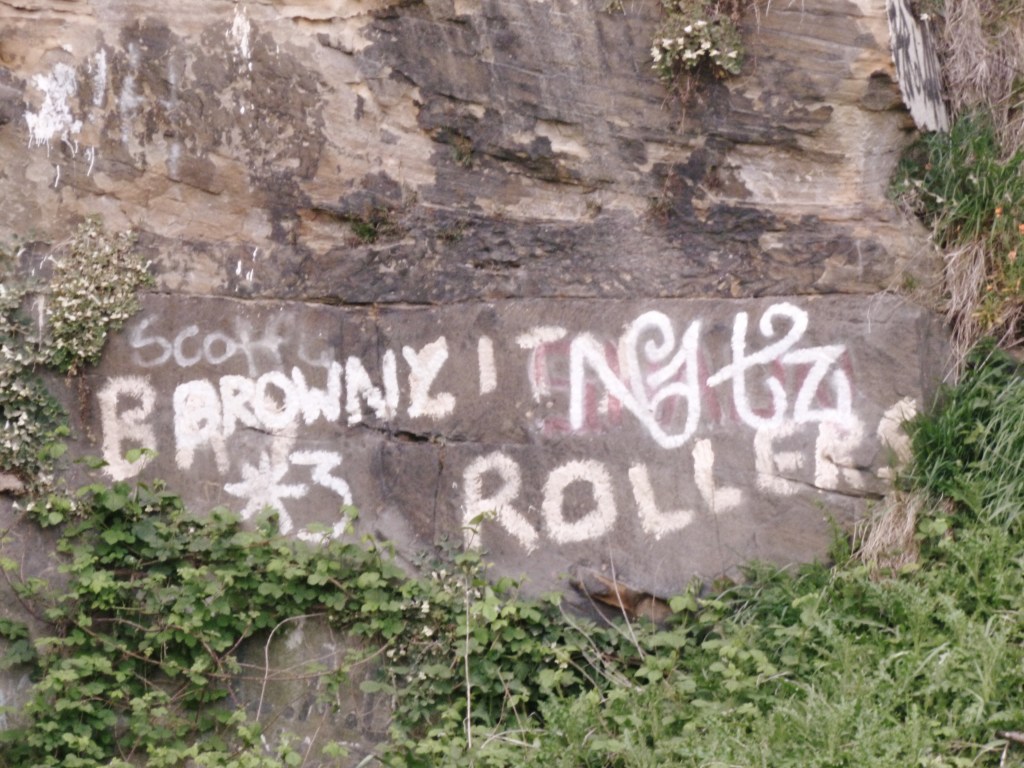
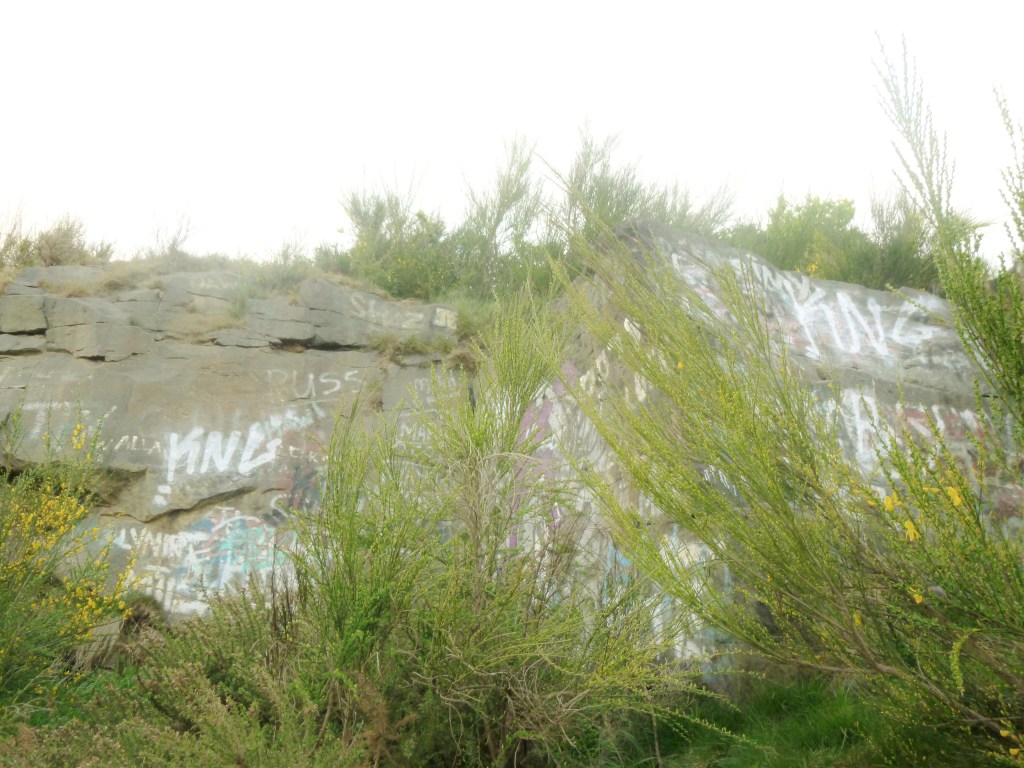
“Memories of May 2000, on the day we left school. Walking through this pathway of gnarled Oak trees, towards an old quarry nicknamed ‘the plantings’, which mimics a mountain top’s rocky outcrop vantage point over the surrounding landscape. All of these things, alongside painted graffiti-covering of the rocks, some of which date back at least to the early 1970’s (full name tags, as if fallen from a raggy old school text book, and ‘Bay City Rollers’ testify to this), well, all of these things are that which the social conditioning of high school, which we were all secretly desperate to escape by then, had blinkered-me-through-fear from even contemplating, never mind discussing, on these obligatory school ending piss-ups that took place up here. Caught between schooled uniformity and anxieties that were too much in their infancy to realise their causation, I vividly remember throwing a full crate of Fosters lager, can by can, into the bushes when my friends were not looking, whilst walking down this very path. Today it would have been the opposite. Maybe I knew my psychological limits better back then…”
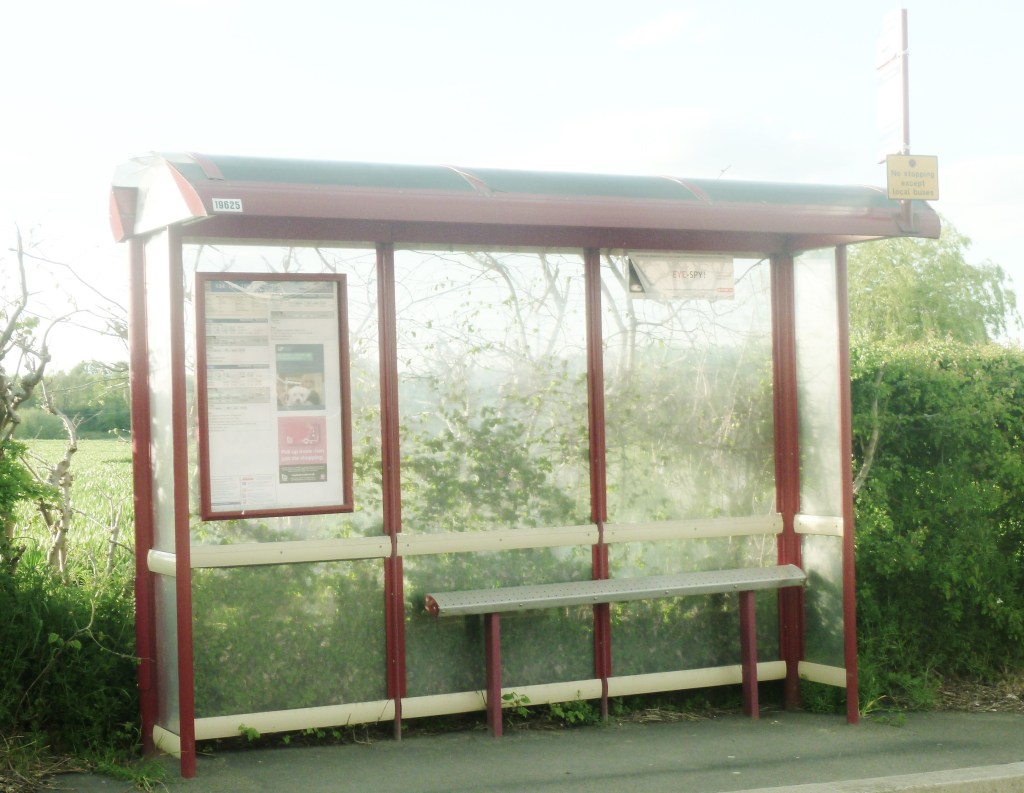
“New Road, Staincross. The long-gone 235 and 391 Yorkshire Traction buses taking me back from college in the infant years of a new millennium too young figure what it was yet. Fond memories of getting time on this slightly route homewards to let new music saturate a still-maintained-happy-ending-outlook as I waded through cassettes, zoned out from the social world, in the days before we were all lost to our Ipods. A calm point before the storms. I’m speaking of late 2001 here, and if the world momentarily stopped in the wake of 9/11, so too did my anxieties in a brief moment of art college-enabled reflection.”
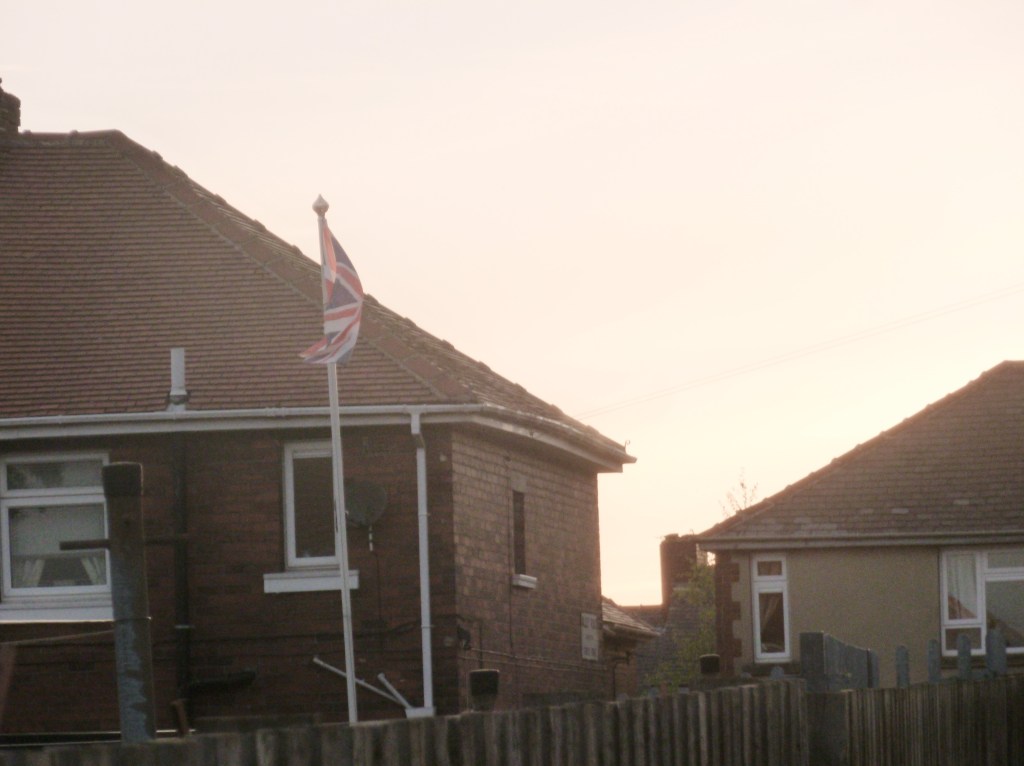
I lead us towards Valley Road [Mapplewell] for a very specific reason. My most lasting memory of the 1997 New Labour general election landslide plays itself out on this road. Aged 13, myself and my school friends took advantage of the general election-instigated inset day to go on a bike ride up to nearby Woolley on what I recall as a gloriously sunny Spring day. Having just purchased plentiful icepops from the now ‘all-propertied-up’ corner shop, we laughed at the seeming absurdity of somebody driving around in car shouting ‘vote Labour’ from a megaphone, when the election had been decided last night. Today, in hindsight, it doesn’t seem so absurd, looking back on what can now be seen as ‘the mood of the mid-nineties’, which New Labour rode. Utterly different what was really happening back then, was the feverish spirit; a conviction that these were ‘good times’. After catching the back end of the Britpop virus, I was far too unclued-up and optimistic not to be swept a long. What, with Oasis, The Prodigy, Pulp, and later The Verve, it truly felt like the working class were back in charge, after what seemed like an awful 80’s. How bitterly wrong this sense of things proved to be. The mood on Valley Road is different now. A huge Union Jack moves in the very calm air, in the garden in a housing block of ‘good intentions’, built in the 1930’s to move people from the slums, betrayed by the past few decades. Will there be cause for celebration tomorrow? It’s funny how you never see any joy or celebration when the Tories win power.”
“In once-called ‘Darton West’ we get out the car and walk up towards the recreation ground, which is across from the 1970’s-built cul-de-sac, the only place I still know as ‘home’. Yet on returning it doesn’t quite feel like home anymore. Yet I do feel quite emotional as we approach the first block of council houses to go up in Kexbrough for the miners in the 1930’s. It’s different now, as when I lived here I left and entered the place with ASAP-speed, with the notion of home then being too caught up with my fears of falling into dangerously depressive states. But now I see it as I remember it before all that shit; as a child. The rows of 30’s/40’s houses, they are still here; they exist. They exist in their own right just as much as any yuppie tower block are doing right now in some place elsewhere.”
“Michael picks up on the clear divide that constitutes the area I grew up in. One road literally slices Kexbrough/Darton into 2 separate places; one of council houses built for workers in the long-gone industries, the other a more aspirational, commuter estate, built up after the opening of the M1 that slices through here. The two sides of the village have never really interacted. Yet there’s a divide even in the commuter-built area; between large detached houses with sandstone fronts (for managers, lawyers, doctors, headteachers?) with the oddly-named Roman Road area, where smaller brick-fronted detached houses cluster slightly more heavily. I can’t explain why it is called Roman Road, but it has changed much since I was young. Like everywhere really. There was a bus that came along here, an hair salon called Caesars, now just another house, and many children playing out on the street. Now there is nothing but passing cars, straggling dog walkers [the only acceptable walker in a car-dominated and paranoid estates], and us, looking weird now the sun is going down.”
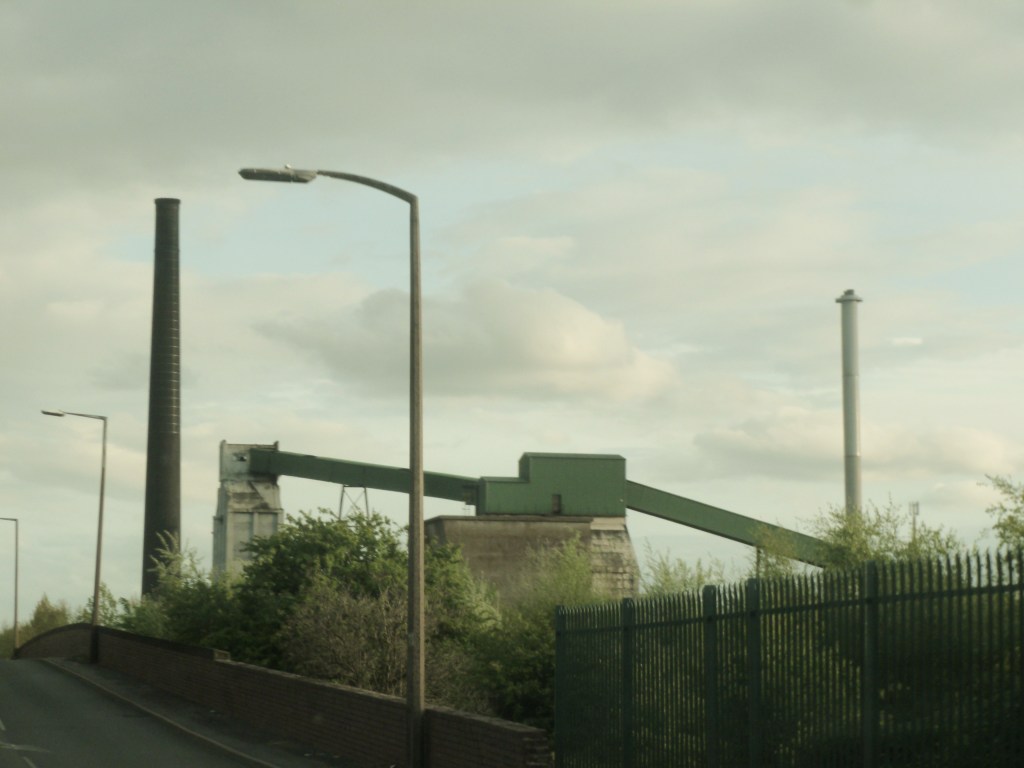
“As we head back north we drive past the large door making factory at the bottom of the hill, where a pit yard once was. Acknowledging it in my vision produces a knot in my stomach, and a poker-faced defiance against a slow sliding down toward even worse work and pay conditions, for those (like myself) caught in the headlights between 40hr-working-week dependency, and a sheer lack of job-hunting guile. “I hear […this factory] treats its staff like utter shit”. Michael responds by talking about stories of fist-fights on the factory floor borne out of misdirected misery and frustration. We don’t even need to confirm to each other our sheer disagreement with working conditions having to be this way.”


















 John B Ledger