Lost Summers: Stories From Forgotten Space


It doesn’t feel like we’ve had a summer for years now. Climate Change may or may not be making July/August wetter, but this plays only a small factor in the loss of summer, if any at all.  Even when the sun beams down the colour looks faded. The taste is gone.

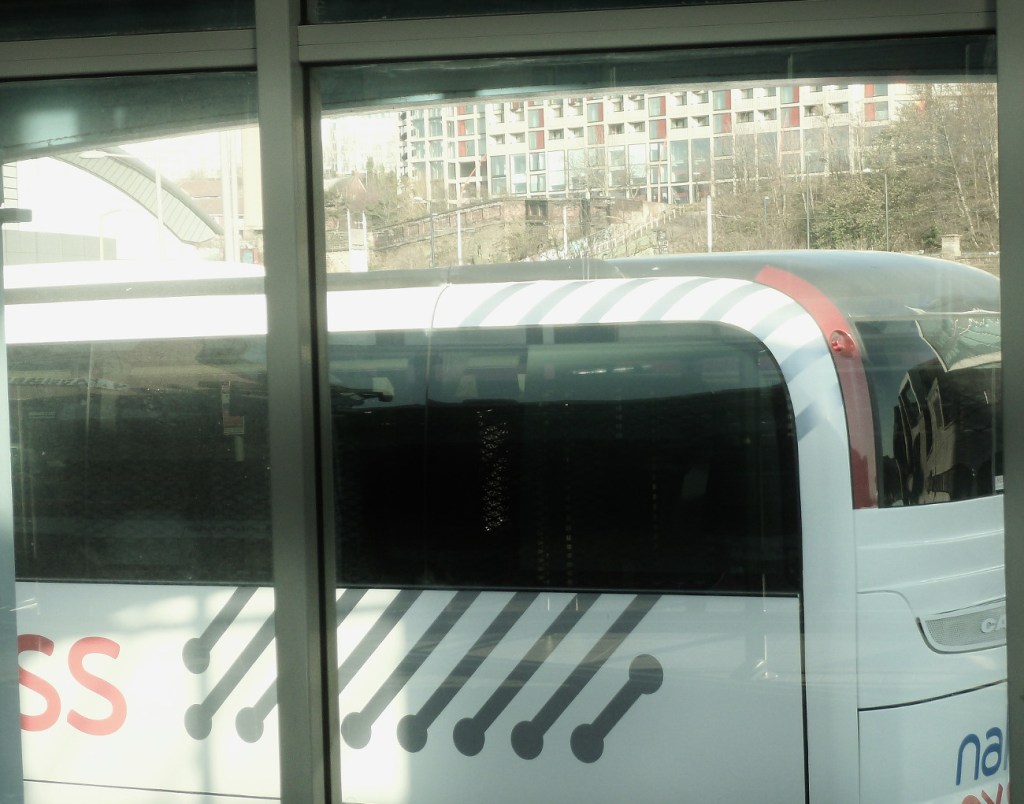
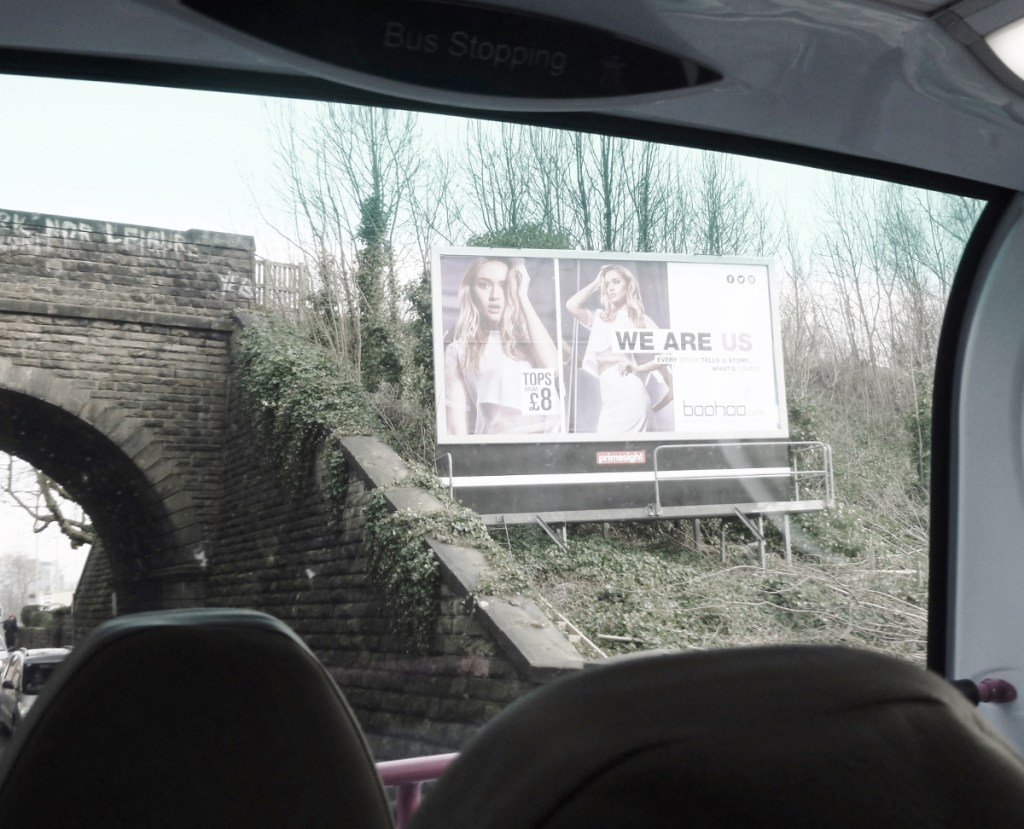
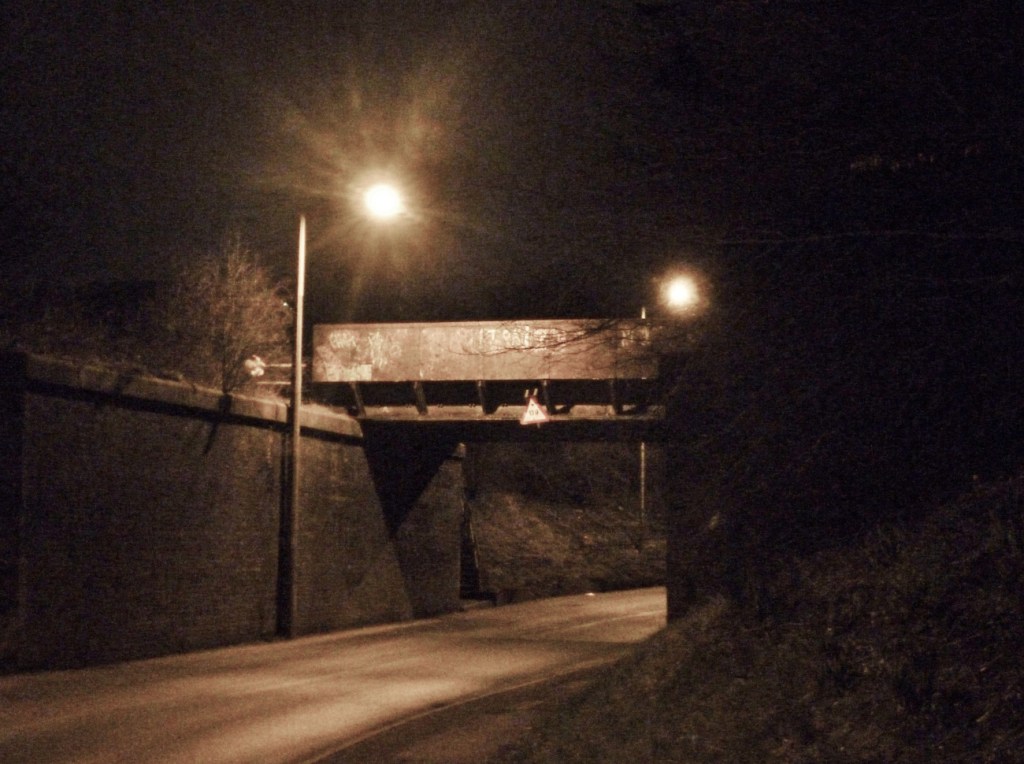
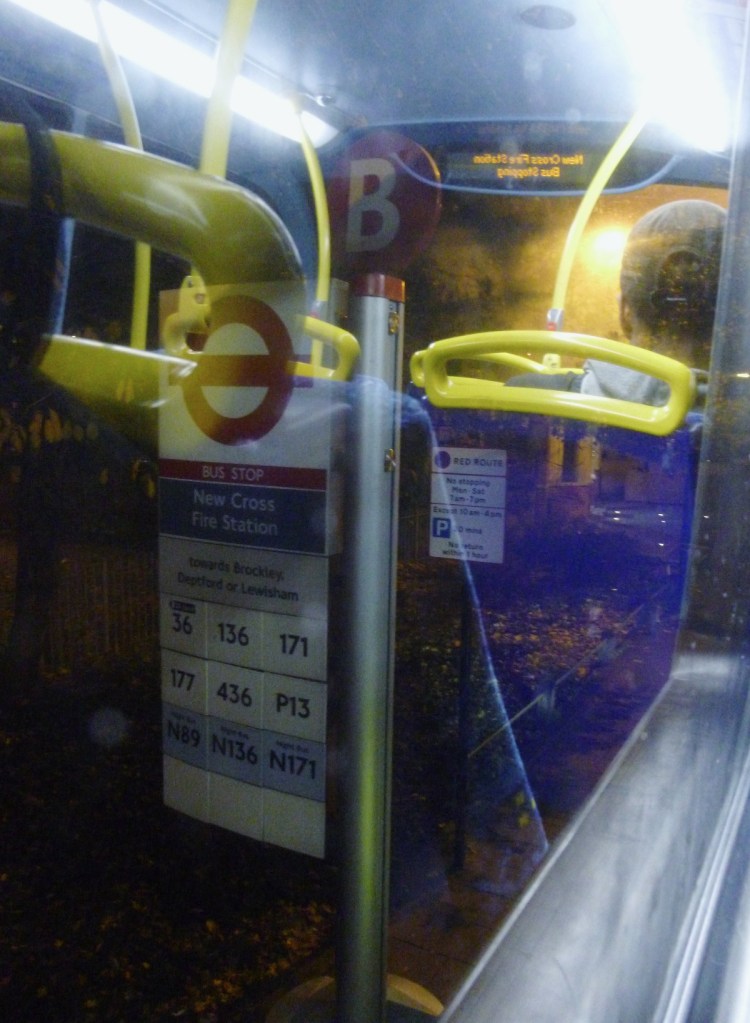
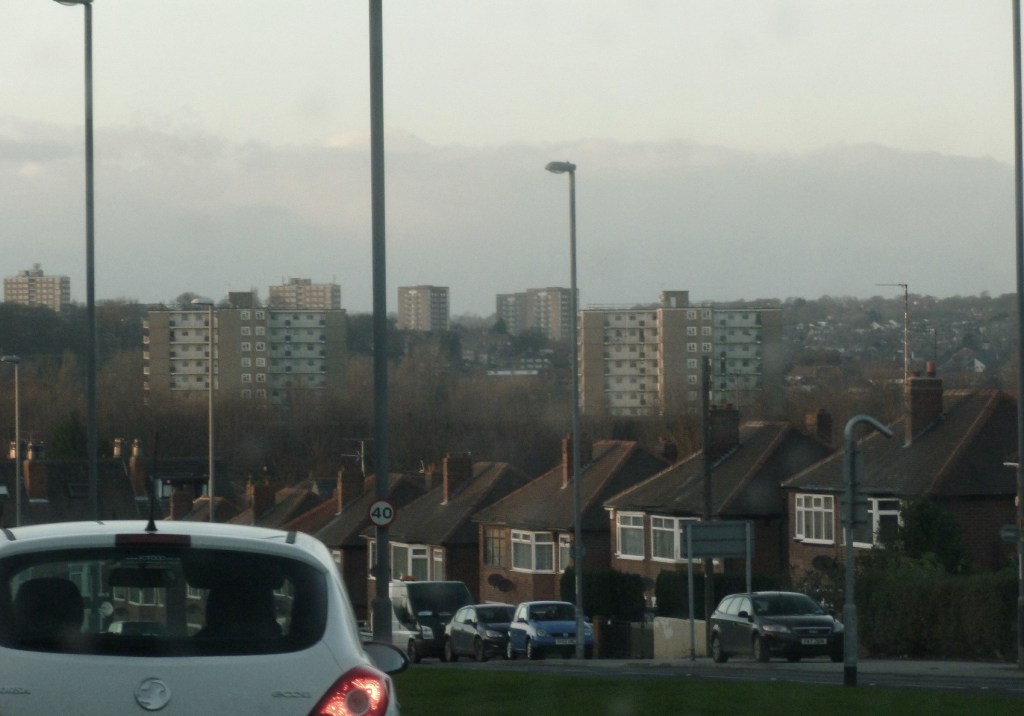
All the more recognisable for watching the landscape from the tinted windows of a bus as it left Wakefield bus station heading through the summer fields of the hills that form the West/South Yorks boundary. A small, unreliable bus company who purchase old coaches; the tinted windows drain the summer colours outside to look like faded photographs, from a vehicle that provokes faded memories of holidays fooling some unlocatable part of me into thinking we are going somewhere coastal, and not just to our workaday drop-off points.  Moving on Up, The M-People, was resonating off the tin and tiles of the bus station, as sounds always do. I make a joke to my work colleagues that now this mildly-annoying song is in my head, I’ll end up spreading it throughout the workplace. But I’m secretly trying to deal with this unending sense of an inner void that I don’t know how to fill;  I was hardly M-People-fond, but at least it felt located somewhere in time; if it wasn’t for the faces (intermittently including my own) all staring at their phone screens, and the evident social pressure to look CGI-perfect, it could’ve been 1993, and, of course, it still is in someway, but without the taste and smell, no matter what that taste/smell was. Reality may as well exist on a computer screen if it lacks any tangibility, and we still roam around in a weird CGI-ied version of the last decade of the 20th century. Unwilling to share this truth, unwilling to share the pain of it.


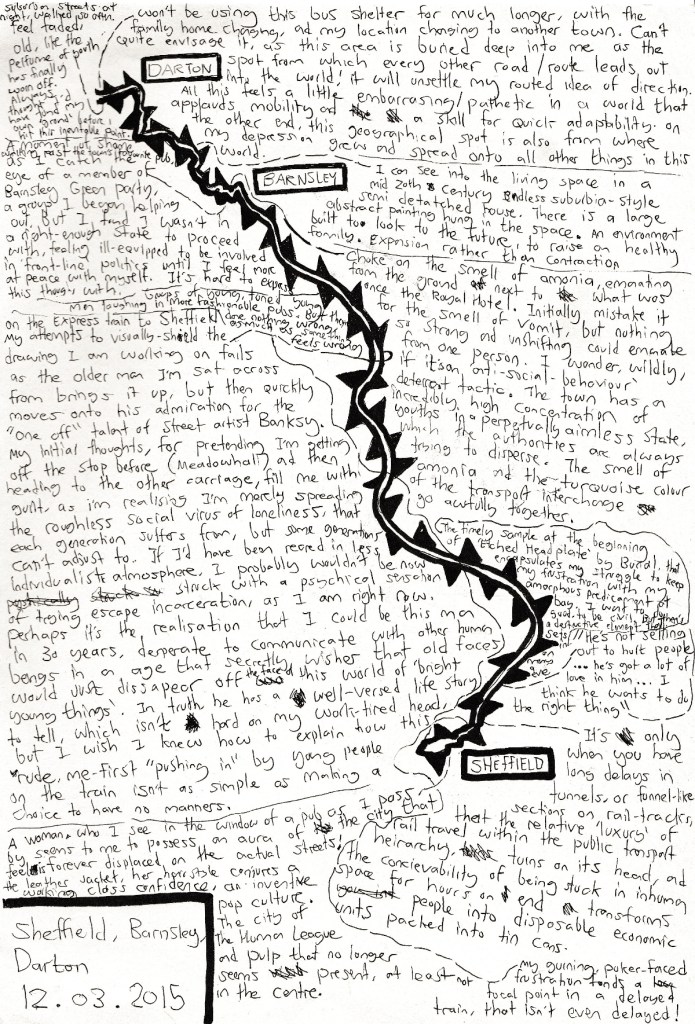
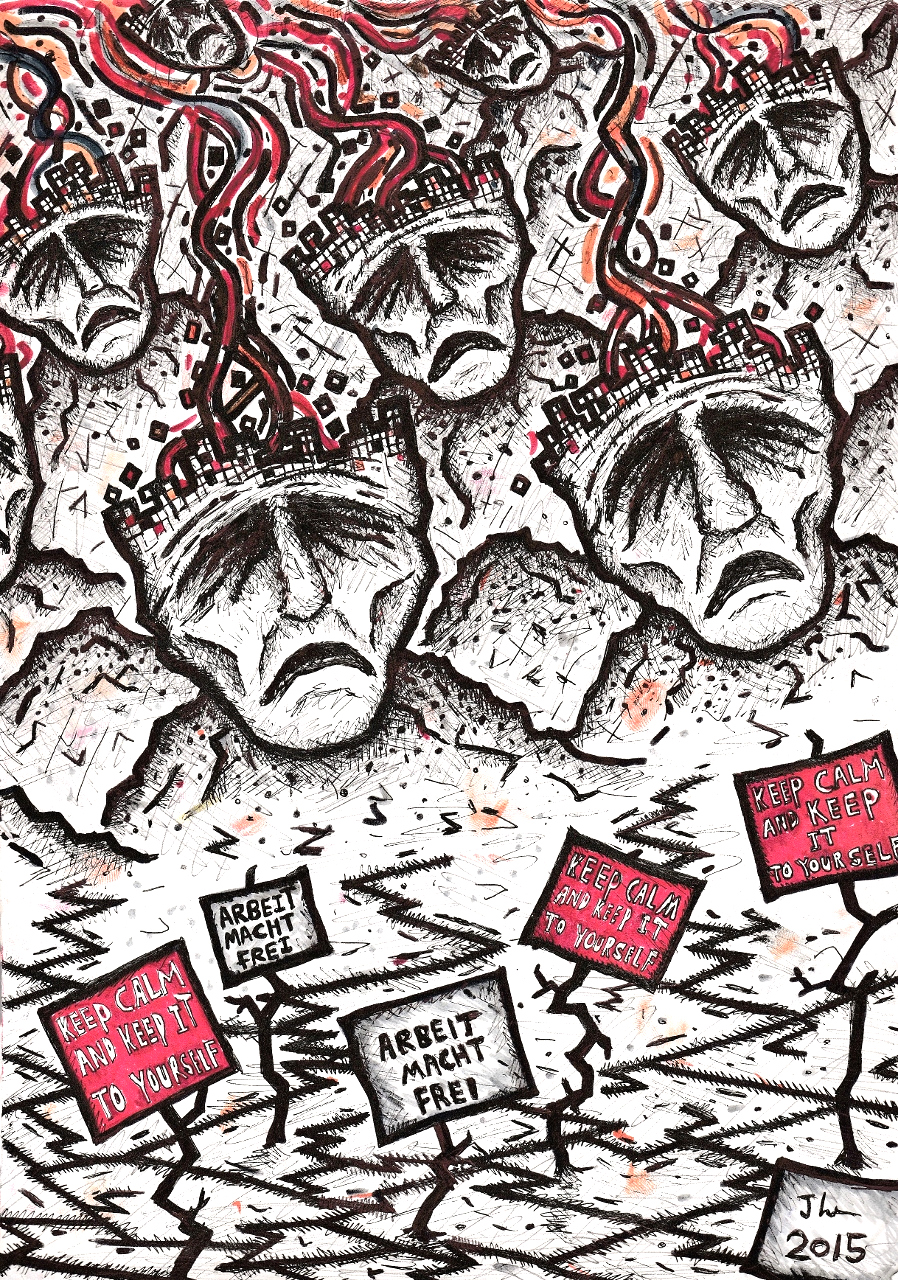
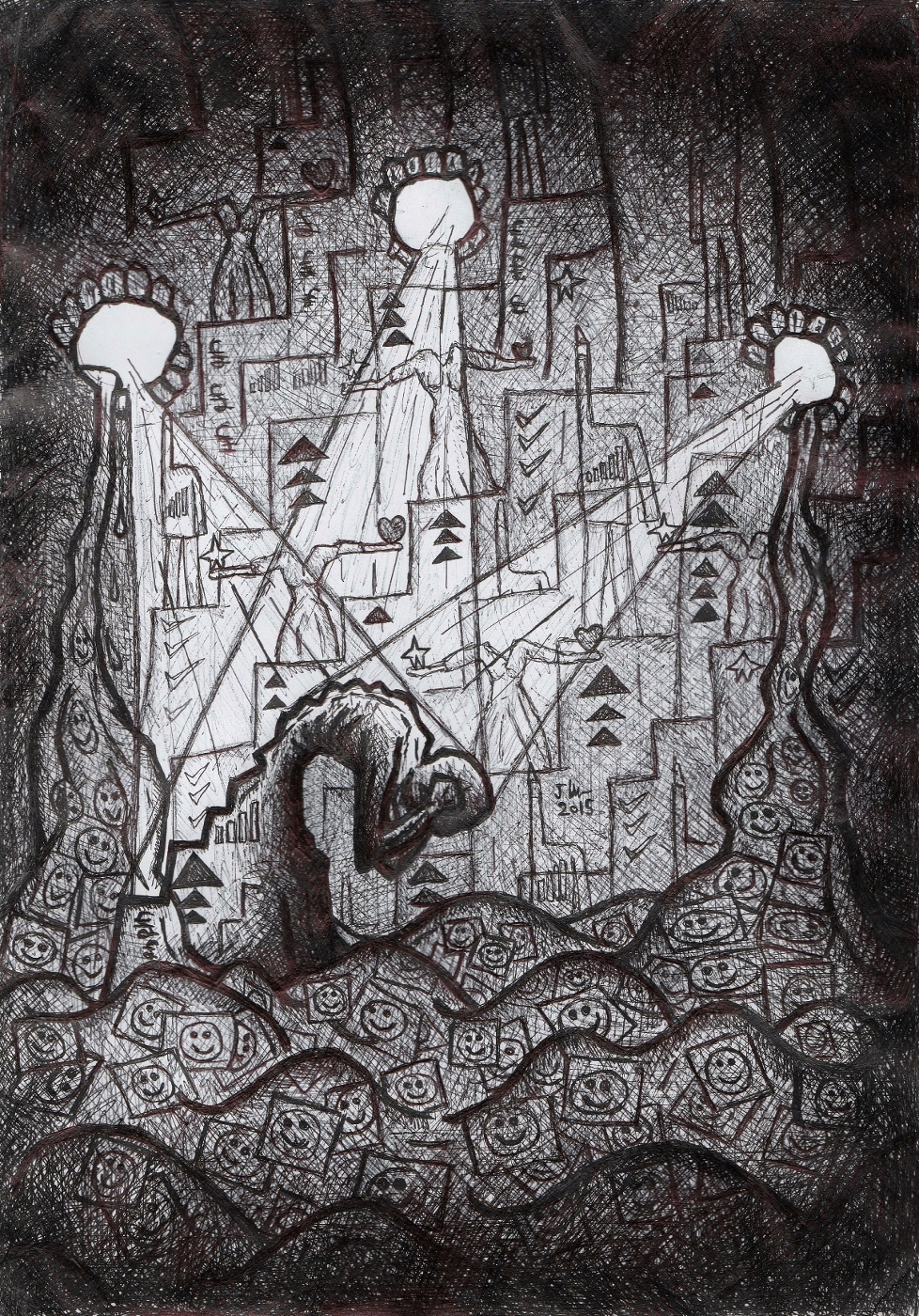
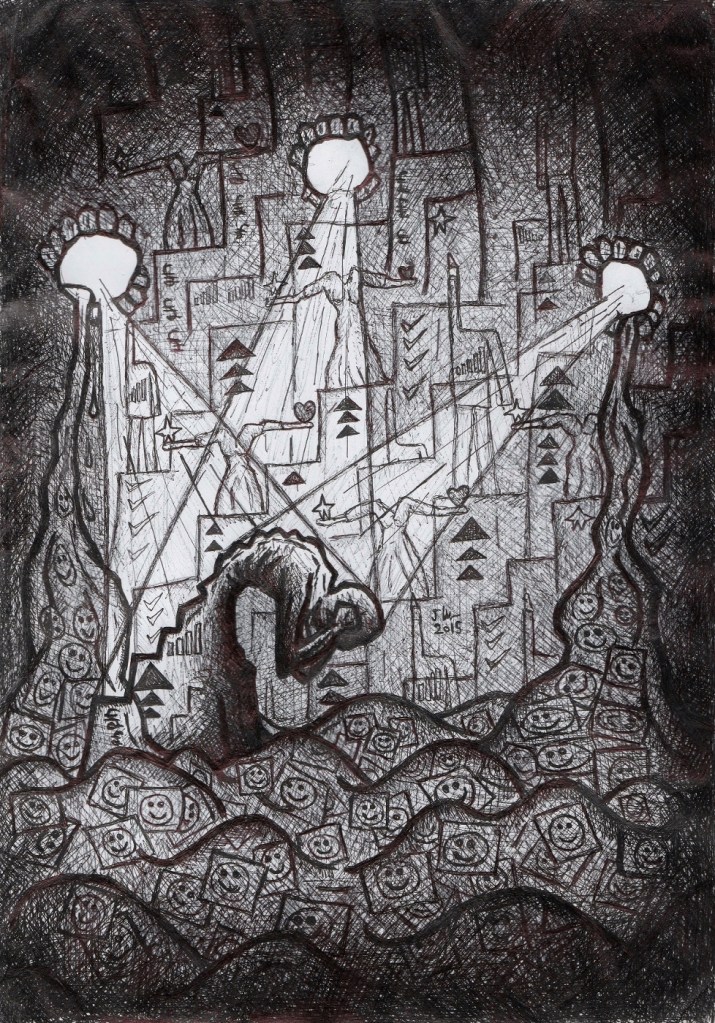
Is it possible to rewind in an ‘always on’ inertia? If so let’s go back to the week following Friday 8 May. I shared a drawing I made in the wake of the Tories getting a majority in the general election. It got the most stirring response I’ve ever experienced in the 7/8 years of posting things online; people weren’t just saying “looks mint man” or “well done John”, they were sharing how they felt in the wake of the realisation of what another 5 years of the Tories’ sheer jubilance in carrying out the brutalities of neoliberalist economic realism would entail (as opposed to New Labour who seem to carry out the same measures through a sheer disbelief in themselves). I felt stirred, because I felt that others were stirred. You cannot be stirred for long if it’s a solitary experience. A sense of collectivity in enraged disbelief at what had just happened erupted. The summer looked daunting, looked like it could ignite – but at least it looked like it could be alive. I thought something new was afoot. But the same shit happened. The fire was dampened very quickly. It fell prey to the now-well-known amnesia and exhaustion of our ‘always on’ lives; psychologically overworked by the never-ending overtime of cyberspacial capitalism, we don’t recall the immediate because the here and now is fracked to death. Just like everything else that once felt like it required urgency, it suddenly feels far away. Was I fool for thinking that this was different to the other times? Maybe.

Life itself feels far away. Again.


Back into deep deep summer and an environing sense of depression takes hold again, like every fucking year to memory now. The possible exception being 2011, which I will return to. Whilst families still go on their holidays, the chain pubs promote ‘summer fun’, and Facebook piles up with photos in the sun, the mood is as heavy as to induce the mental equivalent of the Bends-effect once you try to out-do the environing depression and prise yourself into an proactive state. Mounting frustration; peak-time self-destruction.

The massive support for Jeremy Corbyn, as much as it shouldn’t be dismissed as mania, or as something that will fade into insignificance, is too little to late in regards to this year’s deep summer to provide any sense of a break from this shitty reality. At which point let me point out that I have never been averse to either socialist, anarchist, insurrectionist or reformist measures; any ways of making cracks/leakages in the global glacier of ‘capitalist realism’ with the aim of something better (what could be worse than the [no]future of diminishing returns it has in store for us?) has my backing. I am not aligned to any oppositional force, nor am I averse to any.

But more is needed. The only true summer moment of the past ten years I can think of was the English Riots of 2011. I’m not saying they were constructive (and what made them stand out more was that they were situated amidst a year of Occupy, the Arab Spring, and plentiful large-scale protests), and me, as scared of confrontation as I am, was as anxious as anyone about what could occur at the peak of their escalation. But they at least gave a sense of life to a country that has otherwise been in a coma under neoliberalism, to which no amount of ‘fun in the sun’ simulcra can make me feel otherwise.

The last few years have barely tasted or smelled of anything. I have been preoccupied with ghostly traces of a past that won’t go away. As deep summer rolls on I realise I’m just as stuck as I was the year before, staring at the appearance of the movement of people ‘getting on’, all the more impounded in this deep and depressed illusion of summer.

It’s all about being stuck

Maybe (in fact, probably) there are small and still-barely-connected energies at play, setting in motion the forces to build a continuity capable of shifting this neo-ice age of the neoliberalist political economy that coats the recognisable world (like rare creatures frozen in ice that could speculatively be brought back to life by science, the shared convictions of the 60’s and 70’s that the world could be shaped for the better still stare back at us as they float underneath this icy coating). But in spite of this probability, the sensation we still have to battle day in day out, on a Alone Together (a brilliant book which brilliantly manages to miss the elephant in the room) basis, is one of being stuck.

We rush around at a faster and faster pace, cyberspacial info swirls in and out of our heads, faster and faster. But it’s a trap; the more we try to evade the hell of being stuck the more we impound a very specific technological framework that serves to make the possibility of alternatives to the current state of play seem impossible. The more we rive and tear the more we become trapped. Or so it increasingly seems.

How have we managed to reach a point where we are both manic and deeply bored creatures at the same time? A Hyper-Malaise prevails. Disbelief, an inability to be excited by life alongside a Feverish chasing up on errands  “surely it will all make sense once I finish the next task in hand….?” Anxiety and boredom are the ruling coalition, and realisation of this is so depressing on an solitary basis. Relief comes when somebody shares the same conviction, but it is thus far a rare occasion amidst the sea of commands to find the current state of play a deep forest of yet-to-be-discovered enjoyments, rather than what it really is: a wasteland of intoxicants to momentarily soften the blow.

Yet the depressed are potentially the ‘drowned and saved’ (to use the title of J.D Taylor’s blog – an inspirational writer of my generation if ever there was one), waiting to be joined together. They are thus the true optimists in-waiting, because the intolerable state of realistion they find themselves in makes for a deep deep desire and longing for a way out, amidst these deep deep depressive excuses of a summer.

Interviewed for Art Saves Lives International magazine

This gallery contains 7 photos.

Originally posted on ASLI MAGAZINE – creating change:
Artist John Ledger ? John Ledger, 31 from Yorkshire, United Kingdom is an artist who specialises in fine art and drawing. With a self professed existentialist nature, John continues to search for what he defines as a “breathing space” in order to find the answer to one of life’s big questions “who am I” and says “I…

“I spend hours looking sideways, to the time when I was fifteen”

I must first of all explain how I was alerted to these lyrics from The Fall’s track Frightened, it’s only fair: via a great Youtube lecture by Mere Pseud who referenced them with a not-too-dissimilar-intent as my intent. But when I heard him echo the lyrics to his lecture audience I thought: that’s my life that Mark E Smith’s talking about… (although the original lyrics say ‘sixteen’ not ‘fifteen’ – maybe I started puberty, and thus a descent into a thinking-person’s-dead end a year younger than Mark E Smith?). It’s not the done thing to acknowledge that you’ve become stuck at a point in your life – but I’ve got fuck all to lose in pretending that I haven’t.

On rolls the deep summer. I have grown to despise both August and December (“you miserable fuck; why do always hate good things?”). I struggle, self-destruct and smash my fists against more psychological walls in these 2 months more than at any point in a year. It’s taken me a good decade of my adult life to fully realise this, to the point where I wish the ‘we’re all going on summer holidays’ and ‘season to the jolly’ months would vanish from my time on this earth. I wrote about the Xmas/New Year period in a blog last December called Share The Pain, with the conviction that our current social structure makes the adversities of life (both age-old and utterly preventable) far harder to deal with, due to the denial of the fact that life isn’t actually that great all the time. A society-hating society driven by implicit commands all based entirely on individualist fulfillment, where there is an immense deep-sea-like pressure to feel individually fulfilled more so around two points when we are supposed to living the good life; mid-summer and Xmas. The result is the knife of the pain-denying, market-individualism, that enshrouds us, punches deeper into ones coping mechanisms, making one feel more like a fuck up; a lonely, aging fuck up.

Genuinely decent human beings say to me “your art’s fucking mint man, it must make you dead proud”. This is possibly true, but only when I’m actually in the process of making. Otherwise there remains a great void, intermittently filled with the screaming-schizoid-noise of contemporary life; emptied only to be filled at some later point, like an urban sewage system.

“…I don’t know how to use freedom. I spend hours looking sideways, to the time when I was Sixteen” (Frightened, The Fall)

oooon4

(A dream I had when I was 20 where I was encased in a rock on some distant planet, watching the around me)

I can roughly trace my thereon-after sensibility, of depression, to a point when I was 15, when the glow of life fostered by childhood vanished in the short space between hearing Radiohead’s then-2-year old track Paranoid Android and going out and buying it from MCV in Barnsley’s Alhambra Shopping Centre, and what I can now see as the beginnings of feelings of total emptiness from which the only state in which to resume the inescapable tasks of life was one of ‘controlled anxiety’, that broke into panic when the control-based routines were interrupted. The wider state was (and still is) one of ‘managed depression’.

Art-making became a prominent feature in my life from 3 years after this point, and proceeded to give a discontinuous continuity to my life. The broken bits, the gaps in the process of making, are where I keep on becoming aware that I’ve been spinning around since I was 15, going nowhere emotionally (and FUCK ME I’m tired of writing this every damn year).

People have said that I live in the past. I do: from 15 onwards I have never been able to picture a future. The thing is the place where I have become stuck doesn’t exist. it’s a void I hang over. A nowhere land, which I am all to aware can’t be revisited. A transient moment that was never superseded, where any memory becomes more desirable than the voided-present that sucks in the future.

I think this is the reason I have been enchanted by non-fiction writers who deal with depression and anxiety as something constitutive of the times I inhabit. They make it seem so sensible as to why I should’ve felt this way from day one of my self-designated adult life. Writings on ‘hauntology’ refer to how the future seemed to abandon us,  in the latter half of the twentieth century, to the point where it has become impossible to imagine anything but a slow entropy dragging down life quality in this eternal-present-land. It’s a conviction felt more by those who grew up in the 1970’s, but I was duped by a sense of progress amidst the hazy, new-shiny-capitalist Utopianism of the early 90’s, once it had convinced us that socialism had been buried with the collapse of the Berlin Wall , and that was a good good thing “let’s party man!, things can only get better!”.

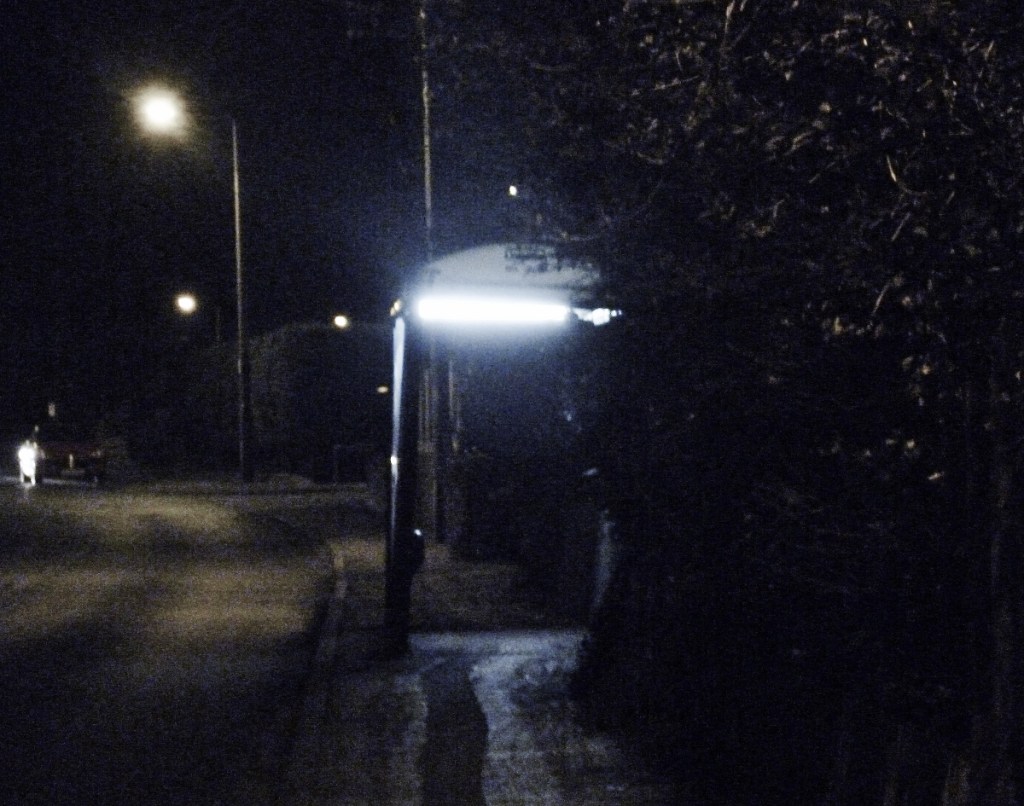
I genuinely have spent hours looking sideways, as I’ve always been tasking-up the day in hand to avoid the hell of empty time. In-spite of the bookshelves filled up with mindfulness, which is alienating dead language when you feel like I do, the only empty time I can actually appreciate is on trains, or when I’m caffeinated. The problem is this alienation comes from a general conviction, embedded further into our perceptions of the Other by social media, that most are building a life of continuities of emotional and material progression. And it isn’t a total illusion, as I have felt like an observer of life, as it drives past me at some insignificant bus stop.

When I try to think of myself in these terms it’s pretty much like the scene in the Truman Show when Jim Carey’s protagonistic character hits a wall painted as an horizon; the ability to perceive more than what’s in front of me vanishes.

“Back to the 90’s, feel good hits!”. Even those born too late into the decade to remember it are overly nostalgic for its hyperbolic optimism in the faded, yet CGI-ied, depressed continuation of it in our times of disbelief. We never really exited the 90’s. 9/11, The Iraq Invasion, and Broadband folding of all that’s ever been into a digitised ever-present, pushed us right back into the decade we were supposed to have left. So, what exactly are we trying to achieve, what exactly are we innovating, striving for? Why do I feel so alienated from this? As much artwork as I make, I forever remain in a renegade state of mind, because the general command to better ourselves comes across as equally absurd and stressful.

The boundary between what stunted me as a human being in my mid teens and the conviction that it closely corresponds with entering a ‘secretly depressed age’ is very blurred to say the least. But it isn’t so strange that I feel more optimistic and full of life when I find somebody who owns up to feeling this way too. I’m still an optimist. If I see clues to a genuine way out of this I can sense it in my bones.

I think we can sense when we have been duped long before we can acknowledge it. There’s a ray of light, as tiny as a spec in the midst of the long night in my eyesight, conjured by growing evidence that many more are admitting they feel like me. I have sensed for some time that there is no future for me the way things are. From my perspective it can only be a good thing the more people there are who own up to feeling the same.

This Is Not a Top Song List: My Life Through Joy Division Tracks

“They keep calling me”


Amidst the pretty stark turbulence I experienced as 2015 began I became obsessed with trying to write something about Joy Division’s eternal-presence in my life. But I never got anywhere, convincing myself it needed to be a project of  a sizable, I-know-everything-about-Joy-Division, quality due to the task of writing about one of those bands guarded with pitchforked-opinions by musos. But it felt crucial for me to write something both for myself, and for the reason brilliantly articulated in Mark Fisher’s Ghosts of My Life: “If Joy Division matter now more than ever, it’s because they capture the depressed spirit of our times. Listen to Joy Division now and you have the inescapable impression that the group were catatonically channeling our present, their future. From the start their work was overshadowed by a deep foreboding , a sense of a future foreclosed, all certainties dissolved , only growing gloom ahead.” (Mark Fisher, Ghosts of My Life, 2014).
Ben Hewitt’s article Joy Division: 10 of The Best, in the guardian this week, gave me an motivational template: I’d use a selection their songs to expand on all this stuff about the band that I have been driven to tell people in pubs for the past 3 years. But I don’t have any desire to write about a fave song list per se: the album tracks I reference gain a great deal of their significance when listened to within the context of the entire album (this should seem obvious, but in the Ipod age, the ‘shuffle’ features heavily in the way we listen to music). I also wanted to use individual tracks to explain how the din of their resonance seems to get louder and louder the further we (in UK terms) descend further into the Thatcherite experiment that may finally be coming to end… “this dream it takes too long”. And although I found only managed to write about 7 songs, they were more than sufficient. Thus I have proceeded in writing the blog I’ve been wishing to write all these years.


In the past few years it seems overwhelmingly the case that we are looking back to a certain time for answers to a present day inertia. Yet we don’t seem to realise that this is what we’re doing, and so just continue doing it blindly. Cultural artifacts from the 70’s into the early eighties seem to be constantly at hand for reference on all media platforms. For example, Ben Hewitt’s article: although I think it’s brilliantly written in its own right (far more imaginative use of language than I could ever achieve), and it creatively touches upon material that relates to their ‘channeling of the present’, it also seems oblivious to it. When he writes of Dead Souls that “…Curtis sounds like he’s being pulled by ghostly apparitions, trapped in a place “where figures from the past stand tall / And mocking voices ring the halls”…” isn’t the most ghostly aspect of all in how this perfectly describes our relationship to Joy Division in the 21st century? Such articles and documentaries don’t seem to understand the motive behind their accumulative coming-into-being 35 years after Ian Curtis killed himself. Of the 7 Joy Division songs I have picked, I have tried, when possible to introduce them in relation to personal experiences, 1. Disorder
“Could these sensations make me feel the pleasures of a normal man?”

It must have been 2010; in that murky moment between something bad (New Labour) and something worse (all-out-Tory Class War-disguised as ‘the coalition’). Up until now Joy Division had been off my succession of cheap mp3 players for a few years – having told myself that the obsession I had with them in my early 20’s, some five years back into the thick of Blair’s Britain, had been a sign of immaturity, and that they’re subsequent increasing popularity was no more than a Topshop accessory. As the fall of 2010 arrived with the threat of immobilising snow storms entrenching a deeper existential inertia, it all reversed, and I found myself hurtling back towards some kind of early 20’s point.

We were drinking at a friend’s flat in the back-end of Barnsley- one of those new-build apartment complexes, squeezed in amidst unhappy-looking Victorian terraces still stained by the soot of a vanquished industry. A few cans downed and then it was time to head into town, myself regrettably still hooked the mirages of fulfilled hopes and dreams that coated the shell of the so-called Blair-year Party-times. But this was now descending into its zombie stage.

We came to an agreement that we needed a ‘going out song’, and we chose Disorder. The throbbing beat of the bass drum kicked in, and the trance-like state took over for the first time in years. This wasn’t a flashback, as I was back there again. The way my slightly inebriated friends were moving around the room, getting seduced into the whirlpool-like nature of Disorder when played at volume, made me realise that this wasn’t some “Lets all dance to Joy Division” indie-cool trend: this was real. My early twenties-daily dependency on Unknown Pleasures didn’t seem so weird any more. My friends may or may not have been depressed, but they existed, like me, in secretly-depressed times. At that point, despite differences in opinion of the severity the global and social issues outside the window, Joy Division felt like understanding of life that we all shared.

The insightful left-wing group Plan C convincingly argue, in their essay We are all Very Anxious that anxiety is the dominant ‘public secret’ of this current stage of capitalism (which doesn’t mean to say that other negative emotions have disappeared, just that this is the definitive one of our age). By ‘public secretit is meant that it is “…something that everyone knows, but nobody admits, or talks about. …[W]hen discussed at all, they are understood as individual psychological problems, often blamed on faulty thought patterns or poor adaptation”.

I would add that there are two public secrets; the anxiety we endure being the first, and the second being that we exist in ‘depressed times’, and many of us spend much of our lives rocking painfully back and forth from anxiety to depression. But what is incredibly important here is that Joy Division share the public secret with us, ‘catatonically channeling our present’ as Mark Fisher says. What makes Disorder so [Unknown]pleasurable is that it shares that publicly hidden anxiety with us. It speaks about something we normally have to hide. The guitar riff between verses is so riddled with panic it is intoxicating, it recognises the pain that is otherwise barred an outlet.

From 2010 onwards I remembered what this music did for me. How it’s darkness was often a life-saver. Perhaps a necessity as I stared down the barrel of a nastier, more Tory reality. As the drums continue to smash out in a death-drive whilst the rest of song exhausts itself into finitude, Disorder becomes an introduction to a record that makes no emotional compromises; doesn’t pretend things are OK; makes no effort to pretend it sees a bright side to life. And this is why from this point onwards it resumed it’s place as a make-shift prescription tablet ‘day in day out’, from 2010 onwards.


2. Insight

“I’ve lost the will to want more, but I remember when were young”

The mid years of New Labour were a weird time for those of us in our late teens and early twenties. So many people I thought were sorted were actually in a real mess, trapped between small-town college courses they had no interest in and bleak job prospects, propped up by bi-weekly drug or drink intake. I never put 2 and 2 together at the time. One friend from back then spoke of his recent depressive spell: “It’s like somebody flicks a switch, and I’m gone for days on end.” The minute-long opening to the track Insight has something of the uncanny about it. The soundscape of lift-shafts moving and doors locking is so close to epitomising the nausea-like continual-return of depression it’s almost an unreal sensation as the shivers go down your back and you think “fuck me, that’s exactly how it is!”.

I was pleased Ben Hewitt included it in his list of songs, although it’s with tracks like Insight that I come to realise that listing album songs merely for their individual qualities is somewhat lacking. Insight’s intro is the seminal moment in Unknown Pleasures. Even after the self-destruction of Disorder, and building terror in The Day of Lords, there is still potentially room for another world, another way. But Unknown Pleasures is the world of the depressive; once that door locks the depression sufferer knows all-too-wll what world we’re in; he/she knows that feeling of that ‘locked door’, once you’re inside “gone for days on end”. Insight plays the pivotal role in signifying that this is no ordinary record; you’re entering a specific world, at which point sufferers of repetitive bouts of depression have a moment of strength due to being able to invite others into it. It has much the same relationship as Heart and Soul does on their second album ‘Closer’ – the position of the sorcerer’s hand, dictating the overall direction of the record. Their producer Martin Hannett was clearly quite unique, his ability to conjure the soundscape around Joy Division’s tracks is so fitting the only word you could use in hindsight of what Joy Division became is ‘perfection’. It now almost seems like he was electronically connected to Ian Curtis’s emotional state, forcing him to be the cypher for our present day cyberspacially-fucked subjectivities.

Insight makes sense of what has been and what is to come from the viewpoint of clinical depression. But if we are to conclude that we live in a secretly-depressed time, then that sense seems far more wide-spread than merely being down to personal shortcomings. Insight really does channel something. The world they and their post-punk contemporaries saw/foresaw, one where social democracy was crumbling under a return of more powerful and relentless capitalism, where industry no longer needed them, no longer of value to society, well all that never went away. All that happened was that it was buried under the incessant command to be positive and proactive in the market fundamentalist economy that requires us to be market individuals, where opting out of the game is all but impossible without dying as it seeps into all potential waking (sleeping) moments due to computer technologies. This sense of having “no future” actually intensified, but was barred an expressive outlet amidst an intensifying downpour of aspirational dogma. I think this is why these days we so often find ourselves praising certain artists from the Post-Punk-New Wave crossover of the late 70’s to early 80’s, because that period seemed to be a ‘breathing space’ for raw emotional response to the early days of the Thatcherite transformation, before it became so entrenched that raw expression became so much harder to articulate; a ‘reflexive impotence’ (Fisher) that not only affects our ability for political engagement but also our emotional expression – “smile or die”.


I have previously written about this uncanny-like-relationship music from this period has with our contemporary situation. It’s like what happened from then onwards was some sort of icing over, and that we now stare at these voices as if they have been frozen in time, floating underneath the ice. I wrote previously of Kate Bush and Joy Division in particular. I think of the music video to Kate Bush’s Breathing (based on nuclear war – another issue that, although as relevant today, seems frozen into a 70’s/80’s time-pocket), and the images of her trapped behind the see-through skin of the bubble she is encased in seems to pretty-much visualise what I mean here. Perhaps the drive towards retrospection in this current moment is due to a slow-awaking to the horrifying future-less reality we actually exist in, finding ourselves with no choice but to push away all the hyperbole that disguised this truth to us from its onset there-on-after? 3. Novelty

“You’re on your own now, don’t you think that is a shame, but you’re the only one responsible to take the blame…so what you gonner do when the novelty is gone, ?”

A sense of loss. Novelty was actually one of the first Joy Division songs I ever listened to. Aged 18 (2002), it was a cassette featuring a Joy Division compilation on the one side, and Television’s Marquee Moon on the other. It signaled the end of teenage life. I was experiencing my first ‘They Live’ moment (where he puts on the sunglasses and sees the Real), when the comforts and sugary surface of the social construction fell away, leaving me shit-scared of a world my nervous system has no way of coming to terms with. It resurfaced into 2012 when my messy inability to adjust to a Masters course in 21st century London made me face the truth that I my youth had now come to an end, with no progression to another stage of life on the horizon.

I reference these two points because I think it is arguably most tragic of their songs, because it seems to document the point of loss – that point where a little something of you dies inside, from which ‘New Life’ proves impossible for many. Mark Fisher in his 2005 Kpunk blog The Nihil Rebound (published in Ghosts of My Life, and probably the strongest piece on Joy Division I know of) writes that “what separated Joy Division from any of their predecessors” was that their “bleakness was without any specific cause… …crossed the line from the blue of sadness into the black of depression, passing into the ‘desert and wastelands’ where nothing brings either joy or sorrow…Curtis sang ‘I’ve lost the will to want more’ on ‘Insight’ but there was no sense that there had been any such will in the first place”.


Yet I don’t think Novelty does this: it is even more tragic in that it evokes the act of loss. For me Novelty shares the same emotional space as The Smiths’ This Night Has Opened My Eyes (“and I will never sleep again”), the result of which Morissey sang he neither “happy or sad”, just numb. The songs evokes a point of departure. The Smiths, hailing from the same city, would (in my opinion) not make a song that came as close to the point of bleakness as this, whilst for Joy Division it signals the point of departure to “a bleakness without any cause”. 4. Digital

“Feel it closing in. Day in Day out”

As 2005 got messier and messier, I briefly entered a wider social group including of a group of lads from the incredibly-deprived former pit villages of the Dearne Valley (Thurnscoe to be exact), and a group from former mining communities straggling between Wakefield, Barnsley and Hemsworth. All of the places somewhat left abandoned after the pit closures, and which saw our area of South/West Yorks (Darton) as posh – a consequence of us getting the M1, and it becoming a split community of tepidly-affluent commuter houses at one side and council houses built for coal miners at the other.

Sections of this wider group would end up fighting and momentarily-despising each other (mainly over women), and each constituting a more-or-less ‘with it’ group leader and many emotional or physical wrecks. The Dearne Valley lot had no time for Joy Division’s near-death finale Closer, but were obsessed with Unknown Pleasures (and the album tracks most akin the Unknown Pleasures sound), even wearing the album-sleeve t-shirt. I would’ve thought it a fashion accessory back then, until I realised how much of a ‘fucked up’ generation I belonged to, and why such music may just appeal to these people.

“Let’s All Dance to Joy Division” was a track by a then in-vogue indie-cool outfit The Wombats (to which you WON’T find a link on here). It seemed to treat their surging popularity as something with a comical tint to it, as if we were all easy-come easy-go hipsters unaffected by REAL shit. But I saw no joke in what these tracks meant to me, at a very turbulent point, and even 25 years after they ceased to be. Before the death of small town student nights, the customary dingy indie night club would play non-album-track Digital for us every Wednesday, demanded as necessity and eventually granted.

8483071321_f68c71b5b4_o

If it weren’t so minimal the message would be lost. The song is like a drill piece, which, like the outro solo to Shadowplay, is violently unwilling to divert from it’s acceleration towards a dead end. It is 3 minutes of medicinal joy, an energy-release from the general continuity of mild-distress. “I feel it closing in”. If one sensation is necessarily put to the back of the minds of those who hit their twenties in the post 9/11/post Iraq invasion world of increasing cyberspace-interpenetration, it is one of being on borrowed time; where the future has imploded and is hurtling back towards us. ‘Stay young – what else is there anyway?’. With our hands perpetually hovering over our panic buttons, and our feet walking a tightrope above depressive dysfunction, Joy Division’s chaotic hell begins to arrange the look of the world in a way we can deal with. A way we could deal with, back then, when I for one most certainly relied on their music for survival at the most unstable of points. And yes, we did dance to Joy Division. 5. Decades

“Here are the young men, the weight on their shoulders”

Decades, the final song on their second (and last album) begins with a soundscape the feels like entering some sort of bone-yard-remnant of unquantifiable suffering- but a suffering being undertaken with total indifference. Again, Hannet’s soundscaping seems, in hindsight, so close to a putting the seal of inevitability over Curtis’s then-imminent suicide, that you often wonder if he truly was a man caught in the wrong place at the wrong time: a tortured pop artist, radical to the cause, caught in the crusher of one huge transformation paving the way for the a much worse world: one lacking a future. The chilling intro conjures to mind a scenario similar to the raising of the skeletal dead from a parched graveyard on one of the most unnerving of Ray Harryhausen‘s stop-frame-motion scenes in the 1962 film production of Jason and the Argonauts.

Decades doesn’t just seem to drag behind it the weight on the shoulders of the punk/post-punk generation, it seems to drag the ghosts of all previous proletarian generations, embodying the destruction of all that the working classes had worked for/fought for. Not only do Curtis’s vocals sound like the voices of the dead accidentally picked up on a tape recorder, but it is as if our forefathers are raised, bent and buckled by two centuries of exploitation, to see the future they believed they were building for their grandchildren crumbling into wasteland.

“I guessed they died some time ago” (Interzone, Unknown Pleasures)

Joy Division were beyond a cause, and weren’t political, even when Curtis sang of the worst excesses of unaccountable power. But without meaning to or not, they remain a cypher for the collapse of a humanist future, the swansong of a post-punk movement that woke up to the depressive reality of the no-such-thing-as society-nihilism that was Punk’s rallying call; the ‘spirit of ’45’ had been buried and a new nastier phase was on the cards. Curtis’s own political leanings and obsessions were more collateral damage than anything, conveying a sense of despondency with the course being taken by humanity, who seemed too far gone to be able to threat any longer over rights and wrongs. As I said before, this despondency articulated by post-punk never went away, but has been largely denied a contemporary articulation due to appropriation of any idea of individual expression into ‘market individualism’. Consequently their legacy grows larger and larger. Collateral damage indeed.

Ten years later The La’s, a Liverpudlian band, fronted by Lee Mavers, who was hell-bent in trying to make the best pop album in years, closed their only album with two tracks that seem to be living through Post-Punk’s anticipated breakdown in a city smashed by the Tories, Failure and Looking Glass. After the defeat of working class solidarity by Thatcherism in the 80’s, The La’s’ self-titled album now seems to make more sense in 2015 than it’s more lauded ‘Madchester’ contemporaries whose energies were far more easily subsumed into a more omnipotent capitalism’s demand that we enjoy our servitude. Although stylistically following the late ’80’s guitar-band tendency of looking back to the 60’s for solace, the lyrics to the La’s’ FailureSo you open the door with the look on your face. Your hands in your pocket and your family to face, and you go down stairs and you sit in your place” could easily have found a fitting place within Decades. But the incessant demand to ‘dance, dance, dance to our servitudeof neoliberal capitalism is wearing thinner and thinner by the day. I think the increasing popularity of Joy Division with young people is a sign of this, even if there little self awareness of the motive.

2

Which just leads me to…. 6/7 Love Will Tear us Apart and Ceremony

“there’s a taste in my mouth as desperation takes hold/heaven knows it’s got to be this time …..avenues all lined with trees.”

It’s early 2002. I’m a anti-social 18 year old, plugged into his cassette tapes, still capable of day-dreaming in the learning centre of a now-demolished college. A tune comes back into my head from some early childhood point. This was a few years before the days where a tune could be found in just a matter of seconds after remembering it. If this could be classed as memory at all: as memories for me seem more akin to the pre-digital-tech cassette player, in how the original pitch of a track always seems to be lost in translation; a memory/cassette-tape error that allows for a unique relationship with a tune. This only really became apparent after I recently re-watched the film Donni Darko; Love Will Tear us Apart features on the film, and I am convinced that it plays at an higher pitch, which incidentally makes it sound like a cassette tape version.

The tune I remembered in 2002 was Love Will Tear us Apart. But it took me until the summer to actually manage to listen to it again. Thereon-after, as my teenage inertia was superseded by a young-adult inertia (based around what I would come to see as ‘Depressive Pleasure-seeking‘.), Love Will Tear Us Apart became an staple in The Retro Bar at The End of Universe; former bars would be replaced by future former bars, with their only continuity being the ‘stuck record’ of the ‘Indie Disco’. The hair-raising synth and drum outro feels like it could stretch out into eternity, due to perpetual dependency placed upon music that was new when capitalism’s ‘slow cancellation of the future’ was only just beginning. The ‘eternal present’ of our capitalist reality has to come to an end, in some form. But the end cannot be seen from within. But, my god, it is longed for.

As with Atmosphere and These days (written at a similar point) Love Will Tear us Apart and Ceremony (although properly recorded as New Order, after Curtis had died) share the same sense of painful longing for something that never materialises – “this dream it takes too long” as Curtis sings in 24 Hours. Ian Curtis’s lyrics may have been most directly attributable to the specificities of his collapsing personal life, but it is clear that there’s a longing here for something that stretches far beyond these confines, towards a promised world, perhaps?  the dreams of postwar optimism, now falling into tatters in front of the atomised, lonely type of Utopia offered by Thatcherism. It is inconsequential whether Curtis voted rightward or not, he was caught in the headlights of a pivotal moment in history and expressed an anguish an increasing proportion of us identify with.

I listen to Love Will Tear us Apart and Ceremony with that sense of longing that other Joy Division’s songs do not allow for: the social world I long for, not the one being blown into atomized, lonely pieces by the end-game of neoliberal (market fundamentalist) political economy. It’s an in-the-making conclusion that I never thought I’d come close to making when listening to Joy Division; that there is a longing in some of their final songs that looks for an escape route from certain-demise, a last gasp of life.  Ceremony’s “Heaven knows it’s got to be this time”, is a plea: that ‘I want another chance to live!’. “Avenues all lined with trees”, a social world of vitality, for our families, that we once saw as a guarantee. For me, in this past year, these lyrics have served as a mute wish I carry around with me to supersede this awful stage in something I have no embarrassment in calling ‘the human project’. You see, with all these documentaries, and articles, we are looking back to Joy Division to trace our steps back towards a future that was stolen. We want it back.

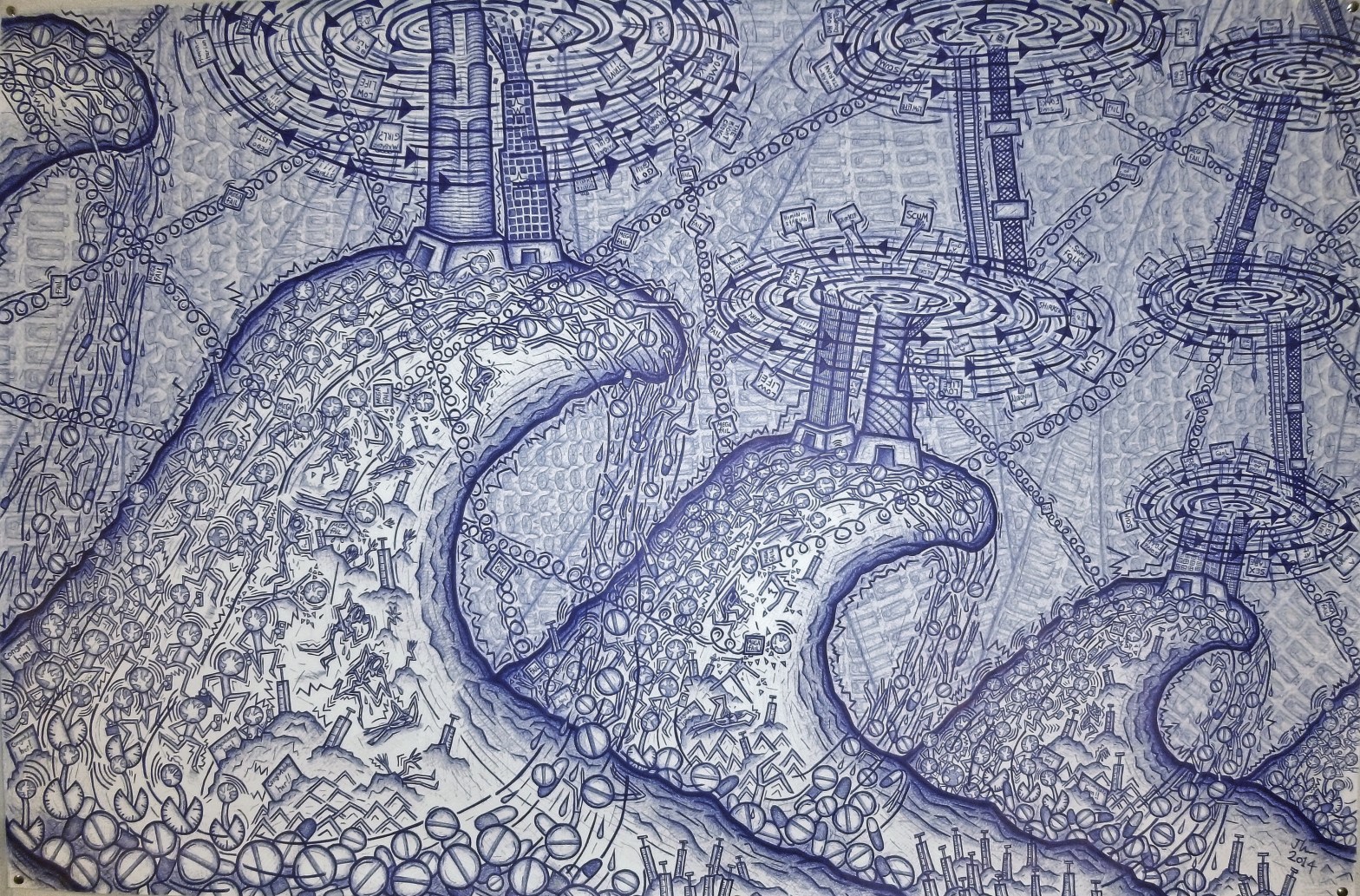
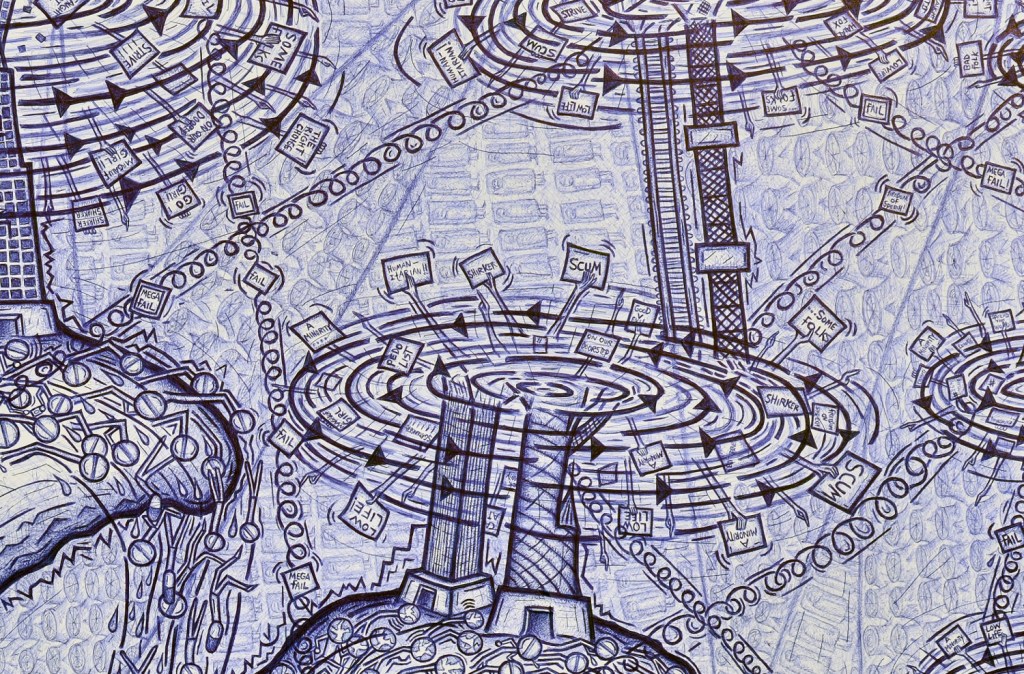
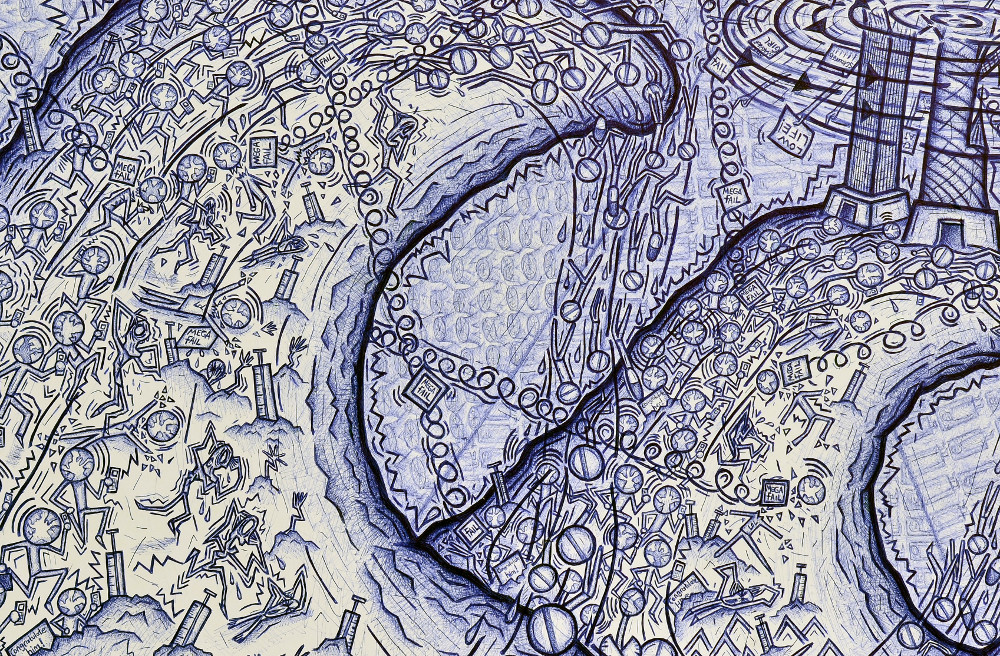
Everybody’s Fracking (2015)

Massively relieved to get this bxstxrd of a piece finished. Sums up just about everything I have ended up agreeing about with just about everybody I am able reach agreements with for just about every day during the past 2 years. I have found the process of fracking to be such an apt metaphor for  the broader predicament of our culture.

Everybody’s Fracking (2015, mixed media on paper, 95X130cm)


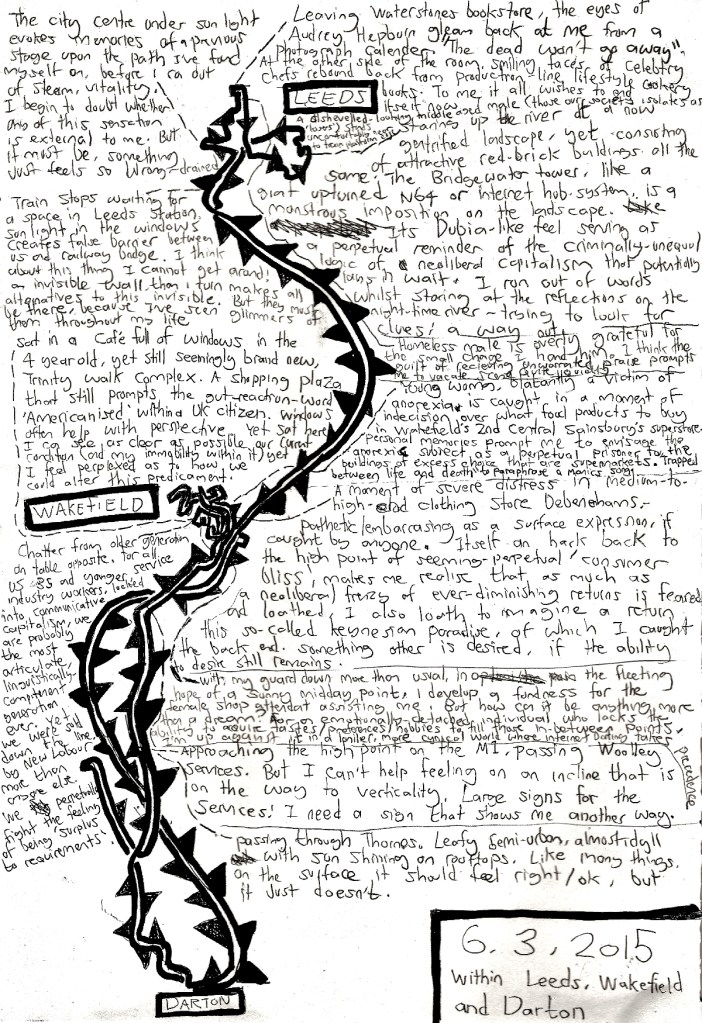
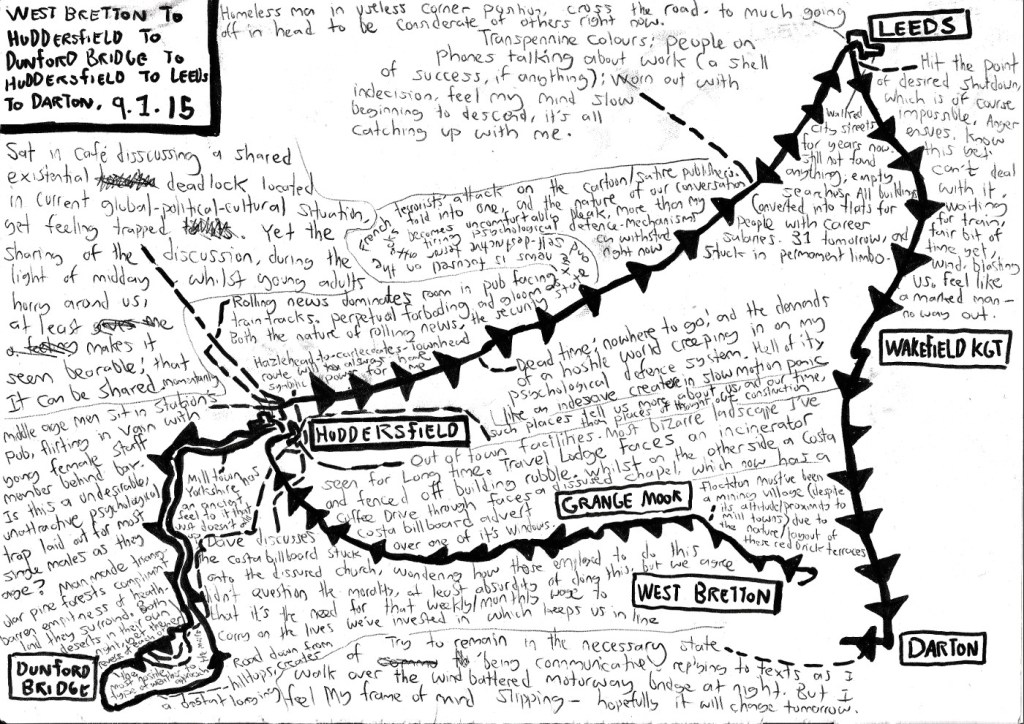
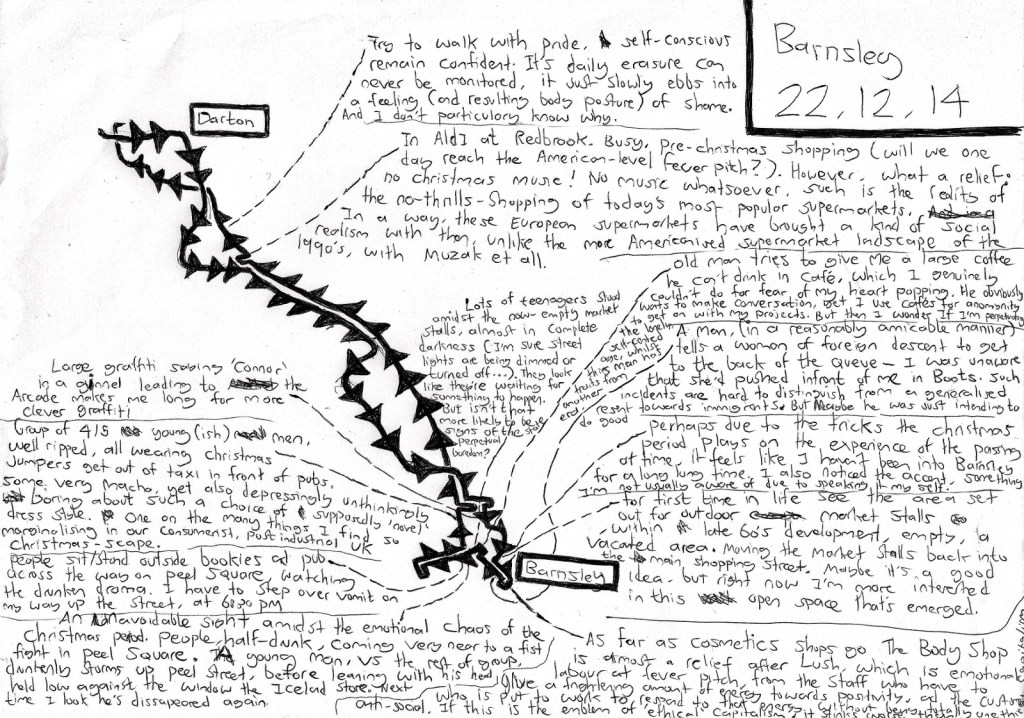
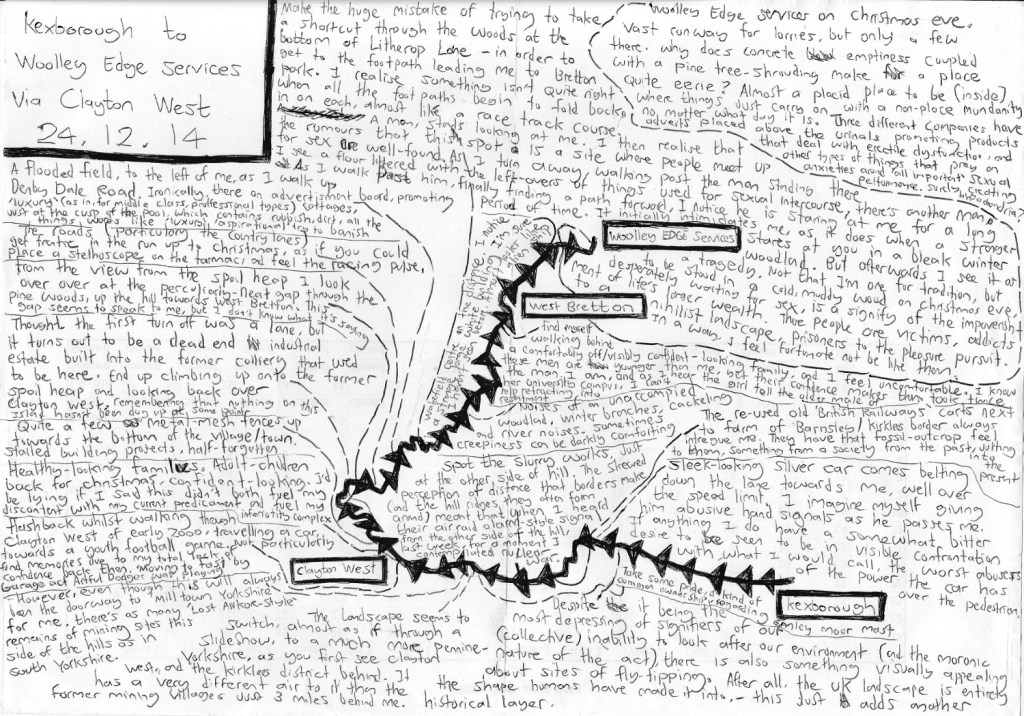
Stories From Forgotten Space

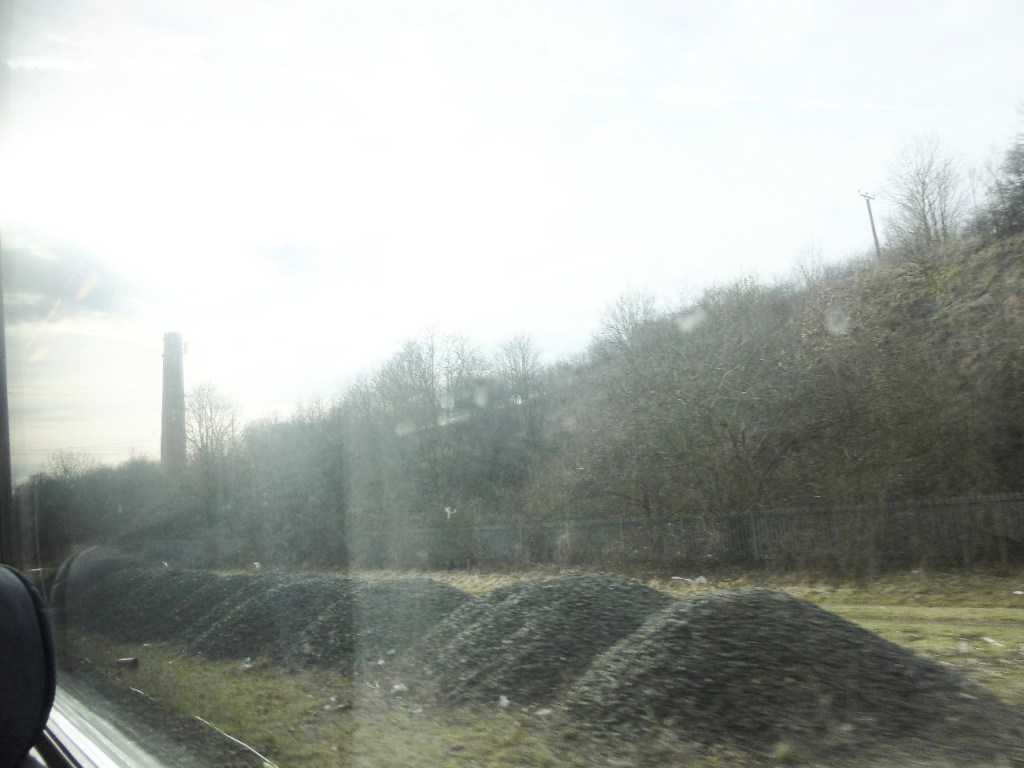
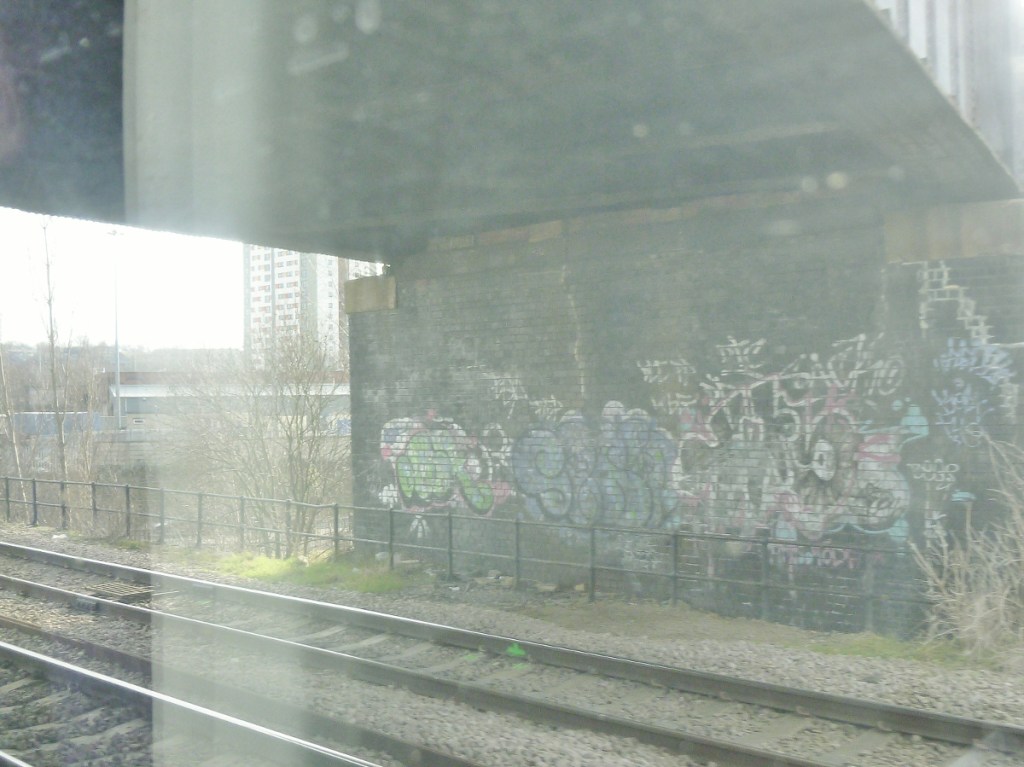
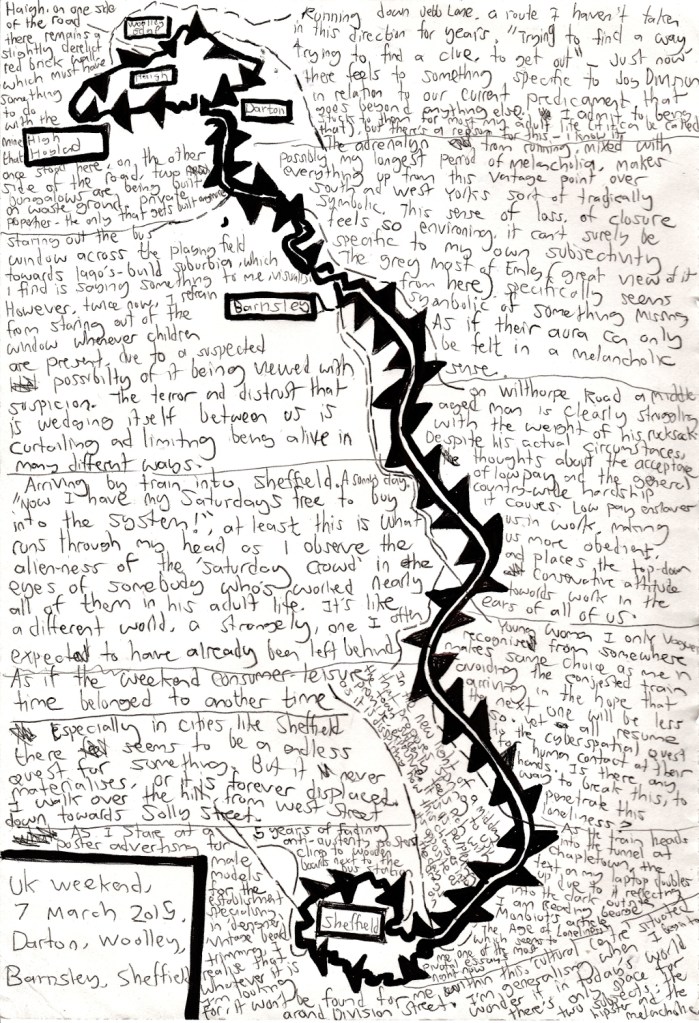
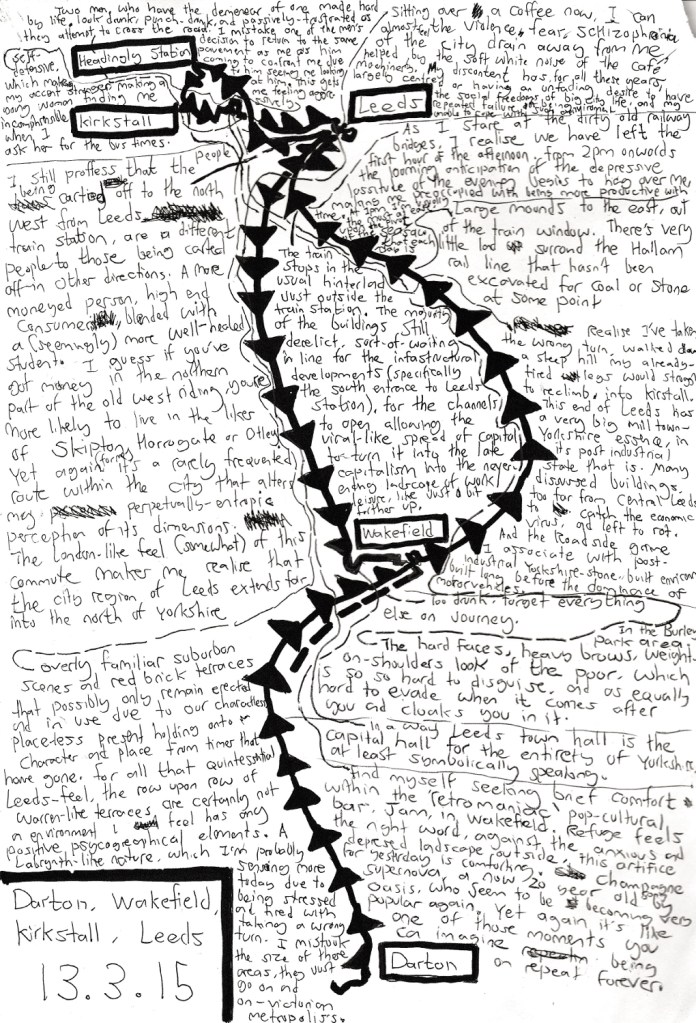
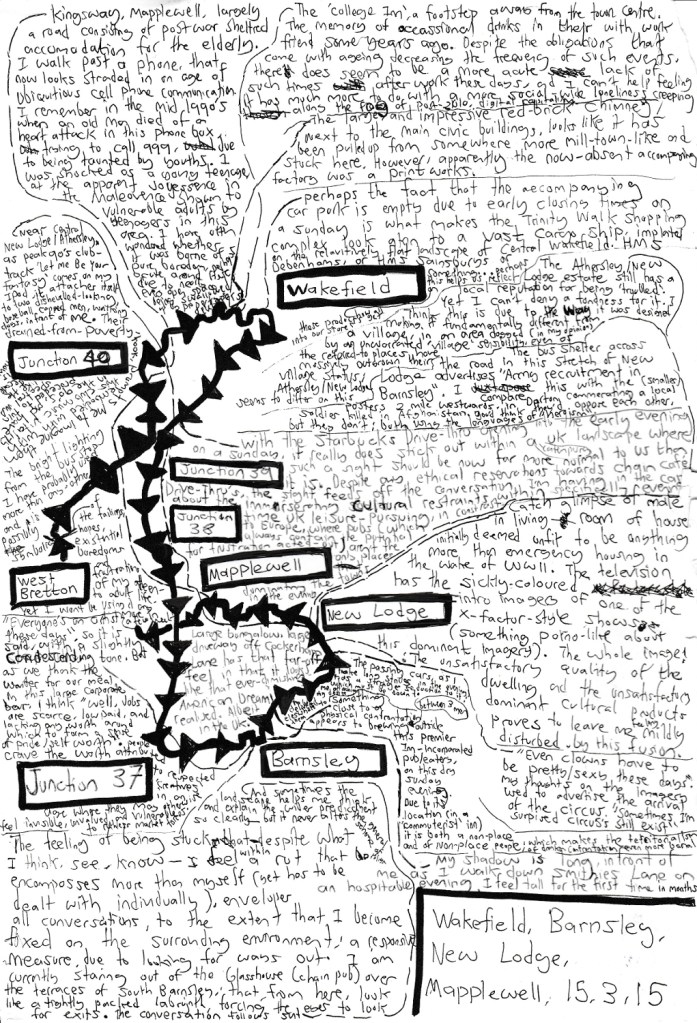
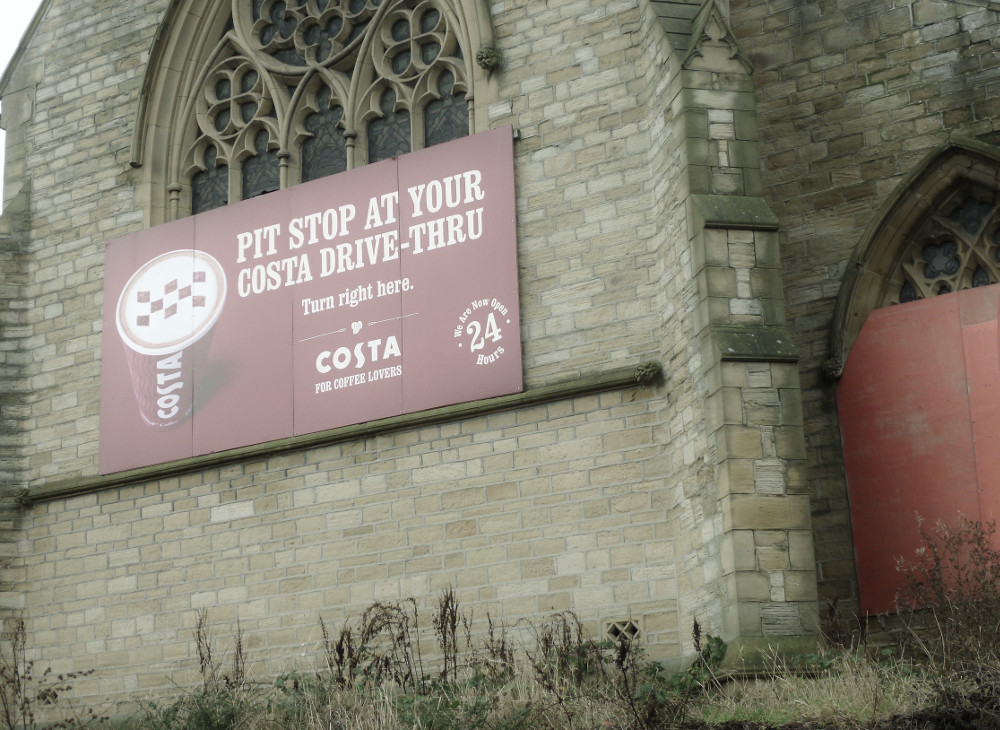
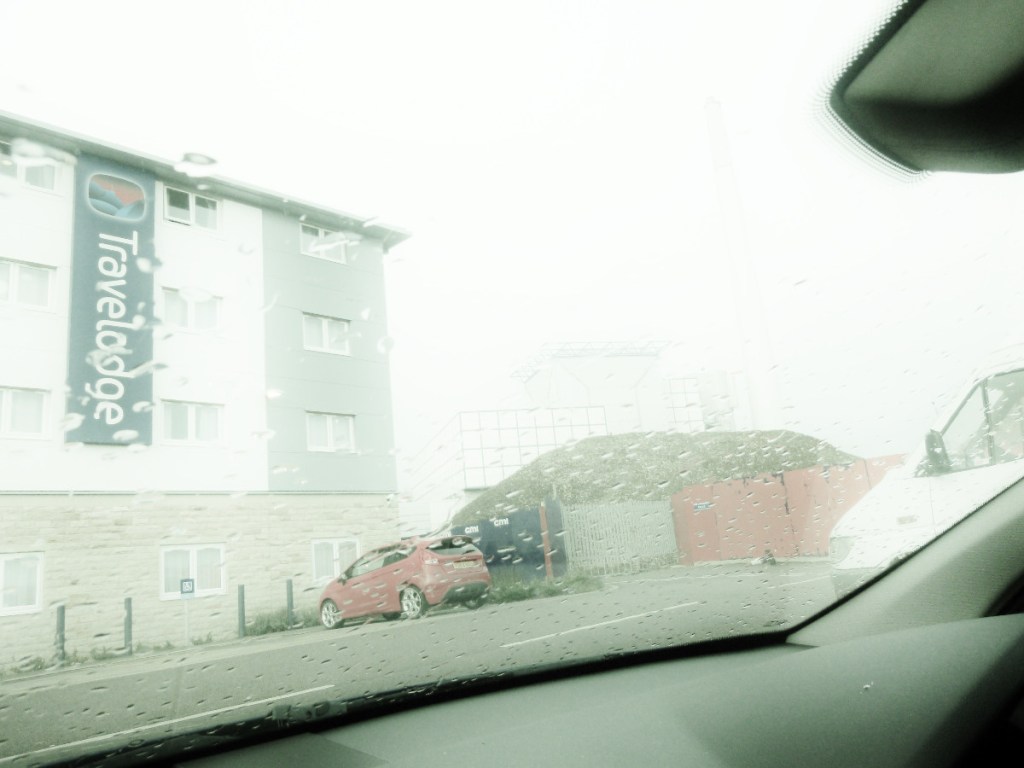
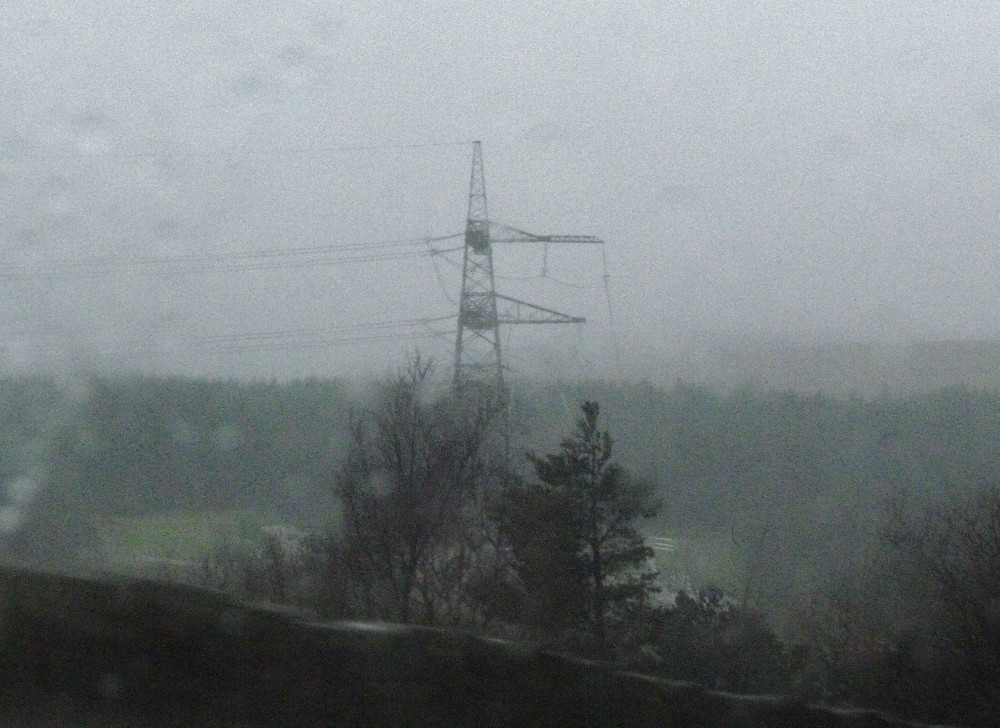
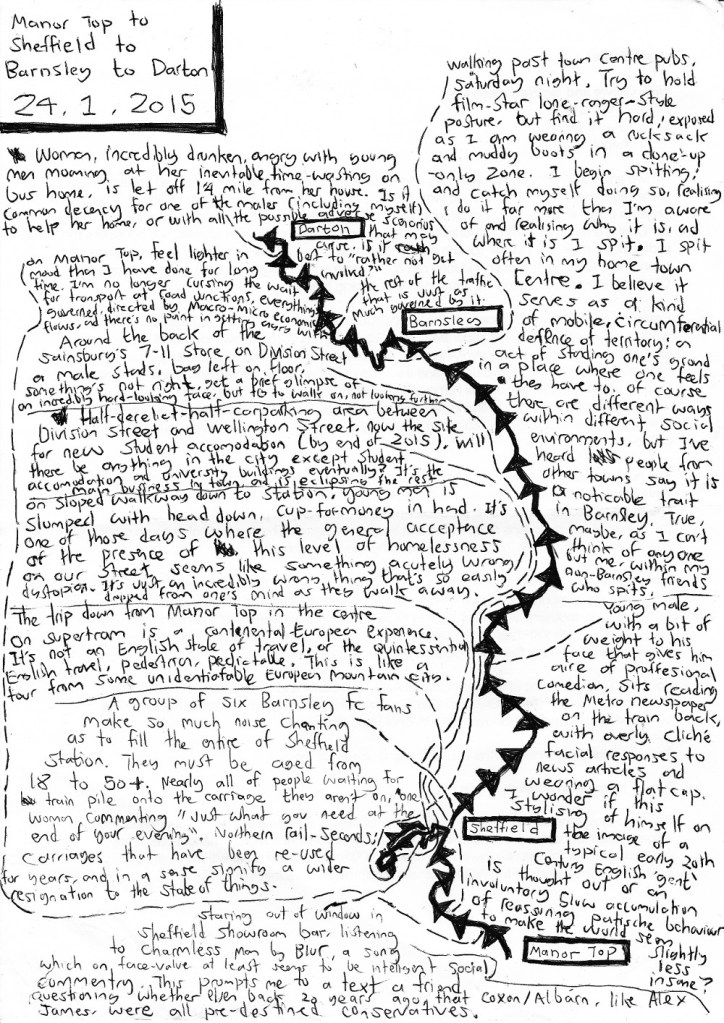
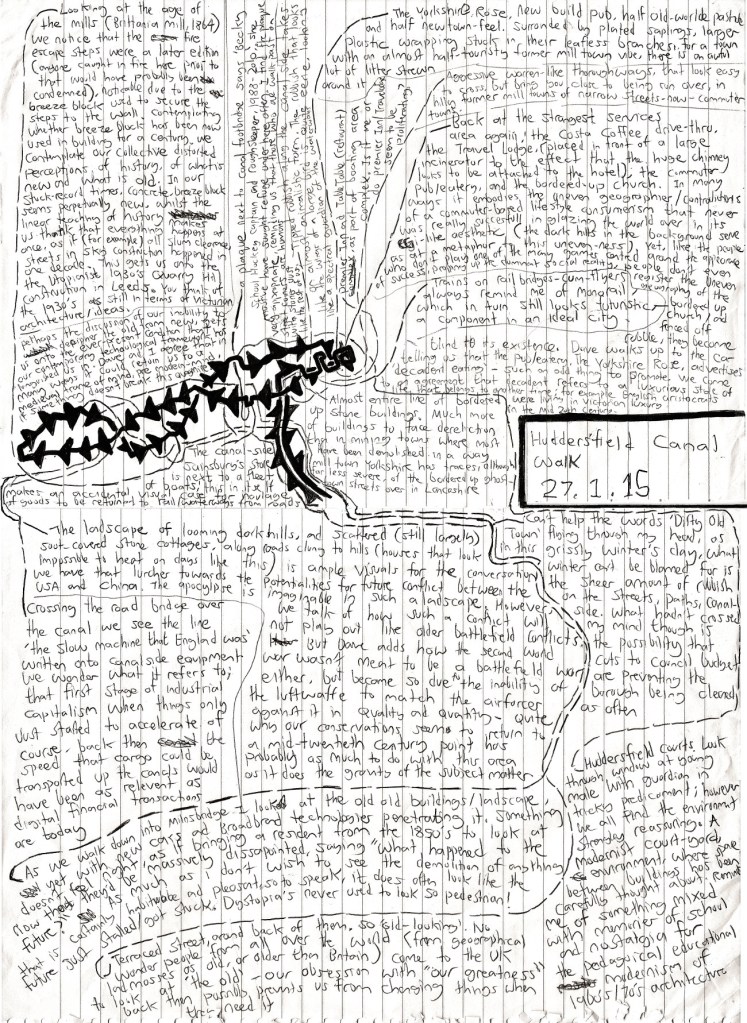
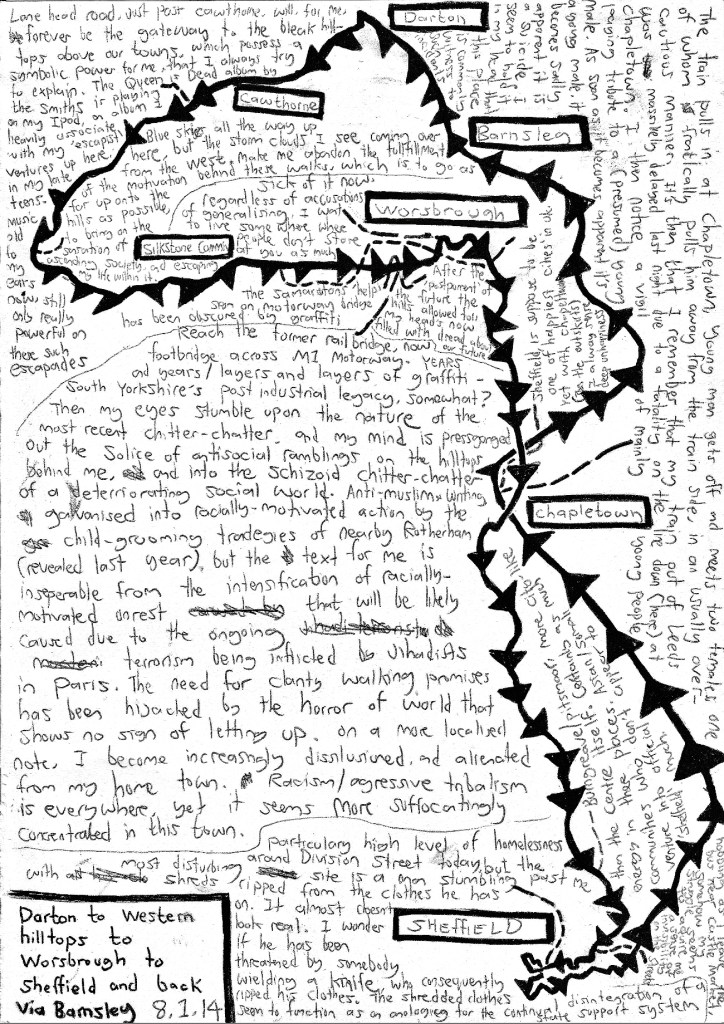
I seem to be at a point of bringing quite a few important works to a point of closure. I and have Finally made my blog series,  Stories From Forgotten Space,  into physical book form. Despite a few frustrating errors made by Blurb’s book publishing program, the minor imperfections can’t take away the central position this book takes alongside my video The Mary Celeste Project [The Scene of The Crash] in my more recent body of work: I see the book as a work of art in its own right, and intend to exhibit it in my upcoming 2015 shows.  However, although I can’t get it done cheaply (unless I find a willing publisher soonish) it can be bought from there http://www.blurb.co.uk/b/6306069-stories-from-forgotten-space

Predominately set in the former industrial heartlands of the areas constituting the former West Riding of Yorkshire, it extends into many other areas within the present day landscape of England. It takes a look at this country through the year leading up to the 2015 General Election