What’s the biggest risk you’d like to take — but haven’t been able to?
Love.
What’s the biggest risk you’d like to take — but haven’t been able to?
Love.
What major historical events do you remember?
9/11. I mean, who doesn’t?
But, being as I was soon to be 18, a symbolic marker point from transition from childhood to adulthood, 9/11 became that marker point.
Everything before seemed secure. If not rose-tinted, then at least buffeted by a secure horizon of endless ok-ness in a western consumer bubble.
Nobody can yet explain how 9/11 felt except by using the John Carpenter film title ‘in the mouth of madness’. The outside and Inside, the real and unreal collided in a way that made an entire coming generation want to run away into nostalgia and nihilism.
It wasn’t the worst thing to ever happen to anyone, but it marked a point of no return: from the anticipatory culture of an analogue mass media culture waiting for a millennium to a desensitised “always on” (and always watching) culture of no more surprises or mystery.
Worse things have happened since, not least in the past 2 years, but nothing will alter a culture quite as bluntly as 9/11.

I guess interpreting a work of art is still one of the few spaces in contemporary life where we are forced to confront the void of comprehension that exists between ourselves and the Other.
As much as Social Media is encouraging ‘creatives’ to be production lines for our own identity, which is built upon an history of art valuation based on the power of certain voices, nobody can really fully deconstruct all art and artists into mere equivalents in a market-based, or any other system.
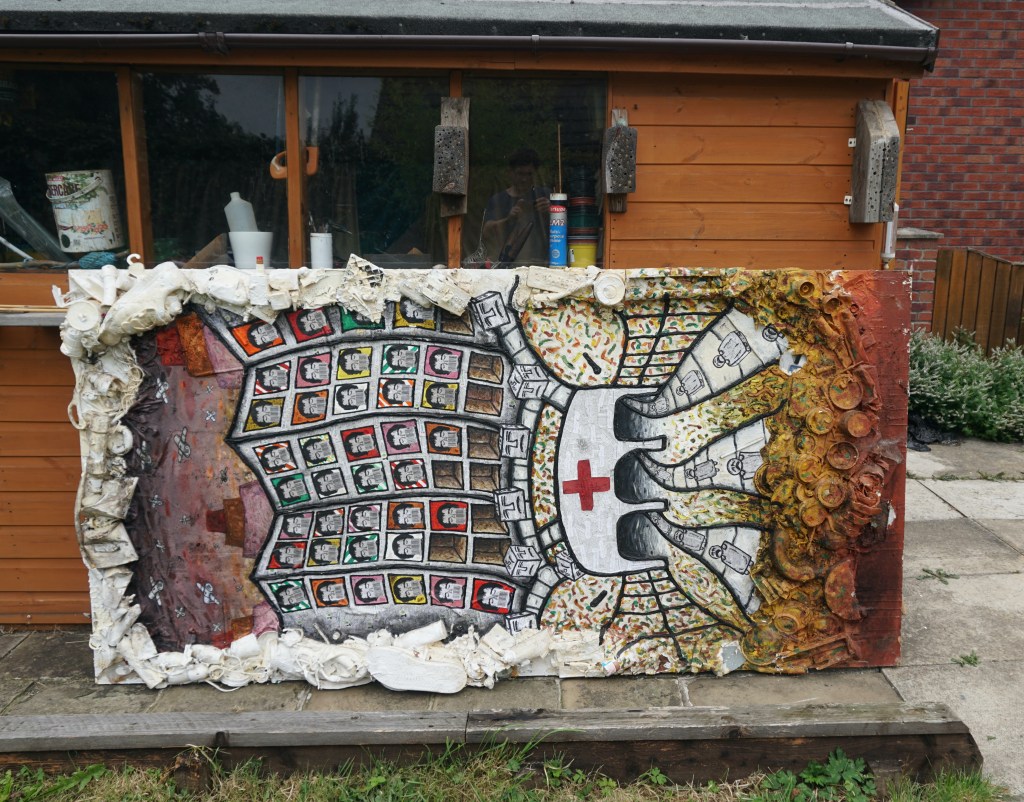
It might be the case that I am never remembered or revered for the work I have produced. It may remain what Gregory Sholette calls ‘dark matter’, part of the mass of creative produce that lay hidden in plain sight.
But none of this can lessen my, or any other artist’s life-long devotion to what they do, whether it translates as a professional practice in our business-dominated lexicon, or remains perceived as an intense hobby.
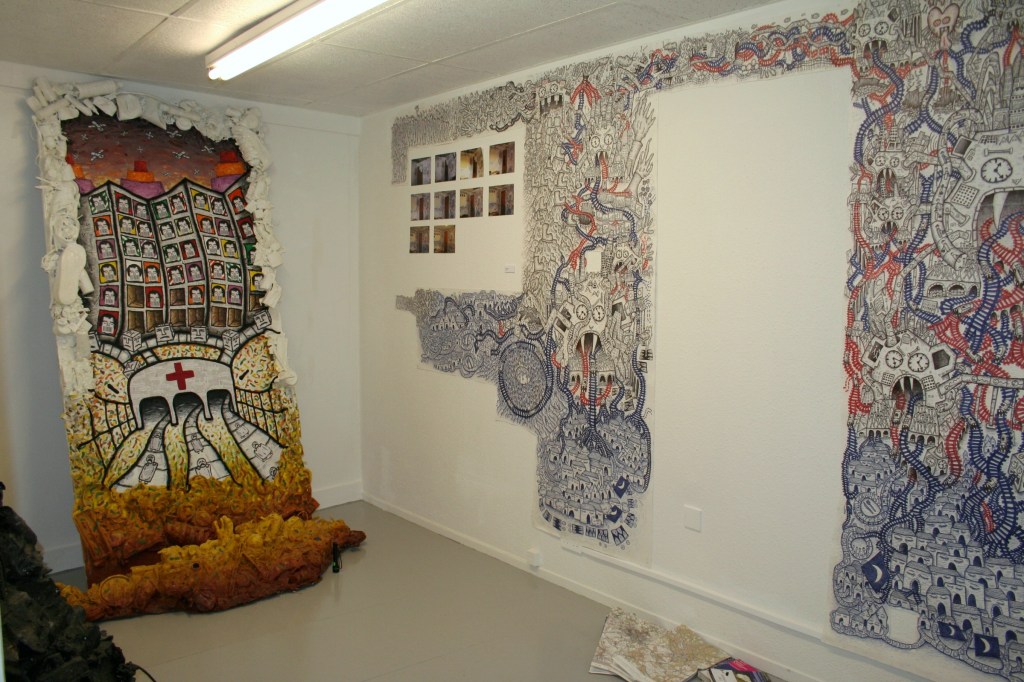
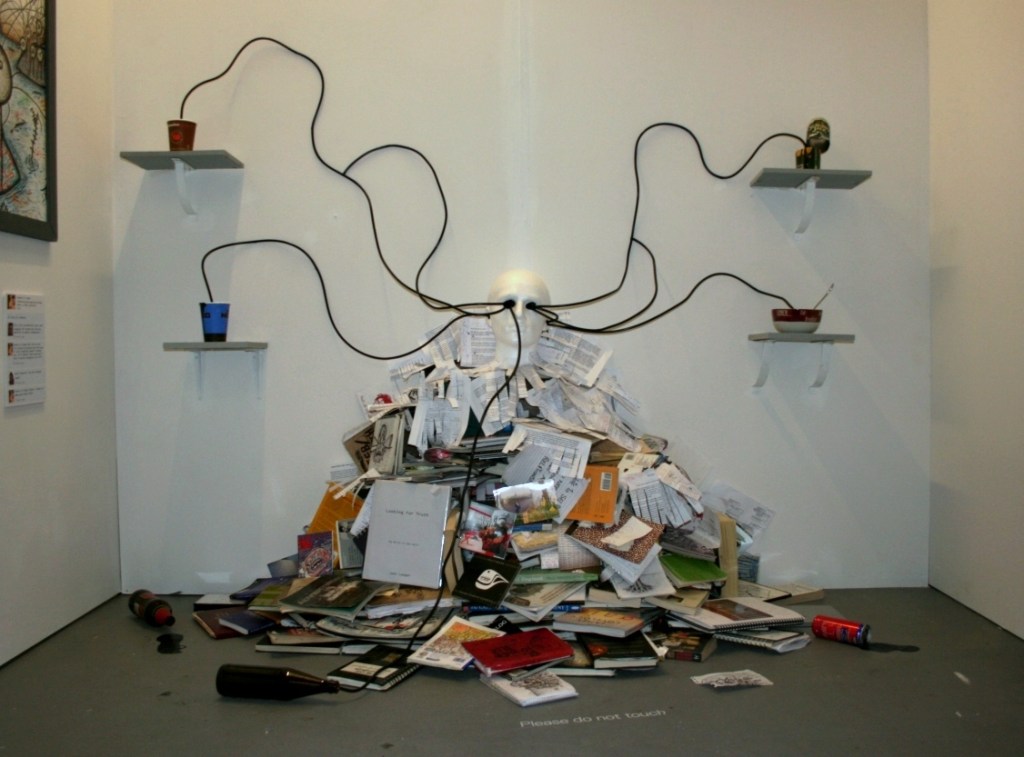
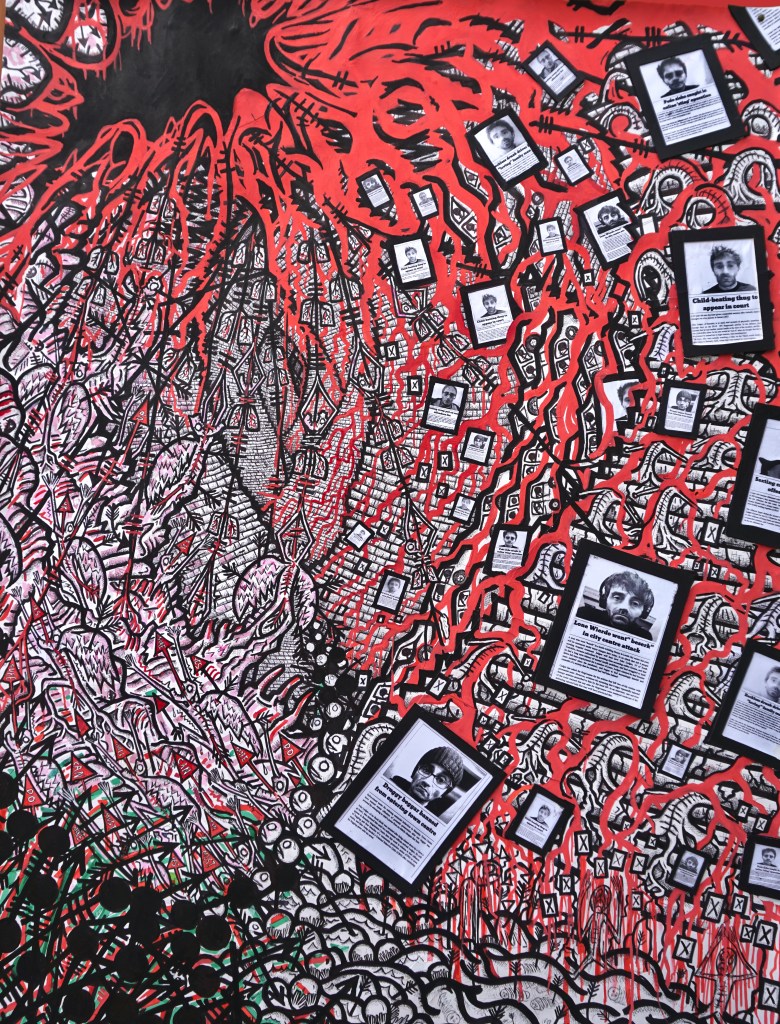
This is why it is kind of sad to drag this most hefty of works out of my parents’ shed to take some final photographs before demolishing it. Because, in the framing of artistic productivity, it’s just one random work of middling standards in the body of work I’ve made.
But, like myself with the works of others, you can only see the tip of the iceberg.
I cannot demand peoples’ attention enough, nor should I, to articulate a year long back-story; how the work was my most articulate display of mental illness to date, how it was the focal work for an entire exhibition project that took up an entire, and how it was the last sculptural-painting work I made before I had to realise I neither had the space of resources to produce such works. Alas, this was also a work that crossed the New Labour to Conservative Austerity years, and crossed a sea change from the unbridled productivity of my early 20s to the heavier creativity of my late 20s and 30s.

The work was made from literally all sorts, and something has caused it to decay , maybe from a mixture of mould and oxidisation, or something. Equally, every time the work gets moved, another bit of the sculptural aspect gets smashed. It wasn’t, and still isn’t the kind of work I could ever afford to look after properly.
But it’s nice to take some photos to say one last goodbye to it.

The artist and writer Laura Grace Ford speaks of ‘the stain of a place’.
I understand this as referring to something so ‘lived in’ that you can never remove the traces it has left; spaces that trigger personal as well as generalised ghosts.
I’ve always found it hard speaking about my home town. Natives are fiercely defensive of it, whilst outsiders still utilise its Victorian reputation to ridicule the place.

I think its the same as the love you have for a family member. Love that you have no choice in. Unconditional love, that is inevitably mixed with hatred, resent and sorrow.
I have often flopped into my home town after a ‘try hard’ endeavour into a nearby city, to find myself met with a deep warmness and sense of community. Equally I have experienced my bleakest and most regrettable nights here, sat drinking by myself in bars that feel like the end of the world, and walking out into what have often felt like the saddest streets on earth.
I wouldn’t feel either of these things in a different place. Although I have built up affinities and affection for nearby towns and cities, the only place it has ever truly stuck to me is in their lonely exits, on train station platforms.
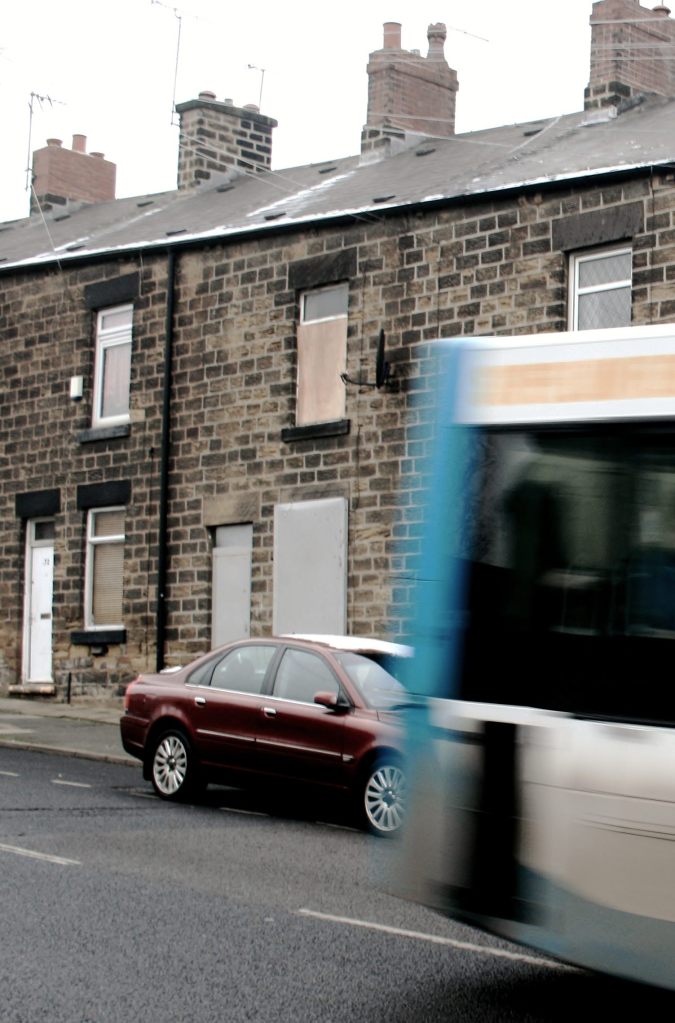
The ‘stain of a place’ finds its visual representative in the soot-stained terraces, the kind that gives all those born in the catchment of the London Brick Company the heebie jeebies. For there is indeed an malevolent aura: a revenge reaped on the sandstone of old river deltas that crushed Carboniferous plants into the zombie energy of coal.
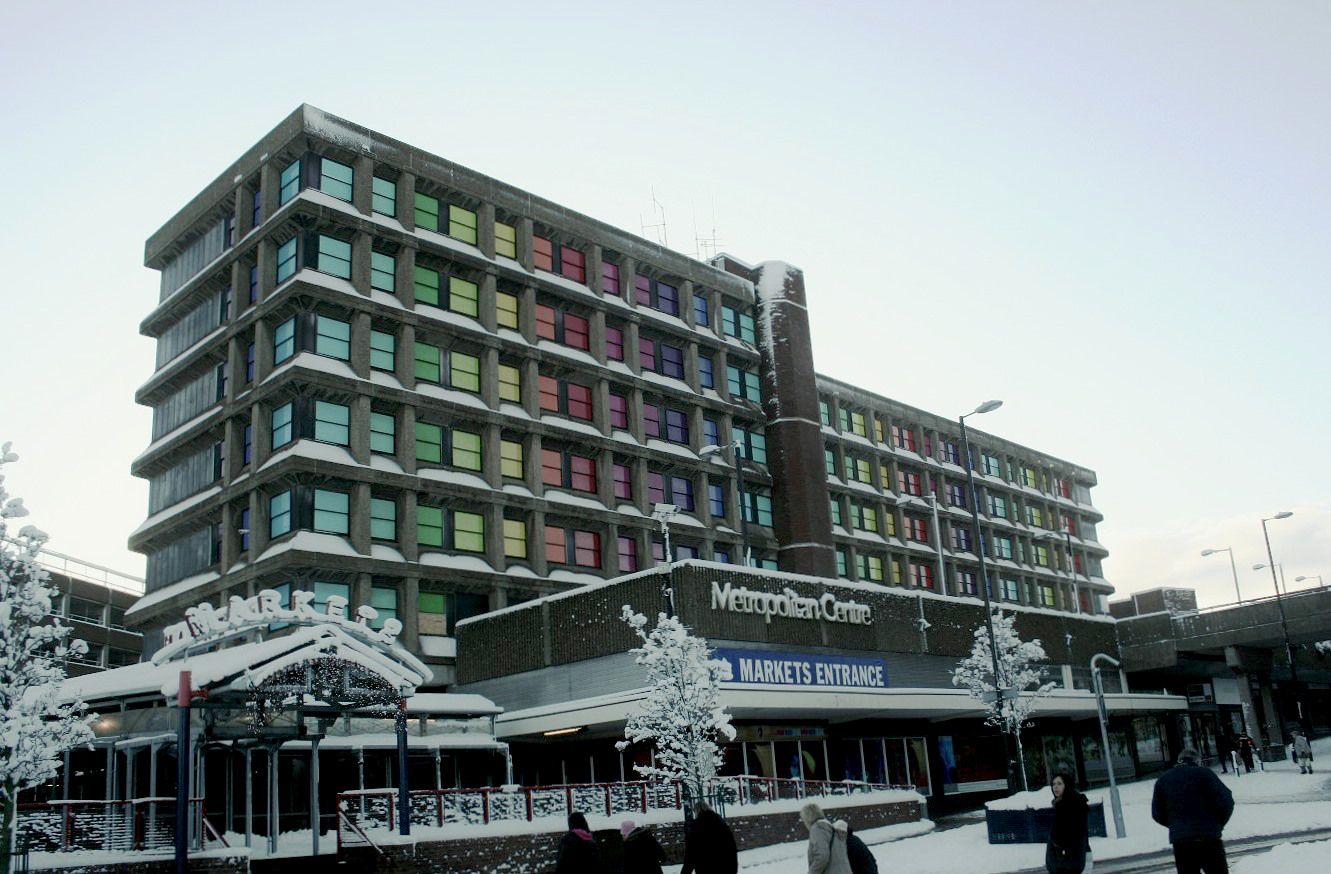
This town has an ego the size of Manchester. It’s true. Perhaps it lacks the accolade, the history, the cultural icons, but it most certainly has a sense of itself that is usually only associated with a town that claims to have made ‘the modern world’.
Perhaps it’s the town hall? In relative terms it dominates the skyline like the Eiffel Tower or St Pauls cathedral (once did). Despite the criticism it received from George Orwell, who watched it get built whilst thousands of the town’s people lived in squalor, it’s legacy outweighs its conception – for it has a gravitational pull towards a kind of civic monotheism, successfully dragging countless ex-coal villages scattered miles around it into its orbit.
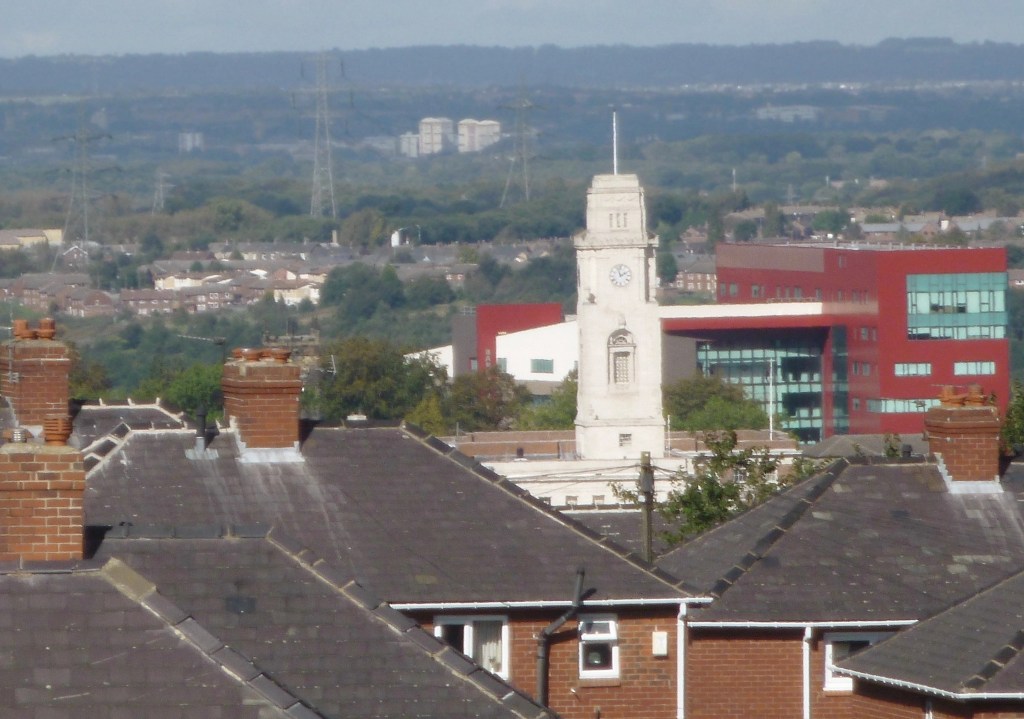
I am admittedly in a state of perpetual flight from its vortextual pull. I can find it suffocating. But it’s something worth recognising for its uniqueness, even in my difficult years of alcoholism and alienation where some make-believe West Country sanctuary perpetually calls my name.
Sometimes walking through the centre feels like I’m on an acid trip in a overly-familiar soap opera set. Sometimes it gets too much. But it will always be here with me now. I will always be part-hometown.
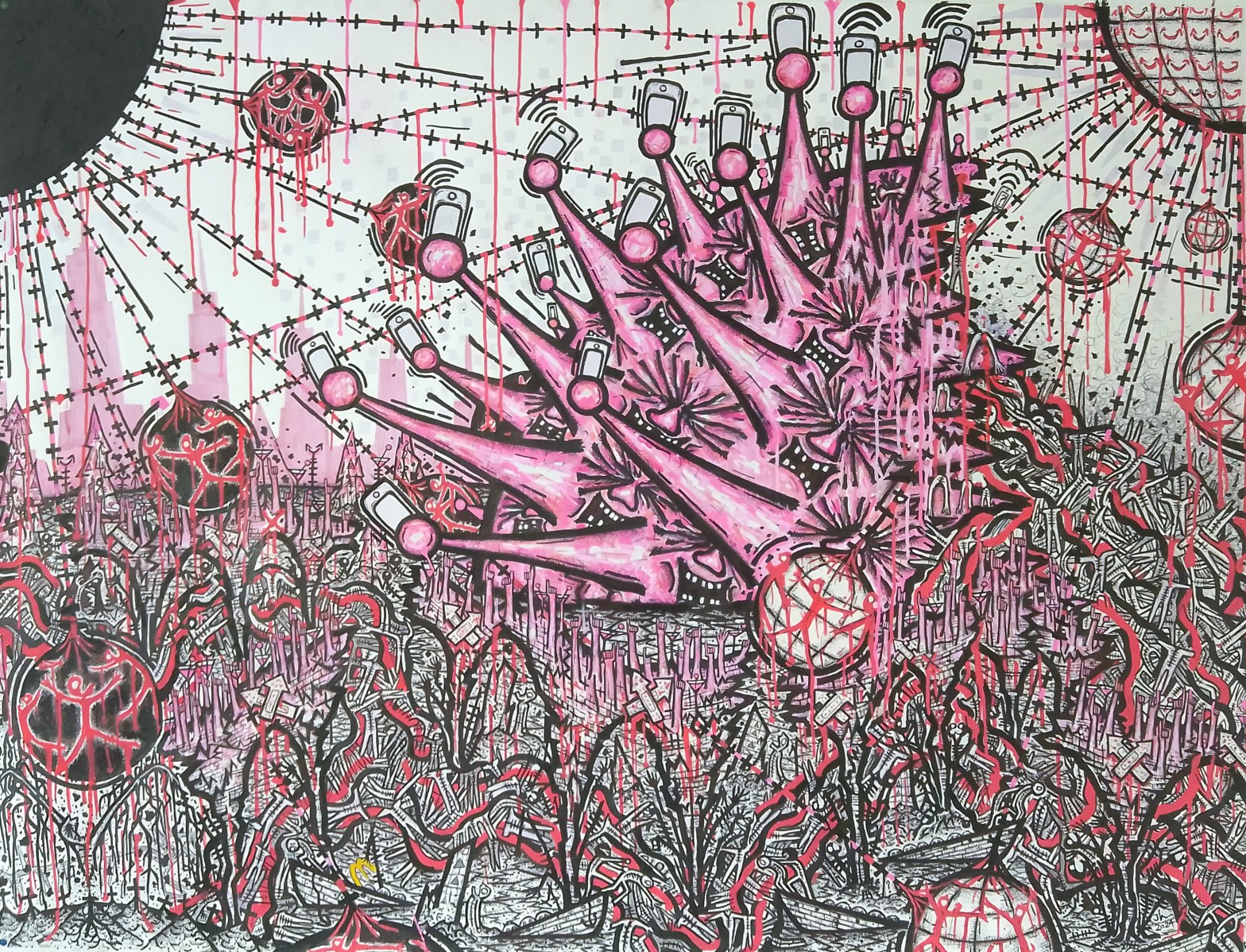
This is ‘NEW BRUTALITY’
Sorry for being trapped in the 20th century dealing with the 21st.
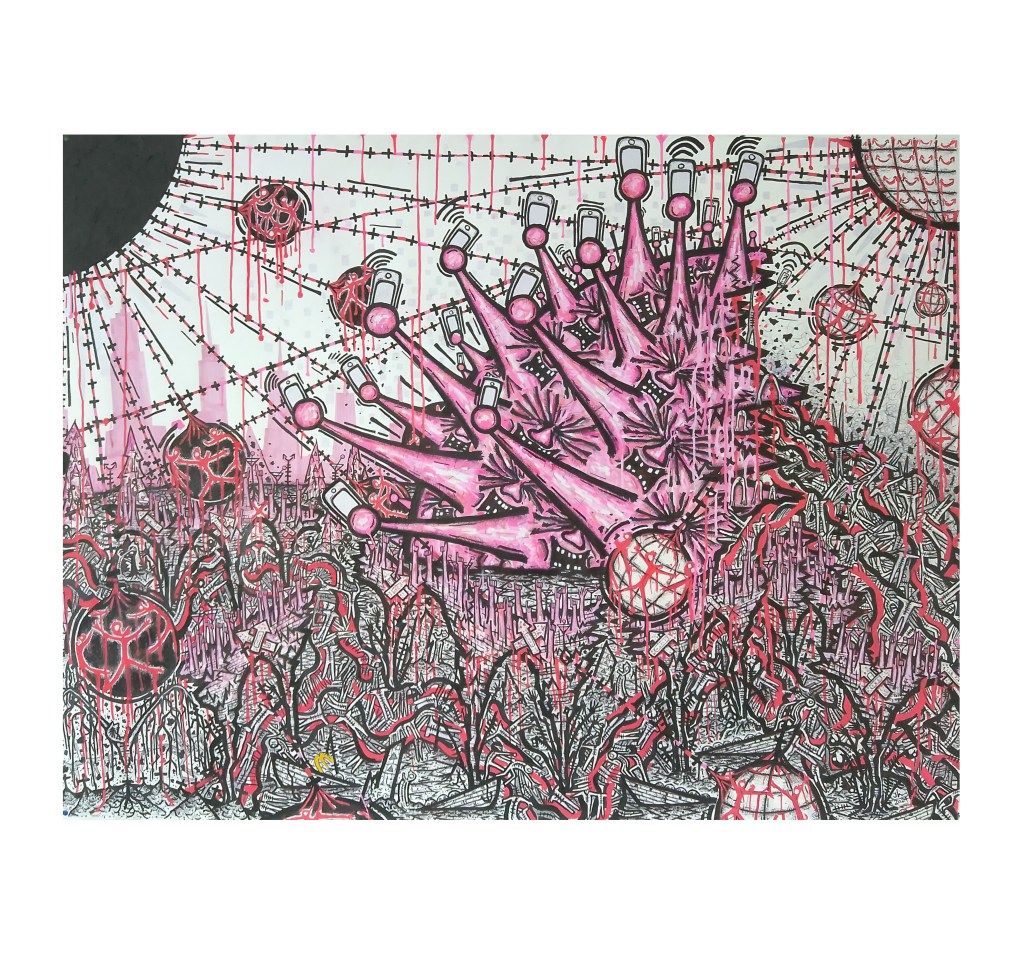
And sorry for being unable to make any sense whatsoever – locked as we are inside the maddening house, where a ‘just do it’ Californian approach to life has left us all burnt out people on a burning planet.
Deep down we all desire nothing more than to ‘escape’ from inside the maddening house – yet we see the state violence inflicted on those beyond its walls.
Words such a ‘digital age’ or ‘social media’ feel vastly insufficient to describe how we have collectively been affected. We have been changed. There is some sense we have been rewired, and do not resemble what we once were.
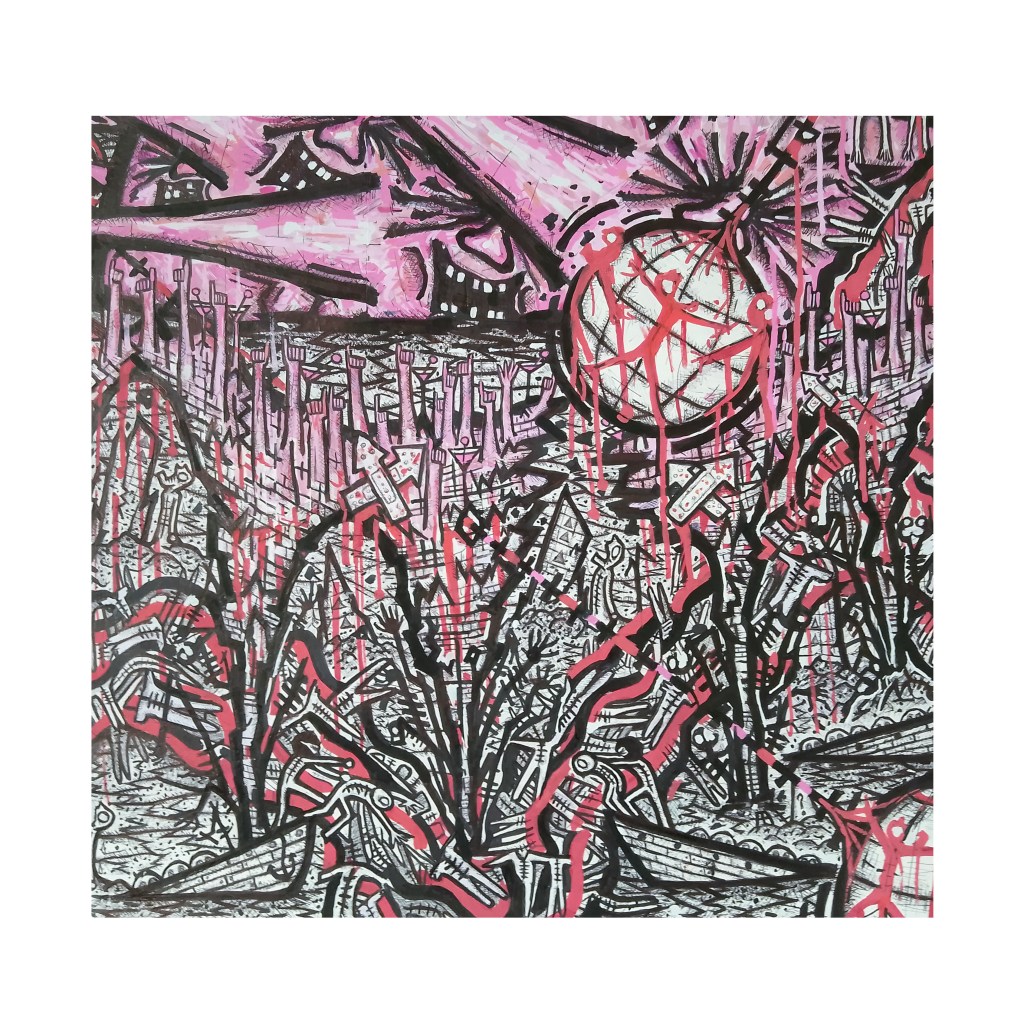
There has been catastrophic breakdown in the conjunctive purpose of dialogue over the last 15 years. Debating has become everything, yet this inability for new understanding to arise from the dialogue overrides all the facts, all sense of being on the right or wrong side of justice. Indeed, sometimes the only joy to be found is to be so wrong that you can at least revel in nihilistic acts.
People are suffocating, ‘spiritually’, and all too often when they gasp for air we palm their mouths shut because of the problematic utterances they produce.
‘Wokeness’ isn’t a problem because it goes too far, but precisely because it refuses to go far enough. At best it castrates and polices a deep desire to ‘escape’ which lies under every aspect of 21st century life. At worst it becomes an top-down autocratic sensibility of a professional class with an acceptable face, who cannot allow our true desires to be realised because they can’t be honest and admit that they don’t really want anything to change (except the expectation that we will become just another smiling face in the corporate blob).

‘Elon Musk calls ‘woke’ a ‘mind virus’, but what many of the loudest ‘anti-woke’ influencers have shown us is how dangerous it is to be only ‘half-right’. We are all condemned to be half-right in this binarising breakdown of dialogue. But if we, with the arrogance of Musk, assume we are completely right, then we miss the point that we are all half-right but fatally half-wrong. ‘Woke’ doesn’t exist in a vacuum; if there is a ‘mind virus’ that splits the collective psyche, then two sides signals danger.
However, virus’s aren’t always bad in the long run. What we are left with is the task of rejoining and reclaiming the new through their rejoining – to escape the frozen images of affiliations afforded to us by the 20th century. Difficult, even mad to suggest. But what else can you do other than shout mad things when you’re locked inside the maddening house?
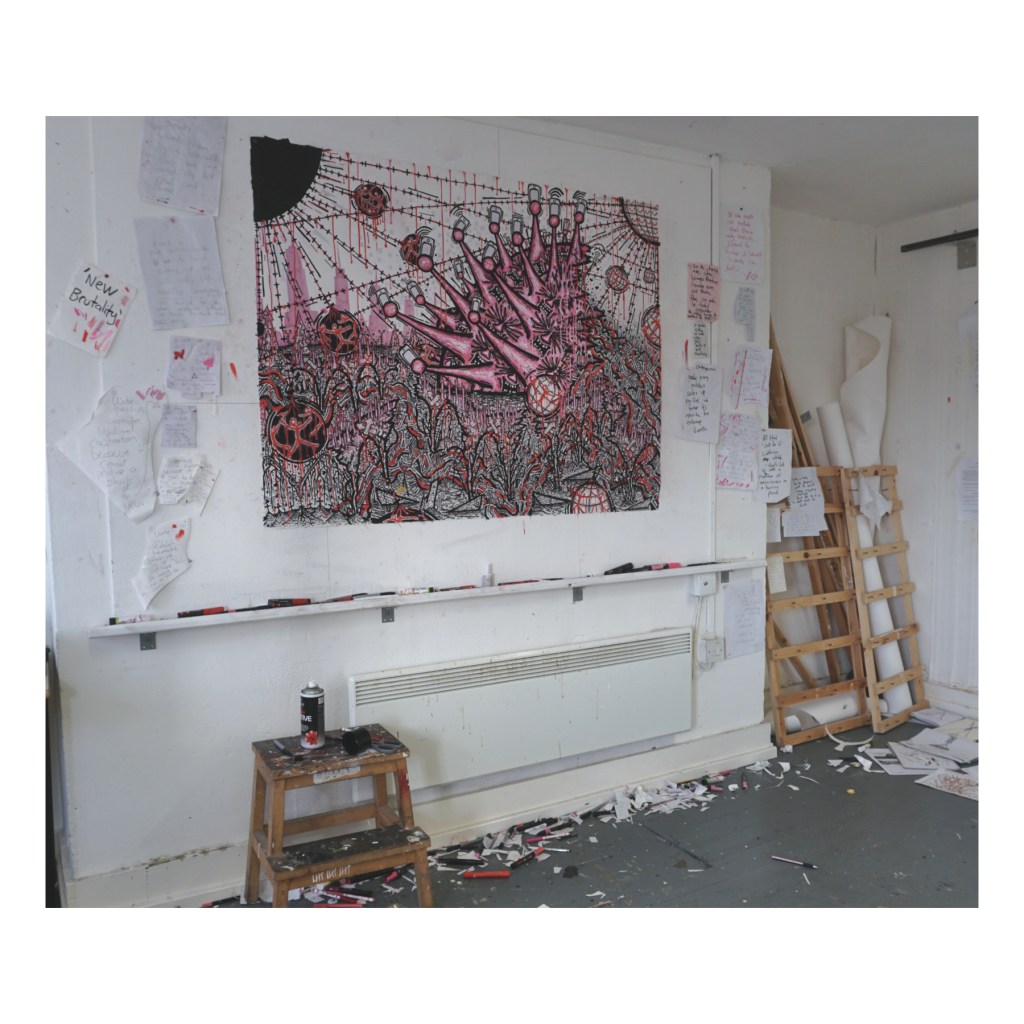
I’ll begin audaciously by saying that nobody destroying communities up and down England over the past week likes themselves.
To be even more audacious, I’d say that every one of them secretly hates themselves.
I know the signs. I know the politics of self-hate: a reality of hopelessness where only vengeance and bullying bring joy.
You hate yourself so much that the politics and cultures of hope appear to be laughing in your face.
Even if you’ve been disenfranchised by an economic and political system that has reduced your quality of life, nothing makes you as bitter and resentful as seeing groups of people who seem to get joy and pride from their lives.
And pride is an important word here.
Provoked by the horror in Southport, the current shambolic scenes may be directly racist, but this is also indirectly a rage against communities such as the LBTQ.
This is because what we are seeing is a protest of shame versus pride. And by extension death-drive versus life-drive.
All these peoples’ proclamations of ‘national pride’, of being ‘true England’ are wishful thinking: they feel part of nothing. What permeates their lives is a lonely shame.
On one level they act out the shame caused by a brutally binary meritocracy of neoliberalism that produces an atmosphere of humiliation for those who don’t fit on the ‘guest list’ , on the other hand they blindly invert a collective shame over our nation’s colonial history into a zombie-ish celebration of it.
We laugh at them, us ‘woke’ folk. We mock the ‘pathetic’ existence of those fat bald thick cunts, with beer bellies sticking out of stereotypically low-brow clothing. The endemically self-conscious Left performs the highly problematic shift from understanding social reality through environmental causality to the finger pointing of individualist condemnation, and spits in the face of these ‘deplorables’.
BUT….
What if you think like a Leftist, see reality like a Leftist, yet at the same time know that you feel the same shitty feelings about your life as the far right ‘morons’?
That’s my issue….
I have spent my 30s onwards battling to remain on the same pitch as the Left, and it’s entirely down to how I have felt about my life.
Perhaps it’s all due my early adult life mental health and confidence problems that meant I struggled to leave the environment I grew up in?
Even wording it like this sounds terribly judgemental. But it’s what’s expected, right?: to move on and out? And ever since then I have felt increasingly caught between two increasingly distinctive cultures who increasingly despise one another. At best I feel alienated from the communities I once thought I should belong to, and at worst judged by them.
But in-between this, I do feel like I have been afforded an insight I believe is rare now: an ability to understand the ‘why’ on both polarities – as deranged as the ‘whys’ may have now become.
I am seeing people from the nearest thing I can now call ‘my home environment’ who are by and large decent and intelligent people being pushed down a self-pathologising worm hole, where their identities are sieved down to leave only the most jingoistic and reactionary nuggets.
Maybe this has been happening for a long time, but it is only clear to me in the wake of the 2010s.
I saw myself as vaguely part of a ‘Millennial left’. We were ‘post-historical’ children. We were promised a world free of struggle and upheaval. However, after the disillusioning experience of New Labour, and the despair of Cameron’s Britain, 2010s’ Corbyn’s Labour promised to resuscitate the ‘another 21st century’ that we all still mournfully carried like an undead child inside of us.
But between 2019 and 2020 we saw the demolition and exhaustion of what, to many of us, felt like such a necessity that the concept of losing felt impossible.
Bereft of this, I have battled to feel part of anything. I have felt increasingly like a pensioner-before-their-time, watching a world that no longer looks back at me.
It’s been so hard to feel any sense of connection to the current progressive movements, and increasingly easier to feel alienated from them.
I trust my conscience. I trust myself never to get sucked into the ‘other camp’ in this increasingly binary way of identifying. But I still believe my own pain, of feeling decreased life expectations, and increasing loneliness, under a ‘structure of feeling’ that suggests that I no longer matter, is the same pain that is producing the people I have seen acting like ‘bell ends’ on cell phone videos this week.

The images are very similar to the footage of angry middle aged drivers jumping out of their immobile vehicles to tear Just Stop Oil protestors from the ground. We mock these ‘bigoted’ people, but what an active Left fails to often understand that these people, systematically bought-off with 1st world pharmacons, cannot but know what is happening to the world, but also know that due to the fact that they are part of nothing bigger than themselves, and thus have no pride, that they can never be in a position to do anything.
Hopelessness hits us all differently, and we all perceive our fortunes from the vantage afforded us in our formative years. Alas, people born in the UK to culturally assimilated family still have a formative vantage defined by privilege based in future-gain. It is an extremely painful experience to watch it slowly erode before your eyes, and ultimately before a world that justifiably has no sympathy, no matter how much you protest that your family were working class and weren’t part of ‘the empire’.
Let me be clear, the folk at these protests terrify me. I saw a group of middle-aged white blokes yelling ‘England, England’ in the face of a man of seemingly Asian-descent a few months back, and it sent the shivers down my back that emanate from memories of playground bullies: “get out of sight, before they get you!”.
But I also believe that I identify with their pain, even if they (most likely) don’t even recognise their suffering. It is obvious from the footage on display that the majority of the people we can see are living piss-shit lives.
Whether they are the consequence of what we have valued in our society for the last 40 years, or just because every society must, by some mathematical equation, have to produce a certain number of angry fascists, I still feel that in my worst moments of shame and self-hate I wake up with the same residual despair and disgust as people who, on the street, are my enemy – more than with people who are factually on my side.

I’ve put a lot of work in at my studio a lot of the last 4 days, and I am very pleased with the way things are going from the perspective of the artwork.
However, the ache from neglecting other aspects of my life has been creeping in. These are aspects of my life that I admittedly continually try to circumvent because they are trapped within lifestyle equations I don’t know how to solve. I was consumed with the concerns that I’m going down the same self-isolating path, where, no matter the quality of the artwork I produce, life doesn’t improve.
With this in mind, I looked at my pushbike that I sometimes store in my studio when I get the train home.
I recalled the heavily-memed H.G Wells’ quote that “Every time I see an adult on a bicycle, I no longer despair for the future”. Because, interestingly, what is often overlooked is the standpoint of the cyclist. Ten minutes on a bike (as long as there’s no gale-force wind, winter rain or road rage) and you no longer despair in YOUR future.
I weirdly find jumping on my bike one of the hardest acts; a mind-set will doggedly refuse to evict itself, and sees the bike and feels threatened.
Emotionally, I was crying out for this bike ride home, and, importantly, I needed to go the longer route, due to what I would see there.
…and what I would see was my own actions; actions that I find it ever-harder to recollect as the pressures to have at least some material stature of as an adult aged 40 has slowly washed away the significance of the more passionate artistic acts that punctuated my 20s.
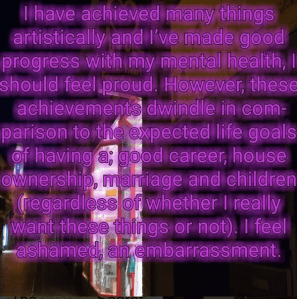
The above quote was anonymously submitted to a project I co-led as part of a collective project way back amidst the ‘Corbynista’ heat of 2018 (or so it seemed) that promised to not only wipe out student debt, but the inherited shame of countless millennials.
I suspect I know who wrote it, and I am comfortable saying so, because we have admitted that we share very similar feelings, as we persist and persist as artists often in the ‘dark matter’ of culture, now irretrievably captured and rewired by the social media artist-subjectivity which includes all content creators.
Likewise, I often struggle to feel proud about all the things I have done.
Even when I cycle I am vulnerable to achievement-obsessed thinking, and even as I cycled as fast as I could up and over the ridge of hills that separate the drainage basins of the river Calder and Dearne and recollected how much I love this area in summer, it was only as I descended past the Yorkshire Sculpture Park that I forced myself to stop and observe the fruits of things I had done.
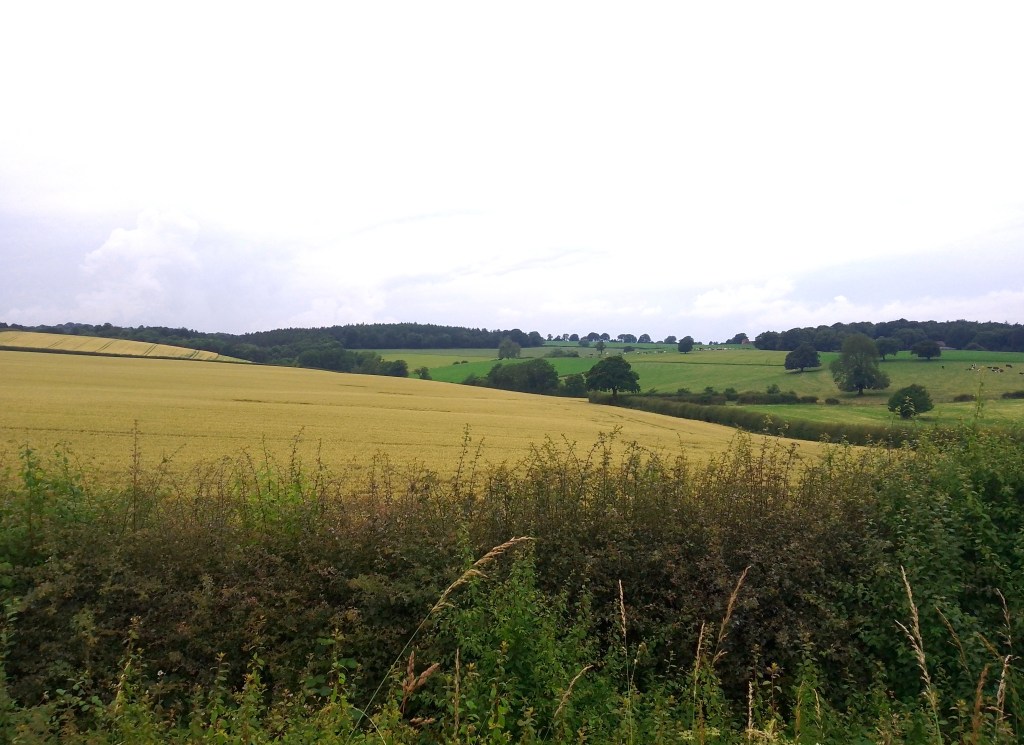
This area sits on the boundary of South and West Yorkshire. Unlike North or East Yorkshire, which will no doubt conjure an idea and cultural identity defined by either the coast, the ancient or the rural, West and South Yorkshire were seen as industrial, and in turn are now identified as post-industrial.
The problem with the notion of the post-industrial is that it is easily conflated with the notion of ‘post-historical’. Together they can habitually collude in culture, politics and the psyche to create a sense that the march of time stood still at some point in the final years of the 20th century. Indeed, this vague point has created a perception of a default moment, which perpetually feels like it was only yesterday.
This frozen clock is perpetually and rudely arrested by a conflicting reality, of an acceleration of tech, tensions and other things on a global scale. But also on a local scale. The default mode cannot understand the level of development going on, as the infrastructure bows under the pressure.
This is quite a lengthy way to explain the geography of this area. Yet, between the haphazard sprawl of West and South Yorkshire, there still remains a curved gap of land which is still largely rural. The Yorkshire Sculpture Park sits at the middle of what can seem like a little oasis, which rivals the rolling green landscapes of Dorset or Devon.
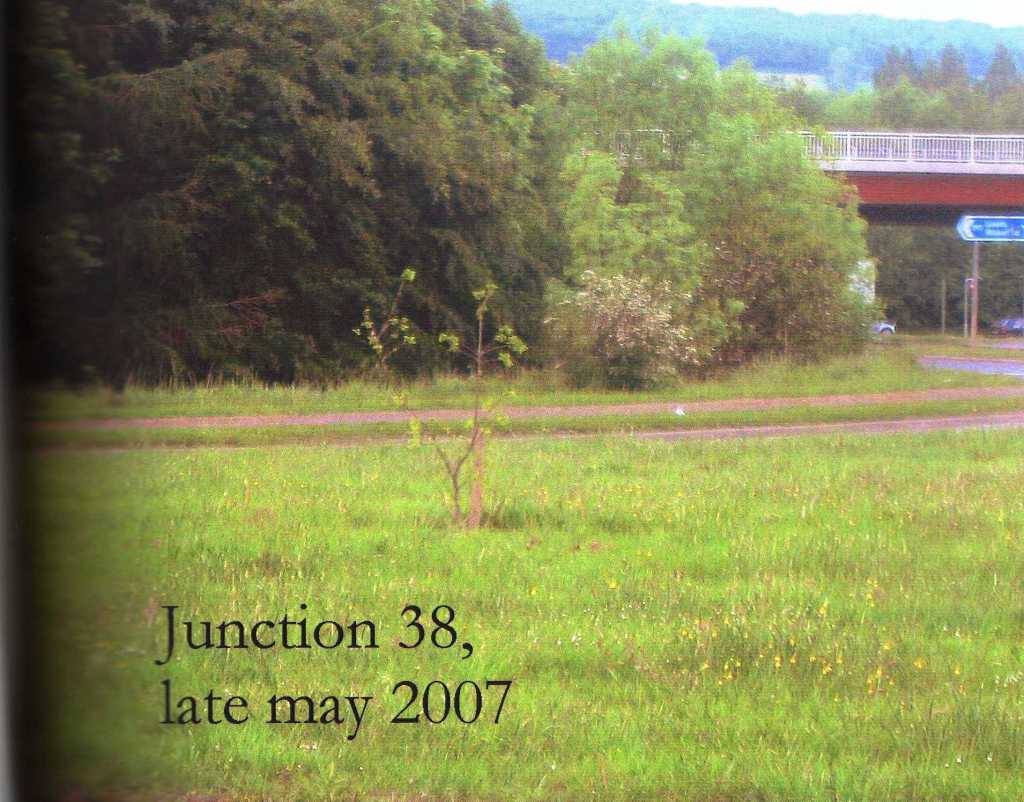
The above image is of an oak sapling I planted back in 2006 with the help of a friend to dig a hole in the dark of that graveyard week between Xmas and New Year. The image at the start of the blog is of this sapling now as a tree in 2024.
I had called this project ‘Green Graffiti’. In my very early 20s I had my fair share of naive creative spunk, I knew little about the larger art world. It was a year before I began to work at the Sculpture Park itself, which, in-spite of the invaluable educational aspects of the experience, was also an experience that dented my confidence to put myself out there as an artist – I’m still trying to counter an internalised narrative that I’m not the ‘right’ sort of artist to be in the art world.
So it’s fitting that we chose this location to plant this tree.
Around the corner I encountered the roadside area in the image below.

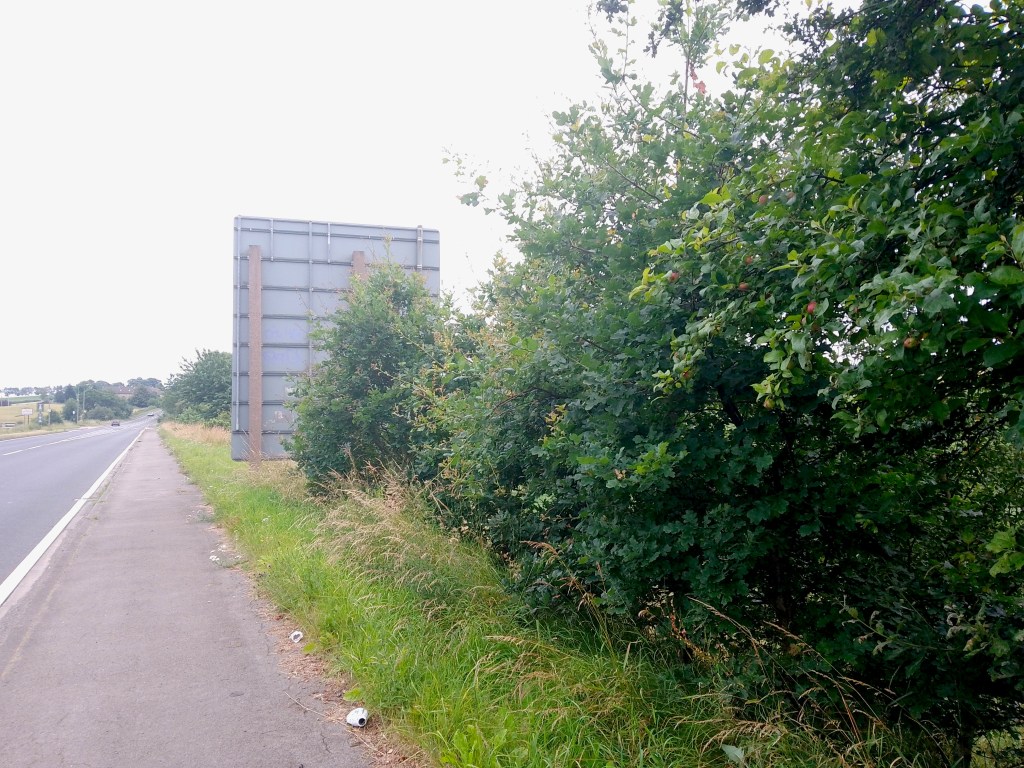
Back around the winter of 2009 and 2010 I would receive my wage at the Sculpture Park on a weekly basis, in physical cash. I would go and collect it on my day off. But in my rucksack I would carry a few saplings each time. Since I left the sculpture park nearly 5 years back, these trees have become a woodland.

Why is all this important? Because it’s important to see things we have done to the closest thing to an innate value they hold, and not via the social comparisons that have been harder to avoid making as the pathways you’ve taken earlier in life begin to look more defined and firm in their hold.
There are many things I regret from my 20s. But what I don’t regret are my creative acts that perhaps wouldn’t have occurred if I was a little more aware of a larger art world of people already ‘in the know’.
Fast-foward to 2024, it’s impossible to be naive. Even in 2006 you really had to go looking for news, unless it was on the television. Art exhibitions and opportunities were still primarily advertised on flyers.
But sometimes just doing something like getting on a pushbike can push away the weariness of the overbearing ‘knowingness’ of our times. And things just are, and aren’t jostling for primacy 24/7.
Describe your most memorable vacation.
1993 was a year that was crucial in forming my sense of futures and pasts.
9 years old, my dad had become a teacher, an historic unprecedented feat in family history.
We now had a car and my parents decided that they no longer wanted to go to my grandparents’ caravan in an area of the English coast now associated with bleakness (The Lincolnshire coast).
For the first time ever my parents said we were going to a place I’d never heard of: Cornwall.
After throwing up after a 7 hour drive, I recovered to find my 9 year old self in paradise.
Like my first experience of seeing dinosaur bones in a museum I felt like what I was experiencing was both unreal and the preserve of important, TV people.
The beach at Perranporth was like a fever dream where I’d suddenly taken the place of somebody in a film. I didn’t realise cliffs could look so dramatic and the sea could be so blue in England.
The week before I’d just seen the film Jurassic Park. I was a vessel for the euphoric pop music on the radio stations. All of this added to what I look at with so much life, and concern about why I have been able to replicate such good vibrations as an independent adult.
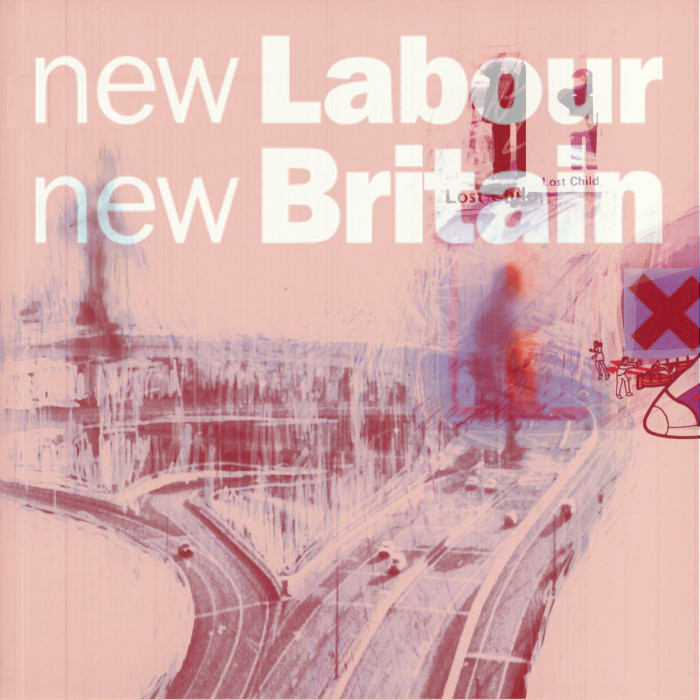
All memory is worked upon backwards – they are private sculptures that are never completed.
Today when I think back to spring/summer 1997 the ambient backdrop is the b-sides from Radiohead’s OK Computer, which I didn’t actually hear until the 2000s. I heard bits of OK Computer and The Prodigy’s The Fat of the Land at the same time on a holiday journey, and they gave me what I’d come to understand as ‘future shock’; a vision of a place we hadn’t quite arrived into yet.
Because very little music, as great as it may well be, has felt ‘futuristic’ ever since, this moment has a gravitational pull that drags later encounters backwards into its orbit.
My personal accounts are difficult to separate from the fact that a pervasive structure of feeling in British culture seems to be one haunted by the ghost of 1997.
As Labour come back into power this week, all focus is on 1997, eclipsing all other Labour election victories. Despite the Labour party being the biggest party in Western Europe when Corbyn was leader, despite most people not really believing that this current Labour Party can deliver the structural changes much-need by most of the country, a kind of narrative remains fixed around this idea that if we can just get back to how things felt in 1997 things can be ok again.
I think it was the writer David Graeber who said that ideology works not by believing in the dominant narrative about life, but by believing that everybody else believes in it. We know the world is very different to 1997, we know what happens when private sector funding of public services was done before (for example), we know so much isn’t working and isn’t going to work, but yet we cling to threads of the governing discourse because if everybody else does then surely they are right?
Trying my hardest to chip away at the retroactive alterations made to my memories of 1997, I still recall a euphoric atmosphere that permeated all aspects of life. Even as a 13 year old I still obsessively looked for connections, and when my local football team gained promotion to the Premier League for the first time, and then a rock star ‘man of the people’ became prime minister, the future momentarily looked nailed on to the better than the past.
Did I know much about the damage that Thatcherism had done to towns like my own as a 13 year old? There’s definitely much that I’ve sown onto these recollections afterwards, but you couldn’t help but be aware that a lot of bad stuff had happened around here and things could be a whole lot better. But unlike how it feels as a 40 year old after 14 years of feeling like I’ve been punched in the stomach, 1997 was almost a momentarily transcendental release from the weight of past through the Messianic rock star, Blair.
Again, this is likely because I had no reason to feel out of breath as a 13 year old. But it’s also a sign of how different reality now is.
The Corbyn era was also about 1997 but not in the same way.
Although Corbyn, the man himself, may be more associated with a post-1945 social democratic politics, the ‘momentum’ that pushed the movement along was also born in 1997.
Yet, unlike the mainstay of the progressive wing of the establishment, in parliamentary politics, business and media, it wasn’t trying to set the clock back to 1997. Whether it was ever made aware or not, a movement dominated by people in their formative years in 1997, people for whom Blair’s “education, education, education” speech momentarily meant something, we were undertaking something that Tom Whyman in his book Infinitely Full of Hope, called Applied Hauntology.
Hauntology, lazily or simply (on my part) characterised as the present moment being haunted by the past through ‘lost futures’ that never materialised, is here progressively activated.
If you were fortunate enough to assume that you were guaranteed a life of expanded horizons, university, new experiences, and a better quality of life than your parents and grandparents, the 1990s embedded an expectation of life in you that, by the late 2000s returned as a form of unworked-through grief.
Far from merely being a Western Consumer attitude of the late 20th century, it permeated old industrial areas, which, although traumatized by post-industrialisation, believed help was on its way, and it was all underpinned by the cultural exuberance born from what Francis Fukuyama called ‘the end of history’, a moment after the end of the Cold War, and East/West divides, when just for a moment it looked like we could collectively ‘do this’, and make a more peaceful world.
As wafer thin as the grand narratives of the 90s may have been, they gave young people a vision of a better life, and a better world to come in the Millennium. Jeremy Corbyn’s surprise election to be the leader of the Labour Party seemed to open a door, that seemed to connect directly from Millennials optimistic expectations and a future that looked workable, bypassing the encroaching sense of dread of reality in the 2010s.
It was a moment when a generation applied hauntology to almost reactivate the lost futures that culminated around the year 1997.
In 2024 this momentum has been squashed, exhausted, and what we have again is an obsession with trying set the button back to 1997.
And to be honest, I’m not crushed. It’s a relief to get the Conservatives out. And, maybe because the Tories have exhausted me so much, I’m not as quick to condemn this new government as many are. Every little improvement makes big changes in life. As if some of this creeps back into everyday life, perhaps the ability to feel the idealism inside oneself will come back too.
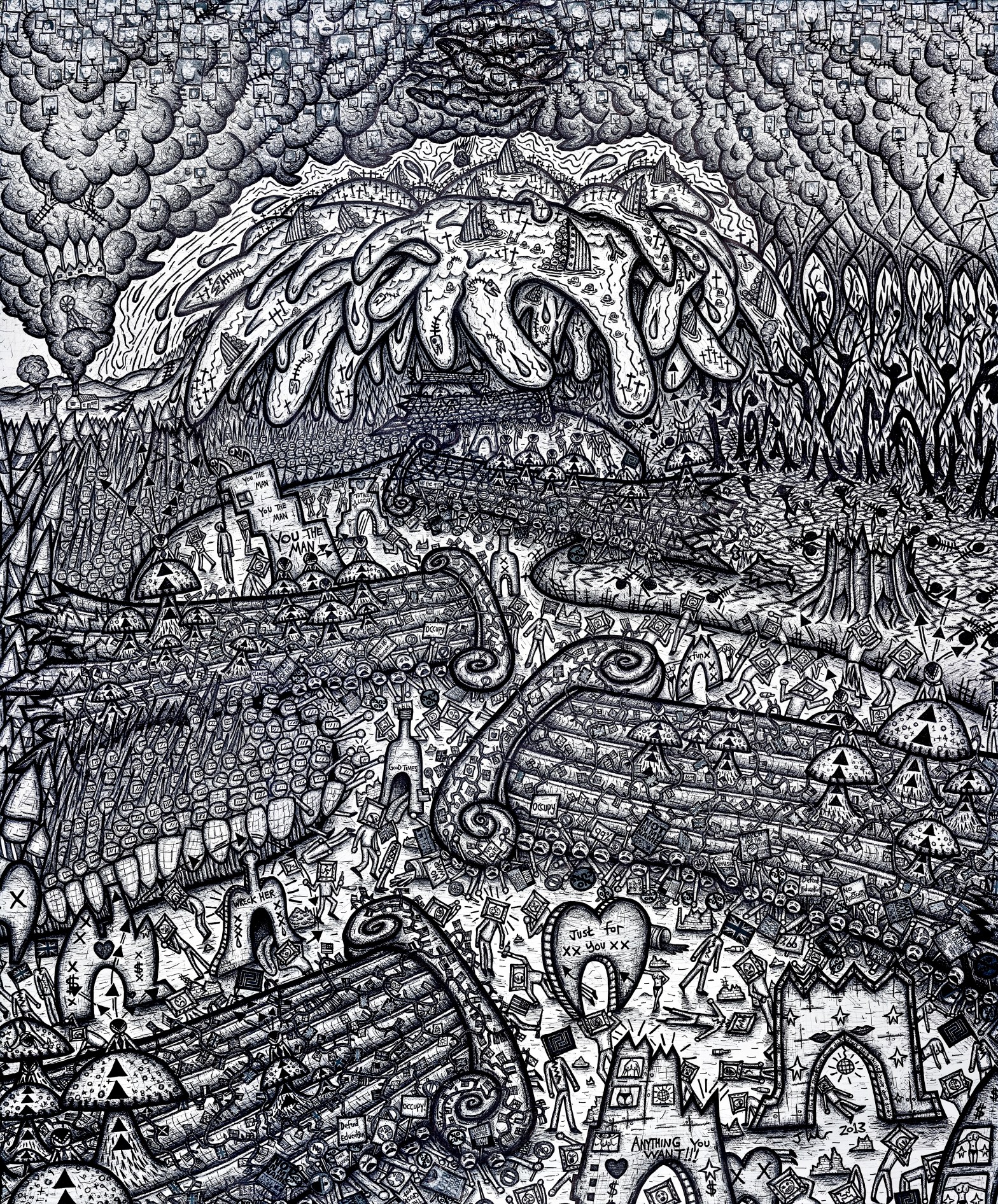
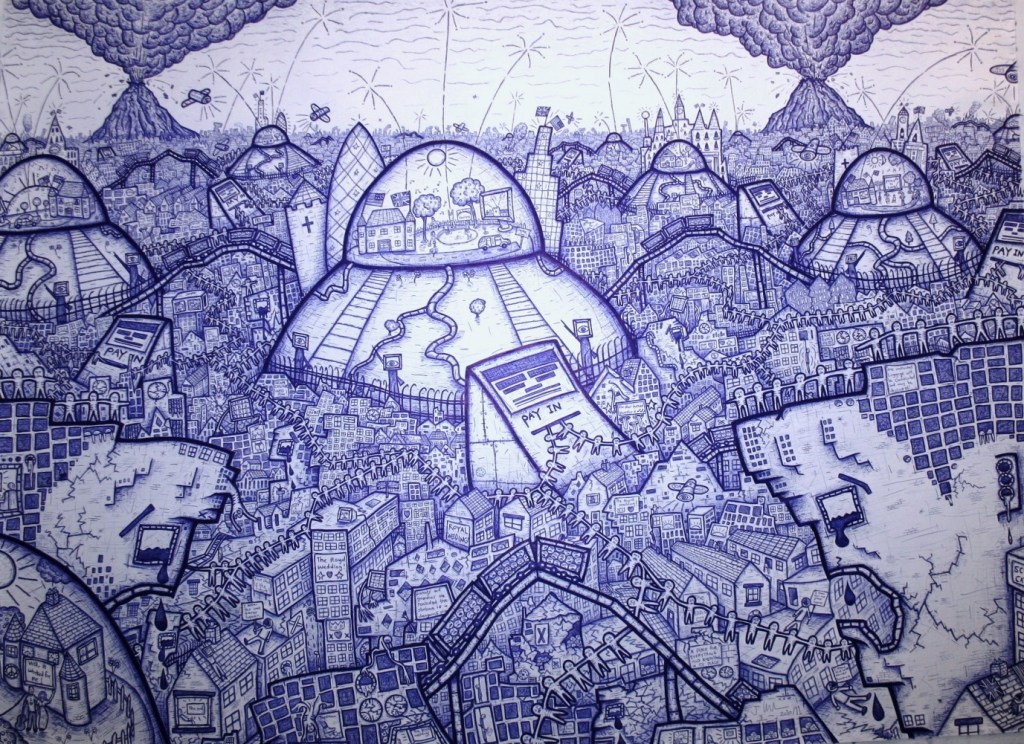
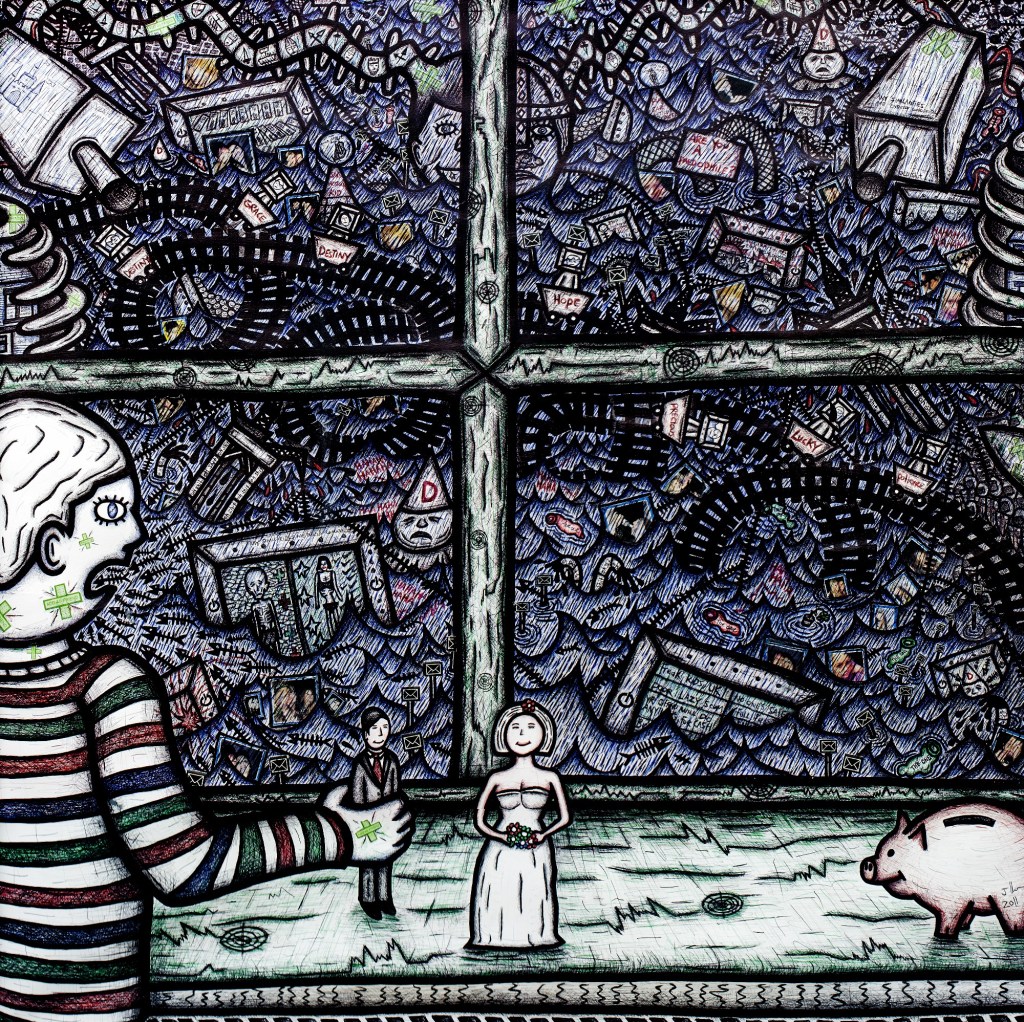
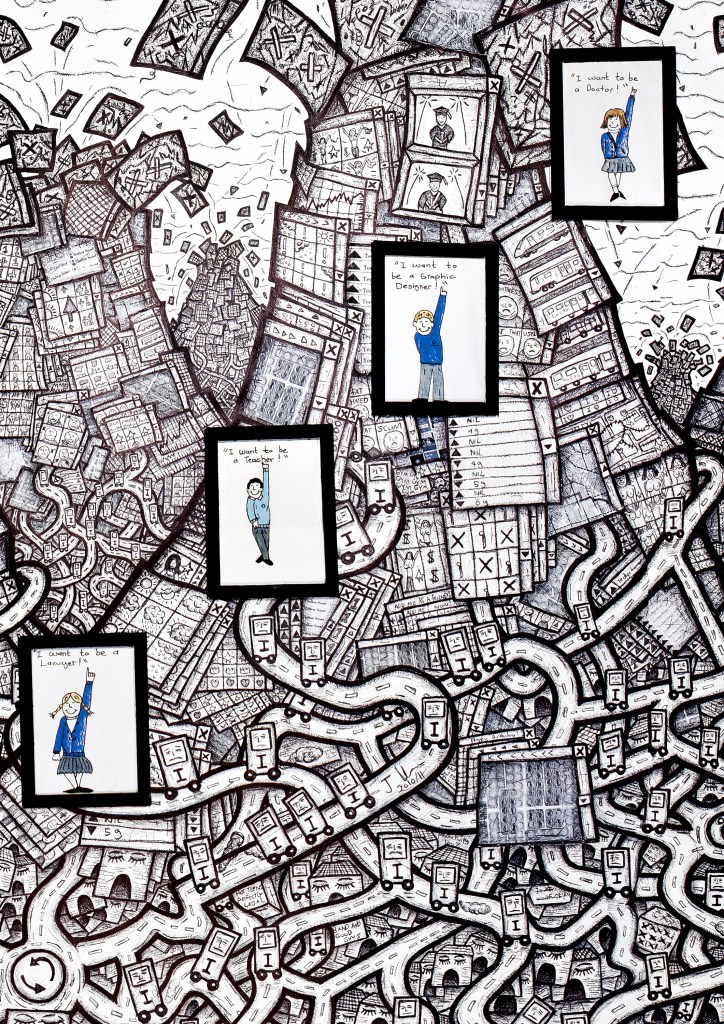
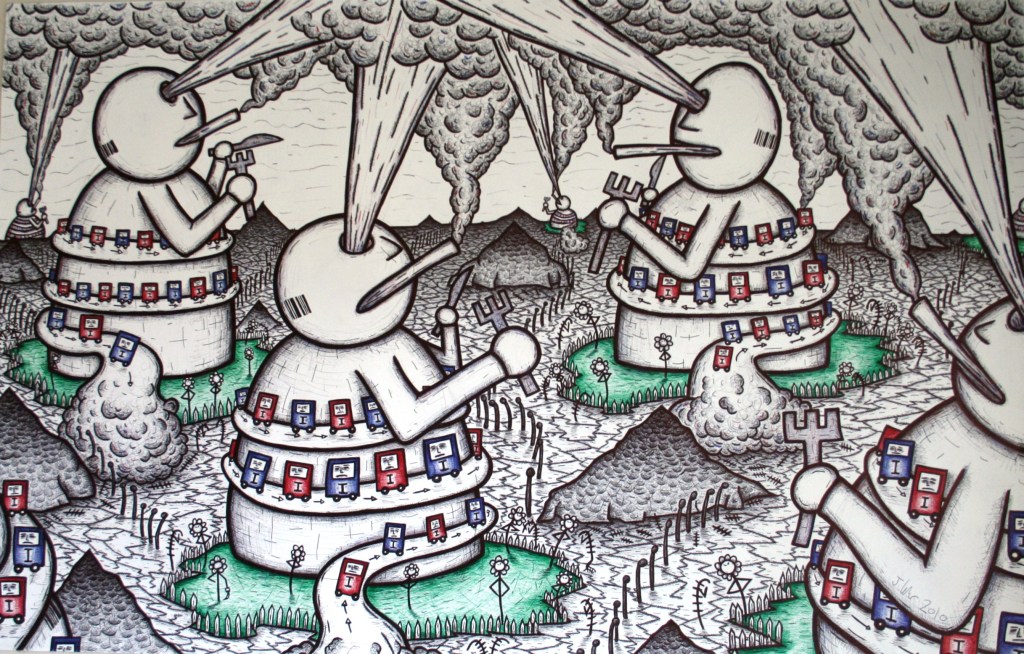
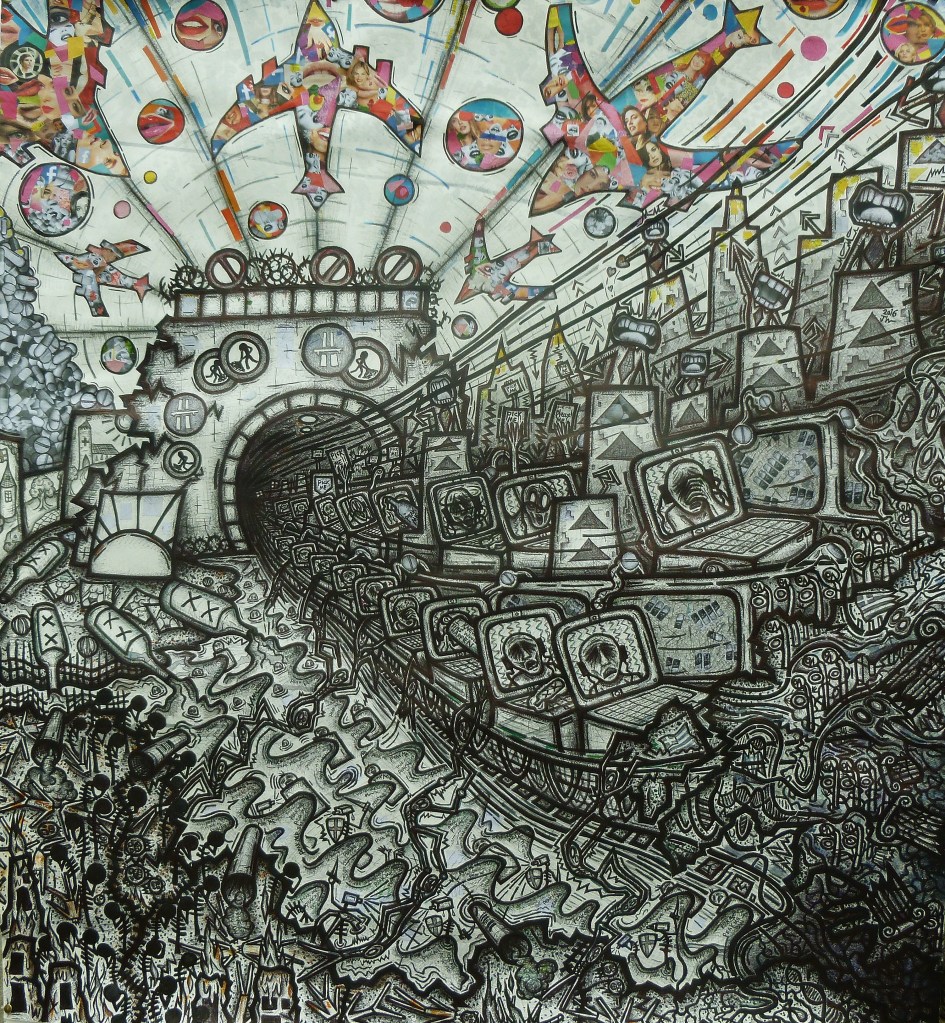
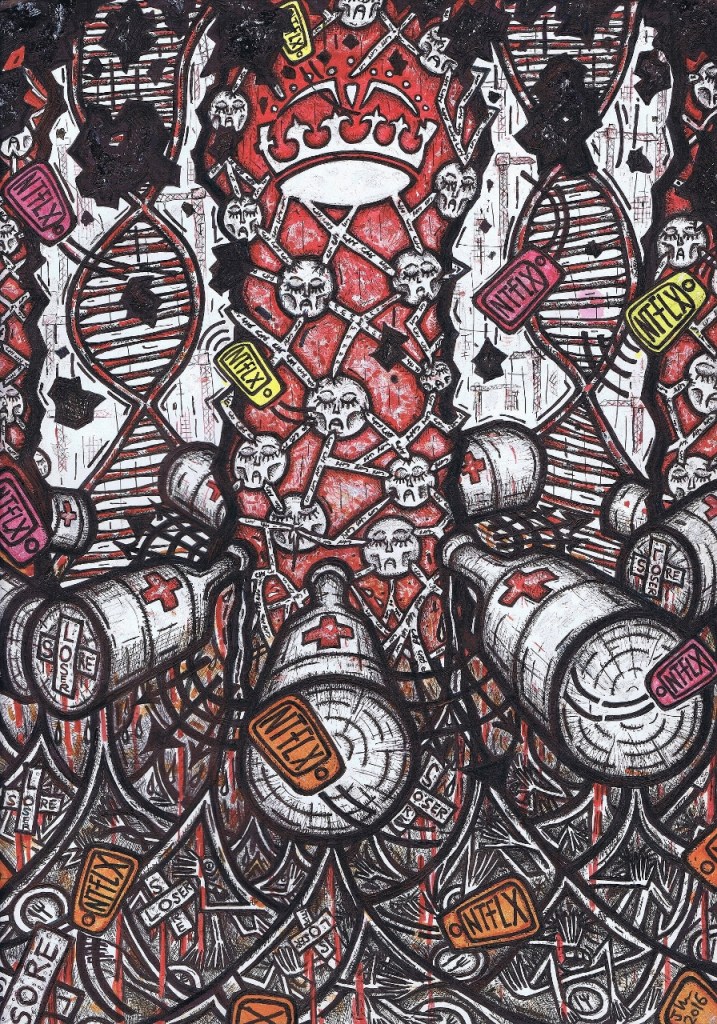
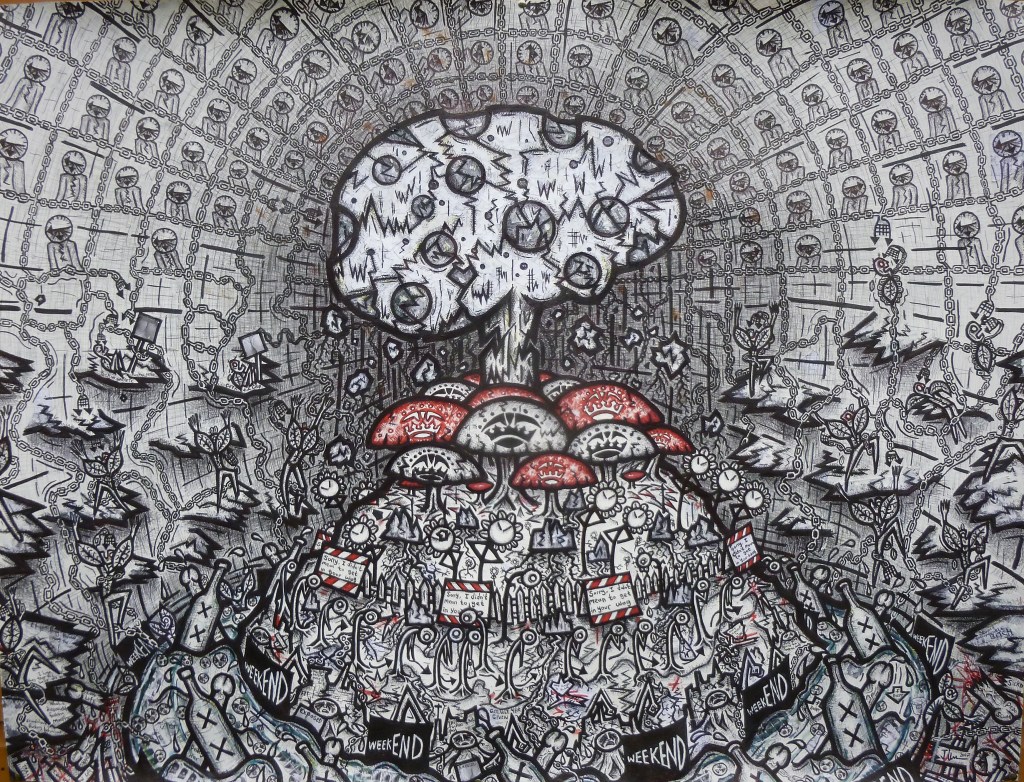
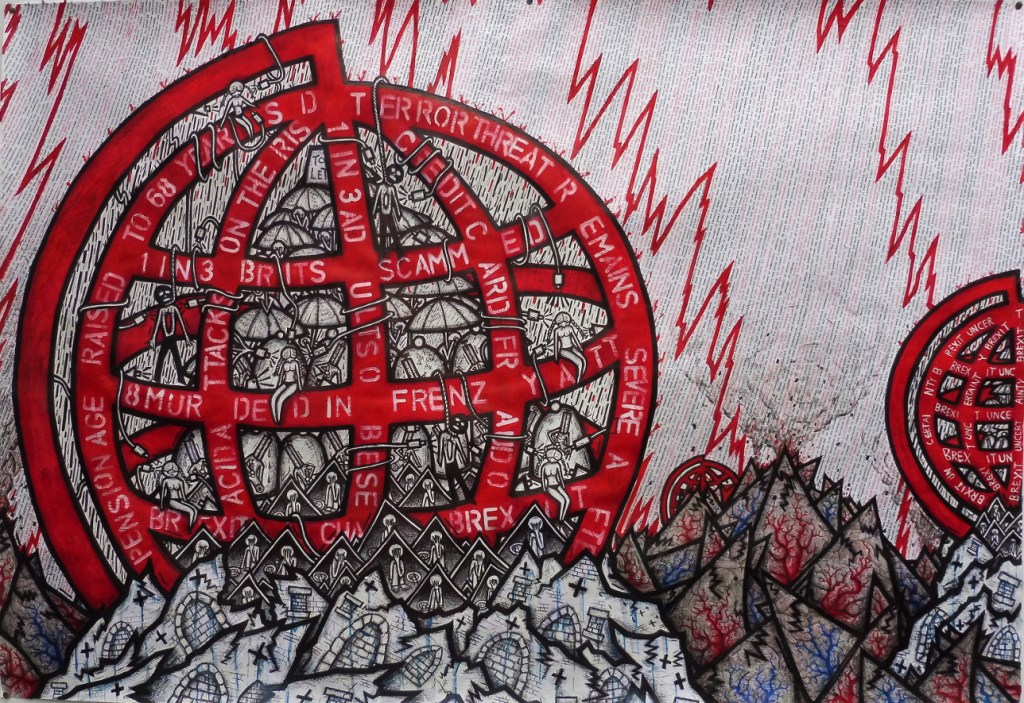
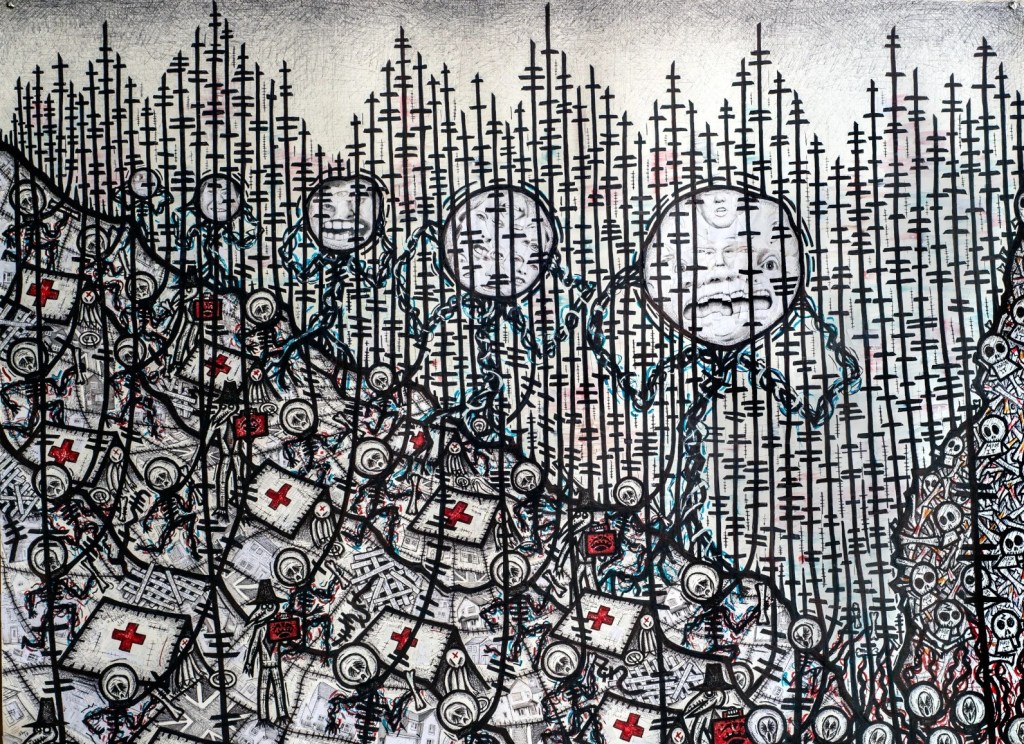
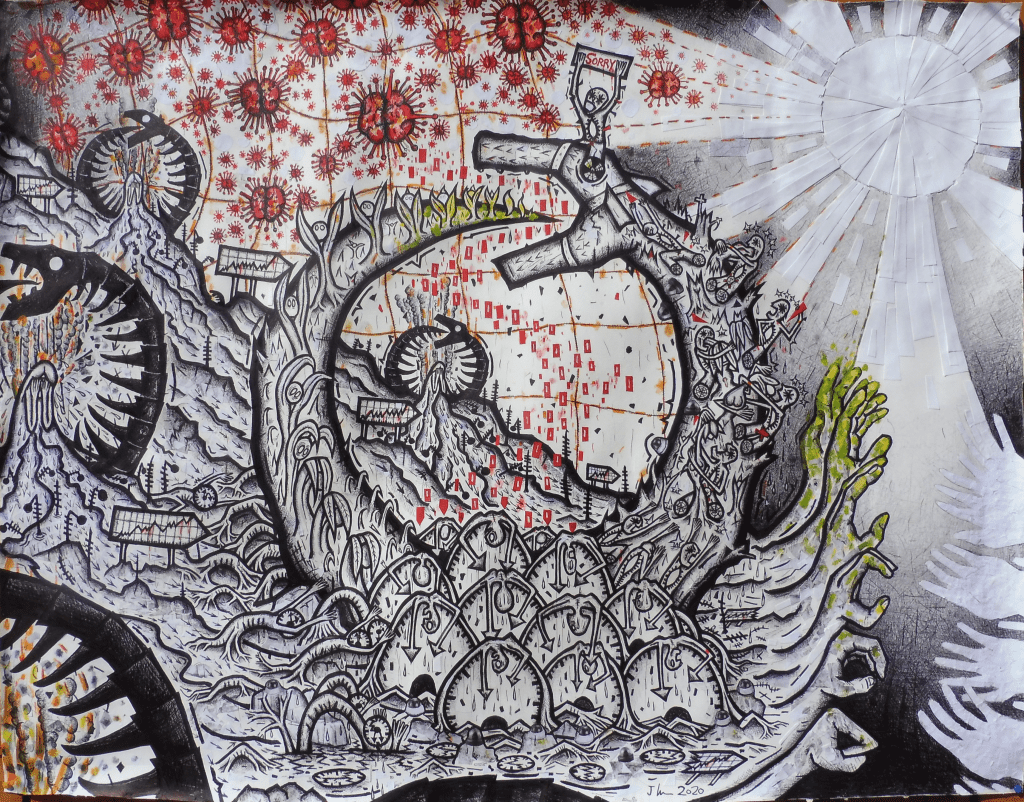
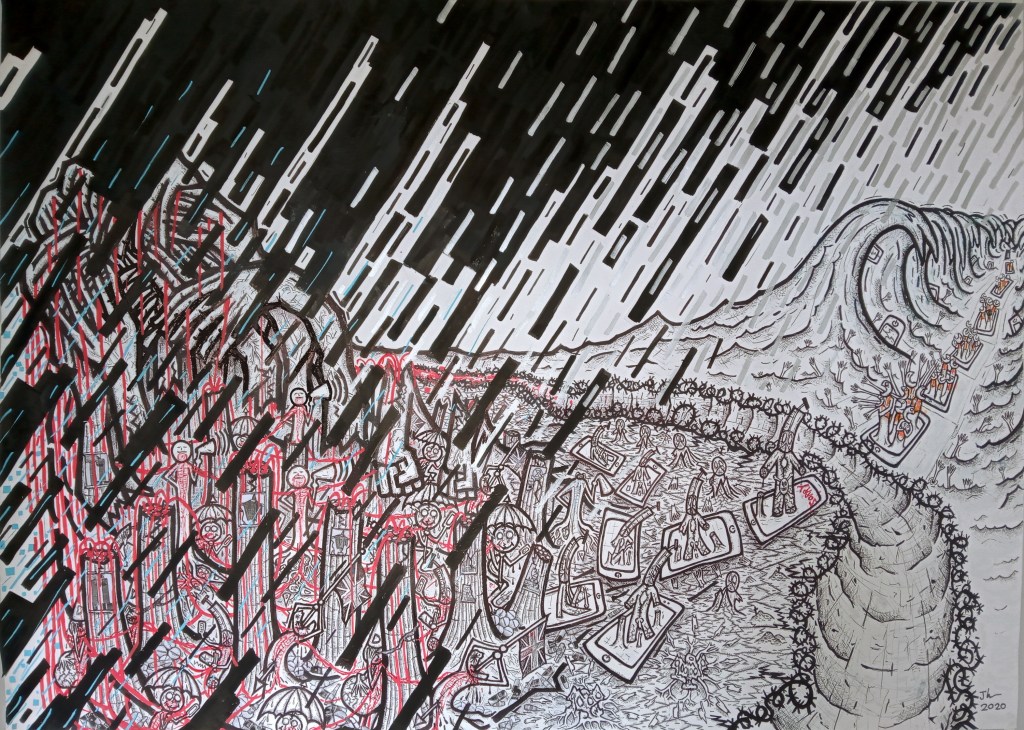
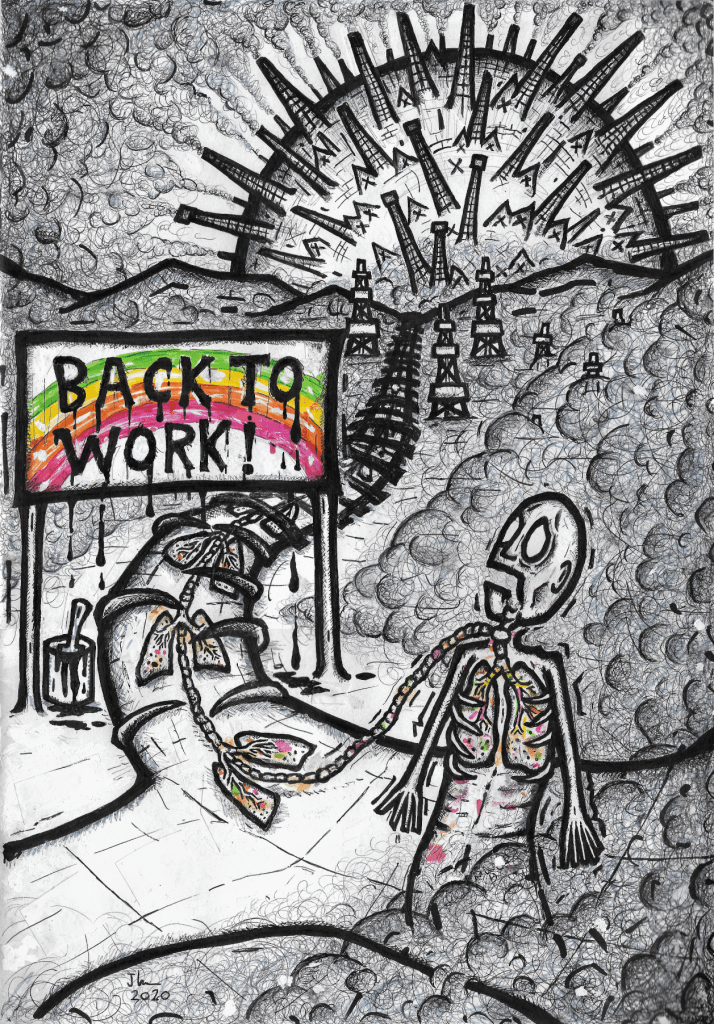
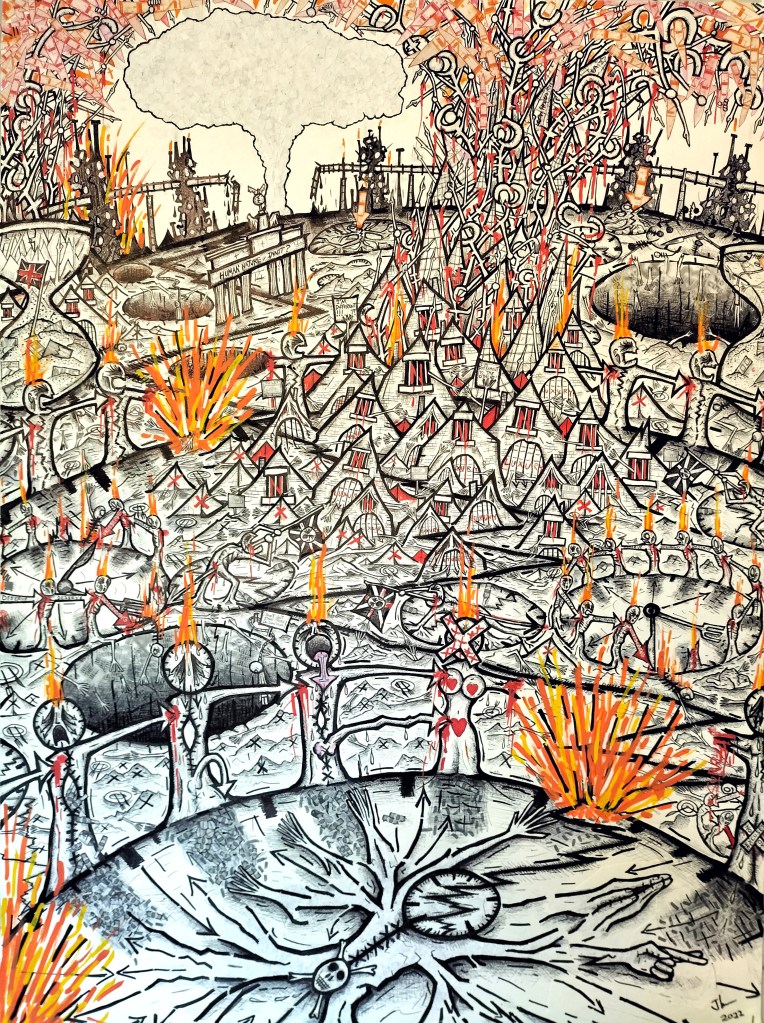
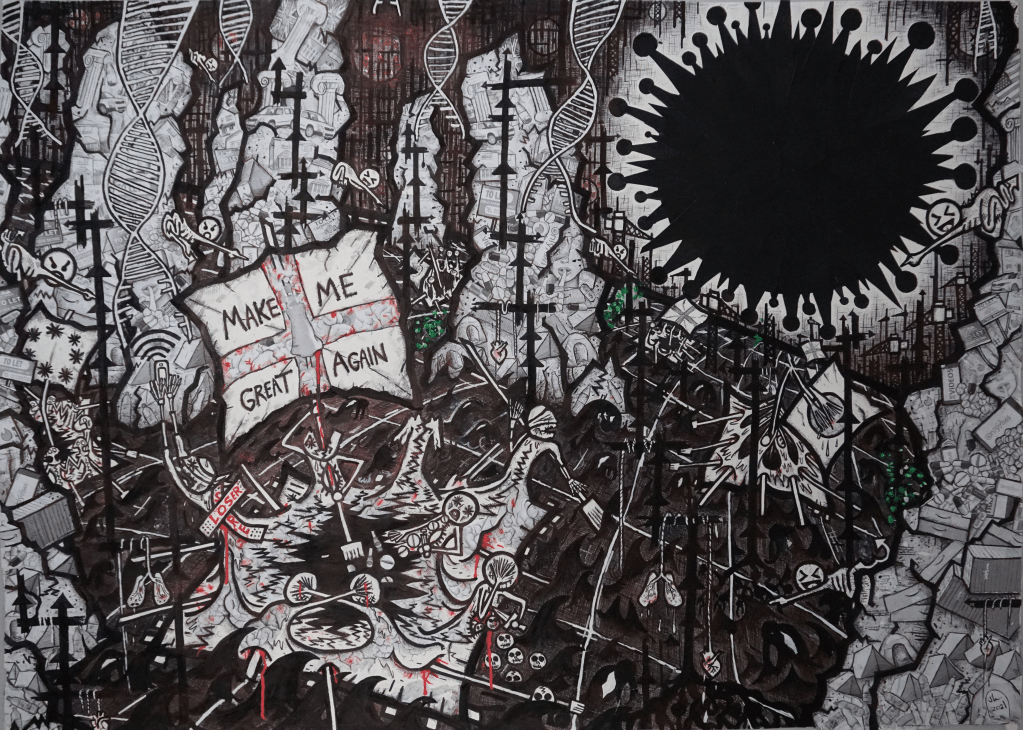
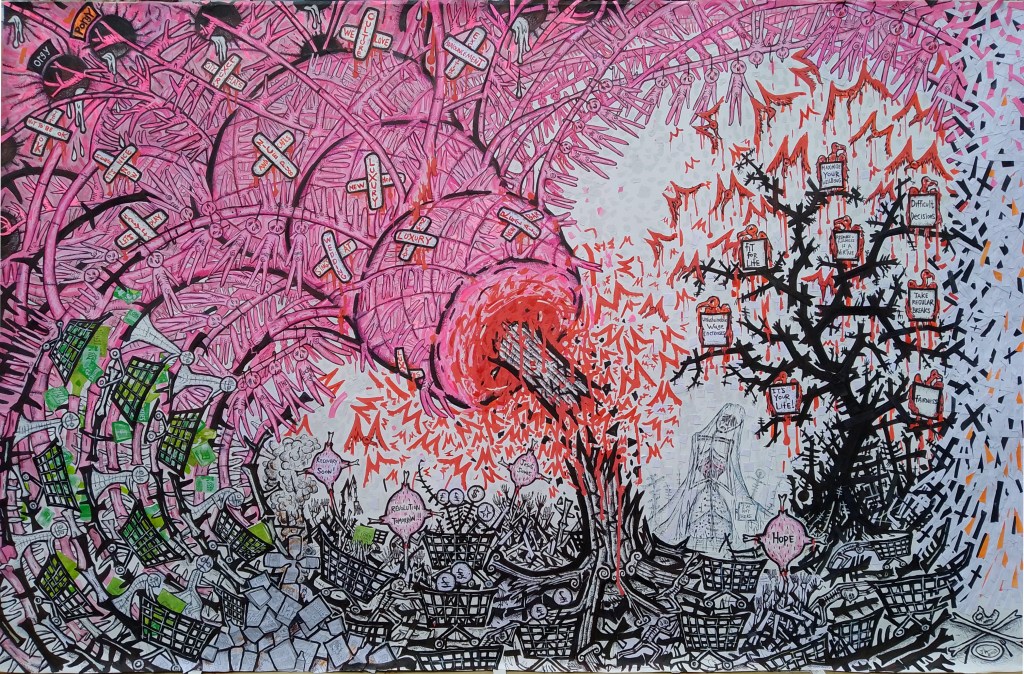
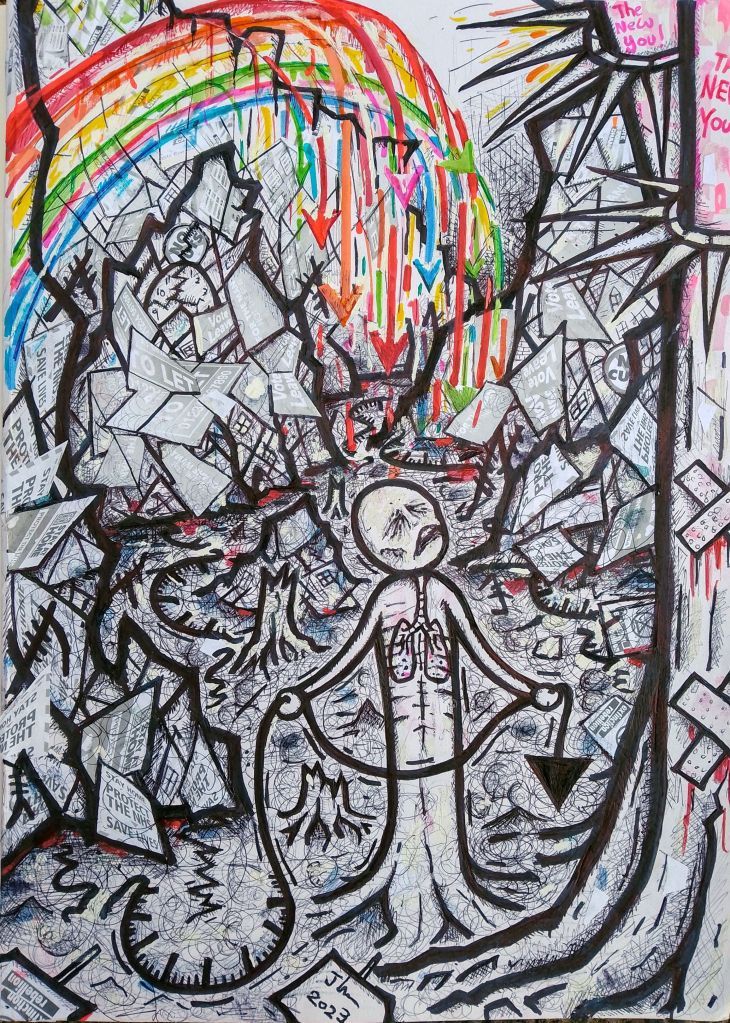
I’ve done a lot of these virtual retrospectives on here. But why not another?
Whatever the future looks like, even if it’s a continuation of the same but worse, the last 14 years have certainly been something that deserves attention as it potentially comes to a close.
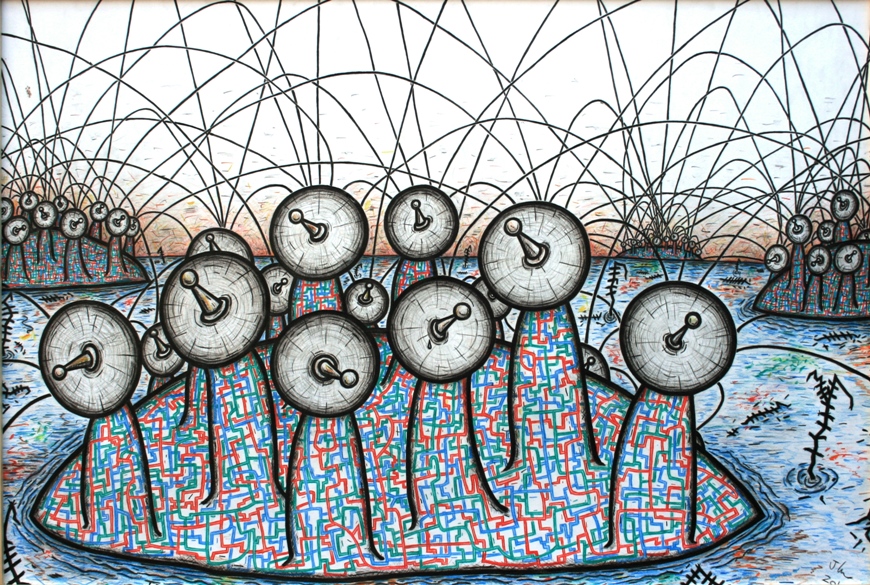
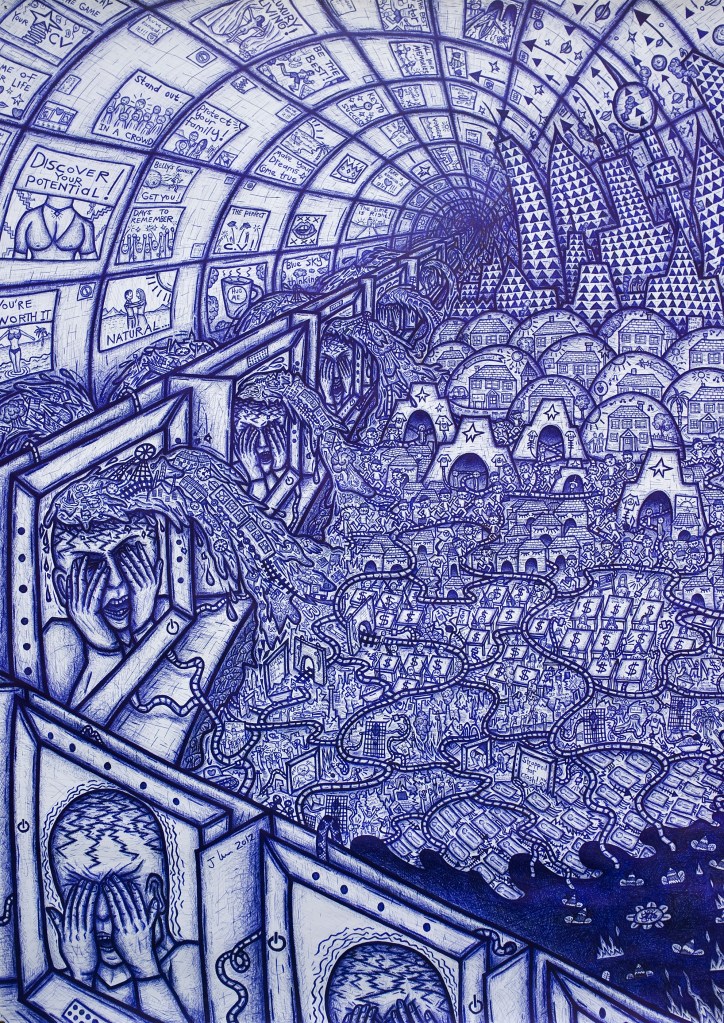
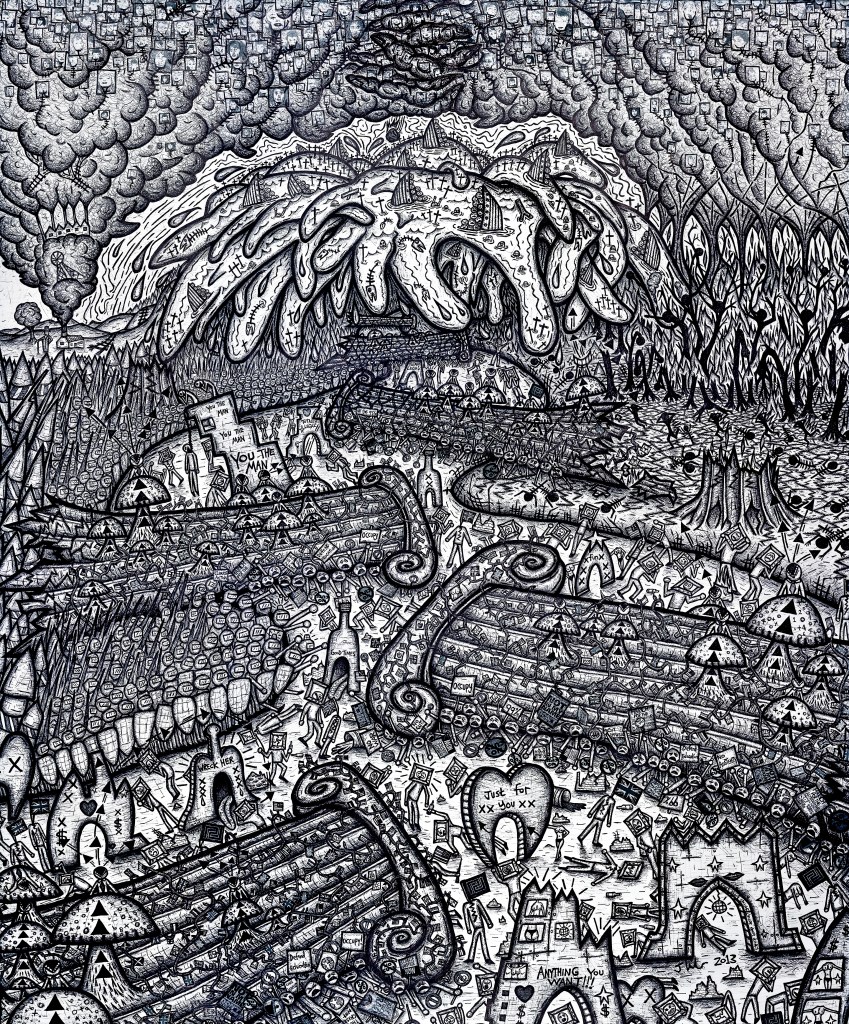
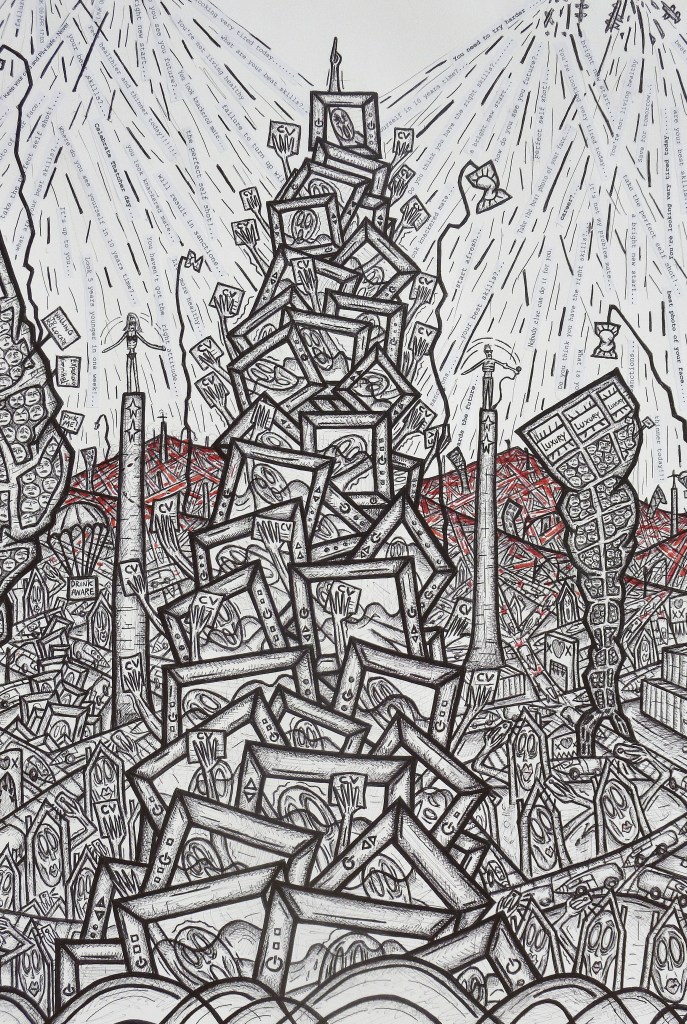
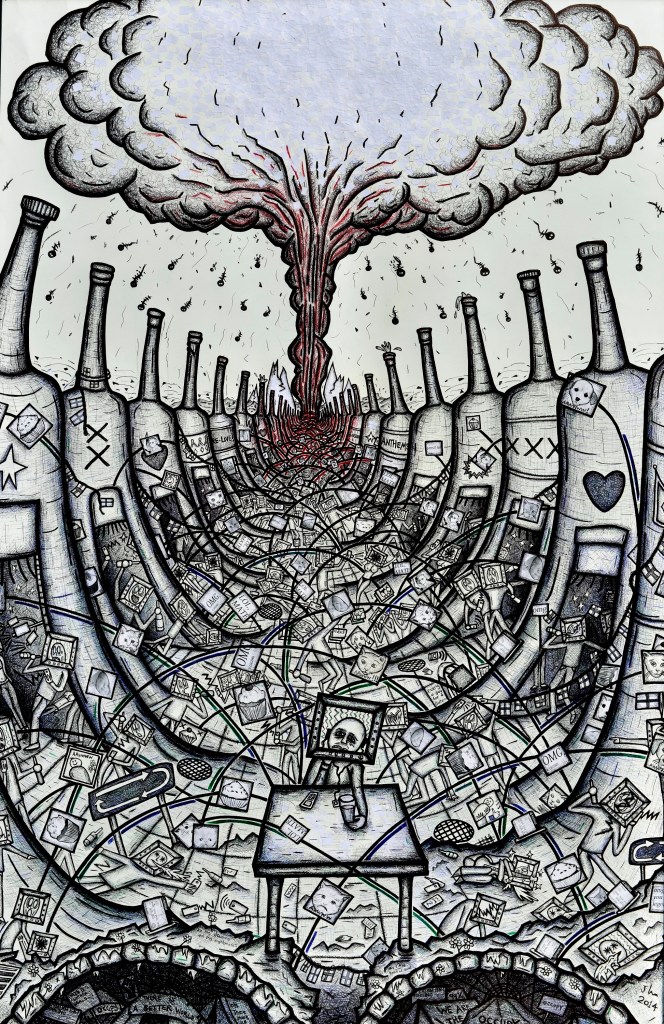
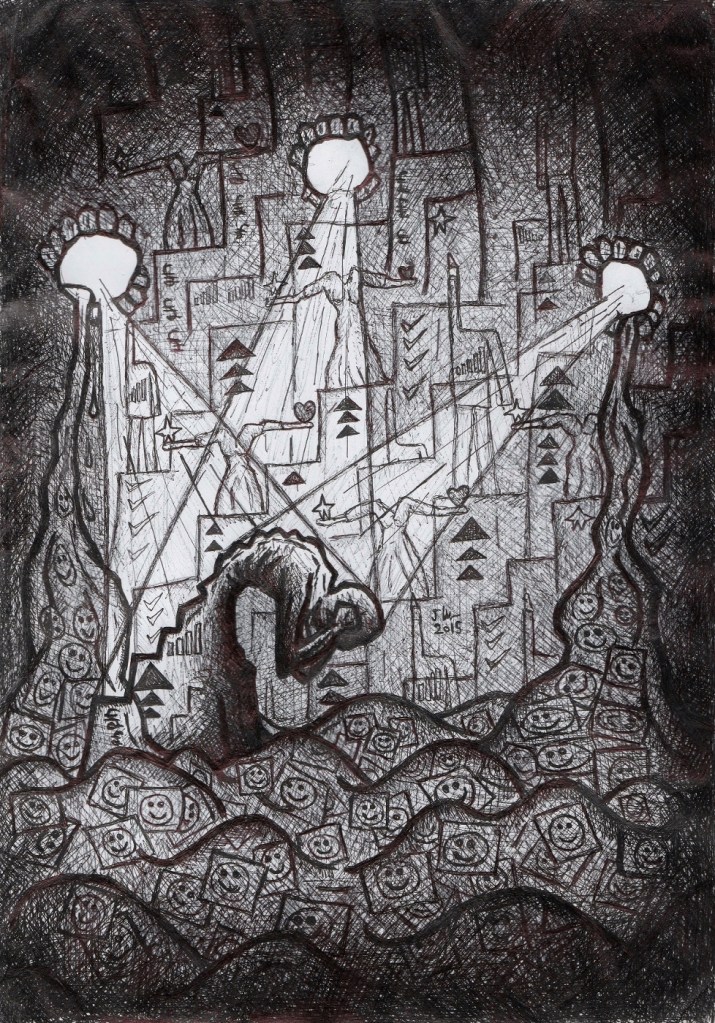
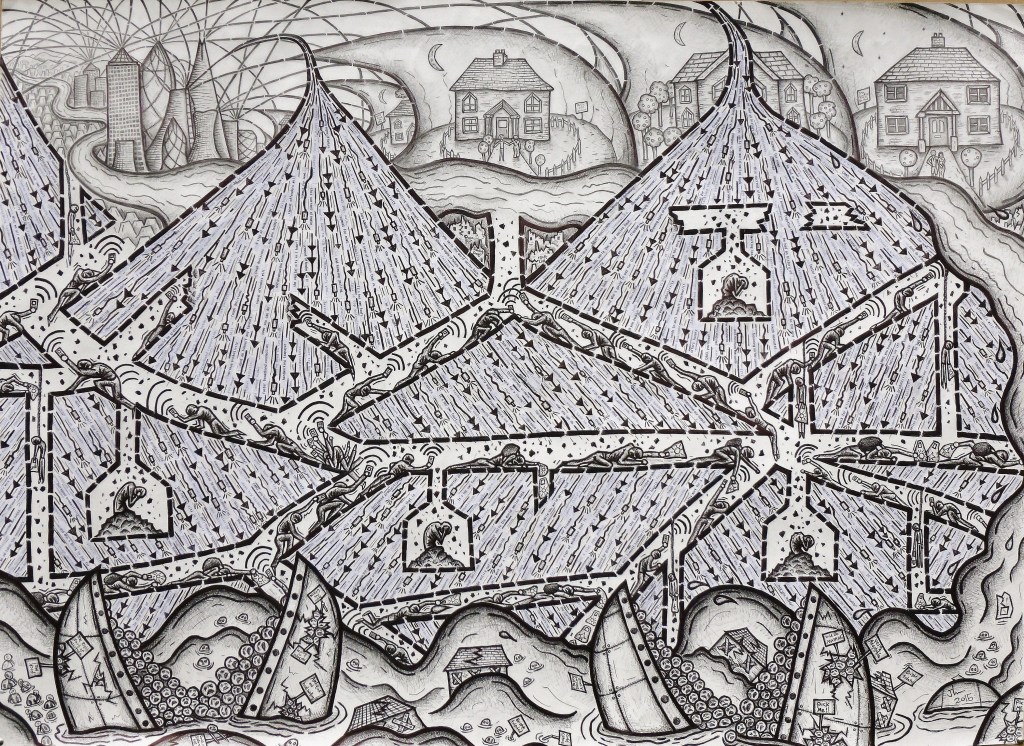
Roughly from 2010 to 2024, I’ve stuck specifically to the drawings just to have some kind of cohesion.










 John B Ledger