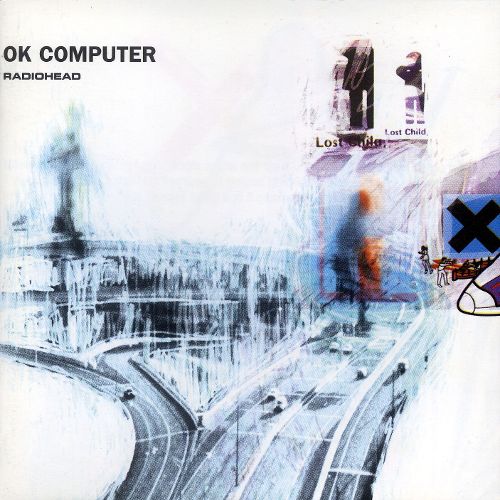
OK Computer at 20 VS the World in 2017

This coming May Radiohead’s 3rd studio album Ok Computer turns 20.

I’ll begin bluntly: its either the greatest record to come into my life, or the most important. If a certain cluster of Pink Floyd albums are normally seen within a similar light, aided by their shared university-town beginnings, then it is with OK Computer’s connection to our 21st century world that the hairs on the back of my neck are raised that little bit higher. I guess this is the loose reason I’m writing about OK Computer and not Oasis’s Be Here Now, for example – which is also 20.

But first of all, back to the future of 1997. The last future…


My first time with OK Computer was on a holiday journey by car taken in a wet July in 1997. Well, I say album; it was one of my sister’s travel tapes, a cassette which featured a mixture of OK Computer and The Prodigy’s  The Fat of The Land, released a month after OK Computer. I was 13 at the time. Radiohead’s Karma Police and Lucky, and The Prodigy’s Climatize were truly new things to my ears.

This holiday journey, listening to this tape, and travelling by motorway past the Birmingham sprawl, was my final experience of what I would call a future moment. This was the final of a series of childhood moments where I envisaged a future substantially different from the present tense I was in. 

The 21st century and ‘the slow cancellation of the future’

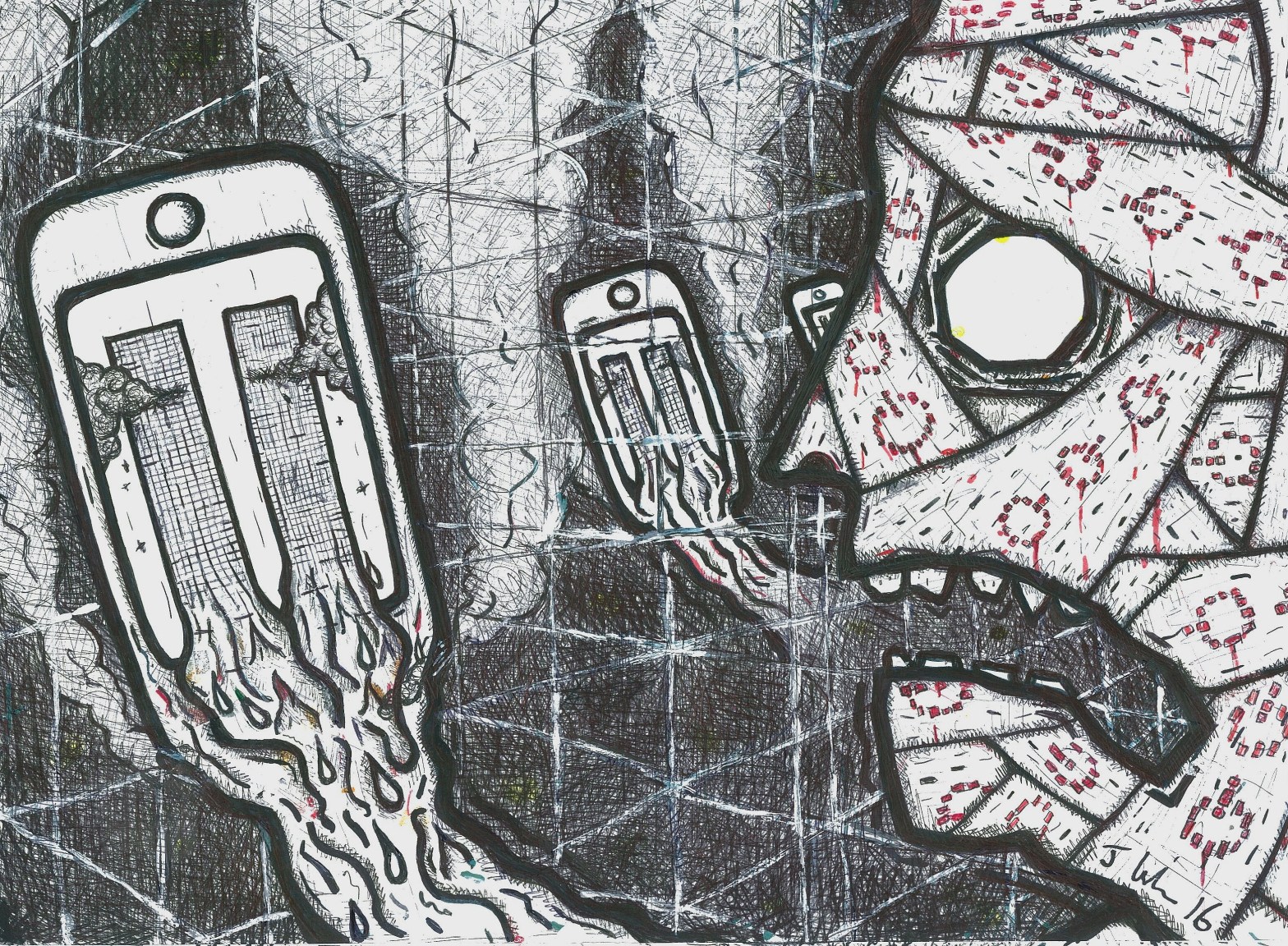
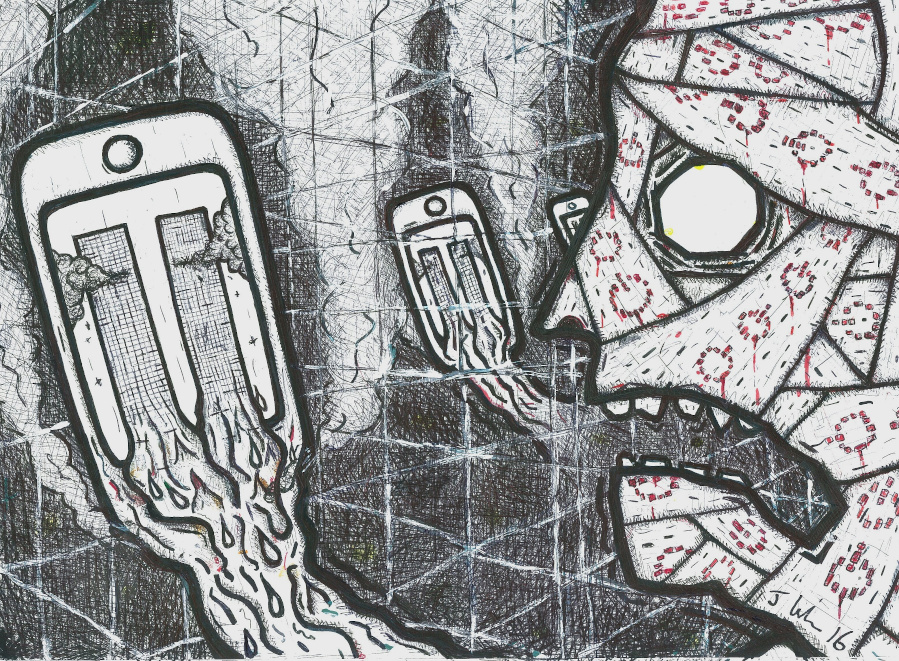
Somewhere between July 1997 and January 2000 that future disappeared into an inability to imagine anything but an eversame set of interchangeable circumstances, initially encapsulated by a pre-millennial malaise that seemed most evident in the bland music that saw out the 1990s, reflective of that wide open vulnerability to a reality waiting to arise in the dust of the Twin Towers.

Both an incorporation of the decade’s electronica revolution in their own right, The Fat of the Land and OK Computer were being seen as the major albums of the year by the culture media. In hindsight, ‘major’ is not the word: they were the last ‘landmark’ albums of popular music – or so everybody with who I speculate on this to seems to agree. There’s certainly been great music since, but could you name a truly landmark album post 1997? We are still reaping the outcome of the computer world, but one effect is the demise of cultural shifts.

The album as an artform belongs to the 20th century (walking around the remaining record shops will tell you this). The problem is the networked technology we now have to share and download music doesn’t seem an adequate progression from the CD,  when much of the cultural product we share, even if only in musical style, seems to belong to previous century.

The recently late writer Mark Fisher never spoke about Radiohead in his brilliant essays on pop music that simultaneously diagnosed the wider predicament of life under what he called ‘Capitalist Realism’. However, the line “the slow cancellation of the the future” attributed to both him and theorist Franco “Bifo” Berardi, could well explain how despite the process of the ‘waning of historicity’ being well under way by 1997, there was still residual space for the imagining of a world significantly different from the present tense. Whilst we anticipated the millennium with an almost evangelical fervour in a world glad to see the back of the 20th, it has felt that the 21st century, to paraphrase Fisher, never arrived.

OK Computer, even whilst relying on a deeply mid-twentieth century 4/5 piece guitar band formation, seems to be about life in the time after it was made; a world gripped by the logic of “capitalist realism” (a diagnosis by Mark Fisher), which, mediated through a computer world, envelopes us in a ‘liquid anxiety’ (referring to another the recently-late thinker, Zygmunt Bauman), and as a highly atomisating society that doesn’t even believe in itself, persists under an umbrella title of ‘The Control Society’ (Guilles Deleuze).

In (Cyber)space nobody can hear you scream

Deleuze’s 1992 Postscript on Societies of Control describes a structure of “ultrarapid modes of free-floating control” replacing the older social structures of Discipline and Punishment in the late 20th century. Defined by Michel Foucault, Discipline and Punishment societies are territorial and entail “the organisation of vast spaces of enclosure” such as factories, schools, hospitals and prisons. Control societies are the evolution of a later stage of capitalism, enabled by network technology, where the social structures that formed around the old spaces of enclosure disintegrate into the ‘gaseous’ quality of the corporation,  where community never existed, and  “the brashest rivalry [is] presented as an healthy form of emulation…and runs through each, dividing each within”.

Although the older structure never died but became a substructure to deal those who’s ‘lumpen’ existence denies them access into the networked society, I’d argue that Pink Floyd’s iconic The Wall is the quintessential work of art on a Discipline and Punishment society, whilst Radiohead’s OK Computer is about control. I’d define OK Computer as the struggles of the human animal who’s behavioral patterns are encased in the binary systems of computers – something we can all relate to in 2017.

This is why I want to speak of OK Computer for its emotional reach, and how although it is wrongly defined as being ‘depressing’, is actually is a work of art that encourages us to fight off a pervading sense of hopelessness. And I think this message is so important today.

1999, and the pre-millennial malaise


I had to wait until spring 1999 to come back into contact with Ok Computer, when I bought the album from a retail chain now forgotten in time. I mention above about a pre-millennial malaise: it’s arguable that the buzz of the early to mid 1990’s was built on false promises of a liberal capitalist utopia (which is impossible,  if not totalitarian in hindsight), but, comewhatmay it had blatantly been exhausted by the final year of the decade, wearily waiting for something else. It was the first year I can look back and honestly say I was experiencing anxiety and depression. Where that began and a wider cultural mood ends is arguable, but it is true that I bought Ok Computer at roughly the same time.

I was blown away by the album, but it also severely spooked me. It was too close to the bone for somebody young/naive enough to imagine that the future wouldn’t roll out smoothly like an album of Stone Roses riffs. I wasn’t prepared or equipped for what it had to say – I even remember taking the line “spend[] five minutes in the mirror each morning saying to yourself ‘each day in every way I am getting better and better’” from artist Stanley Donwood’s album sleeve artwork on face value as self-help to cull the first sprouting of anxiety, rather than realising its dark irony about life in a control society.

I’m amazed that I survived, an Airbag saved my life”

We are awoken to the nightmare with Airbag. “I am born again” sings Thom Yorke as machine saves protagonist from machine – saved by an Airbag as he crashes his “fine East German car”. The words could easily be taken from an headline in a local newspaper; but whilst these words are so everyday, they exist within a science fiction soundscape that evokes a world where computers take over the means of control whilst the corporate zombies just sit back in ‘paradise’, only to be awoken by machine error.

“I am born again”

This existential ‘rebirth’ sounds very much like the heaps of ‘self-help’ language that provided the background noise that naturalised the ‘new’ capitalism in the 1990’s, where history ‘was over’, and all we could improve was our own standing in the world (a world which was, after all, subjective, and defined by what frame of mind we ‘chose’). Yet in a sea of sunshine music, perhaps Ok Computer was one of few popular records that sounded the warning bell in paradise at the end of history. And thus this ‘rebirth’ is possibly double edged: is Thom Yorke singing about finding oneself within this ‘paradise’ of the new capitalism, or has he just stared into its void, and is willing for a rebirth of the human spirit in resistance to its sirens of consumerism and career improvement, that lure us into a perpetually decentred self-hood – a life as a node in a network until the end of time?

This soundscape of distress within a seemingly mundane paradise should leave us rethinking where the future visions of science fiction went – are we within them? Ok Computer could never have imagined the Pandora’s Box effect that internet dependency has brought into everyday experience, but as we lead onto the epic track Paranoid Android, the feel of the album seems sufficiently contemporary to today’s disturbed running of human emotion through the ‘man machine matrix’ (a term used by Will Self).

“The emptiness of feelings, Dissapointed people, clinging onto bottles”


Unofficially the 21st century began not on January 1st 2000, but in September 11 2001. The fall out, for me at least, seemed to bring a regained occupation with the music of Radiohead. By this time they has released 2 more albums: Kid A and Amnesiac. The albums continued the conceptual experimentation with electronica as computer technology slowly became more present in our lives. They were of an even darker nature, yet contained a mood of defiance to a new century that was beginning shape itself into Orwellian ghosts from the past that had plugged themselves into a Brave New World evangelically promised by the 1990s. But perhaps until their 2007 In Rainbows, there was never a hint of acceptance about the ‘way of the world’.

I think this is important because Radiohead are all too often labelled as ‘depressing’. The two songs I want to predominantly focus on to finish this piece are songs that are joyous moments of defiance against despair.

Let Down

“One day I am gonner grow wings, a chemical reaction,  hysterical and useless.”

OK Computer plays out like an undulating journey of emotional breakdown and spirit resistance within a computer generated graph. There are a series of emotional powersurges that threaten to bring down the computer system. The first supermassive climax of emotional willing against the machine is Let Down. Thom Yorke’s words remind us not to get sentimental and be led astray into eternal disappointment by false promises of freedom and salvation. The lyrics seem to encourage deep cynicism, of the likes many of us cling onto like  “bottles” after the initial horror of finding ourselves staring into the abyss. Yet why deliver such a message? As in Airbag, the words seem in conflict with the emotions trying to break through; like a forerunner for the struggles for help many of us see, or even act out, within our networked lives, as we become subsumed by the nihilising spirit of the age, feeling locked in painful misunderstandings in the confines of the binary code.  

This is why this song is one of the few that can bring water into my normally bone dry eyes; its spirit resistance momentarily threatens to break the code, and to reach out into the lonely cyberspace of node-trapped-souls, creating (for me) one the most beautiful things I’ve ever heard. And it is here where we sense the refusal of giving in to the ‘depressed spirit of the times’.

Mark Fisher wrote a collection of essays (featured in his 2014 Zero Book ‘Ghosts of My Life’) on one very important band from the late 1970’s in an attempt to look at the pervading nihilism of our times. Joy Division, or specifically the singer (or unfortunate and incidental protagonist) Ian Curtis, was trapped in a world of banal suffering. Fisher wrote “If Joy Division matter now more than ever, it’s because they capture the depressed spirit of our times. Listening to JD now, you have the inescapable impression that the group were catatonically channelling our present, their future.” 

Joy Division remain the perfect painkiller for the present. Few works of pop music engage with the cloud of the nuclear winter of the soul that harangues the anxious contemporary human like the dead souls in Joy Division’s music still do. Ok Computer arguably never truly reaches the wastelands of Joy Division’s second and final studio album Closer. However, it is more structured on the pivot of existential struggle in a world that can often give one the feeling of drowning, rather than in depths of the oceans themselves.

Let Down is brought down slowly by the rainy singalong of Karma Police – arguably the album’s most radio-friendly. The next ‘build up’ begins with the chilling humanness that slowly oozes out of the computer-generated voice of Fitter Happier, which seems to crack under the strain of endorsing a perfectly balanced lifestyle. In the UK in 1997 such a health-freak, body-perfect, corporate lifestyle still seemed wholly Californian.  But in 2017 it is arguable that many here in the UK find our voices being fed into the health-freak-machine as if against our will.

But the stage for the next build up is set by a song I’ve often heard described as the weakest on the album.

Electioneeting tells of the deep cynicism in political campaigns in a ‘post-history’ world where all major decisions have already been made – where politics feels more like a popularity contest. Often referred to as the soft underbelly of OK Computer, I see it as  actually laying the foundations for what the human animal ‘born again’ into a ‘post-history’ control society is made to endure.  Electioneering is the true point of nihilism in Ok Computer. Surely nothing evokes a dead horizon as much its last few bars, which are in anticipation of the second major powersurge: Climbing up The Walls.

Climbing up the walls is the end point of a seismic nervous breakdown, that conjures visuals of ripping the wires from out of ones flesh in some frenzied attempt at escape. It enacts upon us the catharsis of a moment many of us not only anticipate in some forever-delayed moment but possibly secretly long for.

“I’ll take a quiet life, a handshake with carbon monoxide”

If the album was to end with No Surprises – the deep point of depressive acceptance on OK Computer [brilliantly depicted in the music video that uses analogue technology to depict Thom Yorke slowly drowning in a tank] –  then the album could be classed a pessimistic work of art. But, as in the video where Thom Yorke finally emerges for air, OK Computer shows itself to be too intelligent to be led astray by the false comforts of nihilism. The longing for that nervous breakdown, and the ‘quiet life’ with ‘no surprises’ that Climbing up Walls becomes a dark fantasy for, turns out to be an impossible dream.

“This is my final fight, my final bellyache with…”
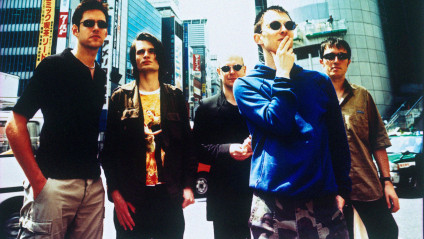

“it’s gonner be a glorious day. I feel my luck could change”

Lucky – one of the most uplifting tracks ever…

After No Surprises you could think that there was no more horizons. The protagonist has been defeated, and will proceed to his physical death a numb depressive. Yet it doesn’t feel quite over…

An early version of Lucky was released on the 1995 charity compilation record ‘Help’, instigated as a way of raising funds for children caught up in the then-ongoing war in Bosnia. Now, it would be crude to make a direct comparison between depressive humans in a highly advanced capitalist economy and the horrors that went on in that war, yet when Yorke sings about being “pulled out of the plane crash, coz I’m your super hero” it’s connotations couldn’t be closer to Friedrich Nietzsche’s ‘answer to the last humans’ caught in the abyss of meaning and morality.

Devon Lougheed relates Radiohead’s music directly to the philosopher most commonly understood (and misunderstood) in relation to the scourge of nihilism in industrial, and specifically post-industrial societies. His essay ‘Nietzsche, Nihilism and “Hail to the Thief”‘ features in ‘Radiohead and Philosophy’ (2009). Here he uses the words of a thinker most unfortunately caught up in the excuses for Nazi and extreme Social Darwinist ideologies in a way that neatly sits with the conditions that prompted Nietzsche to search for such answers in the early industrial times in which he wrote.

“The protagonist of “Lucky” foreshadows Nietzsche’s answer to the Last Humans… The ubermensch or ‘Over human’ stands on the edge of conventional morality, ready to pull the Last Humans out of the aircraft and refashion them into free beings with a new moral code”

Like Nietzsche’s answer, Lucky is about overcoming the despair that seeps in through the social conditions of this super-industrialised age. It easy to see how history has made such ideas dangerous, used in Nazi and Randian philosophies etc, but his ‘answer’ is only to find a new moral code, and that remains a crucial task as the codes that bound our civilisation get chewn into smaller and smaller bits in the mouth of the money machine.

I class Lucky as one of the all-time most important songs for my punch drunk idealism. For a soul weighed down by nightfall’s foul smell of depression-remedy-seeking, the morning bell of Lucky is not the beginnings of another dead day in the rat race but a potential ‘glorious day’ of new horizons, no matter how I succumb to the day in hand.

In 1992 Deleuze told us not to hope nor fear, “But only to look for new weapons”. However,  the latent sentiment in the writings of Marxists (in the loosest use of the term Marxist) in the face of what then seemed like a terminal defeat to capitalism, was hopelessness – in fact many succumbed to the nihilist endgame. OK Computer is this ‘undulating journey of emotional breakdown and spirit resistance’ before it is anything else, but within the scream of the human trapped within the machine is an unwillingness to give up and allow oneself to be nihilized. Even in the computer-generated voice of Fitter Happier is an emotional rejection of the death of the human in a world ruled by computers, corporatism, and consumerism. To will against this is a small, but nonetheless real, resistance to the ‘ways of the world’. Only in Radiohead’s more recent albums do you get a sense that there’s ‘nothing you can do’. 

Radiohead were perhaps the very end of the line of a succession of Postwar pop groups who were given time to experiment and develop. Around the time of the unofficial start of the 21st century (9/11) a band from apt-origin came to the fore with their debut Album Is This It? But The Strokes’ debut was almost their end point. They began as the final product, and like many bands that followed, simply fed back into the machine as a prepackaged musical style. I mean, this is why I liked the album so much at the time; the hits were already there, there was no need (or maybe even patience, from consumer and producer alike) to go through the trials and errors of finding something new. OK Computer, as one a few final landmark albums, was probably part of the end point of such a notion of musical development.

Perhaps this strand of lineage to the Postwar age is why the band’s critical response to our late capitalist world shouldn’t be dismissed from a classist perspective. Ok Computer is absent of the atrocious inequalities and injustices that have proven to accompany the reality of the nightmare world it depicts, but can we reasonably demand a pop group from a leafy upbringing in a university town to deal with class injuries? Is it not more reasonable to argue that in the Dystopian imaginaries of Radiohead rests the Utopian impulses of much post war art? Perhaps there was a benevolent pedagogy laced into the dreamings of Postwar bands, even as they actively rejected all pedagogy?

There’s a huge difference between a band such as Radiohead and much of the music made by the middle class in the past 30 years, even whilst Radiohead’s reaches into this period. Many bands since this point have existed in an environmental vacuum,  where politics is seen as merely another career choice  – thus the plight of the world has become irrelevant to there music.

The emphasis on environmental is perhaps more important than we think – or it at least deserves much appreciation: a university town band like Radiohead could’ve never recorded an album the likes of Joy Division’s brilliant Unknown Pleasures; but likewise, Ok Computer could never have been conceived within the confines of ‘Cottonopolis’.

But right now it is irrelevant whether this connection of sound to surface has died off in the 21st century: I finish this blog in arms of the record that makes me believe in the good in the ‘human animal’.

“…Show me the world as I love to see it”

Mark Fisher – much more than a favourite writer

I’ll begin as humbly as I can. I’m a anxious character, who hasn’t quite yet figured out how to deal with criticism from others and the shame that often follows. This makes me uncomfortable paying respects to a writer who has inspired me as much as any other, aware of the gaping discrepancies in my academic knowledge of the subjects that have preoccupied me for nearly a decade.

I always felt slightly silly quoting Mark Fisher in my own blogs and spoken works. My thoughts always felt vastly inadequate in contrast to the value I placed on their source. I always felt that I’d probably misrepresented what he was saying. Nonetheless, I have referred to his writings many times, maybe as a need to celebrate the emotional connection they gave me.

It was indeed something of an emotional enlightening coming across both Fisher’s book Capitalist Realism and his blog Kpunk in 2010. I cannot think of another writer before him who better helped me construct a vocabulary to articulate how life felt under Capitalism in the 21st century. As soon as I read the first chapter of Capitalist Realism  I almost clairvoyantly read the Kpunk texts on mental illness, the music of  Joy Division, and the shortcomings of ‘starvationist’ leftwing and environmental perspectives before I’d even found them. His words made my own much stronger.

The news obviously broke on social media, and after seeing the words of a few who are more than half a decade younger than I saying how Capitalist Realism was instrumental in shaping their current political ideas and activism, I would speculate that it was the accessibility of the text, in contrast with Jameson, Zizek, and Lacan, that could, in retrospect, be seen as a building block in a 21st century social movement we cannot currently see because we amidst the formation of it. Hopeful thinking, but necessary thinking.

Below I have listed both books I read by him and a list of blogs that meant so much to me:

Rip Mark Fisher:

Capitalist Realism  (2009, Zero Books)

Ghosts of My Life (2014, Zero Books)

Blogposts:

The Nihil Rebound: Joy Division

Good For Nothing 

Fear and Misery in Neoliberal Britain

Abandon Hope (Summer is Coming)

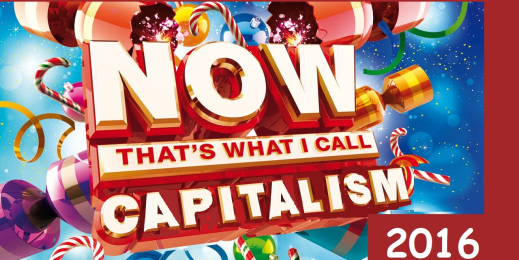
Now That’s what I Call Capitalism 2016


(A writing for the Retro Bar at The End of The Universe Collective)

Apparently Generation Y arrived in January 1984. This means my sense of stuckness could be down being born in a generational hinterland.

Actually no: we are all stuck, stuck in the deep mud between the end of something and something….something else, that needs to be longed into existence promptly.

This year has been one of free-fall in stasis. No wonder the word of the year hasn’t been Trump or Brexit, but post-truth. How could our experience of the world feel to be both frozen and falling to bits at the same time, except in an age when our ability to function in daily life isn’t even affected by an era-defining loss of trust in all beyond our immediate lives?

The freeze and free-fall are no doubt effects that have mushroomed in motion with our hyperspace dependency. To begin with, let’s look no further than the big documentary of the year; Adam Curtis’s Hypernormalisation. In a condensed interview for BBC 6 Music he spoke of how The Internet is one magnificent engineering feat, but one that we have mistaken for the future. It is a means to an end, but has become the end in itself.

But whilst we’ve been caught in this quagmire we have also found ourselves subjected to far more stimulatory information than we were ever equipped to deal with. We have become stuck in a search for an endless series of tasks, which we multitask until the sun goes down (and back up again), from social media, information from all angles, dating, job-searching, house-hunting and more bad news than the TV channels could ever imagine delivering to us. If the Internet was engineered to deliver things, what it has actually engineered is a huge mental health time-bomb, from which no recent global event could said to be immune. A toxification not just of the soil and sea, but also the psyche.

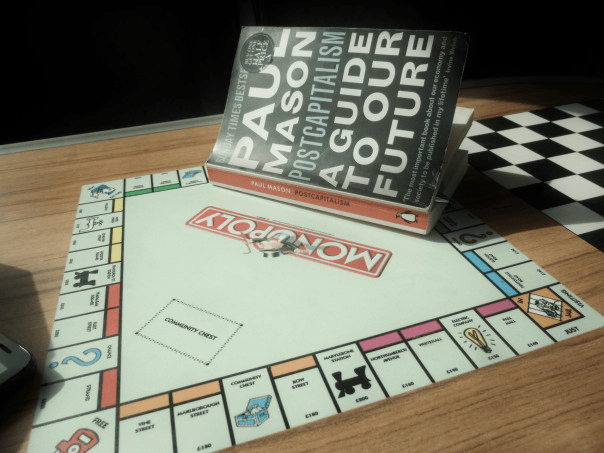
To add to this, economist and thinkers such as Paul Mason and Peter Frase have shown us this year, through information abundance and automation, that computers are actually bringing an end to capitalism. Although it is an end that currently has no end in sight.

..well, it doesn’t if you’re a depressed but stubborn utopianist, adamant that capitalism’s death means fully automated communism.

…rather than Barbarism.

But…  wait for it….!


The Ultimate Roast Potato!! (Sorry Jamie, it’s nothing personal)


“It can’t go any further, it’s already reached the end” says DS Jarvis, in a sweeping but justifiable assessment of culture under late capitalism, as he drives us down the hill from Grange Moor Roundabout towards the built up beginnings of Huddersfield.

Onetime Cool Britannia-late-comer Jamie Oliver is the locus of today’s said assessment. His Xmas cooking program offers to show us how to cook ‘the ultimate Roast Potato’, leaving DS with no option but rage.

“I wouldnt mind… I wouldn’t fucking mind, but he’s already put a disclaimer in his program saying he’s already shown us how to make the BEST roast potato, but no, that wasn’t enough, NOW he’s showing us how to make ‘the ultimate roast potato’“.

The conversation weaves in and out of how outrunning and inevitably then lacking the New, capitalism is pulping culture, and creating pointless tokens of luxury in order to keep selling shit, and we reach the old mills of Huddersfield before DS adds “I wonder if he [Jamie) even realises what ultimate actually MEANS?  It means final, or ending. After this he may as well just fucking kill himself, I mean what left is there for him to do now he’s created ‘the ultimate roast potato?’. I wonder after a hard days baking, if he sits down and thinks ‘Christ, I’m dead inside’ ?”.

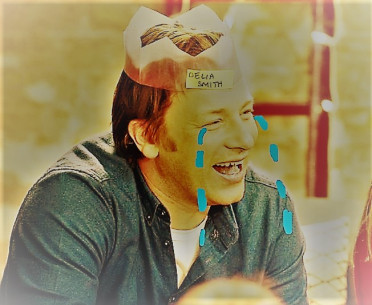
Jamie Oliver arrived in our world on a mopehead in the complacent dying days of the 20th century, adding a flavour of Britpop-lite to high quality food our newly-middle-classed bellies had now come to expect. The problem is, we weren’t so middle class after all. And to Jamie’s horror, he discovered there was lots of people who hadn’t ‘got on their mopehead and looked for Britpop-lite in the 90’s’, and were still eating bad bad bad food. He even cried. This was Jamie’s 9/11 moment.


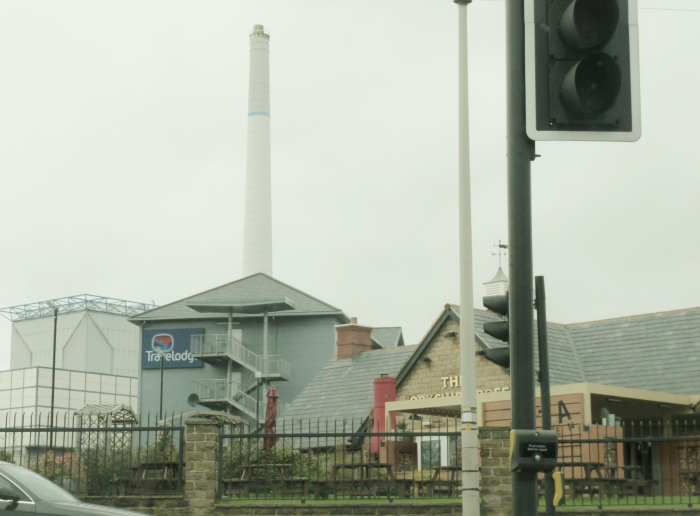
We drive down past DS’s favourite (and most-hated) building in the town; the incinerator. “John, it’s that fucking big, that it actually dominates the town; the town’s main feature is a place where you go to destroy all the shit that you didn’t even want in the first place”. We’ve been to the Costa coffee next to it before, and marvelled at how both it (with its atypical simulacra of Mediterranean life) and a Travel Lodge could only exist in so close proximity to an incinerator in a time where the idea of a place has so utterly eclipsed the reality of a place, to the extent that people can’t see that the biggest chimney in Huddersfield isn’t some now-romanticised chimney, which once pumped dark smoke into the sky over this former mill town, but this white monument to the unspoken failure of consumerism to fill the void.

The Huddersfield of the mind is still brass bands, satanic-but-reassuring mills and Fred Dibner-ites. On the congested ring road DS goes on about how Dibner called Huddersfield a rat-race in the 1970’s. “Fred, you should come look at it now” he says. “You would lose your fucking mind!”.

Into the town itself now, and under the influence (thank fuck). We meet John W. John W looks around the pub. “You see, the Xmas fever usually over-rides the depressed and troubled spirit of the year that’s been. But I’m not seeing it this year. I feel that this year’s events and forebodings have been so hard for us to switch off from that not even ‘santa can deliver the goods’. We are well and truly experiencing something different.”

I must admit my whole idea of purpose has been wrong-footed now that the concerns I felt lonely in thinking about seem to be concerns for all of us to think about in loneliness. I used to think that exercises in the exhaustion of the sugary lie of ideology would be enough to make people reject it like an under-cooked Wetherspoons meal and vomit it out. But a zeitgeist of disbelief is what currently prevails, and who can see that changing in 2017 right now?

As we leave, DS turns and says “I will be following Jamie Oliver’s recipe for the ‘ultimate roast potato’ on Xmas day. I mean, what choice do I have?  After all it is ‘the ultimate roast potato’!. But I wonder what is left in this world for DS, and for all us for that matter, after the ultimate roast potato has been eaten?

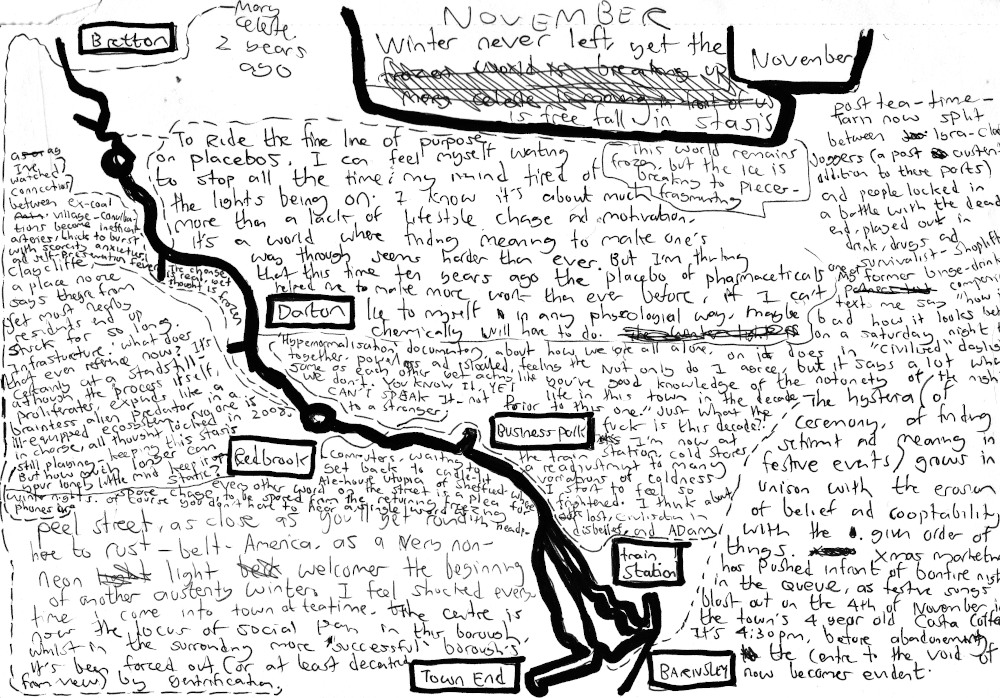
Stories From Time-locked Space. 3

Free-fall in Stasis

(Barnsley, The First Week of Winter, 2016)


Walking back to the suburbs through an M1 junction-hinterland in the dark of a new winter. But nothing feels new. It’s late 2016.

To Ride The Fine Line of Purpose on Placebos…

 …that’s what I achieved ten years ago this winter month. And I’ve even tried listening to that very same sequence of albums that narrated late 2006, attempting to rekindle such momentum.

“I’m on a good mixture, I don’t want to waste it”
But these days I can feel the cogs in my head wanting to stop, like workers in a factory who’ve come to realise absurdity lies in the heart of the notion that what they produce is building towards ‘the good life’. I know it’s much more than lifestyle changes, personal attitudes. But to play the game of attaining placebos, one has to pathelogise their pain. A one-off bluff to be prescribed a painkiller. But can the placebos of the past even work for the present? 

“Look forward to a future in the past”

1996. 2006. 2016. It’s funny how straightforward the shit-neoliberal Britain of 2006 felt, compared to now. Words, art, they seem inadequate, thrown into a free-flowing torrent in stasis – this chaos in a world which yet still appears to be frozen.

For the best part of 5 years I have felt that the life I unwillingly act in is at a dead-end, and that the only way forward is to destroy and rebuild. Illogical as this sounds, it enables me to sympathise with the logic towards the sheer illogic of Brexit and Trump, because I fear that for many they are votes borne of existential desperation.

Thus I can only conclude that two are interlinked. A willing for the ultimate of reset buttons; a fantastical reset button that erases the hyperconnected age, leaving us the choice to pursue a route that fucks with the mind a little less.

And rest…

Every night I fantasise about cutting all ties, walking out my job on my lunch break and walking west to the hills…as if the world was actually different over those hills, and not a mere barrier between two parts of an overcrowded, infrastructurally-unsound, unhappy, LONELY island.

But every day I play the part, a small part. Like the protagonist Sam Lowry in Terry Gilliam’s ‘Brasil’, I carry out a life I find deeply absurd, with smiles less convincing than Gordon Brown’s in a mad mad world. I found some sort of hope in the amount of reception Adam Curtis’s recent documentary Hypernormalisation received, because it’s exactly about this: being unable to believe or have faith in anything in the world you are condemned to live in, but not being able to act out this disbelief and thus carrying on like it’s all fine. This is because for a long time I have felt that the negativity I experience from drunks, drivers, shoppers alike, is because they feel exactly like me: utterly fucking sick of it, but unable to act on it. That illusion of otherness those pennine hills contain thus remains.

The traffic builds as I approach this supposedly small town. Over the past 6 years I’ve watched the connections between these ex-coal village-conurbations become inefficient arteries. Thick to burst with self-preservation anxieties,  created by an artificially maintained level of scarcity, and contained in glorified tin cans. Claycliffe: a place-name that evokes stuckness. Yet a place that nobody calls home, nobody identifies as being in on an Instagram photo. Yet it’s a place where many end up stuck, morning and evening.

Infrastructure; what does it even mean anymore? That all plans are at a standstill is the only fucking certainty here. No one is really in charge, and managerial thought itself is trapped in a past tense; maybe autumn 2008, maybe 2010, or maybe 1999… But the process itself proliferates, mauls through a defenseless scene like a braindead alien predator.

There is so much movement, yet thought itself remains frozen…


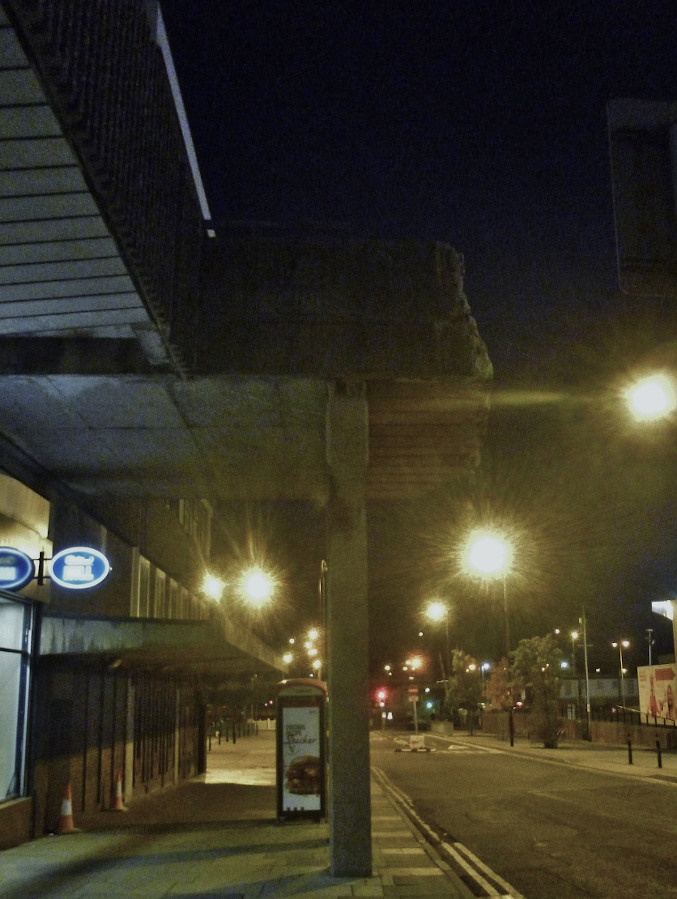
The oft-unbearable middle class chlorophoric-quagmire of the work-a-day-job-existence seems bent of regenerating a shock in me every time I return to my home town on a midweek teatime. A reminder of what life is actually like for many beyond the blinkers of educated career-seeking. But I’m doubting whether it is a reminder: as what I believe I’m seeing is a new development. From Cheapside to Town End,  I feel like I have stumbled upon scenes fit for rust-belt America right here in England.  The centre is seemingly the hub for the borough’s social pain, whereas in the surrounding ‘more prosperous’ boroughs the pain is forced out of view by waves of gentrification.

Comewhatmay, such desperate sights are new to my eyes on such familiar territory. Post 2010 the lycra-clad joggers have proliferated around here, but so too have those locked in a day to day battle with a dead end, either through drink, drugs or survivalist-shoplifting.

I text a friend. She responds saying how “it’s bad how it looks [our shared hometown] looks better on a Saturday night than it does in ‘civilised’ daylight”. This is such a striking conclusion we arrived at, being, as we are, veterans of the town nightlife in its notorious early 2000’s stage.


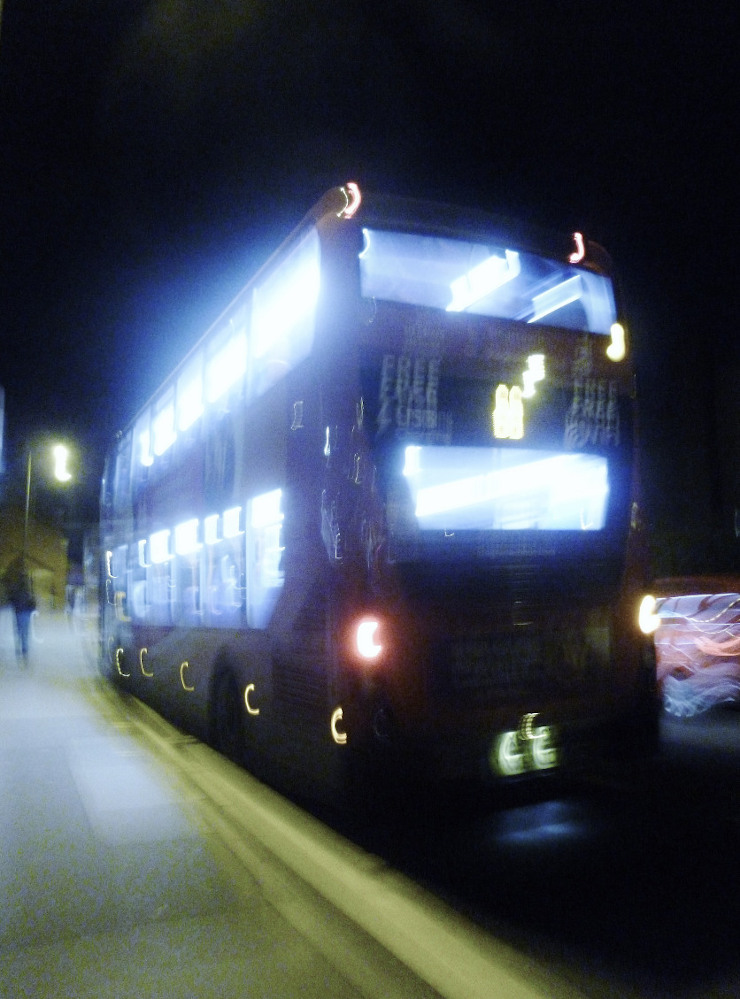
I pass the No 66 Elsecar Stagecoach bus, promoting ‘relaxation’ with its new onboard Wifi –  the warm glow of The Feed as the nights draw in. I initially think of how being connected in every space imaginable isn’t relaxing at all. But I think again: maybe the anxiety is more in the gaps between the points of connection? The urge have unending stimulation. Perhaps it’s turning buses into the quiet, solitary modes of transportation that cars have always been, rather than the overspill of frustration borne from class injuries and alienation that they always used to be. Less aggro, less social anxiety. But more loneliness.

A zeitgeist of disbelief...


I think about Hypernormalisation again…

2 years ago I made a work about how stuck things felt, how stuck I felt. I used this town as ground on which to gather evidence.  It’s weird. It feels like we’re still stuck there, but yet something seems very different, unreal, and unable to be pinpointed. The Mary Celeste Project was about the frozen world. But what can you trust to be real when there is chaos in a frozen world?

I feel cold, anxious and lonely as I look at all the people in the station who feel as anxious and as lonely as I do. Its evidential; it’s on their faces. They wait for their 5pm commute back to the candle-lit-alehouse-utopia of Sheffield, where every other word heard on the street is a plea for spare change, to be spared from the returning freezing winter nights. Of course, decent working headphones will cancel out this growing noise. But for how much longer can one’s lonely little mind hold itself together?


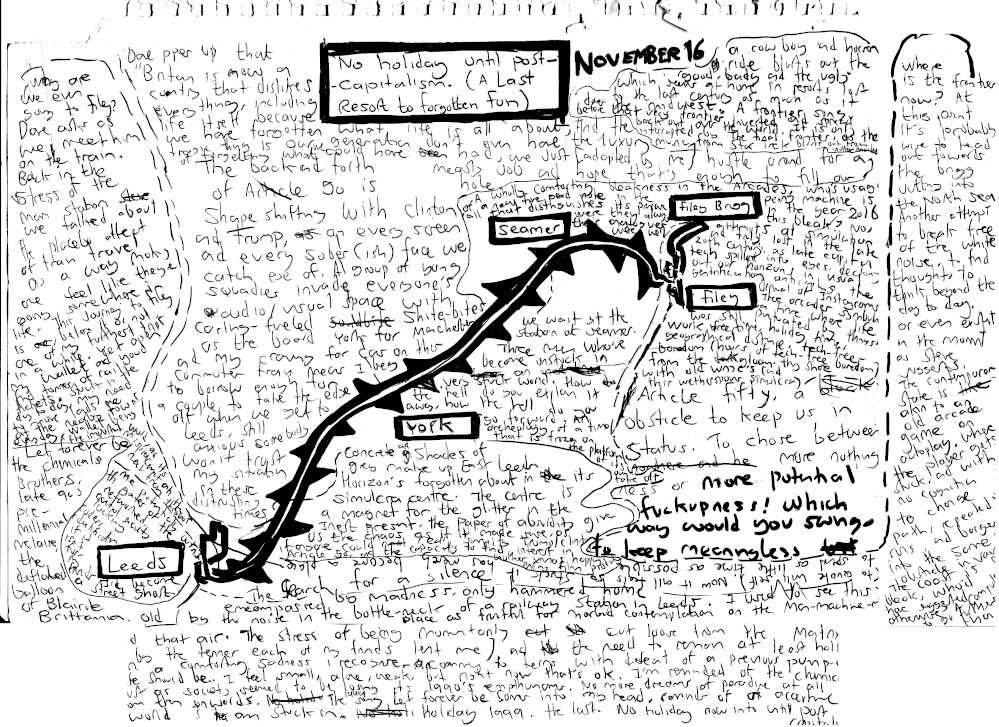
No Holiday Until Postcapitalism (A Last Resort to Forgotten Fun)

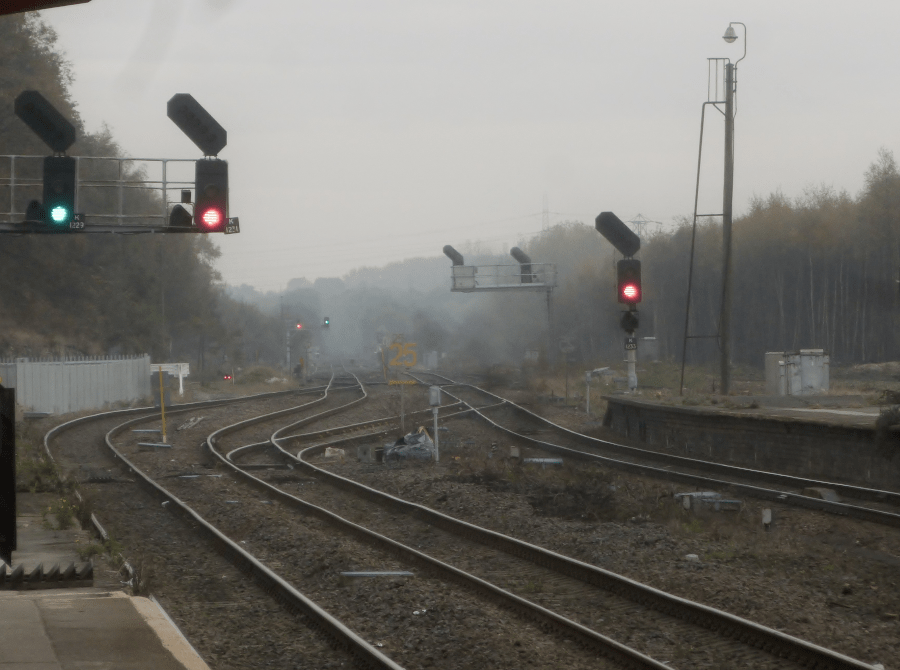
We’re relieved to get out of bottleneck of the north (Leeds station) as we join the now mostly emptied train for our journey to the North Sea coastline on this cold November morning. This station is making us both uneasy. This cold, hollow sort of self-reflection is filled horribly by the noise of this metal-on-metal place. At one point, when a certain sort of examination of life didn’t seem so paralysed by painful introspection, I had a mutual agreement with this place: I’d have to feel stressed and drained – but it would supply me a fresh mine of morbid fascination of the ‘man-machine-matrix’ (Will Self) for artistic purposes. But now that things just feel so stuck it just aggravates a searching for silence amidst the madness.

Going Nowhere. The whole thing is going nowhere, but this giant hamster wheel is beyond the day-to-day experience of a mere melancholic mortal, and there’s sometimes nothing as crushing as feeling like you’re Going Nowhere. Expecting one to obtain a mindset content with staying within 100 metres of their introduction to life is idiocy as things stand.

So hop on the train coz it kills the pain”
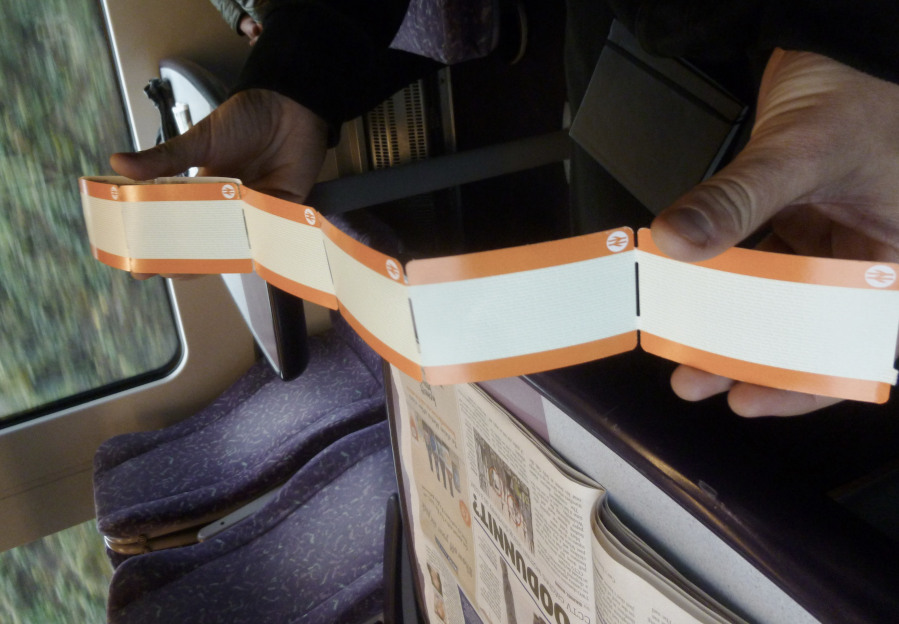
True, this trip to the forgotten fun of Filey is one of the furthest trips I’ve made for sometime, but open my wallet and you’ll find evidence of a person who, although stuck in the day-to-day, makes dozens of train trips to nearby towns.

No destinations until Postcapitalism, just movement…


Wallet being the crucial word: too busy making sure I have my camera, pens and notepad, that I leave it on the train as it leaves Filey. Sending a trip already teetering on the edge of the ridiculous, into potential absurd oblivion.

Liquid Fear in the frozen world…

Suddenly a place caught between the twee and bleak by the tectonic shifts of a seismic systemic change, is totally locked in the Now, as I’m forced to enter the endless corridors of Distrust-ocracy of the scarcity network. 0345… 0800…  0113… You can be trapped in it, or trapped outside it – locked outside the gates of so-called civilisation. But my next coffee, next pint, next train trips to nowhere, next 2nd pint, means right now I’d much rather be trapped within the matrix, and it makes you wonder if being thrown out of matrix next to th3 North Sea is more frightening than Big Brother’s microphones in bushes monitoring Winston Smith as he wandered through England’s green and pleasant fears from yesterday.

No connection to Liquid Boredom…

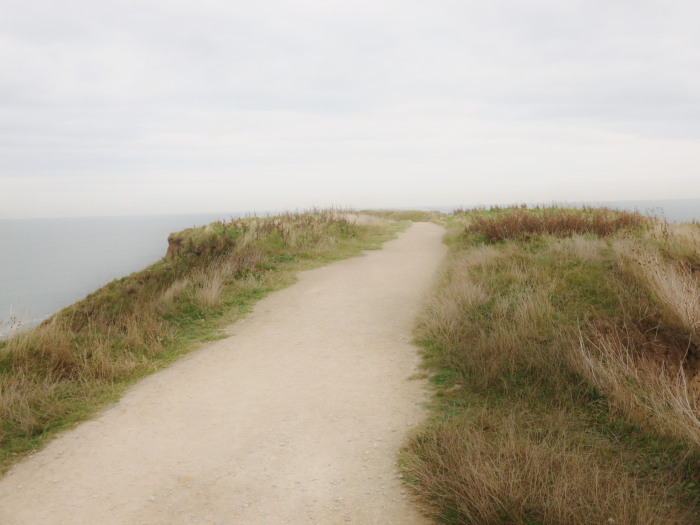
At this point it’s probably wise to head towards the brigg, jutting out into the North Sea. Yet another one of our attempts to break free of the noise. To find thought. To think beyond the day-to-day. To just think, in the moment. The day-to-day isn’t the moment – it consists of constantly trying to get somewhere but never arriving. Like an insect smashing against a window until it burns itself out. Just to get beyond this point, and begin anew.

The Conversation is open and honest as we sit at the cliff edge, as if the proximity to such dangerous forces prises out such honesty about our deep struggles. Three of us, in our 30s and early 40s, all at sea in a world that has lost all sense to us. We walk out onto the brigg, we listen to the sea through an old defence barrier. The sea appears to breathing. Perhaps it is a kind of breathing? But the breathing’s getting heavier. At this point it’s probably head back towards the noise…

A land that anxiety forgot…

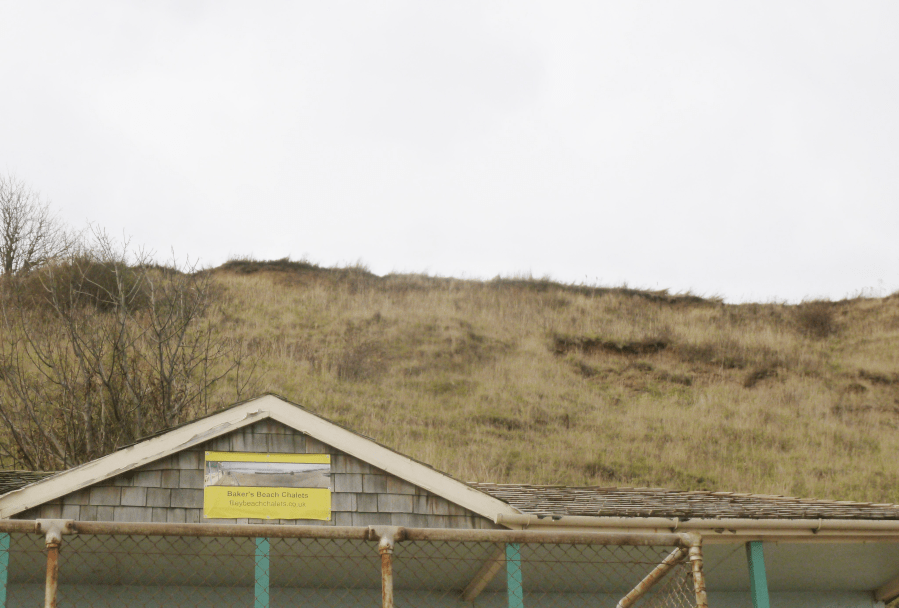
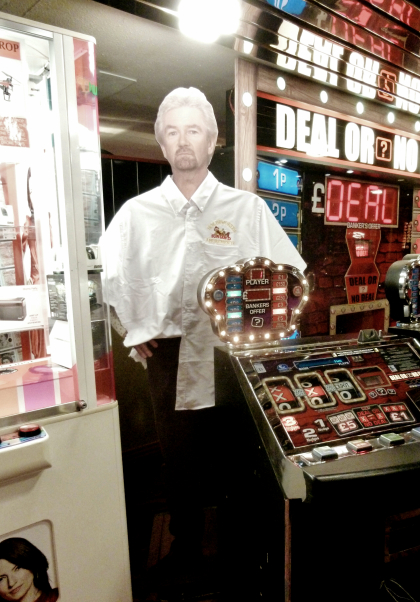
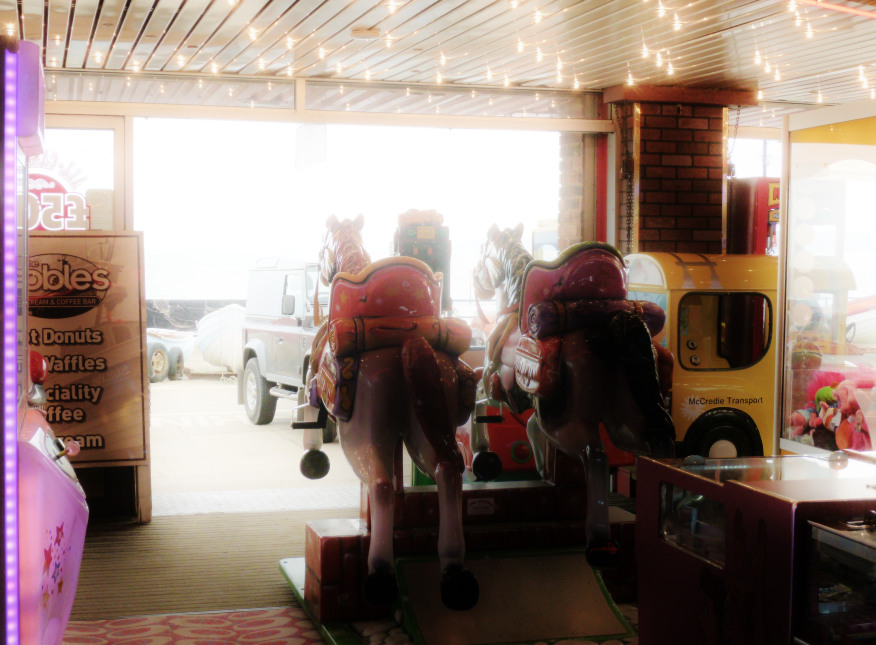
We’re not far from being the only ones here. Yet everything remains open, like a fun land abandoned 30 years ago. But, unlike Chernobyl, nobody turned the lights off, nobody unplugged the coin machines. They push back and forth almost like reminders of the long gone machines worked by the Mill-town workers who’d’ve flocked here on mass for leisure. What is Leisure?  Leisure existed before liquid boredom flattened out our lives.

The arcades are a somewhat comforting bleak. Were they always this Bleak? No. Their mimicry once worked. It worked when the American adventure still worked – when it met with an Island still living out the ghosts of Victorianna. With a deco more in tune with old WMC’S, it’s a far cry from a world perpetually posing for instagram.

Suddenly a cheap quality recording of ‘The Good, The Bad and The Ugly’ theme rings out from a Wild West ride for young children. A song that evokes a frontier is lost to the last century. That very frontier inverted itself and spread back over the world a long time back now. Like childhood memories of holidays, it all seems like a thousand years ago. Suddenly a coin machine blurts out the Star Trek theme tune. The Final Frontier. The horses of this machine face the exit  – they look to be galloping into a void.


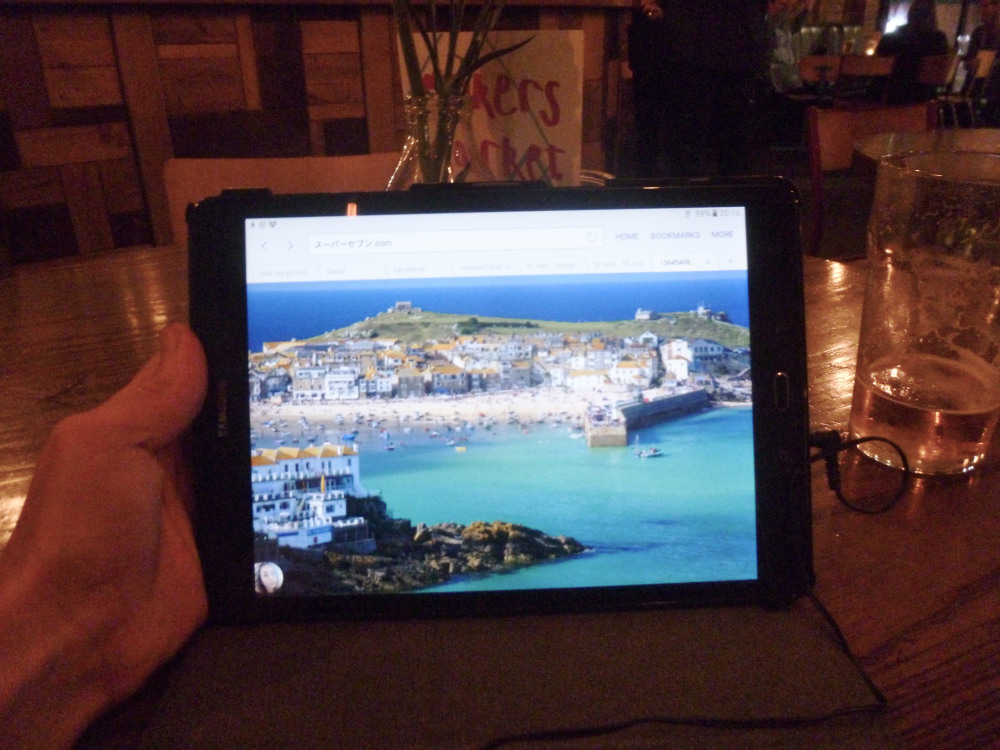
The temperature drops, and we find a pub to sit in whilst we wait for our train. We find ourselves listening to a soundtrack that could well have been playing to itself for years. 1960’s. 1970’s. 1980’s, and a scattering of 90’s, then back to the beginning, maybe forever. David Bowie’s version of All The Young Dudes makes me think who are today’s young dudes ‘carrying the news’? Like the arcades it’s a place that isn’t even trying to be a Retro Bar; abandoned on the highway between the past with a future and a future trapped in the past. And like the arcades it’s a comforting sort of bleak.


The anxiety over not being believed is over. The trust of the train conductors, an unexpected trust, allows me to breath a sigh of relief at the lack of confrontation. I hate confrontation; just can’t do it. It’s what’s kept me from being unable to act on my beliefs over what is wrong and what is right. This awareness is probably why it leads to guilt. Guilt over losing my grip on grasping the chaos of Brexit, and the US presidential race. The two shape-shift, become one and then two again, and reflect back from the anxious faces of the sober commuters, like an airborne disease. Guilt over no longer having the ‘right’ feelings about what is wrong and what is right in this upside down world.

Trump and Brexit? Rational descision making? I think of the mental health of our human race, the rock bottom mental health of the human race. Mental health being crushed between a rock and hard place.  The way we are made to behave – how it’s making us sick of life. Why the fuck would anyone want to continue this? But perceived future confrontations forced me to take the vote of least resistance: I voted to remain. I’m just a coward, stuck in the middle, waiting…

The boarding of a gang of young lairy Manchester-bound squaddies at York, who annex the shared space of the train with masculine-insecurities they already seem condemmed to, forces Dave’s melancholia over the state of present-day life into spoke word: “Britain is a country that no longer likes anything, including life itself,  because it has forgotten what life is. And the tragedy is that our generation don’t even have the luxury of forgetting what we could’ve had. We just hustle around for a crummy job and hope that’s enough to fill the hole…”

But if anything ,today was a humbling day, where failure has been acceptable.

Let Forever be…


1999….

No Holiday Until Postcapitalism…

2016…

A sadness finds its way in after an anxious day placed upon an easily anxious person. A comfort in let down, a solice in the acceptance of failure. The tenners Dave and Steve lent me feel like tenders for my last drinks. I get like this on these kind of days,  these rare days of surrender. I don’t mean a contemplation of suicide, but days which almost reach over the years into the future and touch glasses with my final ever glass.

Maybe this is my only access to the future?

Let Forever be… 

As I’m in the past at the same time.

The song Let Forever be, from the weary summer of 1999, seemingly spontaneously entered my head as I left the station and walked into the city. A summer that felt so chilly in the face of the coming millennium. So different from memories of the roaring heat of the mid-90s-euphoria summers. A first point of depression, a year when a switch felt like it had been flicked in my head, was also a year when the teenage kicks of the neoliberal project gave in to a pre-millennial malaise, which, as much of a comedown as it was, couldn’t quite anticipate the hyper-horror ahead.

No Holiday Until Postcapitalism…this is where it began. For me, at least. There’s been no rest in the soul since. What remains of that soul. There must be hope for the nihilised – I may be impatient in most parts of my life, but this is one thing I’ve waited so patiently for.  As much as the future still seems inaccessible,  there is harder times still to come. Who knows who is and isn’t made for them. But at this moment I’m OK.  Thanks for asking.

Stories From Time-Locked Space. 2

Illusions of ‘otherness’ – Over The Pennine Horizon

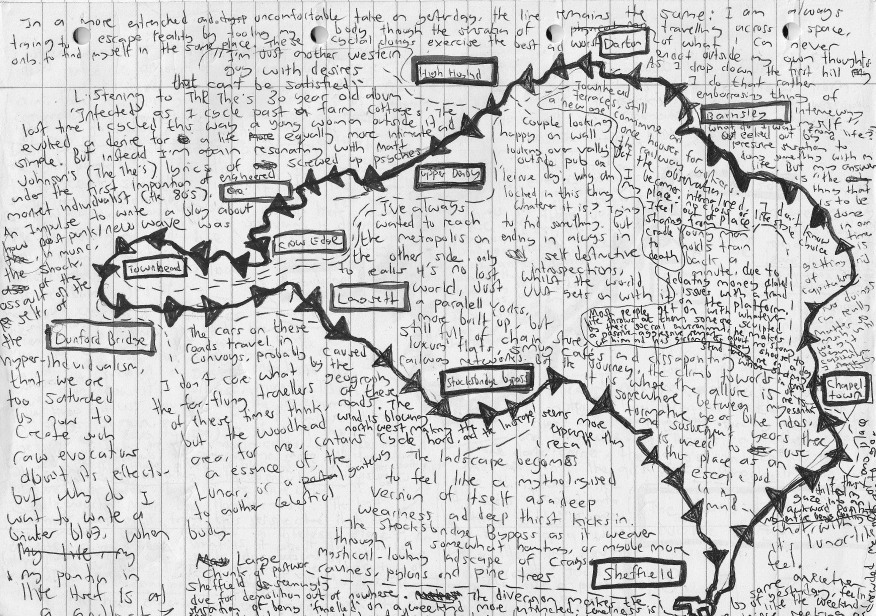
Darton-to-Wakefield-to-Mirfield-to-Huddersfield-Manchester-to-Leeds-to-Darton (Northern Rail-to-Grand Central-to-Northern  Rail-to-Transpennine Express-to Northern Rail.


September 2016.

“Today’s Manchester is dominated by the sounds of the trams. They beep, clunk and even scream as they turn on the tracks, in spaces so close to pavements you wonder how they all function. How do they all function? How does everything keep carrying on? The embarrassing urban anxiety kicks in. The pursuit of something which leads me to the same point I departed at. What to do in this world…today – this city? “Don’t know which way to turn. The best possible use”.  Thought paralysis – it makes me unable to show my human face to an homeless man, despite managing to chuck him a quid. But I’m stunned into shy teenage mumbling when he speaks of his plans of getting through the night ahead of him. I turn down towards Victoria station, stalling as the minutes pass along, knowing full-well I’m aiming for one of the few pubs I know in this city. “What to do in this world…today – this city?”


“An empty seating area in a pub on Friday teatime, a familiar jukebox soundtrack, and I’m regaining mild rays of confidence. “What spurs me on to travel to other towns and cities?” I thought to myself earlier today, whilst the rain mocked any escape plans I had. Maybe my anxiety to “get on the bus and get out” isn’t so much a desire to travel through space, but a desire to travel purely through time. I have a deep longing to leave these times, and traveling allows for a temporary confusion of time and space that throws fools gold in my direction. I find out that the place I have arrived in is, to all intents and purposes, the same as the one I’d just left.”

“The default Manchester-of-my-mind is a first-industrial-city-Manchester, mixed with a Joy-Division-Manchester, mixed with a Blair-years-failed-attempt-at-studying-here-Manchester. But I return to realise it’s more like a 2016 Leeds, but with less of a Canary-Wharf-steroid-injection and more of Shoreditch-smug-injection. The old mills and engraved testaments to the hard-fought gains of the working man easily fall from mind amidst the banal bazaar of retro bars, hip cafes, veggie restaurants, all named anything and everything under the sun. Where is the Manchester that is buried in our heads like old folklore? I’d had liked to have witnessed it before it became an overly decadent city with an ambivalence that pulls LGBT gains to the same level as homelessness epidemics. Maybe I can now see why the drama Life on Mars‘ recreation of 1970’s Manchester was such an appealing fantasy. We don’t crave homophobia,  the real IRA, or for the gates to reopen to those dark mills, but we crave an authenticity. And whether or not authenticity ever existed, our postmodern addiction to the idea of it seems to distance us further from anything that could be called it. Places become parodies of themselves, as if a city could be constantly taking selfies, just to reassure itself it still exists. A once-industrial titan, obsessively staring into a mirror, whilst the land shifts worryingly underneath it’s feet, as fracking and nuclear contracts give a green light to those less decadent players on global capitalism’s stage.”

“In an age where companionship has been turned into a highly valued resource, made to feel in short supply, we are left to feel ashamed of our loneliness. The weekend is scarcity-central, with everything feeling in short supply, especially time itself. As Friday evening begins, it doesn’t matter where you are because if you are alone you’re alone –every seat in every pub, usually for a rendezvous with stable solitude, is taken, and every space for daydreaming is swallowed up. I walk back and forward, like a stuck soundtrack, only noticeable to the homeless, the only static bodies in our hasty times. I bump into a friend in the Piccadilly rush. It’s awkward. He wouldn’t care, but I do. “Just what am I doing?” These whole endeavours seem so pathetic under the weekend’s spotlight. “The city can be a lonely place” – an old piece of wisdom digs itself up to the surface, more like woodworm than earworm.”

By now the peak fare rail curfew is lifted and I grab a can of M&S cider and head for the train back to Yorks. My anxiety is curbed as a 6 carriage train pulls in. But no: it seems that any train attending to the needs of the millions who make up the discontinuous Northern Metropolis has to be a scarcity train.  The first 3 carriages stay put as the tired have to use their one last burst of energy to run up to the other 3. If you want a picture of a Northern English future, imagine continual disappointment under signs for ‘the Northern Powerhouse’ – forever.  “We should never have it so good” is what Macmillan meant to say. As we travel eastwards the early Autumn sunset penetrates the windows and makes silhouettes of Manchester’s millennial monoliths – they pray to the Gods that the sun will never set on the world that built them. But despite the illusions of clairvoyance the September sun gives as it penetrates the scene, their day of reckoning isn’t today.”


“Land-locked on an Island”

Darton-to-Dunford Bridge-to-Langsett-to-Sheffield


“As I begin my cycle up to those hills, yesterday’s impulse is today’s: always trying to escape reality by fooling myself I am doing so by traveling across space, away from wherever the sense of stuck-ness is most claustrophobic.  I always end up where I was, and who I was, before. But during these cyclical doings I exercise the very best and worst in me – new depths of contempt and idealist manifestos crisscross in my thoughts. As the first of many hills give way, still on the foothills, I ask myself what it is I really want to happen – a question prised out of me from a pressure to DO SOMETHING. I answer myself with this: “What is to be Done? Lots of things have been done, and lots don’t seem worthwhile doing again. Right now the only thing that is to be Done, is to ditch capitalism – transcend it, upend it, or just end it”. That is the immovable objective of now.”

“I’ve always wanted to reach the Metropolis on the other side, only to realise it’s no lost world, no place where things are done differently, after all. This is what happened yesterday, but yet the climb to the hilltop Horizon is where the allure still lives. After all these years I’m still climbing up here to see if there is something beyond this reality. From the road the other side of the valley, the Woodhead pass looks like a river made of Mercury. And I don’t care what more far-flung wanderers think of this, because this area, for me, sometimes contains an otherworldly essence, like a gateway to another celestial body.”

“The Stocksbridge Bypass valley almost broke me, and as the thirst and exhaustion kicked in, it took on an almost mythologised representation of itself as the ravines, pylons and conifer plantations began to look threatening – almost a concrete abstraction of the notoriously dangerous road I was climbing up. So, by the time I reached Sheffield I was massively relieved. But not before long I felt estranged amidst the weekender endeavours. The locus of this seemed to be the diversion I had to take, after realising a large concrete chunk of postwar Sheffield, centred around the Grosvenor hotel, was ring-fenced for demolition. The erasure of yet more of one specific era also made a physical embodiment out of what I was feeling today and yesterday in as the cities reached their weekend point: a sense of being forced either onto the narrow curbways or of being funneled into a design for late capitalist life. Neither appeal. Nor does hanging about this evening, and I call today off at an earlier than usual point.”


The Land That Noise Forgot.

September 2016


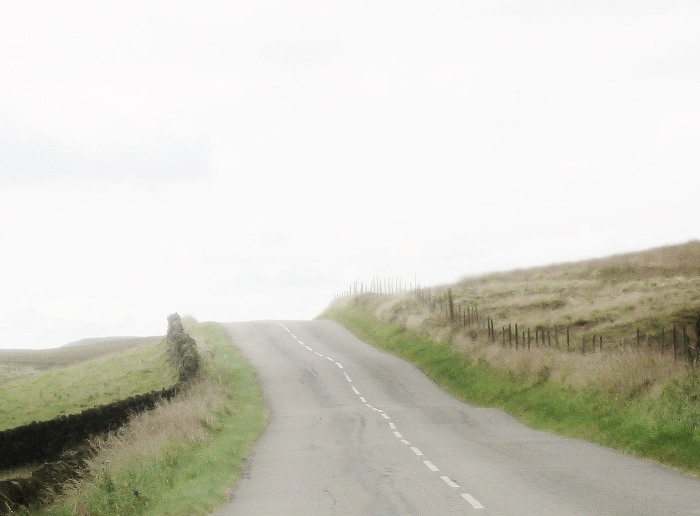
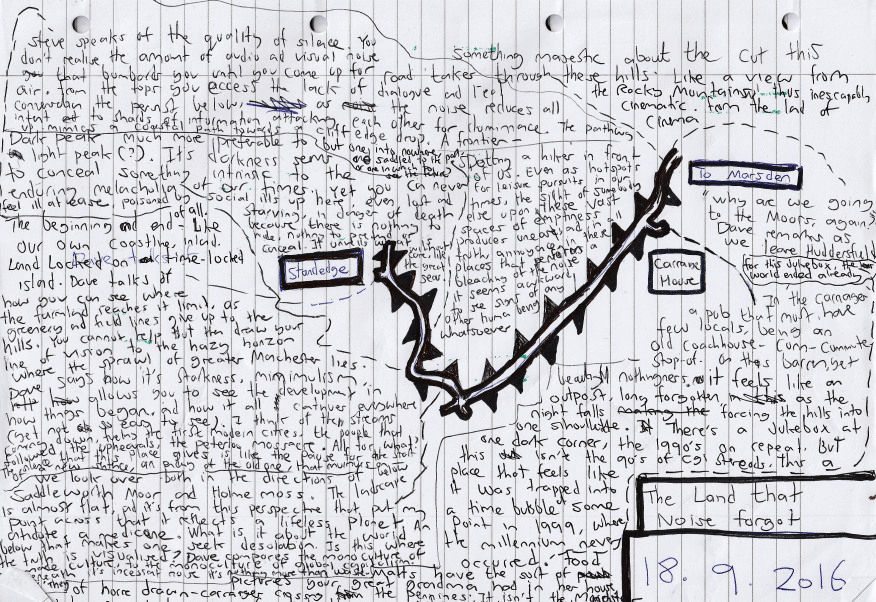
There’s strangely a normality to Sunday evenings, that reassures, quells anxieties often found at other times. Which means that our post-working-hour walk up onto the very tops of hills between Yorks and Manchester is going to work out OK today. These barren stretches up here seem to speak something of the concealed melancholia of life down below. Perhaps they allow you to feel at ease with its truth, ridding yourself of social status anxiety like the weight of a poorly-designed work uniform, as you climb further from the road, to the point that even if you went to far into the early autumn sunset, and found yourself in mortal danger, such anxiety wouldn’t reappear – all you would have is clean fresh fear, a sensation that is somewhat different from dog-shit stink of anxiety that clings to us down below.”


We look over to both Saddleworth Moor and Holme Moss. A beginning. Or the ending. Like reaching a land’s end, in-land. We are Landlocked on an island. Time-locked in space. But this area is like a frontier, even if there turns out to be nothing beyond it. What is it about the life down below that makes us want to seek such desolation? Steve speaks of the value he places on the silence up here.  A silence that separates it from everywhere else on this noisy land. As up here, like staring at the sea, or into space, you can see things move before you can hear them moving.  In a noise-filled age this is almost non-existent. From these hilltops we access the lack of real dialogue amidst the noise below. What is the use of thought down there, when it seems reduced to shards of information in perpetual battle for dominance with one another? These monochrome colours and featureless plains help bleach that noise, opening our eyes like portals to a frontier out of which sprung our industrialisation, and into which we see a space waiting, waiting, and waiting, to be filled by a future.”

“We look down to where the first few cluster-settlements begin the outer edges of a Greater Manchester sprawl that changes from cobbled-stone to concrete within our hazy horizon. Dave talks of how, by seeing where the green farming land gives up to the ‘desertified’ hilltops, such stark end/beginning points allow you to visualise how it all began, and continues, everywhere else. Like the streams that flow down to form the necessary rivers of this ‘first’ industrial city, I think of

the flows of people coming down from these hills, the upheavals, the Peterloo Massacre, the endless rows of workers crammed together, the hopes, aspirations for something better, which informed a pop music that in turn informed the world. All for what? A noisy competition in consumption? An Instagram App on an Iphone? An overpriced hovel overlooking other, lesser, hovels? Surely this can’t be how it all ends?

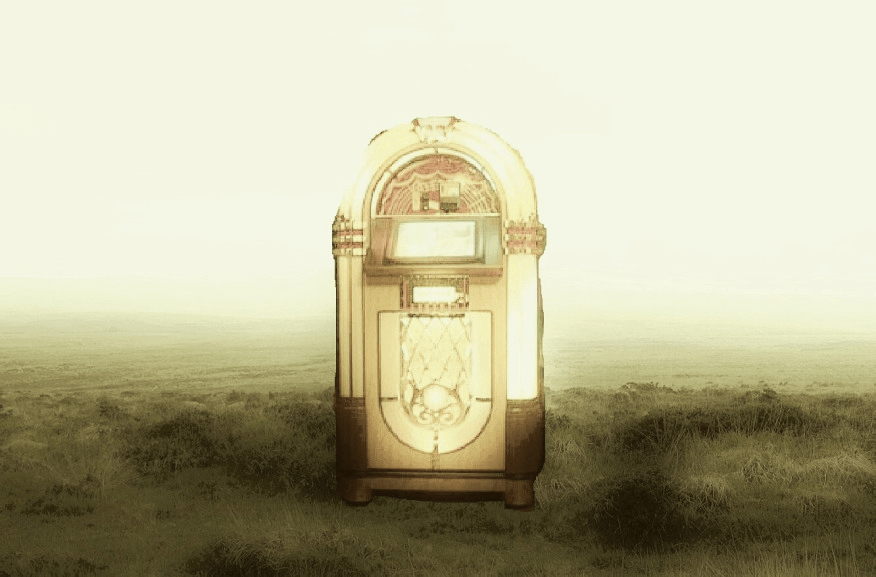
Walking back down the hills, anticipating the mental noise awaiting us, Dave remembers how his noise cancelling headphones kept in his terrace house in a busy suburb of Huddersfield gives him access to a silence provided by capitalism to endure capitalism, rather than a silence from capitalism. But the break out of it’s frenetic inertia hasn’t ended for us just yet, as we decide to seek refreshment in a place that you couldn’t even designate as an Inn. It in it’s location on the border of Yorks and Lancs, this is more of a non-place from a time that is gone. As the night falls around it, who could have ever been a ‘local’ up here on this horse-drawn-carriage-cum-commuter highway? Lights on and open, it still feels forgotten, trapped in a time-vacuum.  There’s a jukebox in a dark corner of the room, the music on it dates no later than 1999. But this isn’t the re-hashed CGI Steroid-90’s you find in the towns below, this is the late nineties as we left it. It’s like the millennium never occurred. Maybe the sentence at the end of our narrative had ended already by then, and the emptiness up here is like a pause at the end of a sentence that’s only exhaustively prolonged down below because it’s amidst an feverish command for economic growth? But where’s the next sentence? Maybe it isn’t Manchester that has ‘so much to answer for’ after-all, but the moors themselves?.

Fighting for Crumbs, at The World Transformed, Liverpool

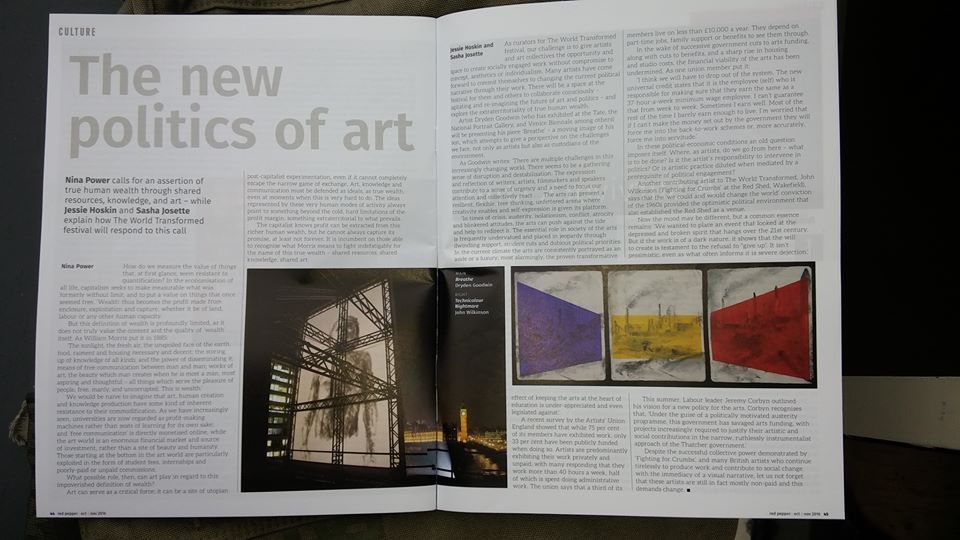
I was very pleased to be invited to exhibit at The World Transformed, a 4 day festival hosted by Momentum as The Labour Party held their conference,  and the leadership election results were announced, in the very same city. It felt great to be taking our exhibition project ‘Fighting For Crumbs (Art in The Shadow of Neoliberal Britain) to the Black-E in Liverpool, to have our work in the same location as speeches by many figureheads at the forefront of a movement to push for much needed changes to the way politics is done and society is run.


#TWT2016 is about practising the new politics. We believe in a positive, future oriented approach to changing society. We believe in amplifying unheard, grassroots voices. We believe in broadening the definition of politics to include art, music and spoken word. We believe that politics is a bout more than just PMQs and Westminster. 

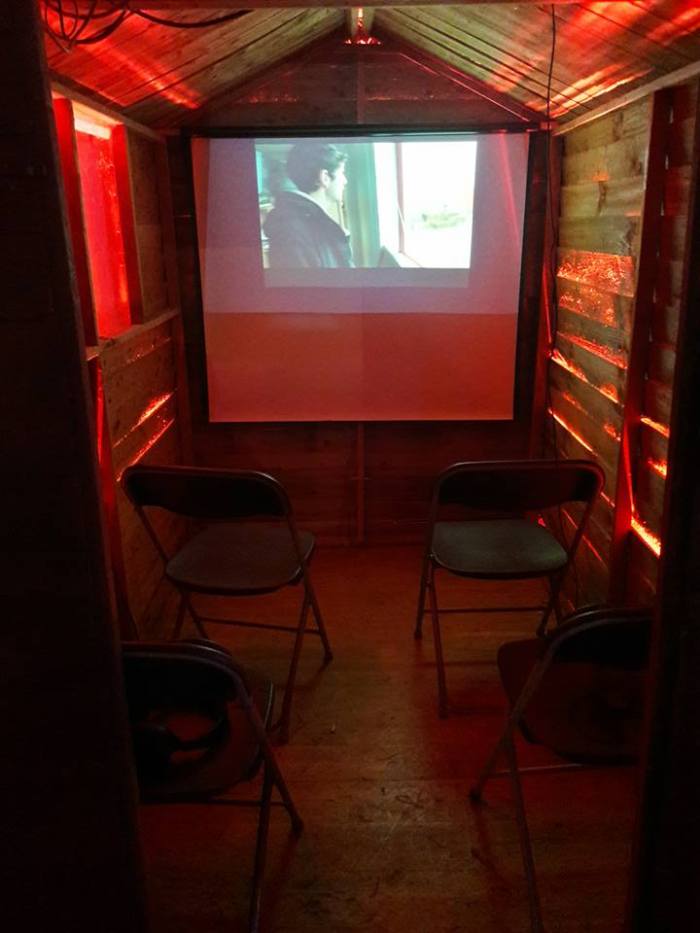
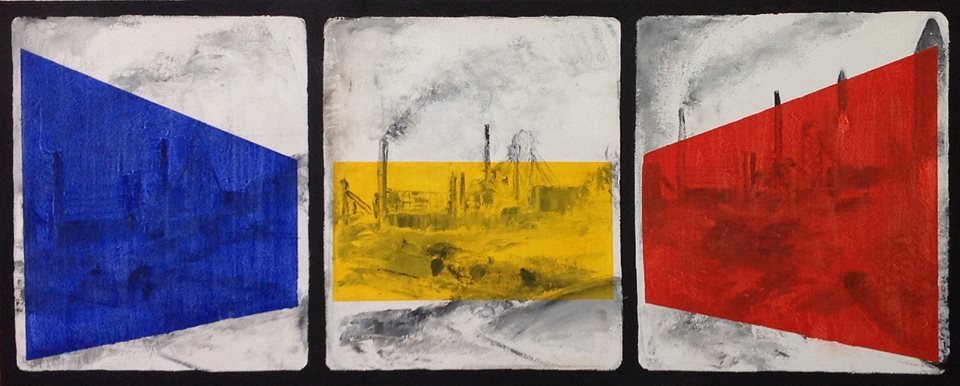
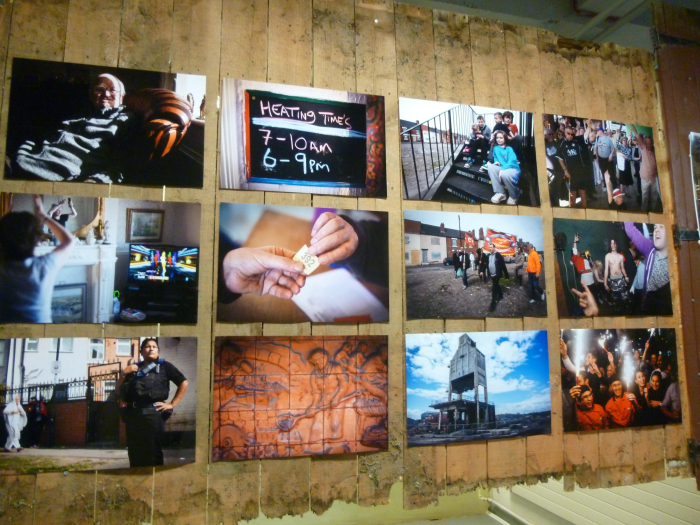
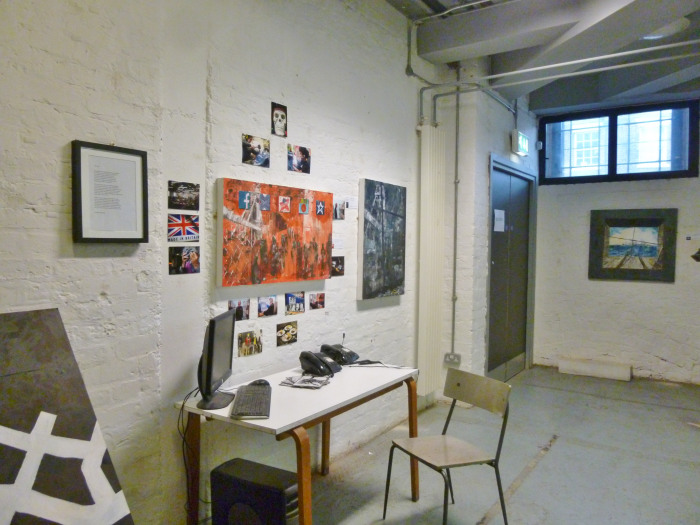
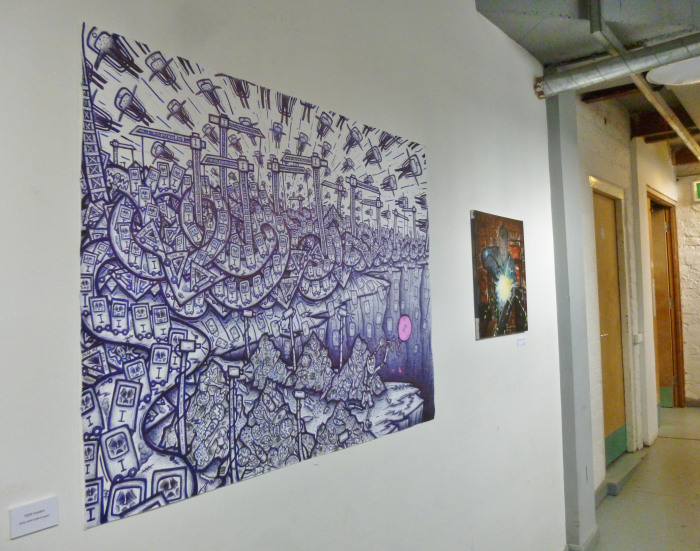
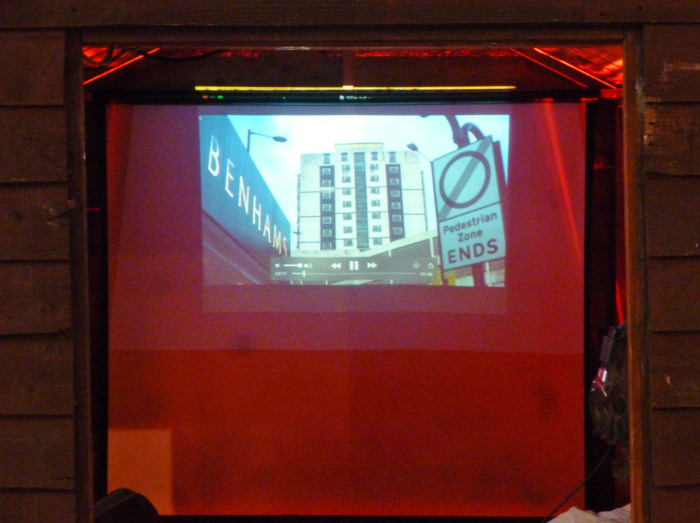
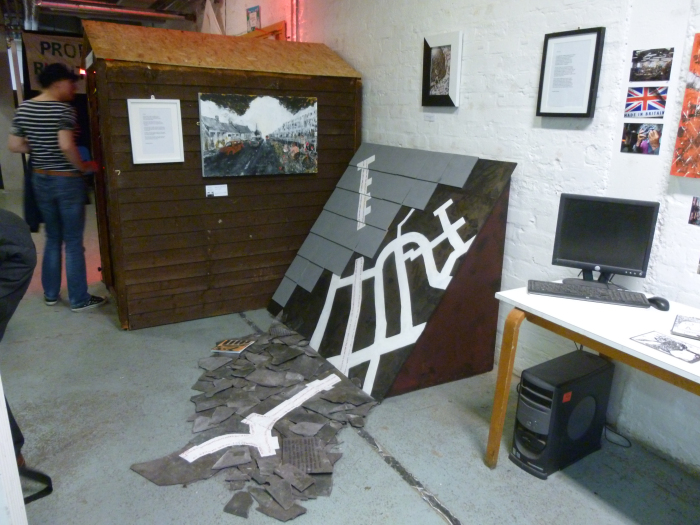
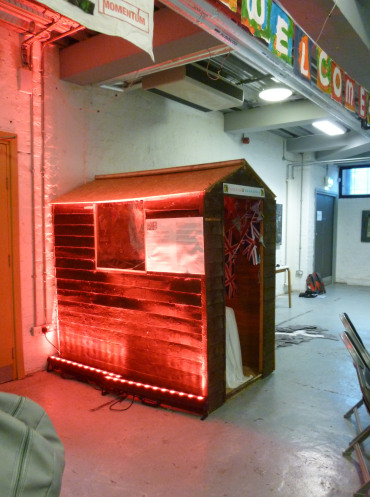
With Fighting For Crumbs being somewhat instigated by the ask to do something to celebrate the 50th anniversary of The Redshed  (Wakefield Labour Club), we worked with the organisers of The World Transformed find a way of using ‘Redsheds’ to exhibit our work and documentary by Connor Matheson. Here are some photographs of the project.

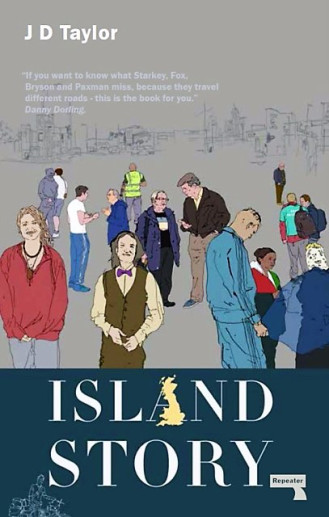
JD Taylor – Island Story: Journeys Through Unfamiliar Britain

Island Story: Journeys Around Unfamiliar Britain. JD Taylor. Repeater Books

I’ve finally finished reading JD Taylor’s brick of a book ‘Island Story: Journeys Through Unfamiliar Britain’ published by Repeater Books. Admittedly I missed most of the section on Scotland, due to a large pen leak defacing most of the section – but there again, being a visual artist, who carries everything he needs even when he makes a short journey means rucksack spillages happen against best intentions. But I read most of this 450 page brick (although it’s probably more fitting to liken it to a piece of sedimentary stone, carbon dated to the British Isles in the second decade of the 21st century), and although it’s a large book, it’s pleasurable reading.

I started following JD Taylor’s blog after taking an interest reading his 2012 book ‘Negative Capitalism’, published by Zero Books. In 2014 I realised he’d been undertaking the sort of project that had become close to my heart in the last few years: assessing the social spirit of the times by traveling the land, and getting close as possible sense of what it feels like to live in the towns and cities of this country. I caught up with the blog literally just after he had posted about traveling through the area from where I was reading the post! And I was intrigued by what he was saying from then onwards.

JD Taylor didn’t go around the Island telling folk what was and wasn’t, he actually listened to what they had to say. Listening isn’t an easy thing to do, and I’m as bad as the next person for making interruptions before somebody has finished a sentence.  I don’t think it’s ever been easy to sit down and let somebody else explain how they see and feel about the world, but certainly not in times where there is an intense social pressure to compete against each other for economic survival. Listening thus requires our want for empathy to win over our gut feelings to get our opinion over before others can. But for those wishing for a future beyond the current inertia, telling rather than listening possibly entrenches the necessary one-upmanship of a social model based around scarcity.

‘Fighting For Crumbs’ at Wakefield ‘Redshed’. Image courtesy of Connor Matheson Photography

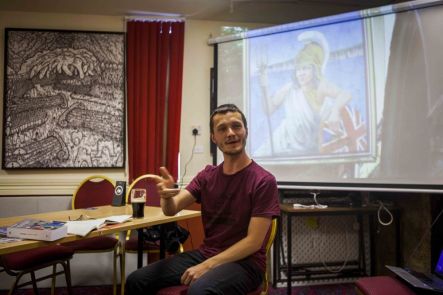
I asked JD Taylor to come speak at a recent art and film project I was involved in undertaking. ‘Fighting For Crumbs (Art in The Shadow of Neoliberal Britain)’ was somewhat a response to being asked to show my artwork in the Wakefield Labour Club (commonly known as ‘The Redshed’) as part of its 50th anniversary events. I’m not in the habit of carelessly flinging works up on walls, and I was keen to do something that spoke of the political mood and social spirit of these times, to contrast with what my friend, and Redshed stalwart, Sandra Huthinson, said was the spirit of 1966; one of political optimism, in spite of the troubles in the world. Taylor seemed not only to speak for the same generation as my own, but I thought his findings upon the roads of this island were closely in tune with the aims of our project. I’ve never asked a writer to speak at an event before so it was an initially daunting task, but thankfully Taylor seemed more than happy to take part, and it became part of a larger tour promoting his book.

Within the island-round journey taken his book unearths forgotten uprisings to challenge the assumption that our collective story is one of putting up and shutting up. There’s a disconnect between Here and There, that seems to become an Us and Them.As a northerner there’s a tendency think we are the worst treat by the powers that be, with the locus being London. This isn’t an unreasonable feeling, especially when looking at the half-century’s worth of diabolical infrastructural neglect over this region. But it’s not necessarily true, and Taylor’s accounts of Kent, as he comes to the end of his travels, leave me quite moved. As it seems that many of the people populating a county most think of as England’s green and pleasant land are as struggling and confused as anywhere else on the island – possibly even more so due to lacking a strength through identity that still gives many in other regions spoons full of spirit every now and then.

The overall conclusion in Island Story is a sense of confusion but mostly defeat. I think he’s on the pulse when saying “young people are worst affected by the peculiar “nowhereness” of the moment” – I’ve heard this misdirected into a sense of personal failure in many who were traveling through their teens and twenties especially since the financial crash. However, the conclusion is not one of eternal defeat.  Aren’t many of us more punch-drunk optimists than pessimists? One section of his conclusion particularly stirs my damaged optimism. Taylor says that

“this sense of inertia and in-betweeness suggests the accruement of desiring energies around the block. Gathering force yet unable to release, time is slowing into one interminable moment before the extraordinary happens, what few considered possible even a few moments before.”

Whether this is a good sum up of this great book, or more of a means of thanking  JD Taylor for speaking at our Fighting For Crumbs event, I’d strongly recommend this book to both my like-minded friends, and my not-so-like-minded friends – after all, the conclusion I hope the book gives you is that wherever we are we all more or less desire and worry about the same things in life.