Please to introduce my new work ‘Hell has too many faces’

Possibly the most idiotic thing I have ever made.
But I shouldn’t fear making idiotic blunders. No artist should.
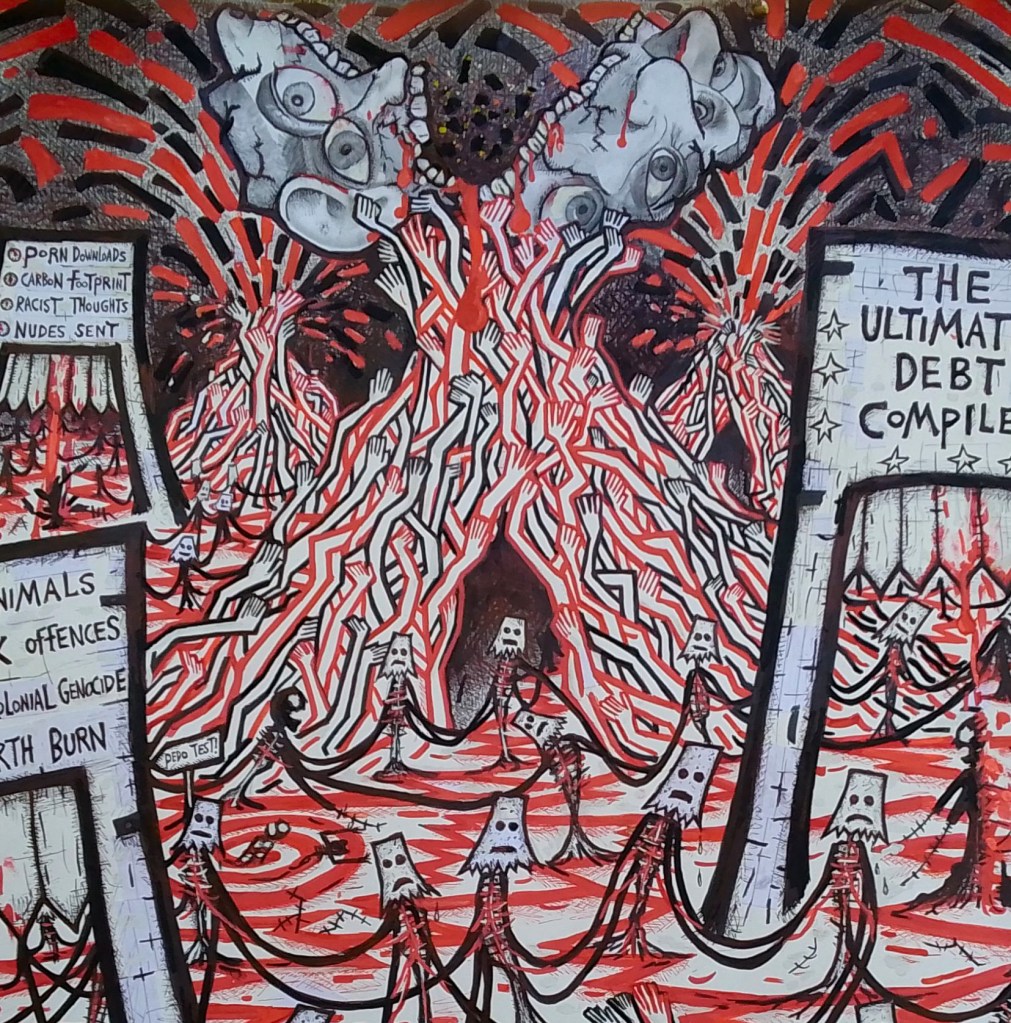
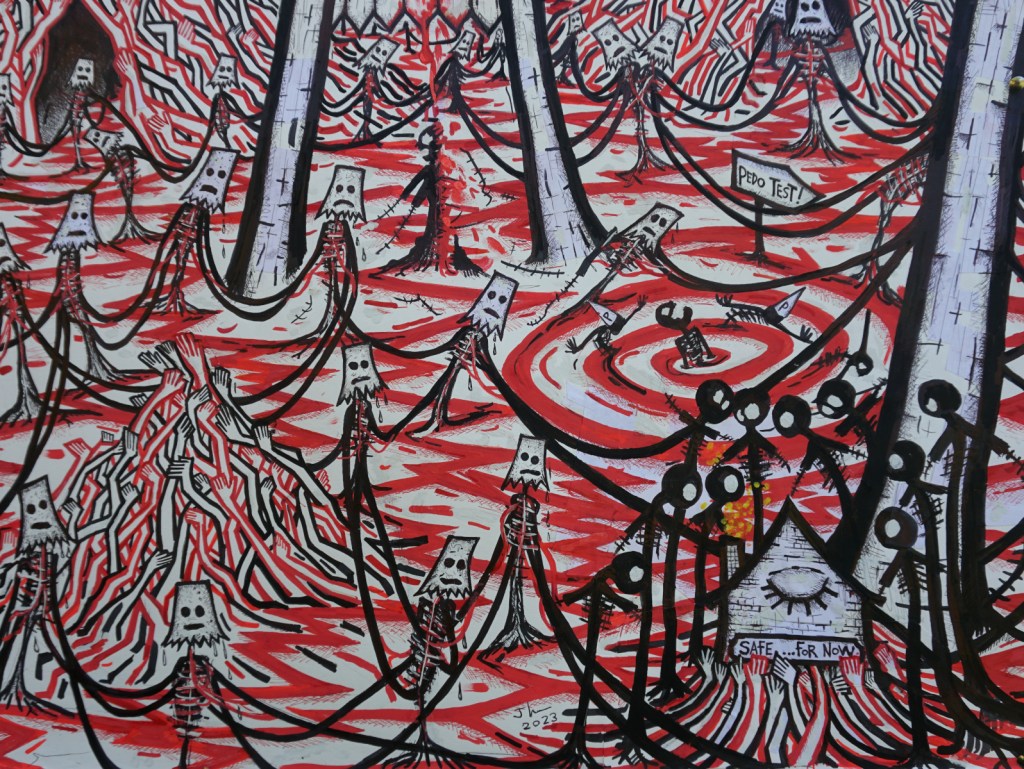

Please to introduce my new work ‘Hell has too many faces’
Possibly the most idiotic thing I have ever made.
But I shouldn’t fear making idiotic blunders. No artist should.
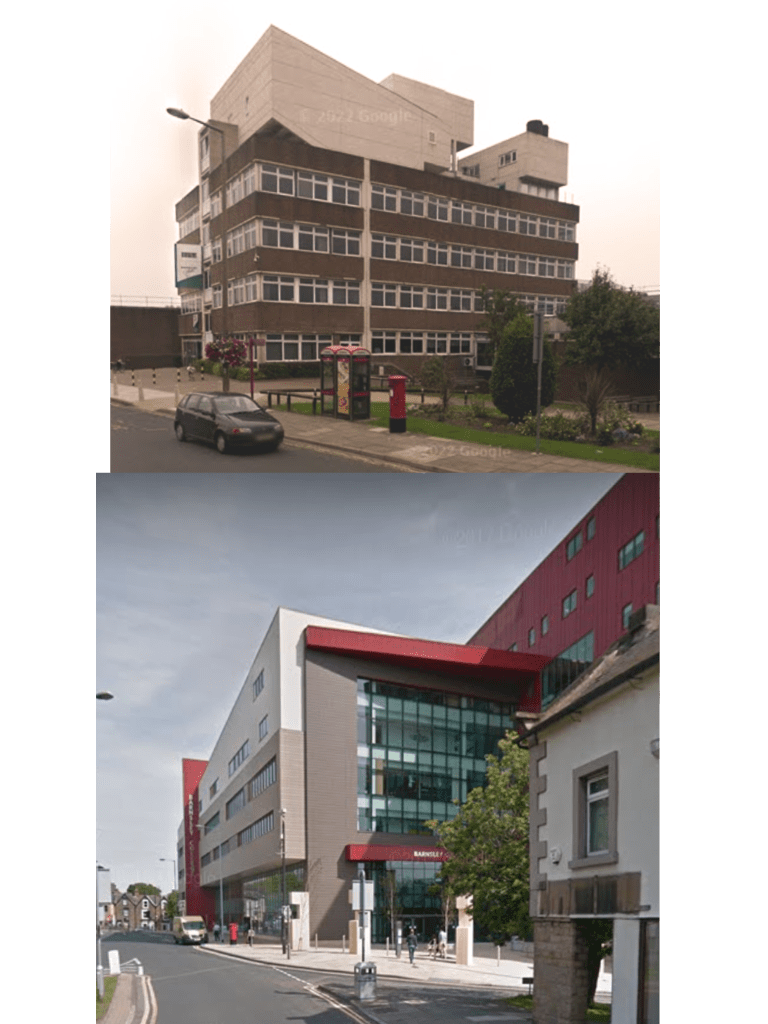
…and maybe it is?
In Laura Grace Ford’s words (I think?) maybe I am also ‘always yearning for a time that has just eluded us’ as I see images of urban architecture that still existed around the time of the financial crash 15 years ago, but before each subsequent crisis, fracturing and dislocating our grasp on a continuity of such moments.
I could have looked at the nearby cities where much more redevelopment has happened, but there’s way enough in my home town, where all the memories still overwhelm, like they re-materialise, oozing out of the walls. Where the faces, the expressions are oh-so familiar; a specific hardened look almost unique to such a space, transcending the eras of late Blairism and the schizoid urban face-lifts of the Tory era.
...I’m working on a life-long project I’ll never get totally right, especially when it comes to this town, where it can’t be perfected because it is ‘lived in’.
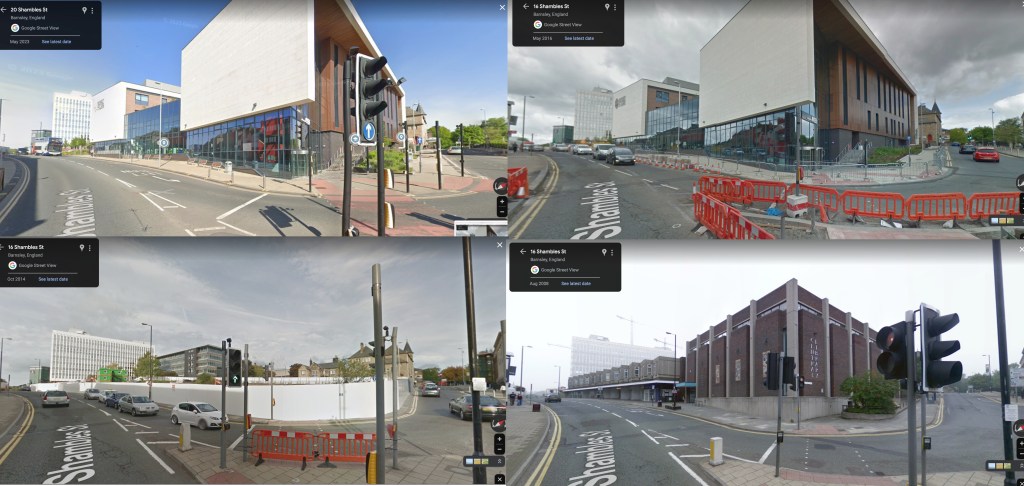
Until 2010, most towns and cities around this area had their ample share of brutalist architecture, or at least architecture that, like the cars in these 2008/2009 camera reels, posses a trace of what I’d call a post-war normalcy – a look and feel of a slightly more egalitarian age, before every exterior and interior design project assumed form with the gaze of Instagram in mind.
I find nostalgic trips quickly become quite unpleasant. But Google Street view doesn’t ‘feel’ past tense – it’s so central to our navigation of the present tense. We feel like avatars of the streets; both present and absent at the same time. Which is why it looks weird to see people wearing protective masks, in slightly less up-to-date imagery – like a reality slippage back into a moment that already feels paved over by the triumph of ‘Back to Normalism’.
When I found out about the ‘dates’ option on street view, it didn’t feel like the past in the way an old photo would. I admit that it was nostalgia that lead me here. A sense of loss, over something that seemed present, within me, prior to the 2010s. But it isn’t nostalgia I feel now I’m here. It felt like I could almost reach back into years like 2008 and 2009 – an ongoing reality, just elsewhere.
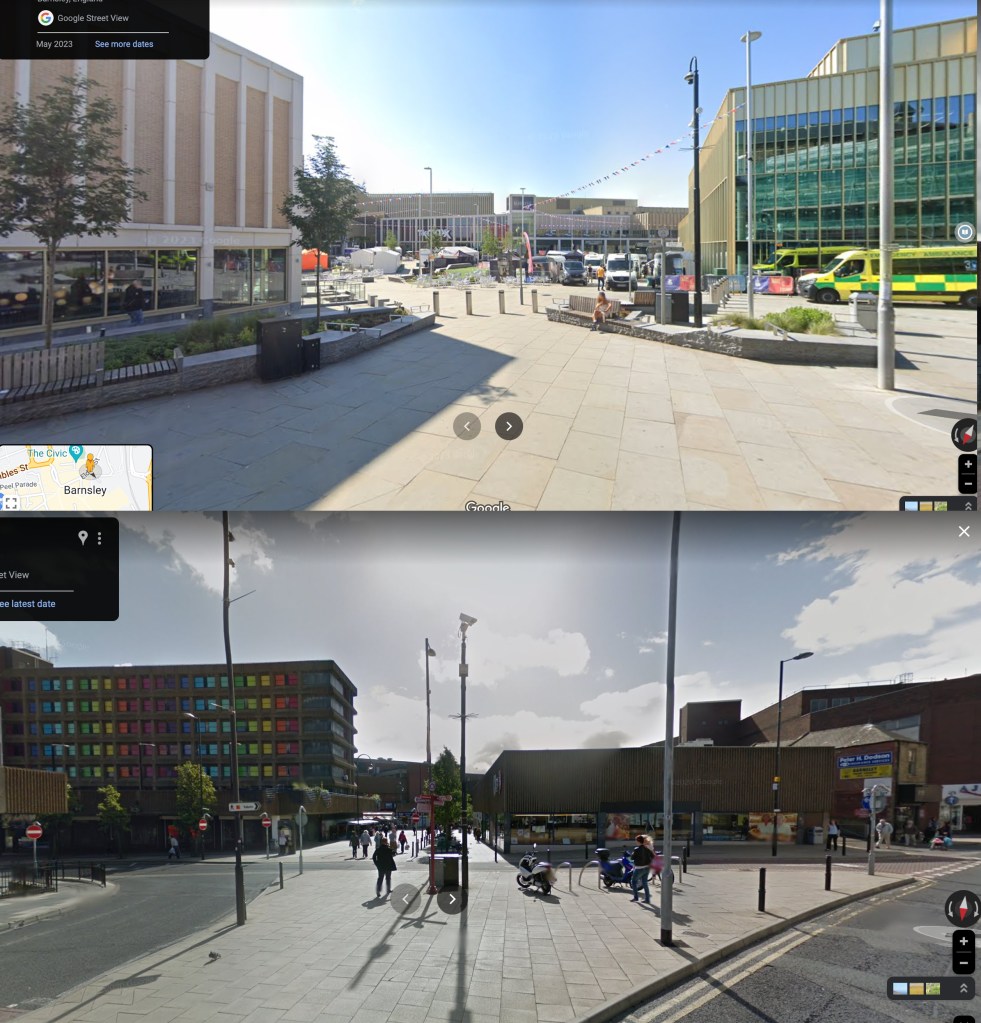
2008 and 2009 are a near-past, yet they totally cut from present tense. I put this down to the aforementioned design of the moment, the remaining buildings, clothes, cars and more. Contemporary redevelopments take the notion of non-place to something unimaginable in 20th century service stations etc. My friend likened the latest redevelopment projects to the latest iPhone upgrades, with all the right apps (Nandos, TGI Fridays, and the most in vogue style cafes and eateries), and I think he was touching upon how physical design and what we still feel inclined to call ‘virtual’ space have begun to be undistinguished in look and feel.
The design of 2008/2009 social space still seems to have a ‘bite’ to it; a resistance in its Dna to the confluence of onset of non-times and non-space.
Byung Chul-Han discusses how we live in a time of excess positivity, but with a poverty of negativity. He was discussing this largely in relationship to psycho-social and economic relations, in how this lack of a negative means that there is no ‘outside’, no Otherness which to relate to, push against, draw boundaries with, in space and in our own egos.
I believe this is equally applicable to the design of spaces, and I think the removal of post war architecture has in turn removed a resistance in space to the obligation to comply with whatever it is we are living in at the moment.
2008/2009, in its photo-flesh, reminds me of a time when I was already engaging in lost futures, (albeit bereft of that term at the time), listening to Kraftwerk, John Foxx, OMD and the David Bowie of Low, and drifting through these local urban spaces in how they looked back then. I miss it because I was still a young man, but I also had no smart phone – the tethering of the last long decade had yet to begin.
I think I’ve written all I can. Like my last post, it doesn’t really go anywhere.
But this ‘lived in’ project simply remains unfinished.

Of late I’ve more or less accepted that I’m unqualified to write even lazy cultural theory.
Much to my frustration, and after realising I was applying for a Phd I couldn’t do, I’ve come to accept that I’ll never get a job in teaching or writing about something that interests me so much.
In part this is because I didn’t earnestly want to. Try as I did, I could never get my head around turning something that feels so real, raw, and ‘lived in’ into a profession that I can switch off from, and not get visually fucked up by at times.
Equally I was borderline illiterate until my 20s. Apart from map books of the urban areas of Britain, I’d only read one book before turning 18. This was ‘Jurassic Park’, the kids’ version, about 50 pages long, and full of photos from the film.
By the point I got into reading ‘proper’, I was already far more confident in practicing art, where the rules and requirements of all other subjects could be warped and steered in a more bespoke direction.
However, it is Jurassic Park that I wanted to talk about here.
I bought this book in a shop in Perranporth in Cornwall. In the weeks previous I had been to see Jurassic Park, and the world had gone dinosaur crazy. This was exactly 30 years ago.
The summer of 1993 remains golden in my memories. No colour has been left behind with time.
I write a lot about depression and anxiety, but I don’t think I’ve ever really written about what it does to actual colour. When depressed and anxious, (and to be honest, you never truly come back the same), you can look at a colour and say ‘yes, that is a beautiful luminous green’, but you can’t experience it quite the same way. Memories from the late 90s onwards have significantly less colour in them.
Aged 9 in 1993 the world looked unbelievably lush – the horizons looked expansive and welcoming. As I looked out onto the Atlantic Ocean across Perranporth beach, the first time I’d seen a sea that wasn’t a mucky brown, I seriously felt like I was in a movie.
…maybe because to some extent I was?
The whole Geist, feel of the early 90s (especially to somebody like me whose family had recently come out of poverty, creating a palpable sense of relief) was exciting and so promising.
The 20th century had done its deeds; war was over, walls had fallen, new shiny shopping centres had opened, and I’d watched our local coal mine get demolished in a moment that felt personally symbolic: the past wouldn’t be my future.
This memory, this beach, this couple of weeks in the summer of 1993 seemed like a manifestation of every cinematic presentation of paradise I’d absorbed in the 80s.
And it was all channeled through the gates of Jurassic Park, which I’d seen at the start of these weeks.
The End of History.
For anyone who doesn’t know who Francis Fukuyama is or what he said, perhaps it’s good to begin by saying that what he said at the beginning of the 90s wasn’t as important as the fact that he had a world that wanted to believe those words.
Between 1989 and 1991, the fall of the Berlin Wall, the Tiananmen square protests and the fall of the Soviet Union, we witnessed what Fukuyama termed ‘the End of History.
He didn’t mean that there would be no more historical events in human history, but that our Modern understanding of history consisting of competing ideologies and social systems trying to build a better world, had reached its final expression in a Western model of Liberalism and Capitalism.
He was criticised then, but even more now for saying something so sweeping and arrogant. But it was the fact that the world, or at least enough of the Western world, wanted this promise, in what Paulo Virno (I think?) said was a wish for an ‘escape exit from both the 20th century and any historical responsibility’.
Who could blame them, really? We wanted the world that twentieth century cinema and adverts had promised us, a paradise liberated from the shackles of historical debts. And the 1990s, the final decade of the century were the ideal terrain.
What I’m saying is that to some extent the 20th century was an Hollywoodisation of reality, and by the 1990s we collectively tried to manifest this. And, for me, the perfect expression of this was Jurassic Park.
Was Jurassic Park not, if only by accident, a transcript for a ‘post-politics’ future, where a Western hegemonic system was so at ease with itself that we could now turn to a playground of ideas that included cloning dinosaurs?
Were the citizens of East Germany not just behind a concrete wall, but metaphorically in front of the gates of Jurassic Park, through which a post-political paradise on earth was beckoning? Weren’t these gates also the metaphor for the plasticly-neoclassical gateways into new world of then-shiny food and shopping chain stores that were splashing bright colours up and down Britain’s previously dreary coal soot-stained main roads?
Be careful what you wish for?
The rest is the history…
Not the end of The End of History, but a slow and whimpering end to its ability to convince.
To an age of disillusion, were we can see behind the stage set. Where we see ourselves, toiling away out of habit and obedience for things we no longer believe in.
Yet who were the dinosaurs? Who did they turn out to be, but history itself, museumified, thought safe to look at behind glass.
David Graeber when speaking about the UK in particular said that our best export of recent times was our defeat of the working class, by which he meant the UK’s weakened unions and political apathy left it a very safe place for foreign investment and international tourism (we’re all trained people-pleasers here now).
Indeed working class life is now in museums here. In places like Beamish, a town recreated into a living model of life 100 years back.
All the while, we all really exist, as working poor, in hospitality, health care and other services jobs.
We are the dinosaurs in Jurassic park, we are the history that can break out of its museumification. Which doesn’t lead to me to making a rallying cry – I’m far from the right person, far from in the right place, far from in the mood to do so (And there are many examples that prove it has already happened, or at least continues to threaten to happen).
Whether we are the subdued working poor, striking in countries like the UK, or the people who have instigated movements against global oppression throughout the globe in the 21st century, aren’t we all the dinosaurs from Jurassic Park?
Yet, what if what holds us back is the fact that we are simultaneously both the tourists and dinosaurs at Jurassic Park?
Is Jurassic park not also the gentrified streets of our cities, the oven-ready (Instagram-ready?) lines of real ale bars and eateries offering toned-down options from around the world? Where work and leisure become 1 in places like the gymnasiums? Are we not both the dinosaurs eating the tourists, and the tourists being eaten? The T-rex and the coward in the toilet – the eaters and the eaten in this staggering and battered End of History reality?
And I have nothing left to say on this really, I just want to wish Jurassic Park and the end of history a happy 30th birthday.
I can’t come to terms with the fact it’s 27 years ago.
It’s my fault, I guess, for getting stuck in this amber. Although I cannot be held responsible for the formation of the amber itself, I need to accept some responsibility for getting so stuck, and in turn unstuck from the world as it continued to turn.
It’s just that I woke up with 1996 in my head this morning, with memories that I haven’t been acquainted with for some time because I the cringe of them made me repress them.
“Can you remember when Ledge went dead broad Yorkshire?” my friends would say to me in the following years at high school, kind of intended to cause me embarrassment, as it did so.
It’s true, much to the criticism of my mother, who expressed a now partly-gone way of marking differentiation within the working class, between those who were respectable (who she identified her family with) and those who were ‘common as muck’, who I was apparently talking like. She also wanted to get as far away from the poverty of post-war Britain and then life under Thatcherism, that she was slowly changing the way she spoke, which in turn made me feel ever more embarrassed.
In hindsight I was beginning to feel cut loose from any order of things, and any senses of belonging or authenticity. Coming from a working class family on a small cul-de-sac of private houses, within a larger council estate, I felt like an impostor. I was too soft, had no hard edge, which seemed like a mandatory tool in the survival tool box, and I embarrassingly went on walks on a Sunday rather than hanging around outside the shops, and watched David Attenborough on a Saturday instead of Gladiators and Blind Date.
Yet, I wasn’t a middle class kid. There was a road that split my village between the council estates and the proto-Barrett estate style estate (with even more pretensions pertaining to affluence). These were built roughly at the time that the M1 motorway brought commuter life to the community, and I certainly wasn’t one of them.
My search for authenticity resulted in a hyper-Yorkshire accent, and an obsession with my family tree. This need for belonging developed to a need to fit in at school, which saw me trade in my interests in palaeontology and trees for football and Adidas clothing.
In hindsight, I was a sensitive child who had been pricked by something in the cultural atmosphere, something that would afflict seemingly everybody 20 years later, as we all clamber for an authentic selfhood in a neoliberal climate where all signs pointing to salvation increasingly tell us that we need to find our true self.
That we are so lost in the first place is indeed due to the trauma of the individual competitiveness of neoliberal culture just proves we are all still in the same picture, still being gaslit, but it’s just the colours and tones have faded from the golden hues of the 80s and 90s.
But am I projecting? Surely all expression is produced at the intersection of the interior and exterior. Which means it’s always hard to see where one ends and the other begins.
1996 seemed like a safe plateau after 20th century history had done its deeds. None of us could have known what was coming, regardless of how you interpret the following decades.
I felt lost, but I had a plan to fit in, and the future seemed to be welcoming me. What I now realise is that this sense of being of no place would evolved, and the horizon got closer, into the 3 A’s of anorexia, art and alcohol.
“What do you want to be when you grow up?”.
I had no idea of how to go forth into this future, and who really did? I remember the GCSE years of 98-2000, with the laughable job search programs on the old IT class computers, which had such limited scope that nearly all the lads in the class got the job opportunity ‘dog groomer’ as an option.
Most of these ‘lads’ have gone on to have children, and have parted into lives roughly defined by whether they moved away into university culture or stayed in more manual vocations within the area.
And in truth I was part of a subsection of a larger group of mates in my year who would have probably been diagnosed with ADHD if we were at school in 2023, who probably still exist on a contemporary minimum wage. We just weren’t aware soon enough that we were ill-fitting pieces for the reality constitution in front of us.
Anyway, 1996 is a colourful year in my mind. Perhaps one of the most colourful.
Admittedly depression, both in its dormant and active character, has dulled the colour of life in the years that have followed. But 1996 is still luminous, in the greens, golden yellows and oranges, and pinks. It seems to emanate out of the pop music, the clothing, the TV ads and even the ten pence chewy bars from the nearby Costcutter.
Our current retro addiction, our drowning in the nostalgia of past futures that we feel we’ve lost, has created a culture-wide habit of fetishising the 80s, 90s and even 00s to the point where it’s very likely that my memories have been photo-shopped, so to speak, ever since.
However, the colour-drainage that has followed suggests more of the aforementioned intersection of my own experiences and the evolving larger cultural mood.
There is part of me, and important part, that is still admittedly stuck in the golden amber of the 1990s. I know what it is, I know it’s part depression that has forged an illusion. But as things stand, embarrassed as I am to be returning to these subjects year after year, I don’t know the way of bringing closure. But perhaps it’s precisley because I’m not the only one?
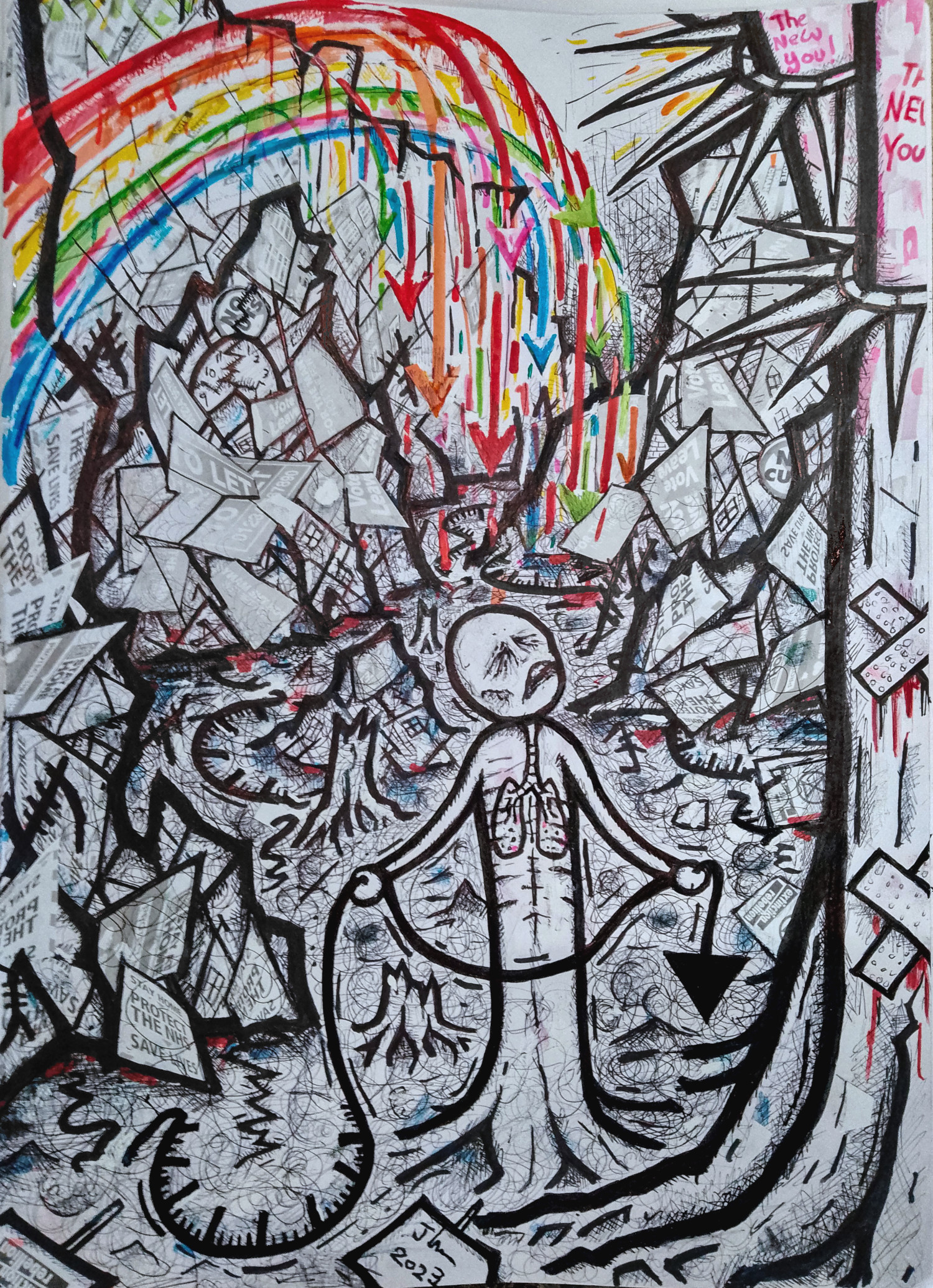
‘The Ever-aftermath’ (2023).

You side-step yourself here, becoming a spectral spectator – observing with no fixed identity abode.
It isn’t just a physical hinterland, but a psychological hinterland: in-between the inner turmoil.
Shelter from the digital rain of micro-instructions that bodysnatch our mouths; muttering a thousand million choices of direction – commands to constantly become more, to do more, to have more, to be more.
But you don’t ‘have to be’ anything here, except somebody who’s bought a coffee and has a seat; somebody who only has to appear like they might have somewhere to be, someone to meet, and something to be. Momentarily you are a spectre, and you find great relief in this – side-stepping all forms and roles a body must assume.
You’re not supposed to love places like this, you’re only to supposed to like the ‘authentic’ the ‘earthy’.
But, if you take Mark Auge’s definition of ‘non-places’ to heart, around 30 years after he described the emergence of spaces of a transitory nature that have no regional characteristics to differentiate them from anywhere else on the planet, you could argue that it has both spread and intensified to encompass so much more of our lives, that nothing is now more false than the ‘authentic’.
Service stations are quintessential ‘non-places’, but the fact that this sounds instantly oxymoronic, says it all, really.
Service stations now haunt me with traces of the late 20th century, generating memories of half-way points on childhood holidays. The architecture and music, and the general longings they provoke, cannot help but fill me with nostalgia.
In many ways, they are a kind of hinterland within the mind-scape of capitalist realism, for here we can momentarily play act at being fugitives to our capitalist subjectivities.
I have been coming to realise that my entire body of work has basically been saying one thing: “Help, I want to escape. How do I get out?
The daily dread of being a mortal body in a space that has felt like it is remorselessly closing in. Baffled at others who find coping methods, and ways to appreciate the beauty, as somehow I haven’t, even now.
I was anorexic because I didn’t know how to be a body that had to become something in this world. I became an artist as a indefinite middle finger up to a reality that I couldn’t find a space to become in. Both were a rejection of assuming form, in a world where I would be humiliated.
Chain cafes, chain pubs, service stations may not be spaces outside of this, but they are hinterlands within it – air pockets inside a process of slow suffocation.
But I have to leave now. I always have to leave, flesh cannot be the spectre it wishes it could crawl out of itself into.

I took these photos over 10 years ago, in inefficient pumps my feet could no longer tolerate – trying, in a repeated fashion, to see how far I could walk it to the horizon on ‘the tops’.
Today I’m up there, on the top, walking the very boggy old Yorkshire/Cheshire border, up to ‘Dead End Edge’ …
Today I became like I have become in many parts of my adult life: paralysed by my own presence – the horror of being living-mass; a face, a mask, a persona that must act and become in this world.
Feeling the draping of a well worn claustrophobia around my chest, I did what I attempted so many times in my adult life. I put on the albums that I once had to carry as cassettes, and attempted the ascent.
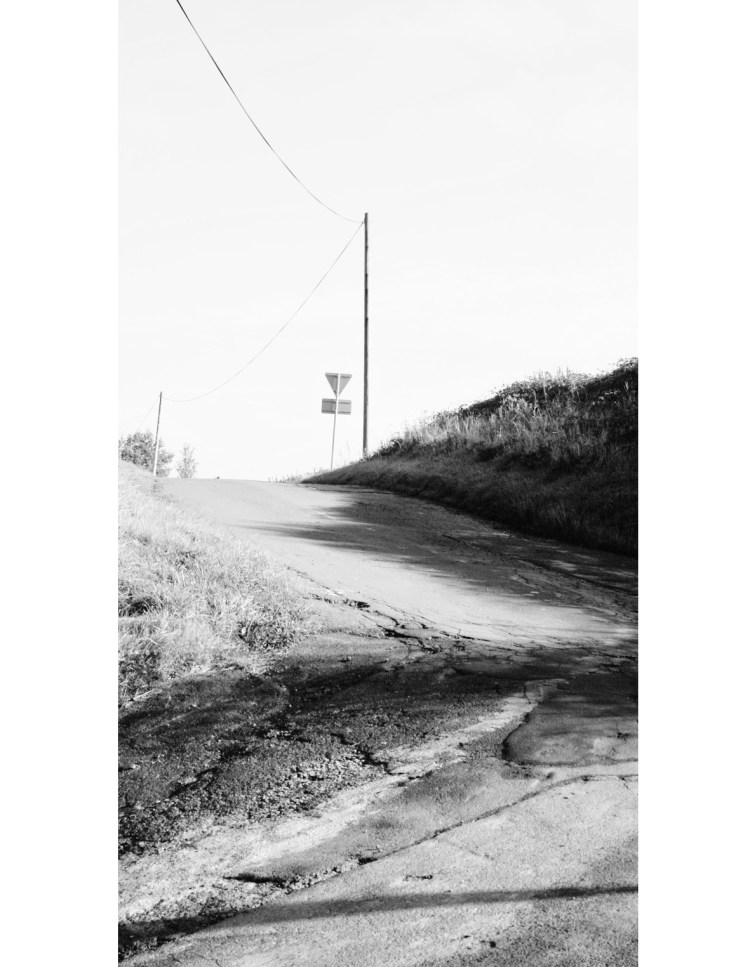
The songs that are now so embedded in the ascent are not worth disclosing. It would feel so odd to sing along to them in big crowds; they are moments that even close friends need not know.
All except the landscape…
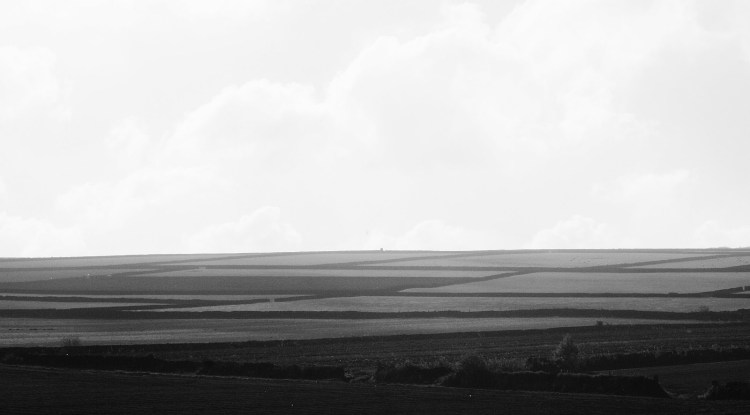
There must be a universality of music in its relationship with landscape, in how we imprint the former into the latter through our need to nestle meaning into something that folds out before us. We all do this, yet we will all have different landscapes and different songs.
Every road-bend up here, every monolithic object, every distant land-block meeting the sky, all are imprinted with lyrics, songs that mark every step on this ascent.
…trying to get somewhere. A point of clarity that always felt like it lay just above, on higher ground.
When the overlap of fantasy and reality inevitably receded, I would accept that it wasn’t worth trying to push myself beyond the threshold on the horizon.
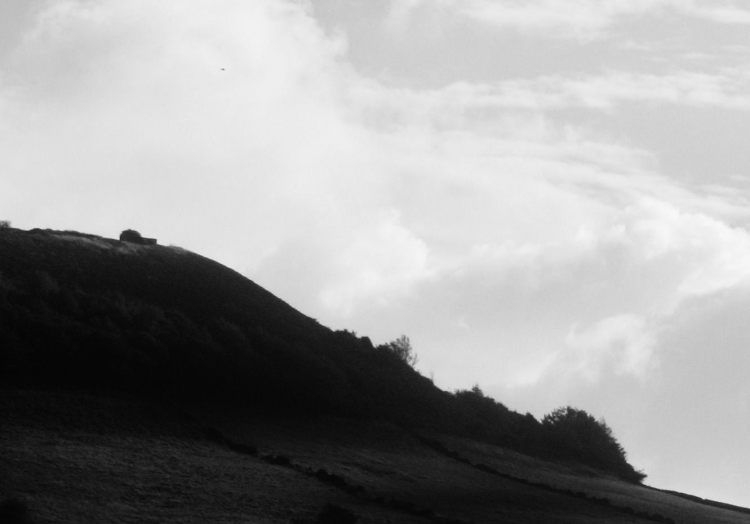
If, through my adult life, I have been saying anything without actually saying it directly it is “Help: I want to escape. How do I get out?”
I normally did my ascent to ‘the tops’ in the aftermath of day when I’d felt like I’d done something horrible or some event was too intense.
Maybe I’d had a messy and destructive night out, maybe I’d binged on food to the point that I had nowhere that I wanted my bloated body to be present in. Whatever the cause, I would walk and walk as if I could escape my own flesh, and out-run my societal skin upon these hills.
“take me to ‘the tops'”.
By and large this life-long pilgrimage was only in my head; the prospect of ‘escaping’ being a secondary reflex to all ‘down there’ stuff.
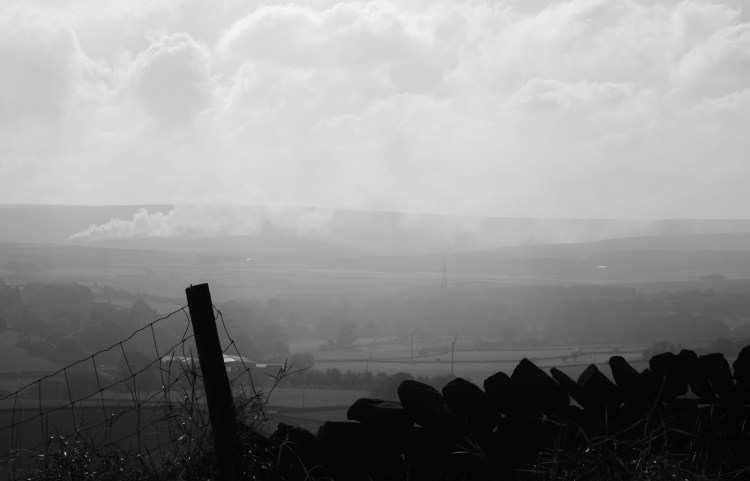
…and ‘the tops’ are always in the subconscious. They’re always there;
…their thick black line on the horizon, looking back down on us. They are always there to meditate on, wondering if one could ever choose to commit themselves into the portal they promise.
It’s only this year that I’ve truly understood what ‘the tops’ mean to me and especially my attempts to ascend to their horizon point.
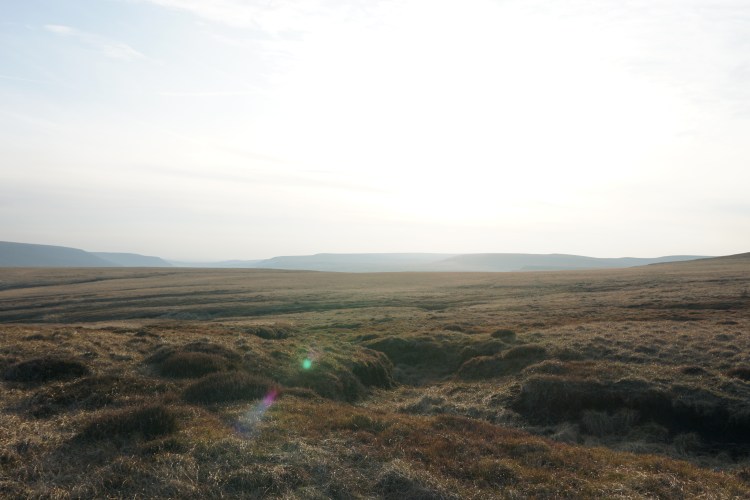
It’s as if these boggy hills are thick with the stories, trials and tribulations that cannot speak themselves below, in the cities, with their dizzying mist of unending upgrades, and continual sticking plasters over yesterday’s doings.
It is as if these hills both bequeathed these cities, and now stand somber, with too many memories that have nowhere else to be heard.
It sometimes seems that it is only in a familiar vastness that we can speak to ourselves and tell ourselves our true stories, devoid of judgement.
I love these hills because they let me do.
I can access them here, and better understand the fundamentals of motives – better understand myself, in a way that enables me to think about what I should do next.
.
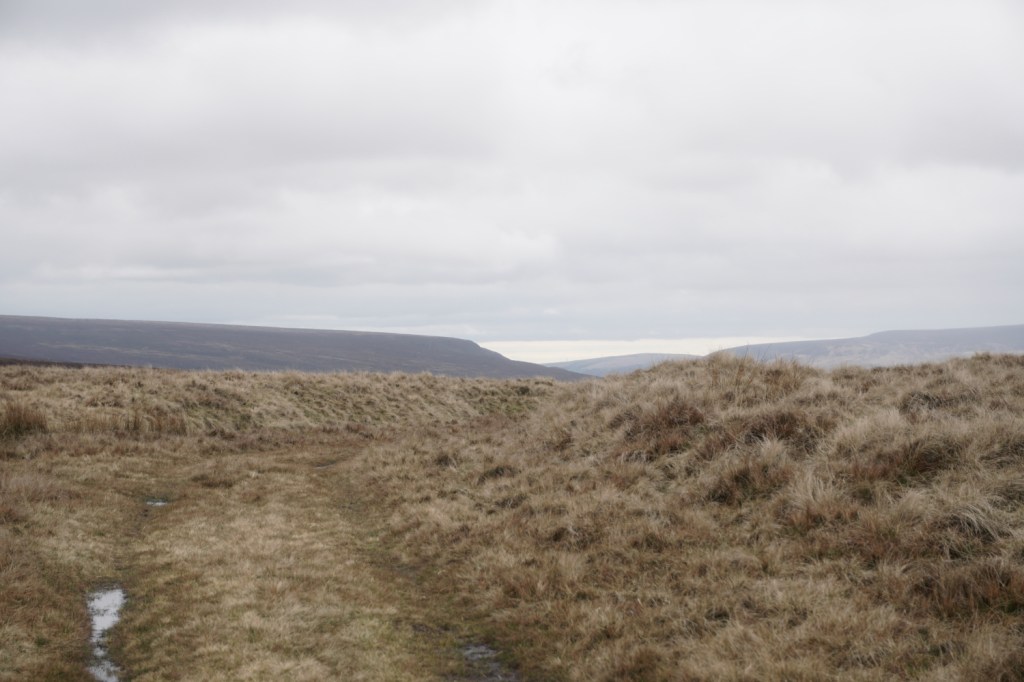
If I could almost remain entirely still, like one of the rare monoliths in this landscape, I may finally find myself moving.
I was in a state of static panic – the plea for an airlift out of an embodiment had become frenzied. “Down there” the onslaught of micro-instructions just got too intense. And like the insect that exhausts itself repeatedly flying into the window on a hot and sticky day, I wasn’t actually moving at all.
I am using a collection of albums that will now stay with me until the day I die. Those that sank into my bones as the soles of my shoes wore away on the tarmacked ascent towards the frontier-like tops.
In hindsight, I walked not only to avoid, but to be with my life “down there” – in a way I just couldn’t be when physically so. It’s as if the spongey texture of the peat actually holds memories, reactivated, like captured gas, by moments in songs, in a place where pain is no longer a ridiculously melodramatic response.
It releases a past passion to carry on in life that I lost to too many of my yesterdays, that were shamefully wasted, spat out against a wall. Years of bitterness spent on empty last trains in what felt like a cancelation in real time of the belief that a life could be what I used to think it was meant to be.
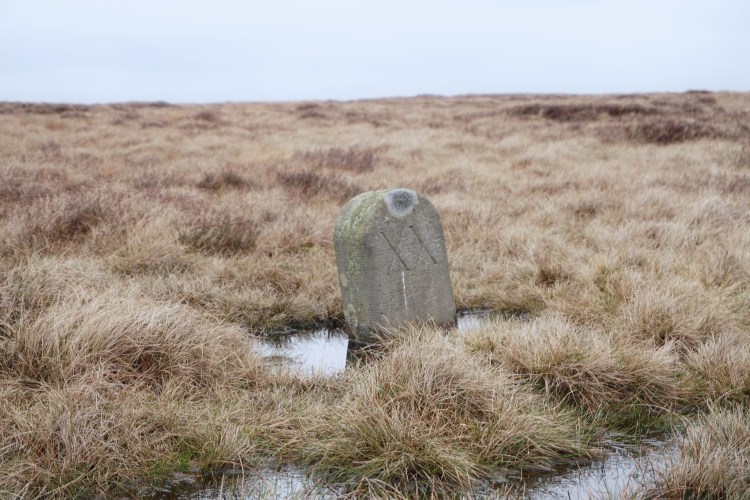
To be human is to be the road. We are road-makers through the indifferent forces ahead, limping on in-spite of our trauma. From generation to generation. Even if that generation is on a downward track, a wipeout, even a holocaust, we must plough on.
I’m on track that follows the trunk road, once a medieval salt road. Crossing east to west. A treacherous road that is hated by the commuters who’s shining cars make it look like a river of liquid mercury.
Yet, as it rises and rises, and passes over these foreboding hills, it is a direct expression for life as the roadway. To those who must see it as nothing but a miserable part of a daily commute, it must sound odd to say how I see it like a biblical reference within a landscape that feels so personal.
As I walk on the track, I can also mourn, as nothing is ridiculous to admit up here. How certain glimpses of hill sides give me flashes of colour, of childhood memories that hold colour in a way that successive memories don’t
Ever since, the world I imagined, a world I anticipated, dissolved. A world of peace, of less suffering, leaving the horrors of our collective past and never returning.
I come here to hear it, to feel ok with it. “Down there” it comes across as ridiculous, because we all must live in the world. We must continue the road, regardless.
I’m still trying to teach myself to live in this world. No longer desperately clutching to the chance that it could all suddenly “be alright” so I can be alright.

Heavy thoughts catch up with me, the prickly breathing sensations when I think about all things political “down there”.
The desperation in the popular politics of the 2010s, for a collective an airlift out of it all is now a distant memory, mere pre-covid energies.
“Down there” we now wander in a claustrophobic wilderness, all of us working our road; ploughing on, trying to find private salvation, private healing. Unsure any spark will ever happen again.
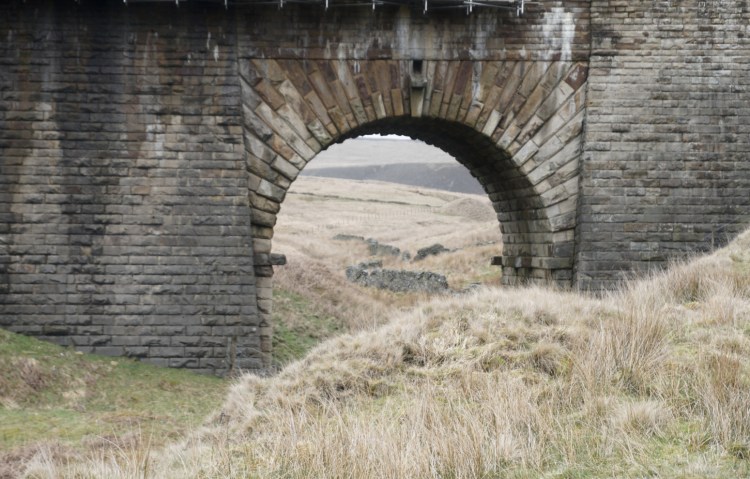
Unable to be with myself and world “down there”, I would come here not just to escape, but with a need for transcendence. It only ever felt obtainable in such frontier-like spaces.
To find a space outside of myself.
“Don’t forget to breath.”
Inhaling and exhaling.
…the endless dialogue that constitutes Being.
Everything in oneness, but everything also in its particularities. Exhale into the universe, inhale into me.
It is true that time makes everything into one, but it is also through time that all things possess their person.
Inhaling and exhaling, seemingly the easiest most instinctive practice, yet the hardest to remember as a life practice; the dialogue between the particular and the oceanic, the whole. Between you, your time alive in this body, and the vast and indifferent procession of non-human time.
The rivers up here, they all reach the ocean – where water is water. But before then, they are hillside streams blackened by ancient peat, endlessly carving out the carboniferous rock; they become the fast-flowing rivers and estuaries that shaped the industry and culture of the cities that cling to either side.
All becomes dust, all becomes water, and nothing really matters. But not before time. Until then everything matters, if only to itself.
And I need to find a way of inhaling and exhaling, inside/outside.
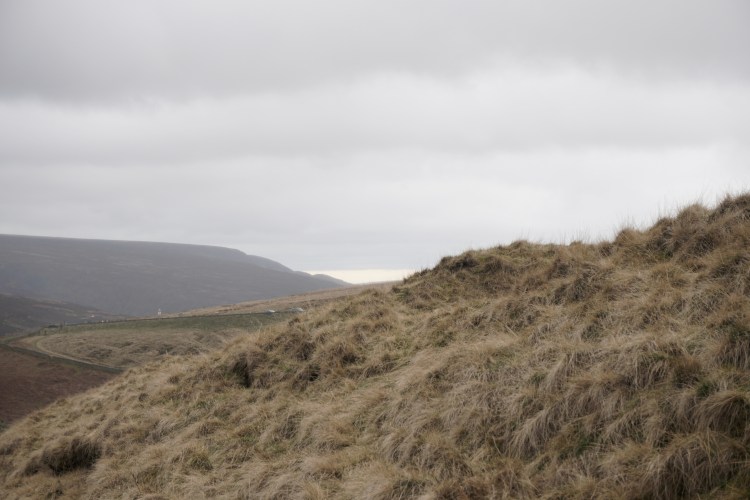
The ascent up here, away from the particulars, the claustrophobia and trauma in adhering to an identity, a mask we must uphold. The wish to fall out of the body, fall head first into the peat and bogs, in a place where are no longer specific.
So many yesterdays I would play dead up here, fantasise about escaping the painful particulars that provoke the tightening of the chest, the claustrophobia, of being, doing, getting it wrong, of being seen, being known, feeling shame.
The only true Outside is death. Only then are we no longer a particular. Every exhalation is a meditation on the moment when we are truly Outside.
The real challenge is to practice the inhalation and exhalation as the movement between the inside and outside; not to give up on the particulars, but not to inhale them to the point of suffocation.
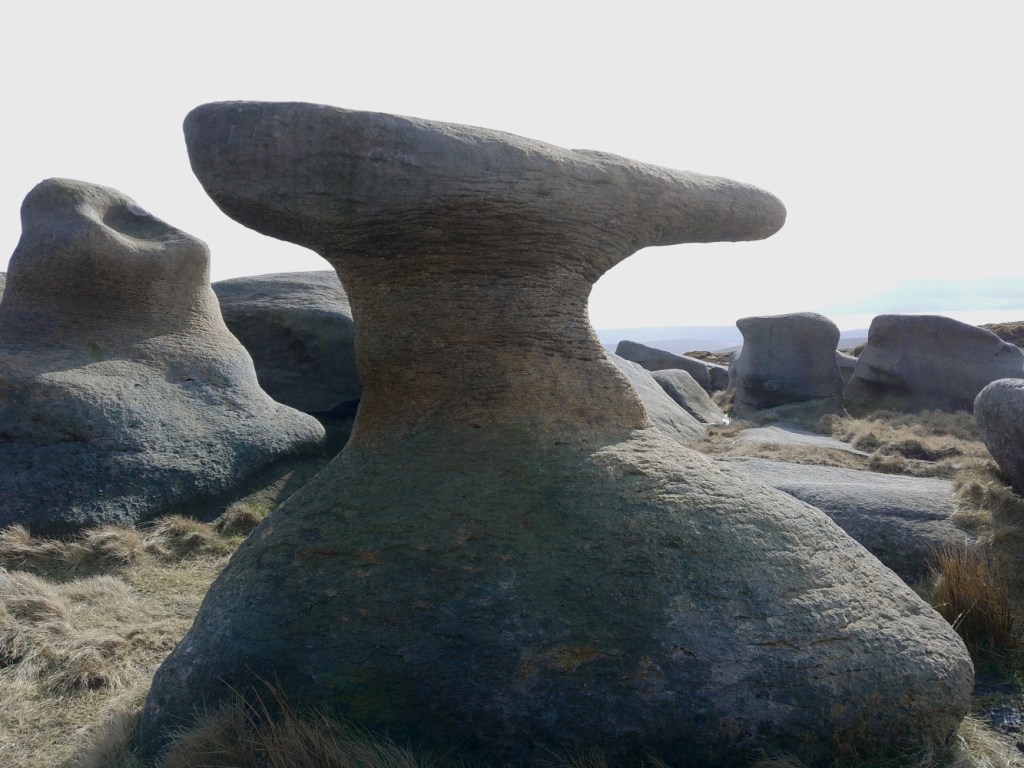
On the first day of trying to make the ascent I didn’t even get out of the car. But there was enough time to stare out the window at the towering blackened slopes of Longdendale. to somehow see my life reflected.
A story lyrically chaptered by this ascent – through the leafy foothills, the barren flats and the finally the dark tops.
Something within me has become accustomed to seeing kinship in its somber beauty.
Through these vast monochrome blocks of landscape I have the freedom to feel the appropriate emotions to deal with the colourless smudging of low-level anxiety that has blotted by adult life.
It’s the ability to grieve for personal lost futures. To love for what hasn’t been, yet still feels attainable, even if it is factually ‘no more’.
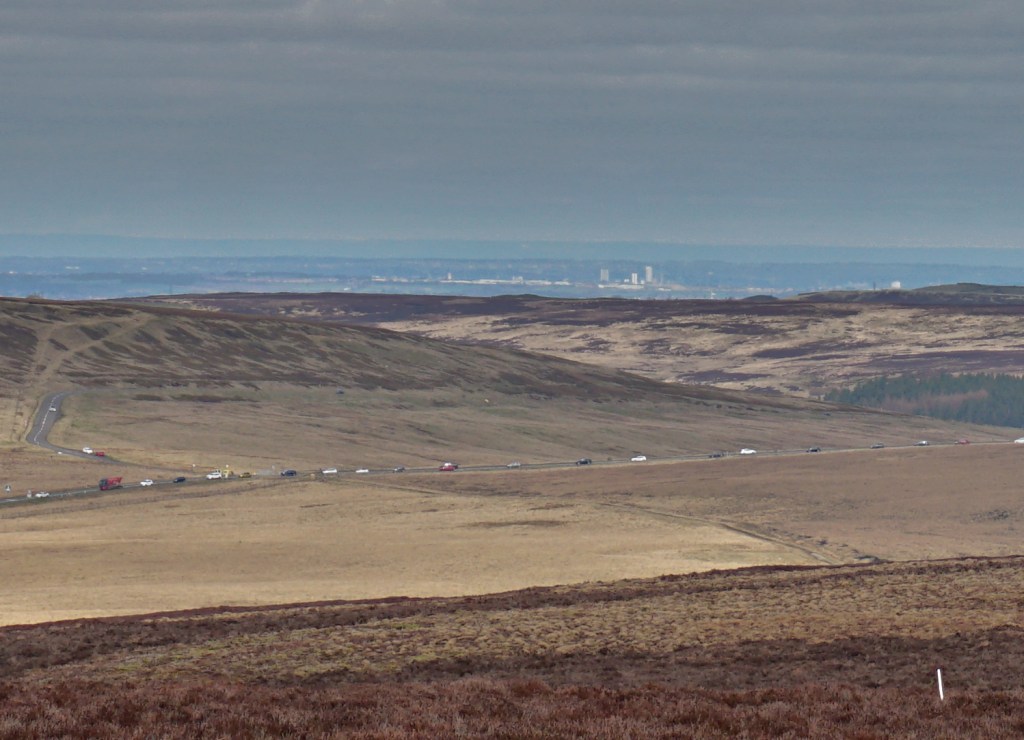
My attempt at the ascent the next day gets further than ever before. In fact I finally reach the summit of the grey/blue line on that horizon that hangs over us.
This isn’t solely a grieving space, but also a space I can escape the ridiculousness of my romanticism for the world. For, up here it is no longer ridiculous , it is no longer getting triggered into bitterness by all the many things that cancel it out. Up here, I look down, and I wish I and it could open up.
Perhaps this is why the ascent always brought anticipation, on catatonic downers that were emotions craving to be released.
Despite their relatively small scale, their expanse suggests I am climbing up to a portal, through which I will find a way that has thus far been blotted out of the remits of what is possible ‘down there’.
This may originate from their lunar-like quality. It often feels like an extraterrestrial landscape; the Woodhead Pass (cars reflecting the sunlight back from the distance) assuming the form of some astral runway, a symbolic passage out of this place.
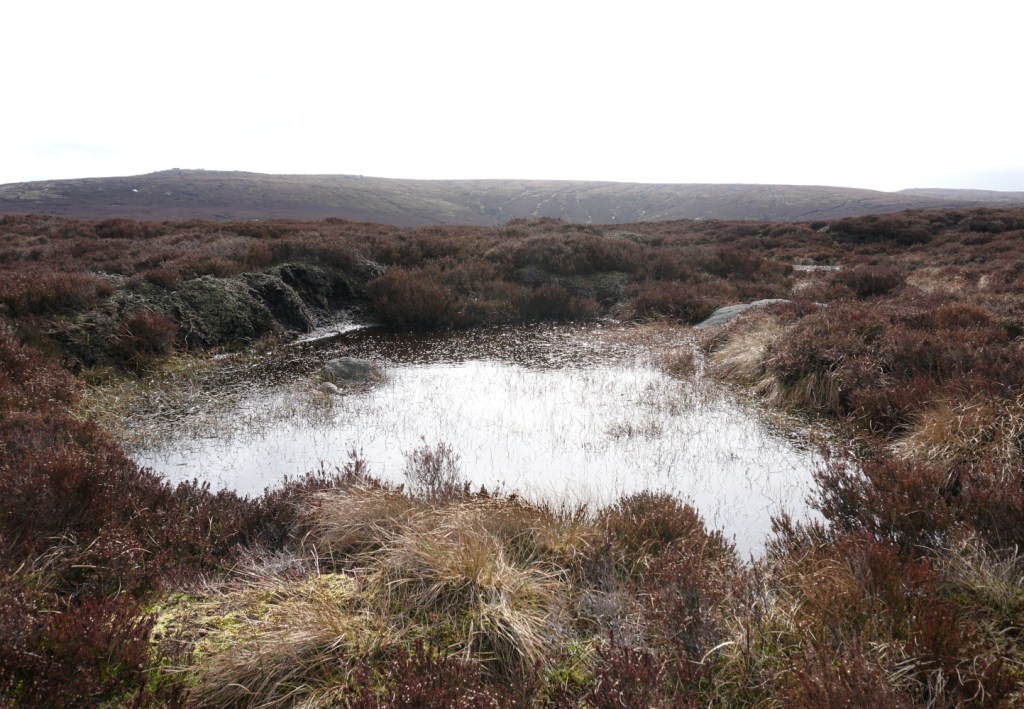
In order to understand a landscape, feel it and not just see it, you need to be kind of swallowed into it – maybe even lost. The same applies for urban space, albeit in a different way. The place needs to have left a mark, maybe indelible, or at least to the extent that it will bleed into your subconcious.
I have spent so much of the last 15 years in aimless days, roaming street after street of nearby cities. I assumed that somewhere hidden in these urban clots was the gateway to the body-presence I so desperately wanted.
Being ‘in the city’ began to get very heavy. And any observant passer fuelled by an ego agenda could expose my vulnerable misery to a space which shows no empathy to the homeless, never-mind more fortunate lost souls.
My need to be air-lifted out of a life path stuck in ‘no man’s land’ had become so increasingly desperate, that the inevitable unfulfilment became deeply unpleasant.
I’m no longer 24 and it is no longer 2008. The atmosphere has changed so much it’s hard not to feel washed up on a strange planet. Strange, because it looks like home, yet isn’t. I am so far from being home.
I have masked how stranded, how lost in an unrecognisable time I have become.
I have lost the ability to adapt to our ever-morphing reality frame.
I don’t know what else I can do or say, without falling into the habit of pretending impotent cliches meant something and I could find meaning from using them.
Maybe I have run out of time…
Or maybe I just need a different kind of time?
The present experience of time flow is at best disorientating, and at worst, emotionally exhausting to the point of being traumatic.
It’s our duty as children of a machine age, to keep up-to-date, as if our lives depended on it – and it often does.
‘The Machine’ must always up its tempo, that is how it survives; by overseeing a climate of competition, from land colonisation, competition for market dominance, to mental colonisation (which perhaps defines what we’re currently in).
I believe I caught the tail end of a very 20th century experience of time, of things getting better and faster in a linear direction. It’s hard to pinpoint when that experience vanished, but since the collective temporal uprooting caused by the pandemic, so many of us simply cannot reapply ourselves to the chaotic rhythms dominating contemporary life.
This feels more like a ‘Whirlpool acceleration’ where things are are still getting faster and faster, and we all still look forward, but as if outwards from a vortex. The tempo of contemporary life is no longer to successive (and recognisable) markers in a rhythm, but instead sucks us into a pulped procession of moments.
So many of us can no longer recover from one burn out to the next.
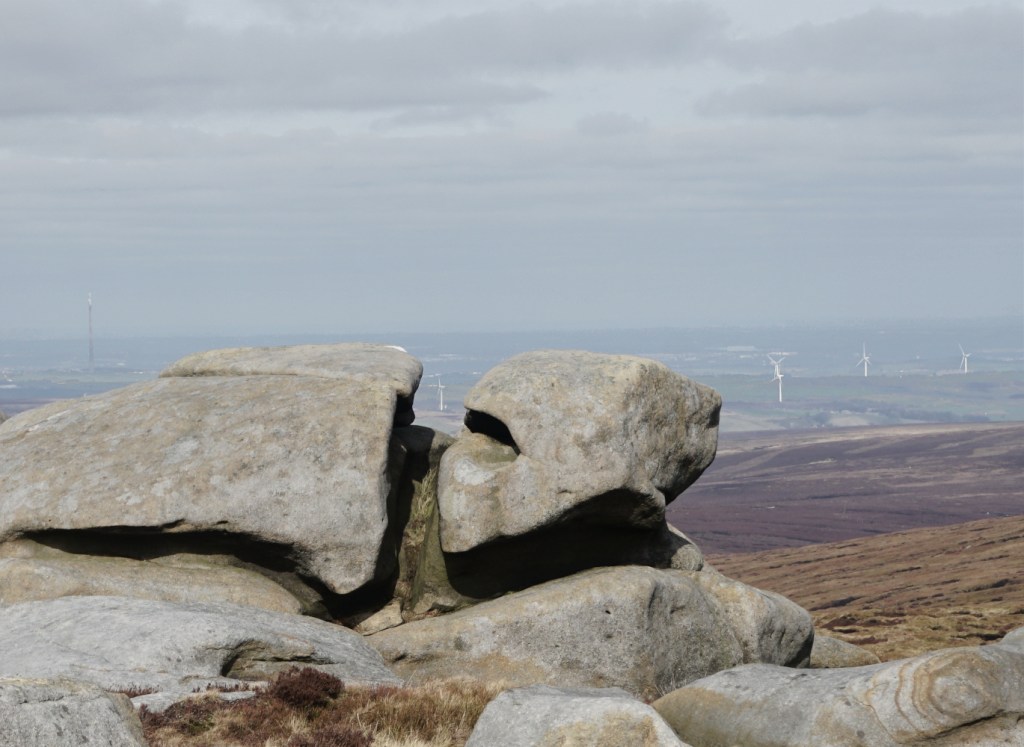
But I don’t want this to be an expression of hopelessness. Largely because I’m now at a point where I can no longer afford to be hopeless. Although I may be out of time ‘down there’, I need to now rehabilitate into a totally different frame.
My 30s have been an unpleasant space. If I have the choice not to remain here, then it would be foolish not to take that choice.
I know there is a lot of people who don’t have that choice.
My most honest assessment of my situation brings deep discomfort to even articulate. Never having a relationship, or children, or my own place for long enough for it to genuinely feel like my own place. I’ve tried things in the past, struggled to cope when things got tricky, but I’ve always had a family home to fall back on.
…and one day I will see this with gratitude, not the heavy shame that has dominated my 30s.
Shame is nothing but debilitating, and it erodes aspects of your self worth, even the sense that you have human rights.
“For ‘who am I to speak up for anything?” the inner story would go, “when I have experienced so little of what makes adult life tricky? I’m not even a real person”.
I could beat myself up about turning away from the world, but right now, I just want a short space dwell in the exterior, the ‘up there’ where, despite the fact it’s not really a natural environment, it still holds its own time(s) – carboniferous, ice age, all meeting and eroding into one, but over millions of years.
There may be fear, in any remote space, but it doesn’t make for anxiety – only the time we humans make between us does that.
I feel like this is where I must do the work I need to do on myself…
…and, despite last chance climate warnings, and a seismic transferal of wealth to the richest, it is something I cannot feel guilt for. For there is now a least one shoot of budding optimism, which is something I haven’t been able to hold onto for some years.
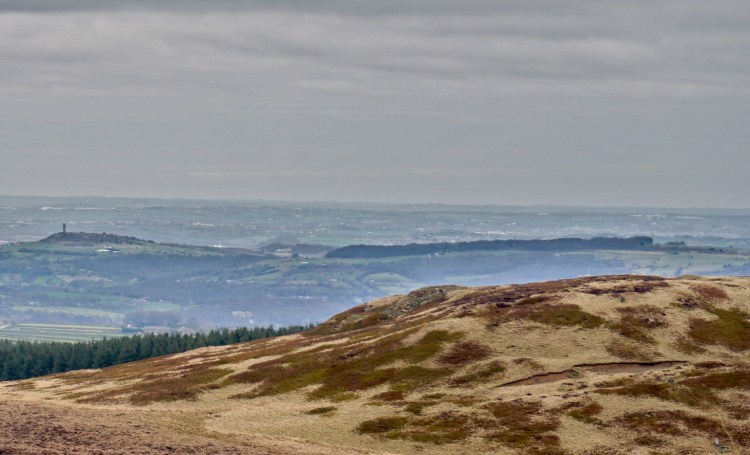
My experience of Mental illness has been of being stuck in a space with your own thoughts about yourself, self-consumed thoughts, swirling around and around with fluctuating ferocity.
The words ‘self-consumed’ will likely produce little sympathy, yet all of my writings, all of my doings have been saying one thing, ‘help, I want to escape this’, over and over and over…
I have been in this self-consumed vortex with my own thoughts and actions, whilst watching other people live out their lives for all my adult life.
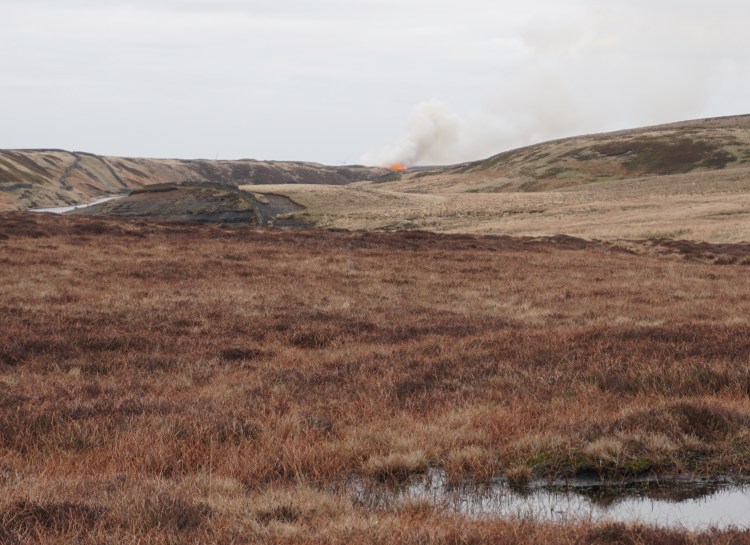
Then comes the Friday evening…
…horrid gut feelings that feel specific to this time of the week…
Alcohol…
I, like many others, use alcohol to exercise what you could call emotional blockages, that build and are difficult to process and manage.
But my relationship with weekends, especially over my 30s has been a personal horror story.
I am never sure how the British weekend experience translates in other countries…
We all live under capitalism, unless we’re rich enough not to, and even as the old work/leisure divisions have melted away in recent decades, I’m sure we all have a relatively similar experience of having a lack of time to do the emotional recovery needed after a weeks’ work.
I think weekends in the UK have kind of become a horror story of their own making. It’s there in the abrasiveness caused by the sheer volume of people clambering for their right to have fun and leisure before they return to work on Monday. It’s nobody’s fault, but it does often feel like everybody’s unworked-through demons are raging up and down the streets of our towns.
…as are my own.
Down there it has felt inescapable…
… and it’s painful and humbling to look back through years of writing, to see similar, self-absorbed pleas.
As life started to feel like it was passing me by, I felt like I had no time to actively pursue ‘leisure’, and I ended up in towns on weekend, telling myself that I had to put in the hours on my ‘projects’ – trying harder and harder to get somewhere; mentally always on the cusp of acceptable adulthood, but never quite reaching it.
As I found ways to avoid ‘banter’ from drunken revellers, who can clearly see that I’m not in weekend dress code, I’d simply join in, only to end up in bars at 1am, one of the last people out, with a rucksack on my back.
Looking down on myself almost from the vantage of this hill, it seems so obvious that this life pattern is blatantly not working. And it’s a truth that has in some way always been staring me in the face; on some level I’ve always known that it wouldn’t finally
…horrid gut feelings that feel specific to this time of the week…

Today, despite yesterday, I escaped it, and I went up onto the tops again.
…and I found myself at a place called Snailsden.
The names of places on ‘the tops’ still pertain to their origin, if only in that your imagination can still make name-places connections here in a way that is much harder down below, especially since the ‘blandalism’ of the late 20th early 21st century smoothed out every rough edge.
Bleaklow is still thus.
Holme Moss is still thus.
Marsden is still thus.
And so is Snailsden. Because, despite the presence of sheep, it feels pre-mammalian; a den pertaining to much more ancient life forms.
It’s hard to believe that this area is still classed as within the boundaries of my home town.
As I walked, sometimes through open moor, I stumbled into a valley that seemed too dramatic a ravine to be where it is. This just does not feel like it should be here, it feels out of joint with what is 10 miles down the hill
Apparently it’s called Ramsden Clough. I’ve never heard of it before.
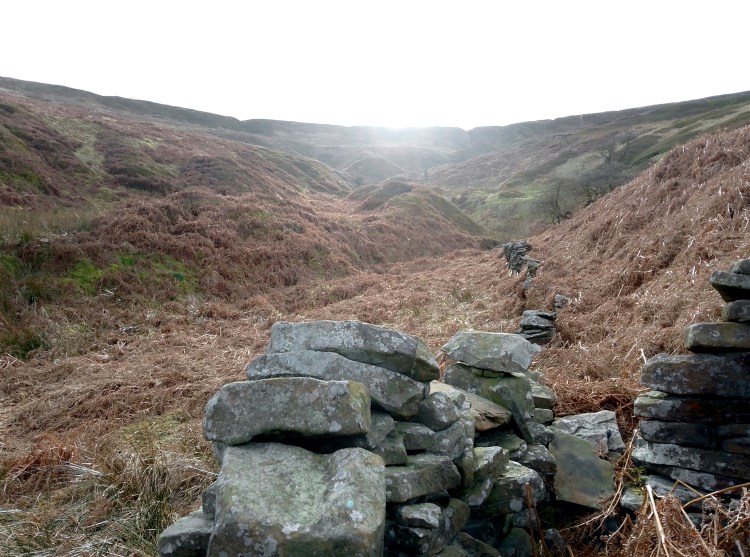
The moors haunt our imaginations, they have a spectral presence in so much culture that has been created down below. They are in us, we are from them.
But they only uphold their poetry when there isn’t another single person in sight. You can only think of others here in their absence.
I wish to walk and walk, without fear. Reaching exhaustion, to point where you lose your sense of self to the land.

 John B Ledger