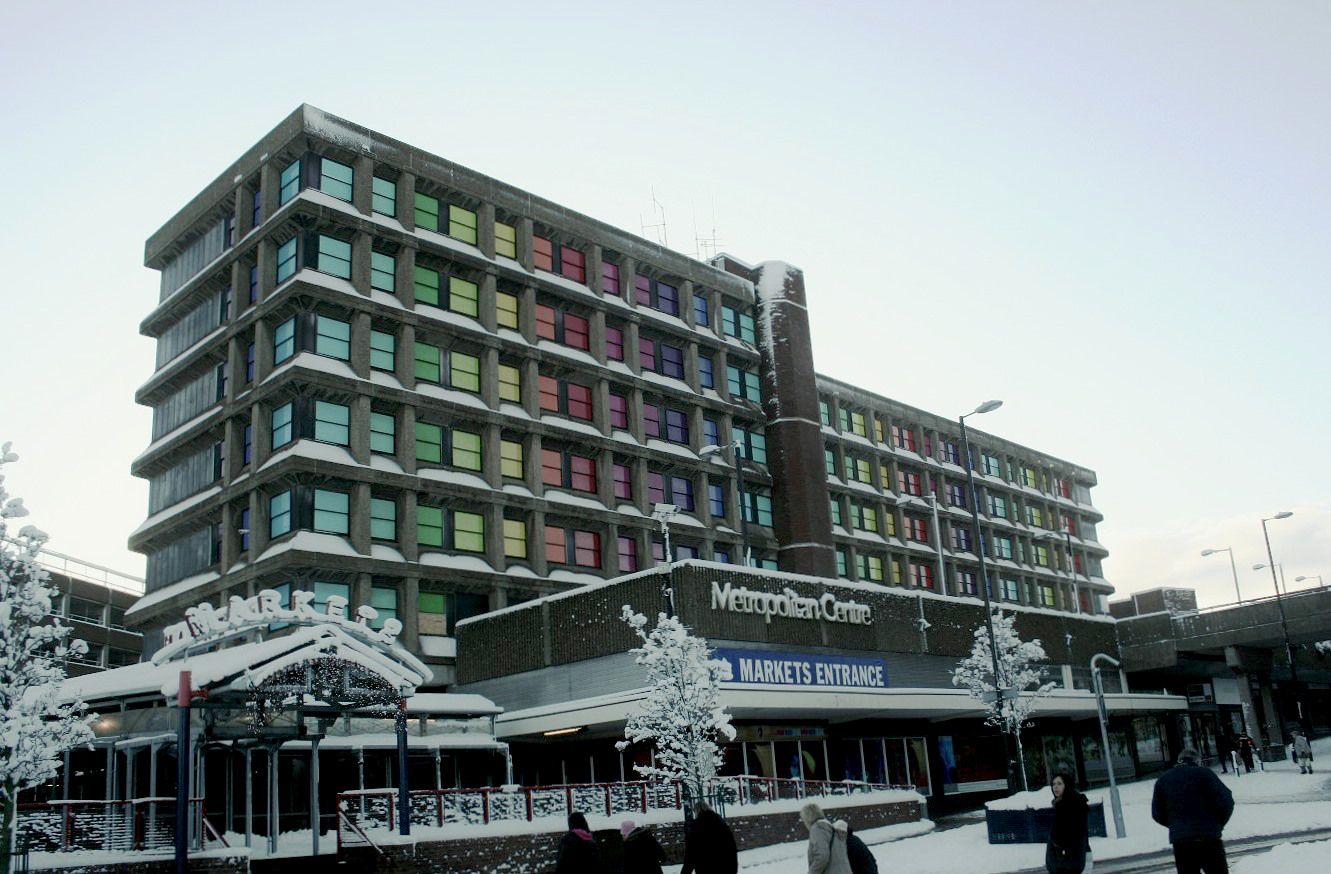
The artist and writer Laura Grace Ford speaks of ‘the stain of a place’.
I understand this as referring to something so ‘lived in’ that you can never remove the traces it has left; spaces that trigger personal as well as generalised ghosts.
I’ve always found it hard speaking about my home town. Natives are fiercely defensive of it, whilst outsiders still utilise its Victorian reputation to ridicule the place.

I think its the same as the love you have for a family member. Love that you have no choice in. Unconditional love, that is inevitably mixed with hatred, resent and sorrow.
I have often flopped into my home town after a ‘try hard’ endeavour into a nearby city, to find myself met with a deep warmness and sense of community. Equally I have experienced my bleakest and most regrettable nights here, sat drinking by myself in bars that feel like the end of the world, and walking out into what have often felt like the saddest streets on earth.
I wouldn’t feel either of these things in a different place. Although I have built up affinities and affection for nearby towns and cities, the only place it has ever truly stuck to me is in their lonely exits, on train station platforms.
The ‘stain of a place’ finds its visual representative in the soot-stained terraces, the kind that gives all those born in the catchment of the London Brick Company the heebie jeebies. For there is indeed an malevolent aura: a revenge reaped on the sandstone of old river deltas that crushed Carboniferous plants into the zombie energy of coal.

This town has an ego the size of Manchester. It’s true. Perhaps it lacks the accolade, the history, the cultural icons, but it most certainly has a sense of itself that is usually only associated with a town that claims to have made ‘the modern world’.
Perhaps it’s the town hall? In relative terms it dominates the skyline like the Eiffel Tower or St Pauls cathedral (once did). Despite the criticism it received from George Orwell, who watched it get built whilst thousands of the town’s people lived in squalor, it’s legacy outweighs its conception – for it has a gravitational pull towards a kind of civic monotheism, successfully dragging countless ex-coal villages scattered miles around it into its orbit.
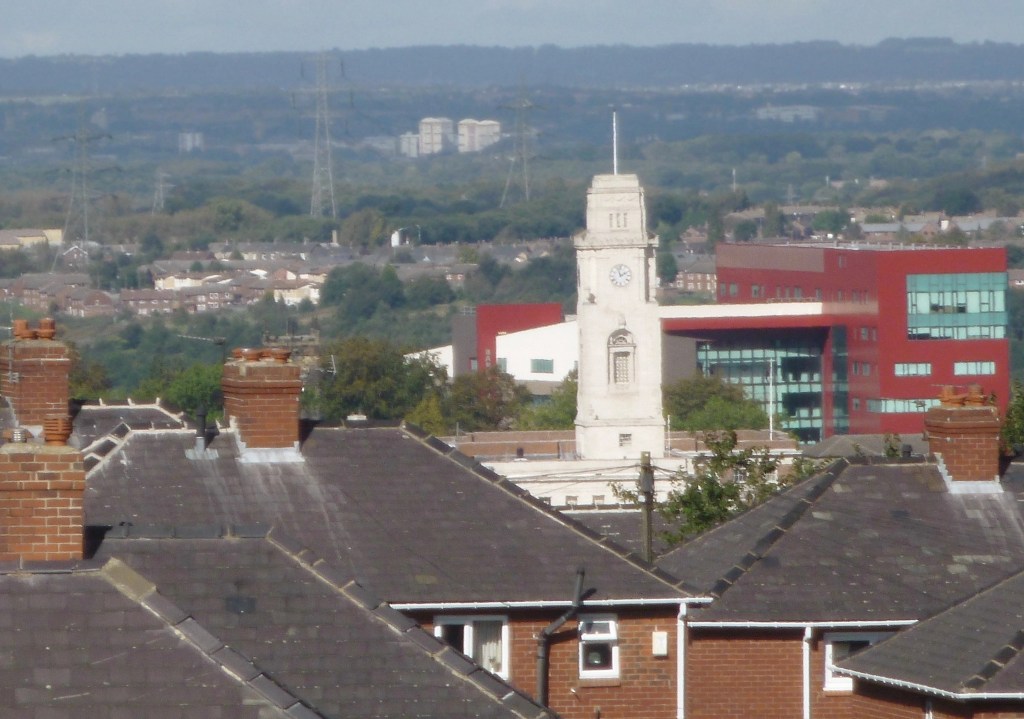
I am admittedly in a state of perpetual flight from its vortextual pull. I can find it suffocating. But it’s something worth recognising for its uniqueness, even in my difficult years of alcoholism and alienation where some make-believe West Country sanctuary perpetually calls my name.
Sometimes walking through the centre feels like I’m on an acid trip in a overly-familiar soap opera set. Sometimes it gets too much. But it will always be here with me now. I will always be part-hometown.
 John B Ledger