
I’ve put a lot of work in at my studio a lot of the last 4 days, and I am very pleased with the way things are going from the perspective of the artwork.
However, the ache from neglecting other aspects of my life has been creeping in. These are aspects of my life that I admittedly continually try to circumvent because they are trapped within lifestyle equations I don’t know how to solve. I was consumed with the concerns that I’m going down the same self-isolating path, where, no matter the quality of the artwork I produce, life doesn’t improve.
With this in mind, I looked at my pushbike that I sometimes store in my studio when I get the train home.
I recalled the heavily-memed H.G Wells’ quote that “Every time I see an adult on a bicycle, I no longer despair for the future”. Because, interestingly, what is often overlooked is the standpoint of the cyclist. Ten minutes on a bike (as long as there’s no gale-force wind, winter rain or road rage) and you no longer despair in YOUR future.
I weirdly find jumping on my bike one of the hardest acts; a mind-set will doggedly refuse to evict itself, and sees the bike and feels threatened.
Emotionally, I was crying out for this bike ride home, and, importantly, I needed to go the longer route, due to what I would see there.
…and what I would see was my own actions; actions that I find it ever-harder to recollect as the pressures to have at least some material stature of as an adult aged 40 has slowly washed away the significance of the more passionate artistic acts that punctuated my 20s.
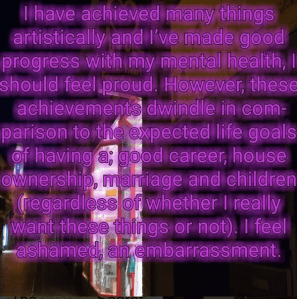
The above quote was anonymously submitted to a project I co-led as part of a collective project way back amidst the ‘Corbynista’ heat of 2018 (or so it seemed) that promised to not only wipe out student debt, but the inherited shame of countless millennials.
I suspect I know who wrote it, and I am comfortable saying so, because we have admitted that we share very similar feelings, as we persist and persist as artists often in the ‘dark matter’ of culture, now irretrievably captured and rewired by the social media artist-subjectivity which includes all content creators.
Likewise, I often struggle to feel proud about all the things I have done.
Even when I cycle I am vulnerable to achievement-obsessed thinking, and even as I cycled as fast as I could up and over the ridge of hills that separate the drainage basins of the river Calder and Dearne and recollected how much I love this area in summer, it was only as I descended past the Yorkshire Sculpture Park that I forced myself to stop and observe the fruits of things I had done.
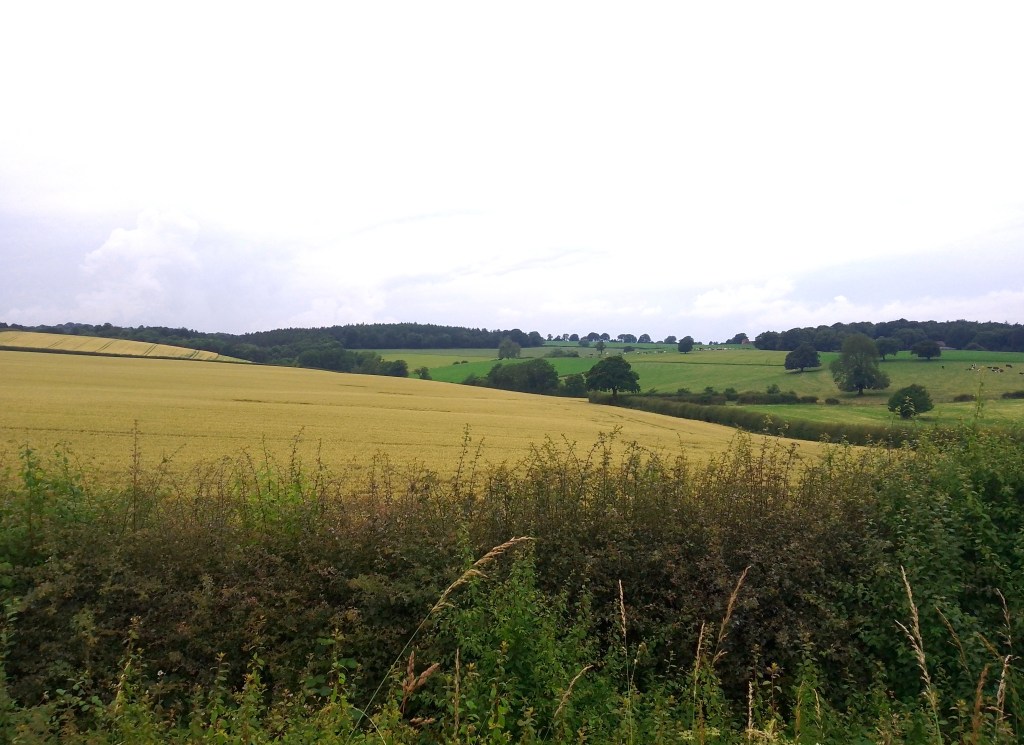
This area sits on the boundary of South and West Yorkshire. Unlike North or East Yorkshire, which will no doubt conjure an idea and cultural identity defined by either the coast, the ancient or the rural, West and South Yorkshire were seen as industrial, and in turn are now identified as post-industrial.
The problem with the notion of the post-industrial is that it is easily conflated with the notion of ‘post-historical’. Together they can habitually collude in culture, politics and the psyche to create a sense that the march of time stood still at some point in the final years of the 20th century. Indeed, this vague point has created a perception of a default moment, which perpetually feels like it was only yesterday.
This frozen clock is perpetually and rudely arrested by a conflicting reality, of an acceleration of tech, tensions and other things on a global scale. But also on a local scale. The default mode cannot understand the level of development going on, as the infrastructure bows under the pressure.
This is quite a lengthy way to explain the geography of this area. Yet, between the haphazard sprawl of West and South Yorkshire, there still remains a curved gap of land which is still largely rural. The Yorkshire Sculpture Park sits at the middle of what can seem like a little oasis, which rivals the rolling green landscapes of Dorset or Devon.
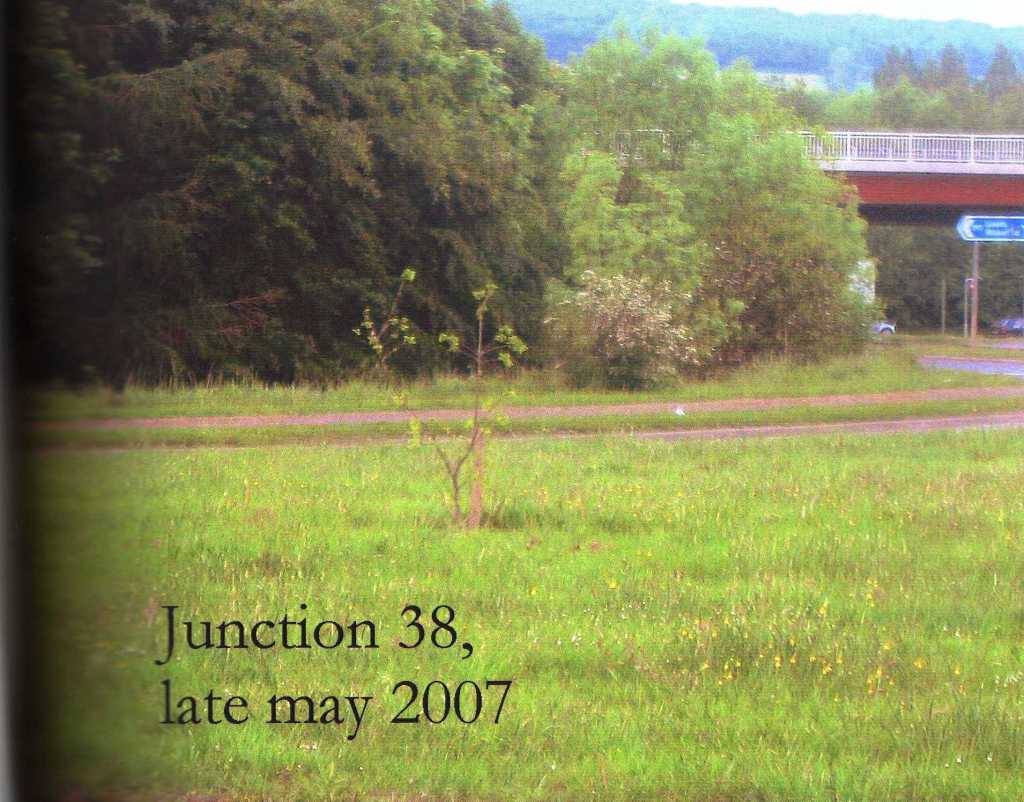
The above image is of an oak sapling I planted back in 2006 with the help of a friend to dig a hole in the dark of that graveyard week between Xmas and New Year. The image at the start of the blog is of this sapling now as a tree in 2024.
I had called this project ‘Green Graffiti’. In my very early 20s I had my fair share of naive creative spunk, I knew little about the larger art world. It was a year before I began to work at the Sculpture Park itself, which, in-spite of the invaluable educational aspects of the experience, was also an experience that dented my confidence to put myself out there as an artist – I’m still trying to counter an internalised narrative that I’m not the ‘right’ sort of artist to be in the art world.
So it’s fitting that we chose this location to plant this tree.
Around the corner I encountered the roadside area in the image below.

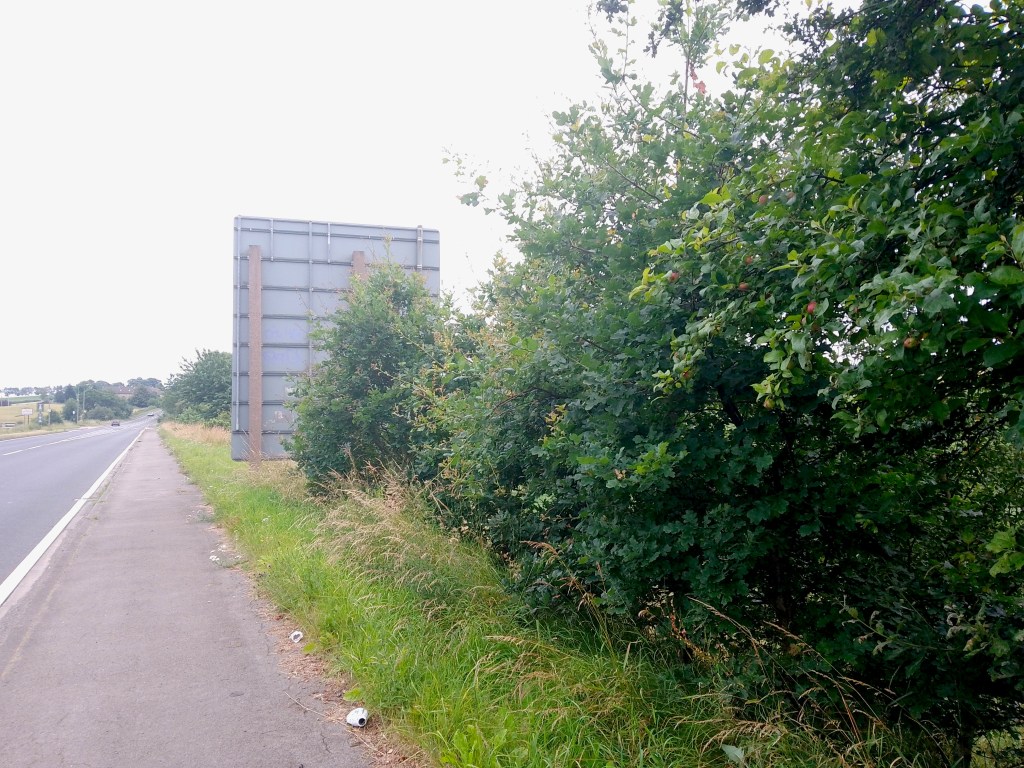
Back around the winter of 2009 and 2010 I would receive my wage at the Sculpture Park on a weekly basis, in physical cash. I would go and collect it on my day off. But in my rucksack I would carry a few saplings each time. Since I left the sculpture park nearly 5 years back, these trees have become a woodland.

Why is all this important? Because it’s important to see things we have done to the closest thing to an innate value they hold, and not via the social comparisons that have been harder to avoid making as the pathways you’ve taken earlier in life begin to look more defined and firm in their hold.
There are many things I regret from my 20s. But what I don’t regret are my creative acts that perhaps wouldn’t have occurred if I was a little more aware of a larger art world of people already ‘in the know’.
Fast-foward to 2024, it’s impossible to be naive. Even in 2006 you really had to go looking for news, unless it was on the television. Art exhibitions and opportunities were still primarily advertised on flyers.
But sometimes just doing something like getting on a pushbike can push away the weariness of the overbearing ‘knowingness’ of our times. And things just are, and aren’t jostling for primacy 24/7.
 John B Ledger