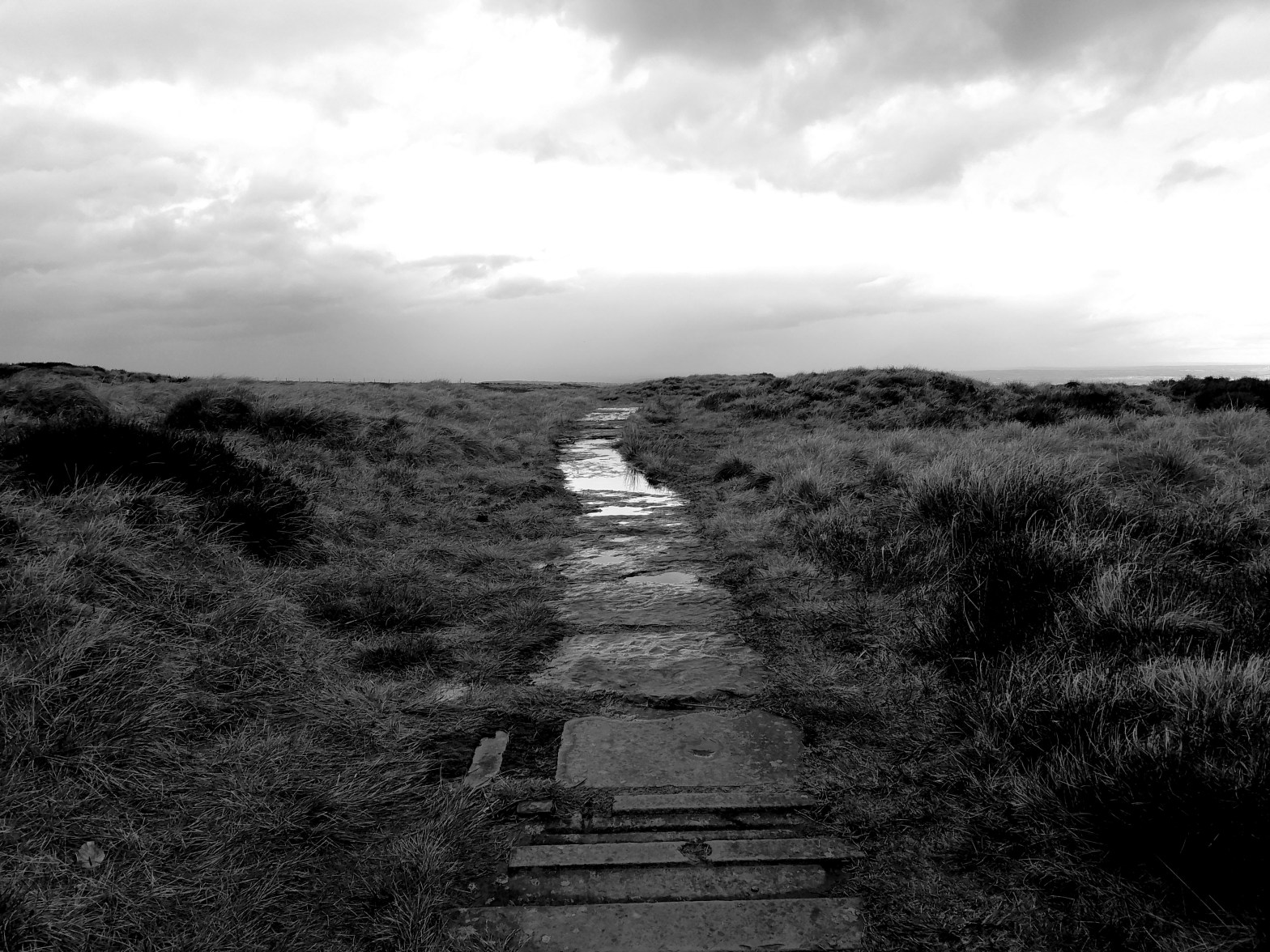
Where do you go when the direction, momentum, you indirectly, but nonetheless wholeheartedly placed your future state of being within, dissolves into thin air, and you see nothing in front of you? You go sideways. Westwards. Up here…scouring for answers.
The moors are plural. One moor is every moor.
But the Moors is a state of being that is singular. Everything, every doing, every trauma is folded into one form, and laid flat out, without judgement, retribution or recourse – just like the rocks strewn around up here over millennia.
The ascent itself is only thus if you can see that which you are ascending from.
The ascent is a meditation that looks back down on the place below that you can never be within, yet must be. but can’t be, but must be(!). The ascent beckons us to voluntarily relieve ourselves of the duty of all living flesh: to show up. Instead it invites us to play dead, to play at being the outcast that one day may be irredeemably forced upon us.
Any other climb is merely a pursuit, a thrill, more Youtube content; it doesn’t involve the deep desire to unzip oneself from a political body that one must posture and be ventriloquised for, and keeping smiling for as if it was their own smile.
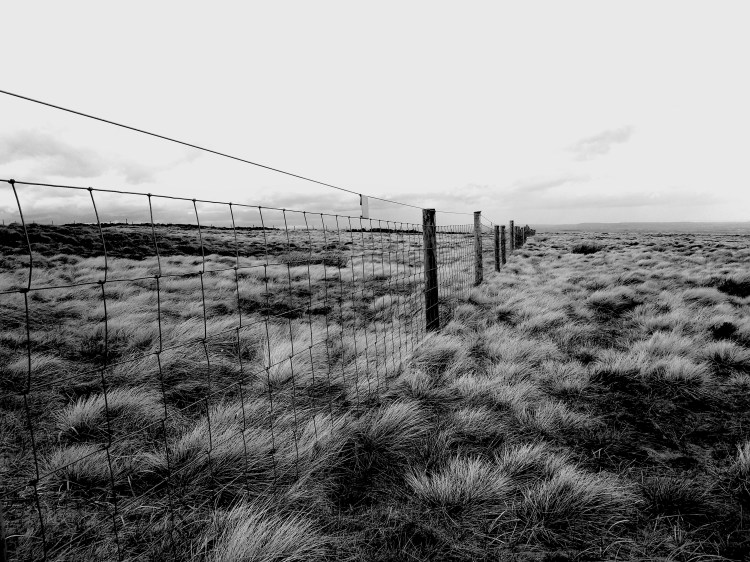
Walking 100 metres west from Black Hill, away from the vantage over the scattered urbanisation of Yorkshire, the shiny towers of the Manchester skyline can momentarily seem distantly exotic. It’s an optical illusion, but not one without potency.
But it’s the same image, really. The Pennines makes parallels either side of them. Peering over them is like looking at yourself through a fractured mirror.
Both sides are witnessing the retroactive hipsterisation of history; a gentrification of the Northern soul. The collective trauma of endless austerity that cannot be spoken and must remain mute in polite spaces; it is squeezed into the recesses of town centres, into an emaciation we choose not to see, even as it comes for us; bent into a smile that must keep smiling, at every new real ale bar, street food kitchen, and every attempt to turn every run down town into a new tourist hotspot.
As we willingly play along with this nihilism, smiling into the camera as the world burns, the moors wouldn’t look that visibly different even in the wake of a nuclear wipeout. After all, they already cater for all the traumas that cannot be accounted for down there – what’s another one?
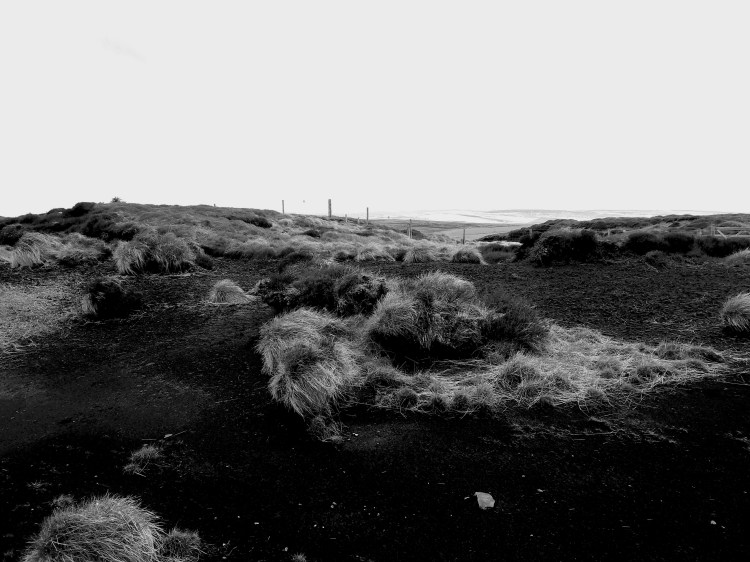
But really, what now plays out down there is capitulation with a cuddly facade.
We may speak of inner peace, mindfulness and body positivity, but we are merely smiling casualties of a failed dream of another kind of 21st century.
Maybe it’s too late now. Maybe the ample advice, facts, solutions of the 2010s came too late to change course. Neither the macro, the micro, nor the global or the personal could do the work in the time allocated to it.
Mental health awareness abounds but will not save us.
We only dare speak of ‘good’ mental illness. The safe space to sigh, to subscribe to ‘better help’.
…not the ‘bad and the ugly’ of mental illness, which remains as removed from discourse as when the monsters originally poured out the industrial hell holes below and found their way up here.
Working class identity is now a facade background to the gentrification of the Northern Soul. We bask under a fake authenticity, acting like animatronic museum pieces for which history has stopped. We split ourselves in two in order to play along.
E.P Thompson said ‘the working class was present at its own making”. But it was also present at the formation of its own monsters, either side of these hills. Brady, Sutcliffe, etc.
If the Moors Murders were not an act of mental illness, then nothing is. The ‘bad and ugly’ side of mental illness we dare not speak of until it’s too late. A Frankenstein’s monster, ground down and ground up, out of the grey, anonymous, mute trauma of working class life.
The Moors Murders are so important to the relationship between the moors and its civilised surroundings. The single fact that the victims were buried here is an horrific manifestation of a collective sickness that keeps on beckoning us to all to flee towards them.
Unlike the Derbyshire Dales further south, these hills still can’t easily be framed by a gentrifying gaze – the hold of the horrors upon these hills undoes their capture, and in a sense liberates them. All things can speak their name up here as the increasingly gentrified towns down below turn away from that which came out of them.
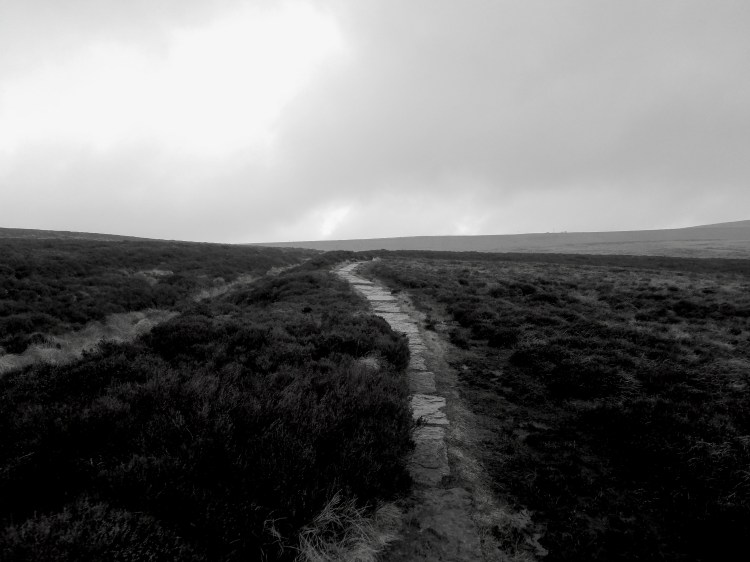
Like the moors, accountability is both singular and plural. Always individual and collective.
Who makes the monsters? And why did we look away when we had the answers?
Conversely, by looking away, out of the towns, since 2019, since the pandemic, it has been the only way to look back in at them.
 John B Ledger