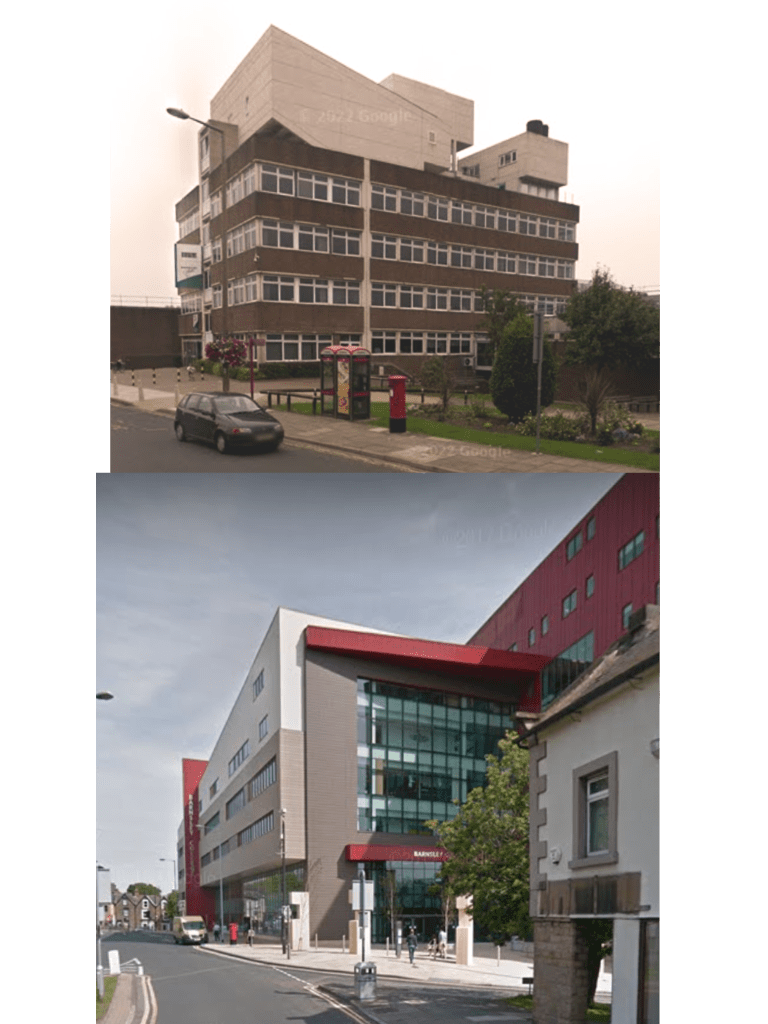
…and maybe it is?
In Laura Grace Ford’s words (I think?) maybe I am also ‘always yearning for a time that has just eluded us’ as I see images of urban architecture that still existed around the time of the financial crash 15 years ago, but before each subsequent crisis, fracturing and dislocating our grasp on a continuity of such moments.
I could have looked at the nearby cities where much more redevelopment has happened, but there’s way enough in my home town, where all the memories still overwhelm, like they re-materialise, oozing out of the walls. Where the faces, the expressions are oh-so familiar; a specific hardened look almost unique to such a space, transcending the eras of late Blairism and the schizoid urban face-lifts of the Tory era.
...I’m working on a life-long project I’ll never get totally right, especially when it comes to this town, where it can’t be perfected because it is ‘lived in’.
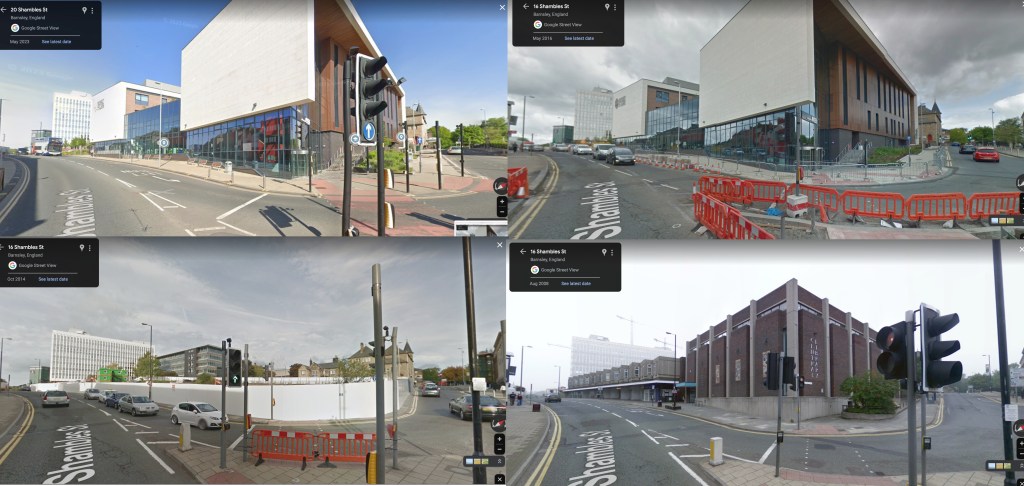
Until 2010, most towns and cities around this area had their ample share of brutalist architecture, or at least architecture that, like the cars in these 2008/2009 camera reels, posses a trace of what I’d call a post-war normalcy – a look and feel of a slightly more egalitarian age, before every exterior and interior design project assumed form with the gaze of Instagram in mind.
I find nostalgic trips quickly become quite unpleasant. But Google Street view doesn’t ‘feel’ past tense – it’s so central to our navigation of the present tense. We feel like avatars of the streets; both present and absent at the same time. Which is why it looks weird to see people wearing protective masks, in slightly less up-to-date imagery – like a reality slippage back into a moment that already feels paved over by the triumph of ‘Back to Normalism’.
When I found out about the ‘dates’ option on street view, it didn’t feel like the past in the way an old photo would. I admit that it was nostalgia that lead me here. A sense of loss, over something that seemed present, within me, prior to the 2010s. But it isn’t nostalgia I feel now I’m here. It felt like I could almost reach back into years like 2008 and 2009 – an ongoing reality, just elsewhere.
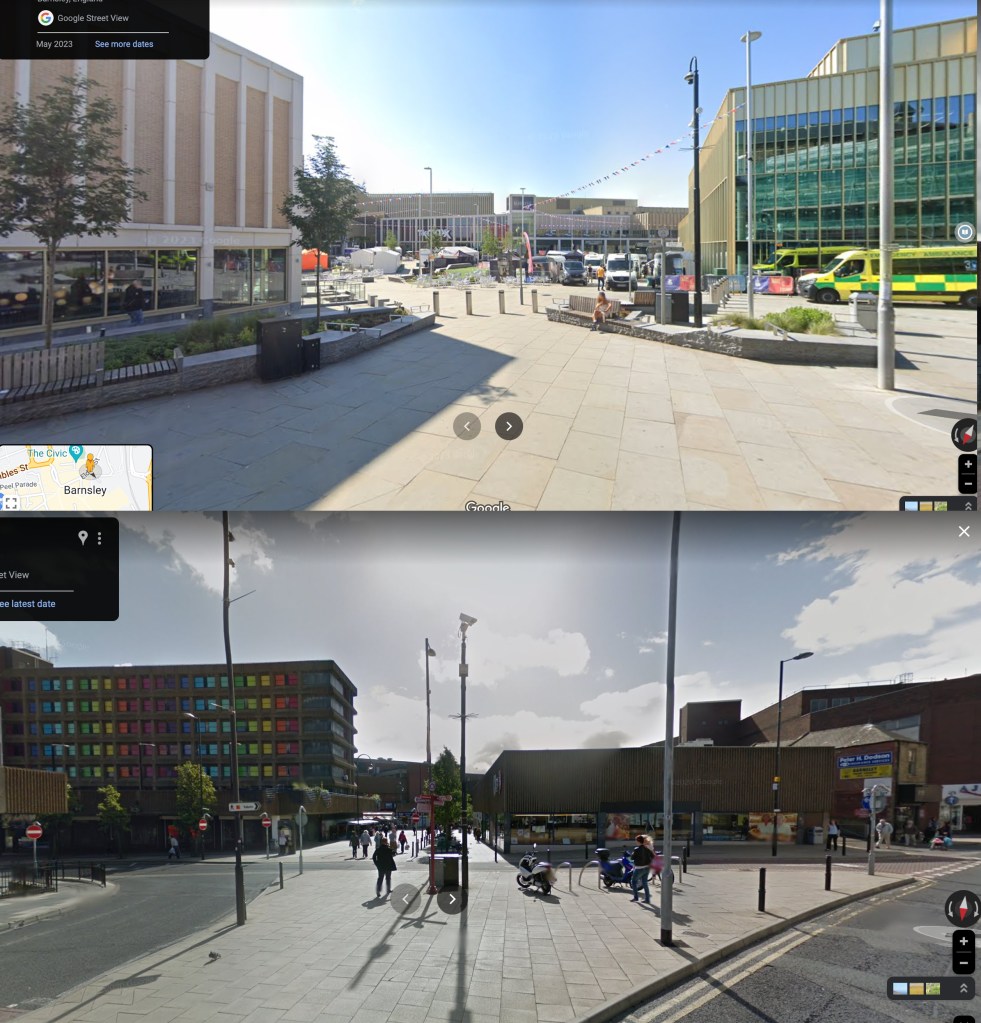
2008 and 2009 are a near-past, yet they totally cut from present tense. I put this down to the aforementioned design of the moment, the remaining buildings, clothes, cars and more. Contemporary redevelopments take the notion of non-place to something unimaginable in 20th century service stations etc. My friend likened the latest redevelopment projects to the latest iPhone upgrades, with all the right apps (Nandos, TGI Fridays, and the most in vogue style cafes and eateries), and I think he was touching upon how physical design and what we still feel inclined to call ‘virtual’ space have begun to be undistinguished in look and feel.
The design of 2008/2009 social space still seems to have a ‘bite’ to it; a resistance in its Dna to the confluence of onset of non-times and non-space.
Byung Chul-Han discusses how we live in a time of excess positivity, but with a poverty of negativity. He was discussing this largely in relationship to psycho-social and economic relations, in how this lack of a negative means that there is no ‘outside’, no Otherness which to relate to, push against, draw boundaries with, in space and in our own egos.
I believe this is equally applicable to the design of spaces, and I think the removal of post war architecture has in turn removed a resistance in space to the obligation to comply with whatever it is we are living in at the moment.
2008/2009, in its photo-flesh, reminds me of a time when I was already engaging in lost futures, (albeit bereft of that term at the time), listening to Kraftwerk, John Foxx, OMD and the David Bowie of Low, and drifting through these local urban spaces in how they looked back then. I miss it because I was still a young man, but I also had no smart phone – the tethering of the last long decade had yet to begin.
I think I’ve written all I can. Like my last post, it doesn’t really go anywhere.
But this ‘lived in’ project simply remains unfinished.
 John B Ledger